A surgical clip applier is the instrument that places a small clip across a blood vessel, duct, or tissue bundle to close it off. In ligation work,k the clip pinches the structure shut so it can be safely divided without bleeding or leakage, replacing a hand-tied suture with a fast, reproducible mechanical closure. The clips are made of titanium or an absorbable or non-absorbable polymer, and the applier is the tool that loads, positions, and crimps them.
For a theatre buyer, clip appliers sit at the centre of both open and laparoscopic haemostasis. The choices, single-use or reusable, single-fire or multi-fire, titanium or polymer, and the match of clip size to instrument, decide speed, security and cost on every list. This guide explains how they work and what to compare.
How a clip applier ligates a vessel
Once a vessel or duct is dissected clear, the surgeon positions the open jaws of the applier across it, checks that the structure sits fully within the clip and that nothing vital is caught behind, then squeezes the handle. The jaws close, deforming a titanium clip into a flat closed shape or engaging the locking mechanism of a polymer clip so it latches shut. The clip stays permanently (or, for absorbable polymers, until it dissolves) while the vessel is divided beyond it. Because security depends on the structure being fully enclosed and the clip fully formed, jaw visibility, tactile feedback on firing,g and a positive lock all matter to the surgeon and, in turn, to the buyer choosing between designs.
Clip materials and how they differ
Titanium clips
Titanium clips are the long-standing standard: inert, strong, and compatible with imaging, causing only minor artefact on CT and being generally regarded as MRI-conditional. They deform to grip the vessel and stay in place permanently. Their limitation is that they rely on crimp pressure alone and can, rarely, be dislodged.
Polymer locking clips
Non-absorbable polymer clips add a mechanical latch and often an inner grip surface, giving a positive lock that resists slippage and leaving no metal artefact on later imaging. They are widely chosen for larger vessels and the cystic duct and artery in laparoscopic cholecystectomy.
Absorbable clips
Absorbable polymer clips provide temporary closure and are resorbed over time, which appeals where a permanent implant is undesirable, though placement technique and sizing must follow the manufacturer's guidance closely.
Applier types and how they compare
Single-fire versus multi-fire
A single-fire applier holds one clip and is reloaded from a cartridge or magazine after each application, giving precise control at the cost of speed. A multi-fire (automatic) applier carries a magazine of clips and advances the next clip automatically after each squeeze, which is far quicker when many clips are needed, for example along a mesentery or in a busy resection.
Open versus endoscopic (laparoscopic)
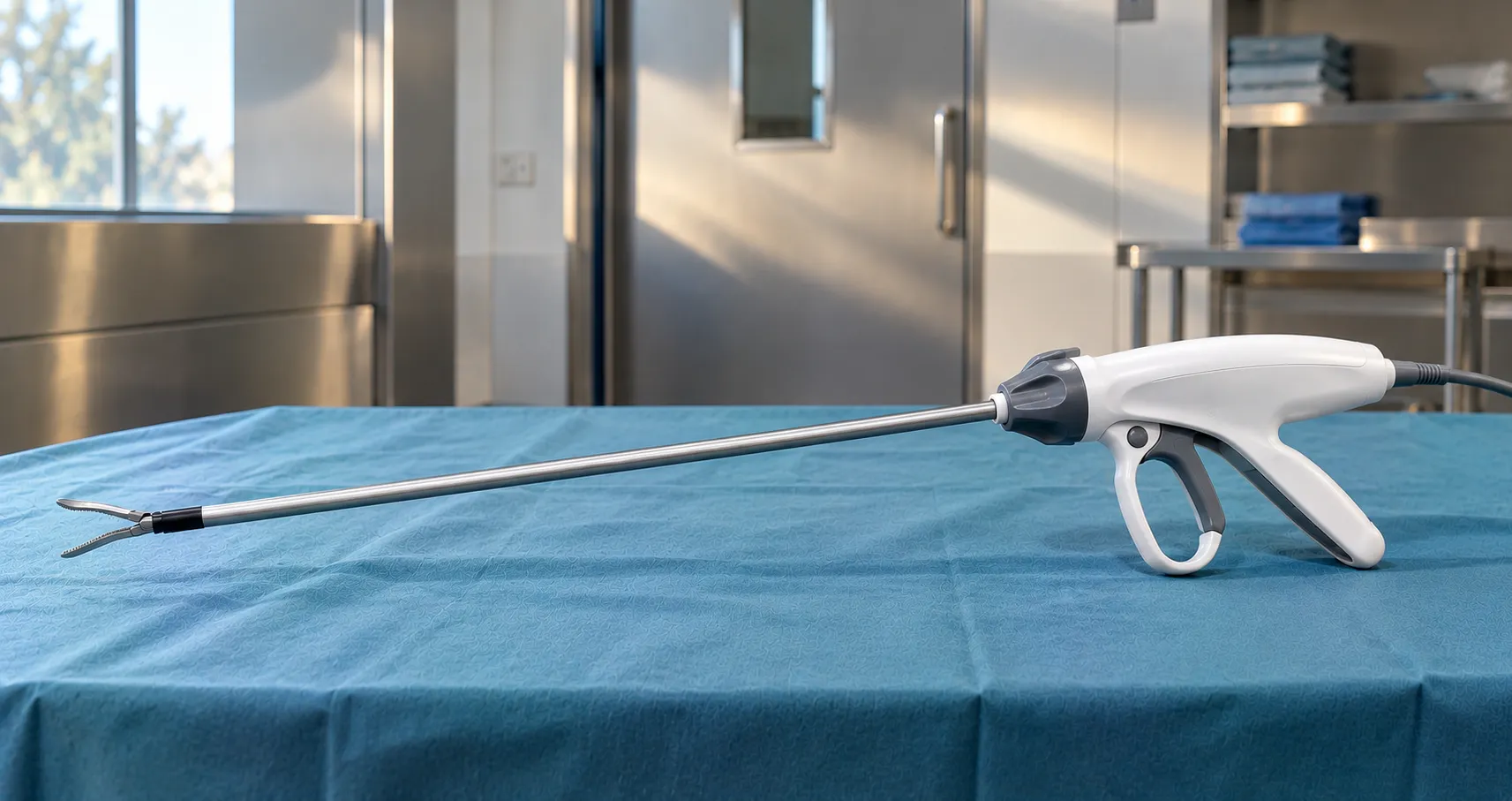
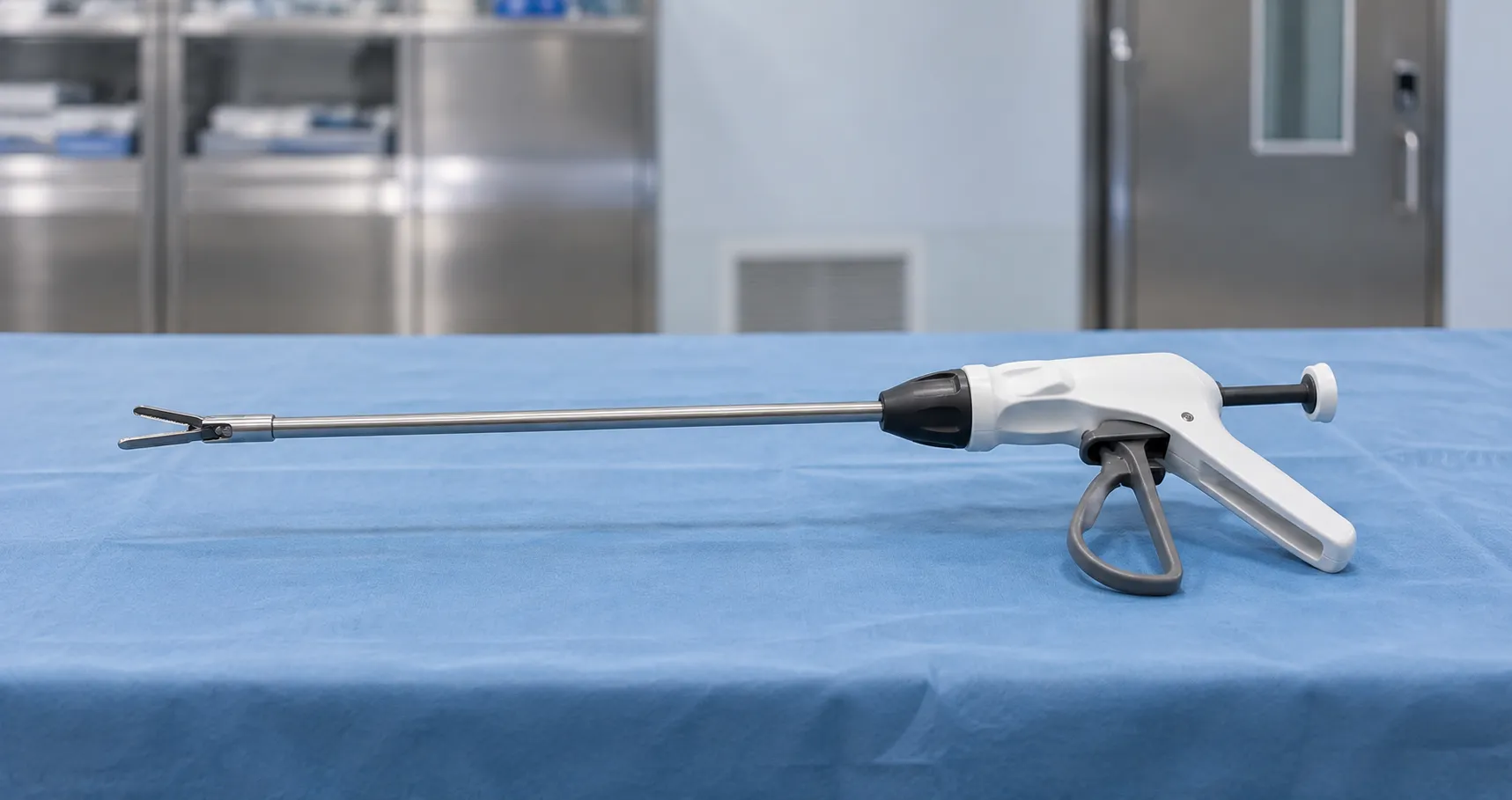
Open appliers are short instruments for use in an open field, while endoscopic appliers are long, narrow shafts designed to pass down a trocar of matching diameter, commonly 5 mm or 10 mm, with a rotating shaft and angled jaws to reach vessels at awkward angles inside the abdomen.
Reusable versus single-use
Reusable appliers are loaded with clips from separate cartridges and are cleaned and sterilised between cases; single-use appliers arrive preloaded and sterile with a fixed number of clips, guaranteeing a fresh jaw and mechanism every time.
Clip size, colour coding and matching
Clips come in a range of sizes, commonly labelled from small through medium, medium-large and large, and are usually colour-coded on their cartridges so staff select the right size quickly. Each applier is designed for a specific clip size and family; a large clip will not seat correctly in a small-clip jaw, and mixing brands is not safe. The size chosen must fully enclose the target vessel with the clip legs meeting cleanly beyond it, so surgeons keep more than one size available for the range of structures met in a single case. Confirming the clip-to-applier match and the size range you stock is one of the most important checks a buyer makes.
Key specifications a buyer must check
Confirm the clip material and size range and that each applier matches the clips you intend to use, including the cartridge or magazine format. For laparoscopic work check the shaft diameter against your trocars, the shaft length, whether the shaft rotates and how the jaws are angled. Look at the number of clips per single-use device or magazine and the reload arrangement for reusable appliers. Check jaw visibility and the tactile or audible confirmation that a clip has fully formed or locked. For reusable instruments confirm they fully dismantle for cleaning and are autoclavable, and that spare jaws and springs are available. Confirm imaging compatibility if patients will undergo MRI, and that sterile single-use devices show batch and expiry. Compatibility with your existing instrument set should be verified before standardising.
Standards, regulation and traceability
Clips are implanted devices and appliers are surgical instruments, so both must carry valid UKCA or CE marking with a declaration of conformity and instructions for use. Because clips remain in the patient, batch traceability matters: record the clip type, size and lot number in the operative note so any field-safety notice can be acted on. Single-use appliers must not be reprocessed unless the manufacturer validates it, and reusable instruments should follow the ISO 17664 reprocessing information in their documentation. Report any misfire, clip failure or instrument fault to the MHRA, the UK medical-device regulator, whose alerts and guidance are published alongside wider procurement material on GOV.UK. Clinical guidance bodies such as NICE may inform local haemostasis policy. Keep the instructions for use, since correct application technique is central to clip security.
Consumables, servicing and total cost of ownership
With single-use appliers, the preloaded device is the recurring cost, so model it against how many clips a typical procedure consumes and how many devices that implies per case. With reusable appliers, the running spend is the clip cartridges themselves plus decontamination, staff time,e and periodic replacement of worn jaws and springs, and you need enough instruments to cover the sterilisation cycle. Stocking a coherent range of clip sizes and their matching appliers, rather than a scatter of incompatible brands, cuts waste and training time and prevents the dangerous situation of a clip that does not fit the jaw to hand. We can help you standardise clips and appliers across open and laparoscopic sets — register as a buyer or contact our team to review options.
Use across surgical settings
Clip appliers are used throughout general, upper-GI, colorectal, gynaecological, urological and vascular surgery, and are a fixture of laparoscopic cholecystectomy, appendicectomy, nephrectomy and bowel resection. A district general hospital typically standardises on multi-fire laparoscopic appliers for routine ligation and keeps single-fire and open appliers for precise or open work, while a specialist unit may hold polymer locking clips for larger vessels. Day-surgery units value preloaded single-use appliers for fast, reliable turnover. Paediatric theatres need the smallest clips and finest jaws, and veterinary surgery uses the same instruments scaled to the patient. Matching applier type and clip range to the setting keeps ligation quick and secure without paying for magazine capacity a low-volume list never uses.
Procurement checklist
-
Confirm each applier matches the clip material, size, and cartridge or magazine you use.
-
Stock a coherent range of clip sizes with colour-coded cartridges for quick selection.
-
Check laparoscopic shaft diameter against trocars, plus length, rotation, and jaw angle.
-
Decide single-fire for control or multi-fire for speed against your case mix.
-
Verify jaw visibility and clear confirmation that a clip has formed or locked.
-
Confirm reusable appliers can be dismantled for cleaning, autoclaved, and that spare parts are available.
-
Check imaging compatibility where patients may later undergo MRI.
-
Record clip type, size and lot number for implant traceability on every case.
Conclusion
Surgical clip appliers turn vessel ligation into a fast, repeatable mechanical closure, but their reliability depends on the clip matching the instrument, the size matching the vessel, and the surgeon getting clear feedback that each clip is fully formed. The buying decision turns on titanium versus polymer, single-fire versus multi-fire, open versus laparoscopic,c and single-use versus reusable, all set against your case mix and imaging needs. Confirm the compatibility, the size range and the traceability, then cost the options honestly. MediGear can supply clip appliers and matched clips so ligation is secure, quick and sensibly priced across your theatres.
Disclaimer
This article is for informational purposes only. It is published by MediGear (medigear.uk) for general information and procurement guidance, and is not clinical, diagnostic, treatment, technical, engineering, legal or regulatory advice, nor a product endorsement, guarantee or substitute for professional assessment. MediGear does not provide medical consultations. Buyers should consult their clinical, biomedical, estates and regulatory contacts, and the manufacturer's documentation, and independently verify all specifications, certifications, compatibility and suitability before purchase. Specifications, certifications and availability are correct at the time of publication and may change without notice. MediGear is a medical-equipment distributor and does not sell medicines or pharmaceutical products.