Sleep services are judged largely on whether patients keep using their device. That makes comfort features, humidification and usage data at least as important as the pressure delivery itself. A device that performs well on paper but keeps a patient awake will be back in the clinic within weeks.
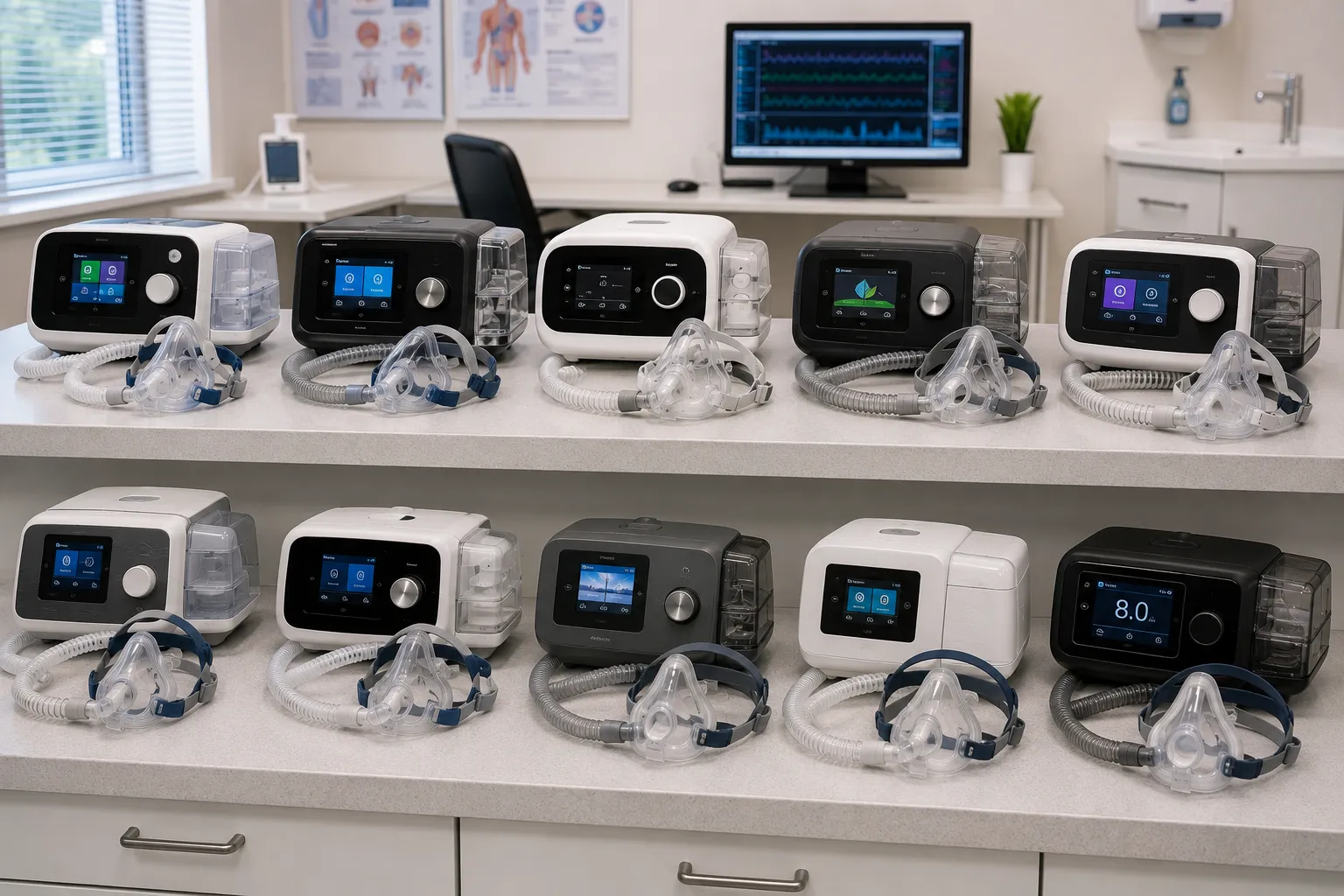
The ten device types below cover the range a sleep service typically holds. Each entry explains the design and what to confirm before purchase.
What shapes the choice
Start with the service model. A clinic issuing devices for long-term home use needs reliable usage reporting, straightforward patient training materials and a workable maintenance route. A service running in-clinic assessments has different priorities, focused on flexibility and quick reconfiguration between patients.
Then consider the practical support burden: mask fitting, filter supply, humidifier chamber replacement and the handling of returned devices. These tasks define the true workload of a sleep service far more than the device specification does.
The ten device types
1. Fixed pressure devices
Deliver a single set pressure throughout the night. Simple, predictable, and well-suited pressure has been established and remains stable.
2. Automatically adjusting devices
Vary pressure within a set range in response to detected events. Useful where requirements change through the night or between positions.
3. Bilevel devices
Provide separate inspiratory and expiratory pressures, which patients find more comfortable.
4. Bi-level devices with a backup rate
Add a set minimum breath rate for patients whose breathing pattern requires support. These are specialist devices with specific clinical governance.
5. Devices with integrated humidification
A heated water chamber built into the device to reduce dryness. Chamber cleaning and replacement supply become part of the service routine.
6. Devices with heated tubing
Reduce condensation around the circuit overnight, as it is a common cause of disturbed sleep. Confirm tubing supply and cleaning guidance.
7. Devices with detailed usage recording
Record hours of use, mask fit and event data for clinical review. Confirm how data is retrieved and whether software or a licence is required.
8. Devices with remote data transmission
Send usage data automatically to the service. Establish the connectivity method, data-handling arrangements, and which devices cannot transmit.
9. Travel and portable devices
Compact units for patients who travel frequently, usually with reduced humidification. Battery options and power supply flexibility are the practical considerations.
10. Devices supplied as clinic loan units
Held by the service for assessment and short-term issue. Robustness, quick reconfiguration and a clear decontamination routine between patients matter most here.
Fitting the device to the patient
Mask selection deserves as much attention as the device. Nasal masks, nasal pillows, and full-face masks each suit different breathing patterns and facial shapes, and a poor fit produces leaks that undermine both comfort and the data the clinic relies on. Holding a reasonable range of styles and sizes, and refitting and review appointments, prevent many returns.
Masks, consumables and stock
-
Mask range. Confirm the available styles, sizes, and fit; fit is the strongest influence on ongoing use.
-
Filter supply. Establish filter type, replacement interval and stock arrangements for issued devices.
-
Humidifier chambers. Check whether chambers are reusable or replaceable and how patients obtain new ones.
-
Tubing. Confirm standard and heated tubing supply and the cleaning advice given to patients.
-
Power. Verify supply voltage options and any battery accessories for travel use.
Patient training, cleaning and servicing
Patient training is the highest-value part of the service. Cover mask fitting, cleaning routines, filter changes, humidifier filling and what to do when something feels wrong. Written instructions to take should not be redundant; follow-up contact should not be contaminated devices; this process needs a defined process agreed with your infection prevention team, covering which parts are replaced rather than cleaned. This should be settled before a loan fleet is established.
For technical arrangements, electrical safety testing where applicable, software support terms for the data platform, and spare parts availability. Service providers publish device safety alerts so field safety notices reach the clinical team promptly.
Final thoughts
Build the fleet around continued use rather than specification alone. Most sleep services need a dependable, fixed-pressure, automatic-adjusting mask range with reliable data to fit real patients. Settle consumables, decontamination and data handling before rollout.
This article provides general procurement guidance for healthcare organisations. It is not clinical advice, does not cover diagnosis or treatment decisions, and does not replace manufacturer instructions or local policy.