
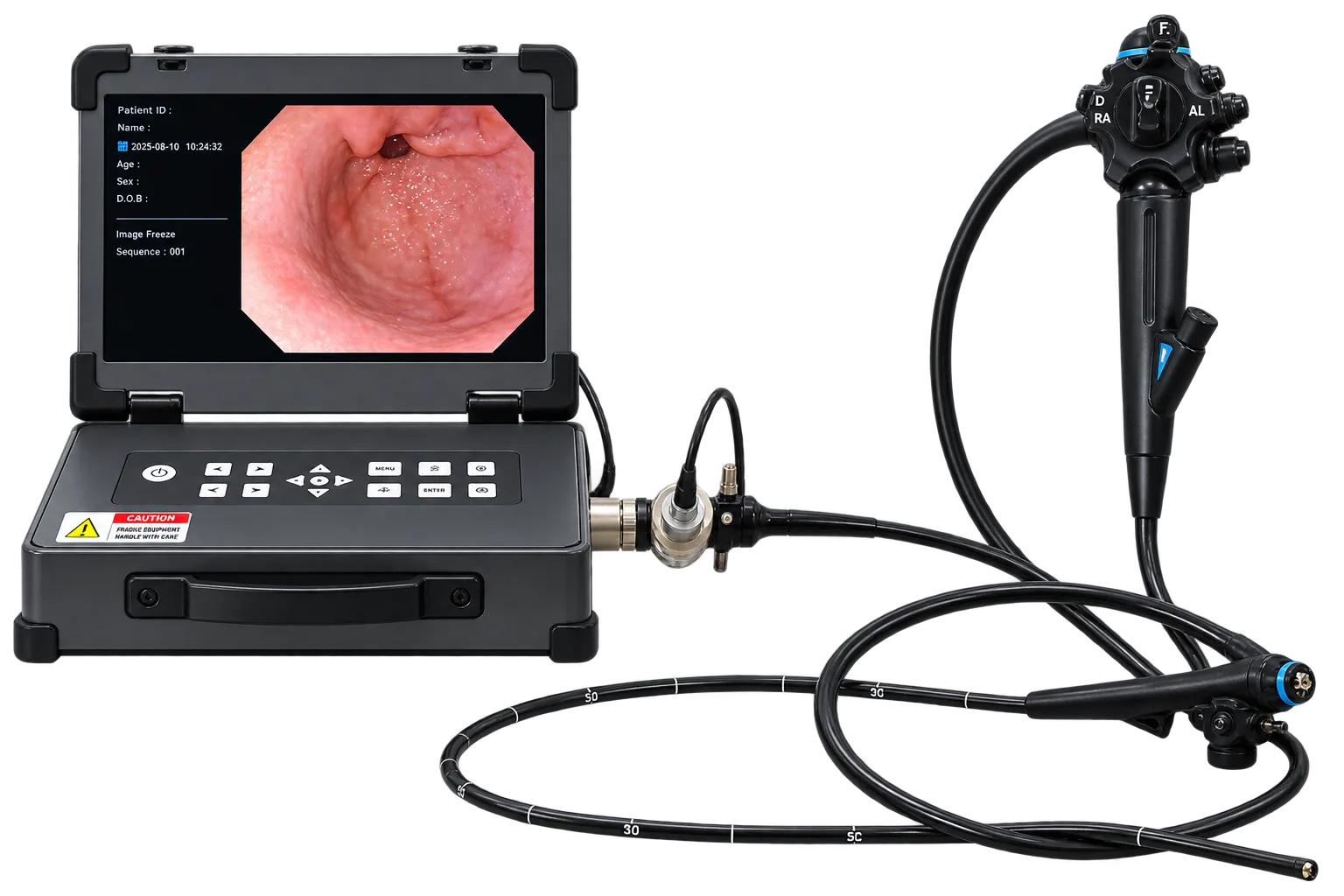
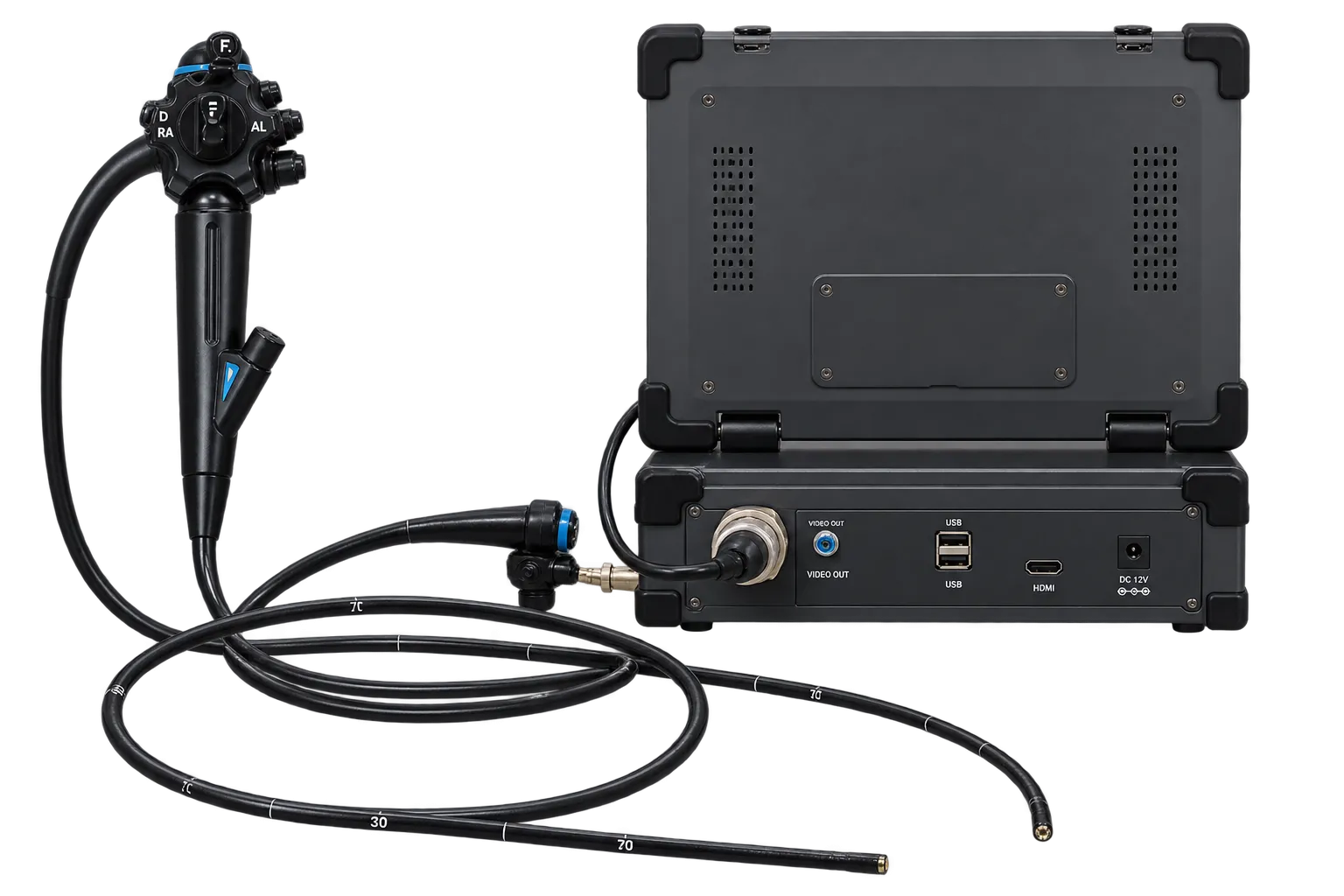


Upper Gastrointestinal Endoscopy
A gastroscope of this description is intended for examination of the upper gastrointestinal tract, and the working length beyond 1050 millimetres reflects that reach. Which examinations any particular unit is suitable for, and which patients, are clinical determinations made by the endoscopy service rather than questions a specification sheet answers. Specification supports that judgement without replacing it. Reach of this order is what upper tract examination requires.
Services Needing Narrower Access
The 6.0 millimetre variant is substantially slimmer than the standard 9.8 millimetre option, and narrower instruments are used where access is restricted or tolerance is a consideration. The trade is channel width, which drops to 2.4 millimetres. Selecting between them is a matter for the clinicians who will use the instrument. Neither variant is better; they answer different requirements. Tolerance and access both bear on which instrument is chosen.
Departments Standardising Their Fleet
Having three diameters documented within one family lets a service consider a consistent instrument range rather than assembling one from separate sources. Processor compatibility, reprocessing arrangements and accessory interchange all need establishing before that consistency can be relied upon. Interchange across a fleet saves time only where it truly holds. Consistency across a fleet reduces what staff must remember.
Endoscopy Units Assessing Equipment
For any unit evaluating instruments, the optical specification is one part of a larger picture that includes decontamination compatibility, regulatory status, servicing and consumables. This page presents the documented specification; Medigear.uk supplies the rest, and the clinical assessment belongs to the department. A full evaluation reaches well past the optical figures alone. Decontamination and regulatory status weigh heavily in that.