
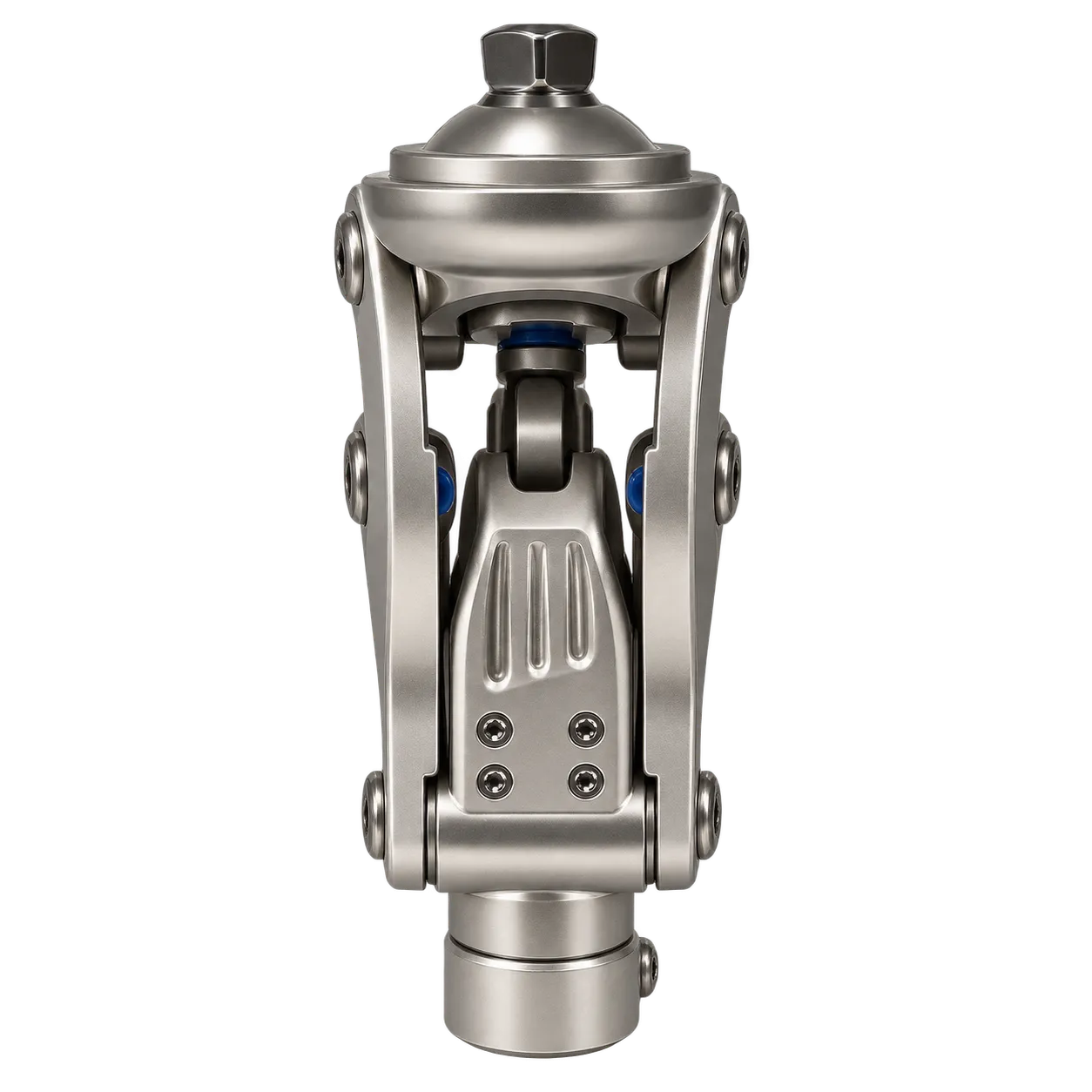
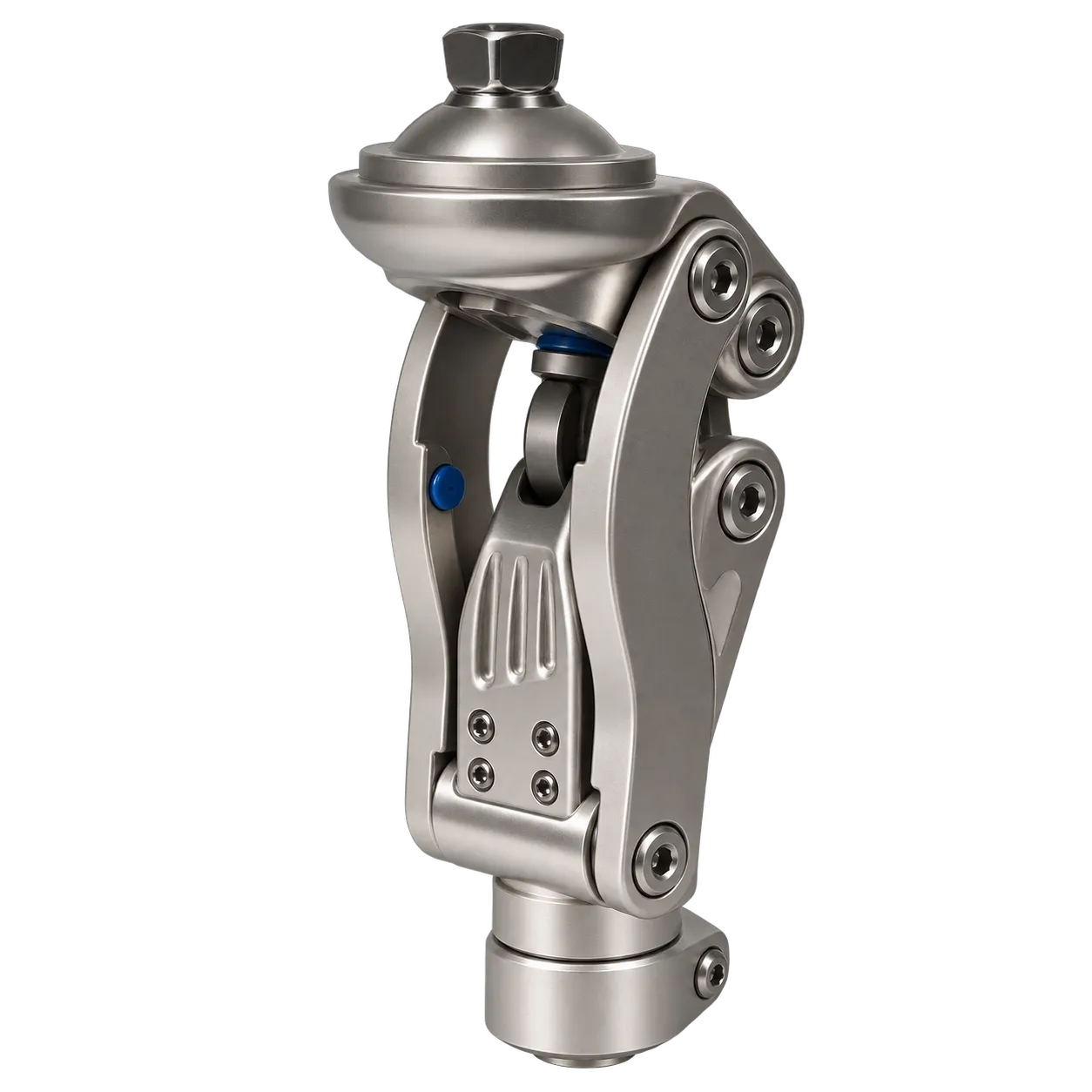
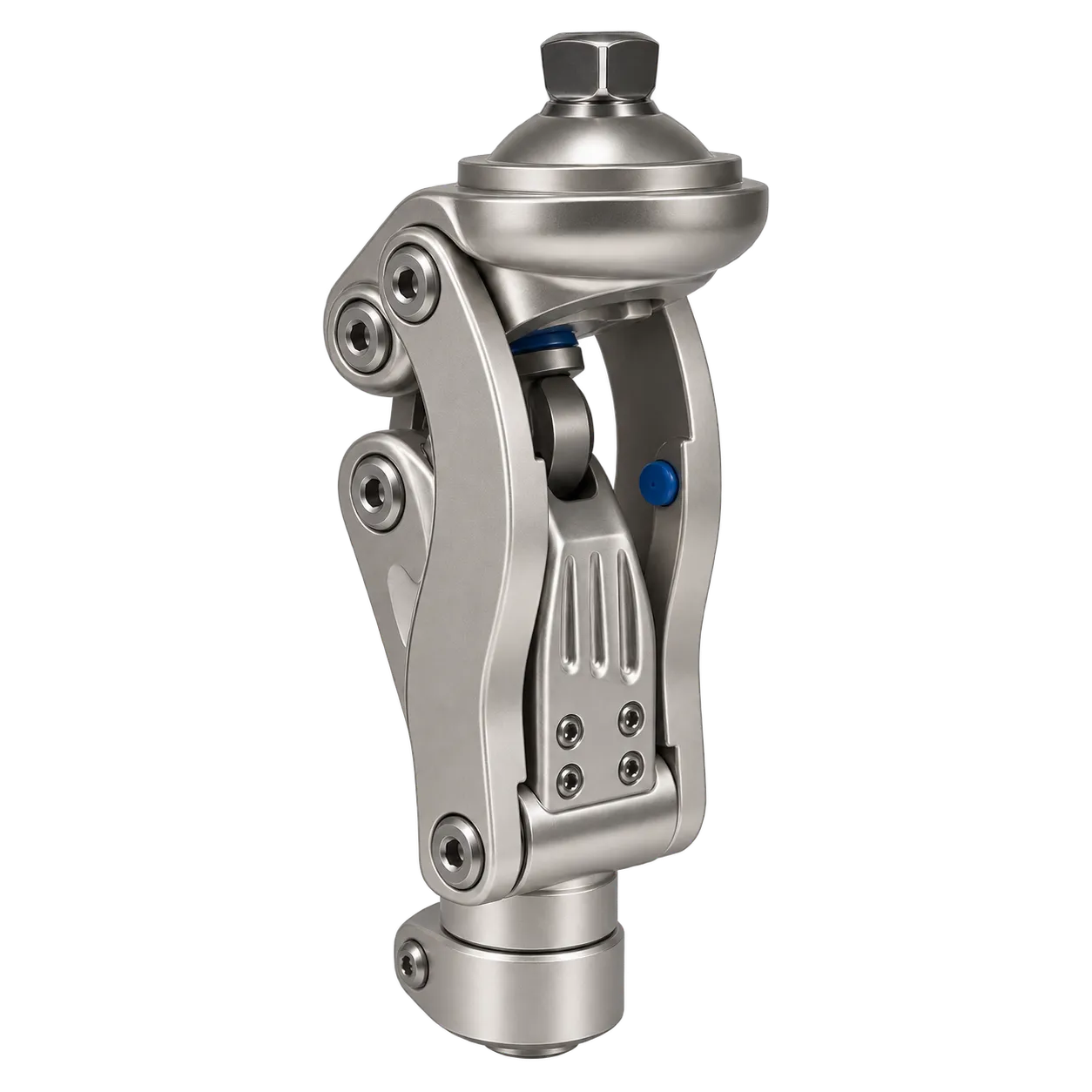
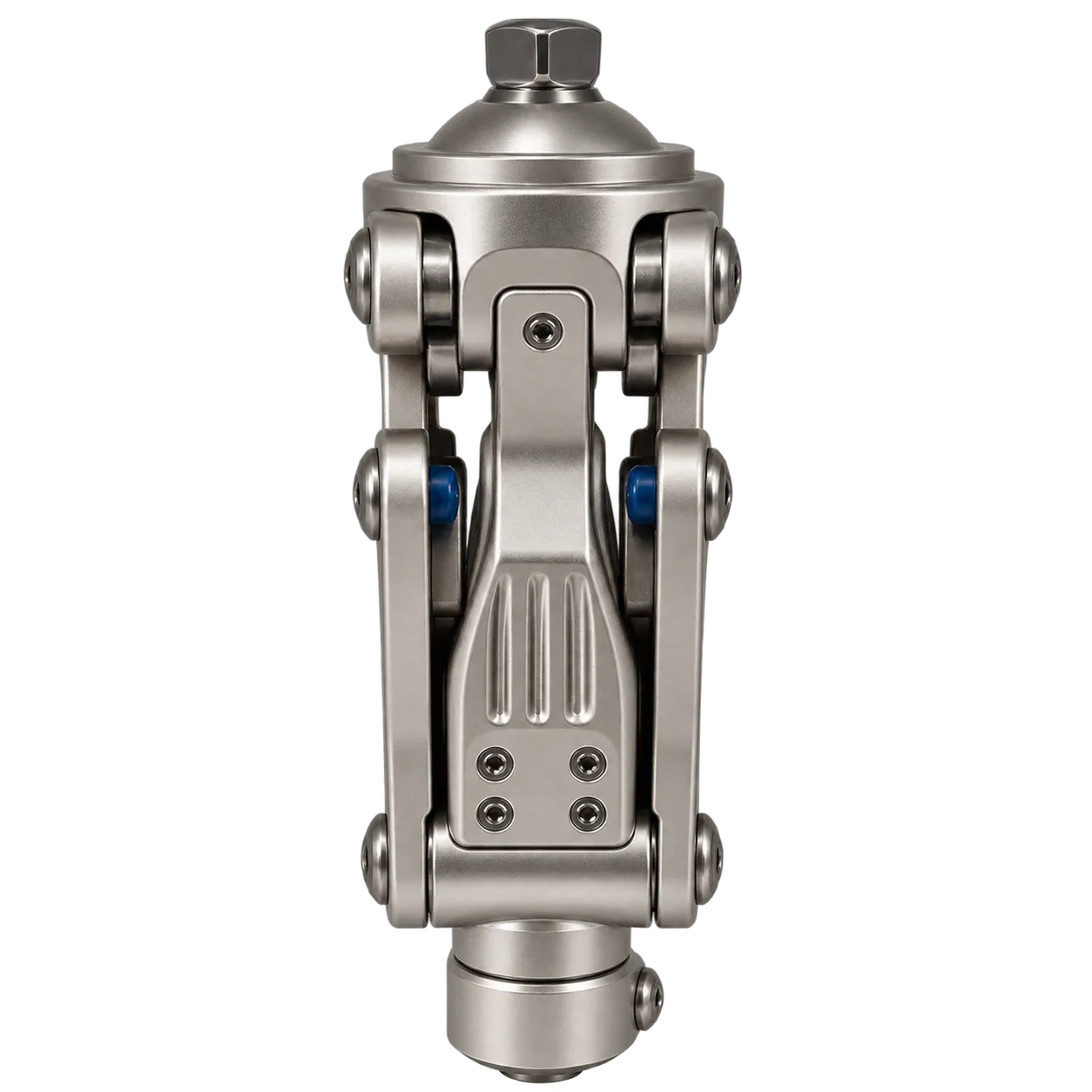
Transfemoral prosthetic fitting is the primary application, with the joint supplied as a component for a prosthetist to align and adjust within a complete limb.
Services considering pre-owned components are supported by inspection findings and service history supplied in writing alongside the manufacturer's documentation.
Knee disarticulation and long residual limb fittings are where linkage geometry is commonly specified, since space below the socket is limited.
Suitability for a given patient follows the load rating and indicated mobility grade, both taken from the manufacturer's instructions for use.
Stance stability and swing clearance are both served by the linkage geometry, with the specific behaviour established from the manufacturer's documentation.
Clinics maintaining a component stock benefit from provenance and refurbishment records held against each item.
Services planning maintenance are supported by establishing replacement pin and bushing availability before a component enters stock.