
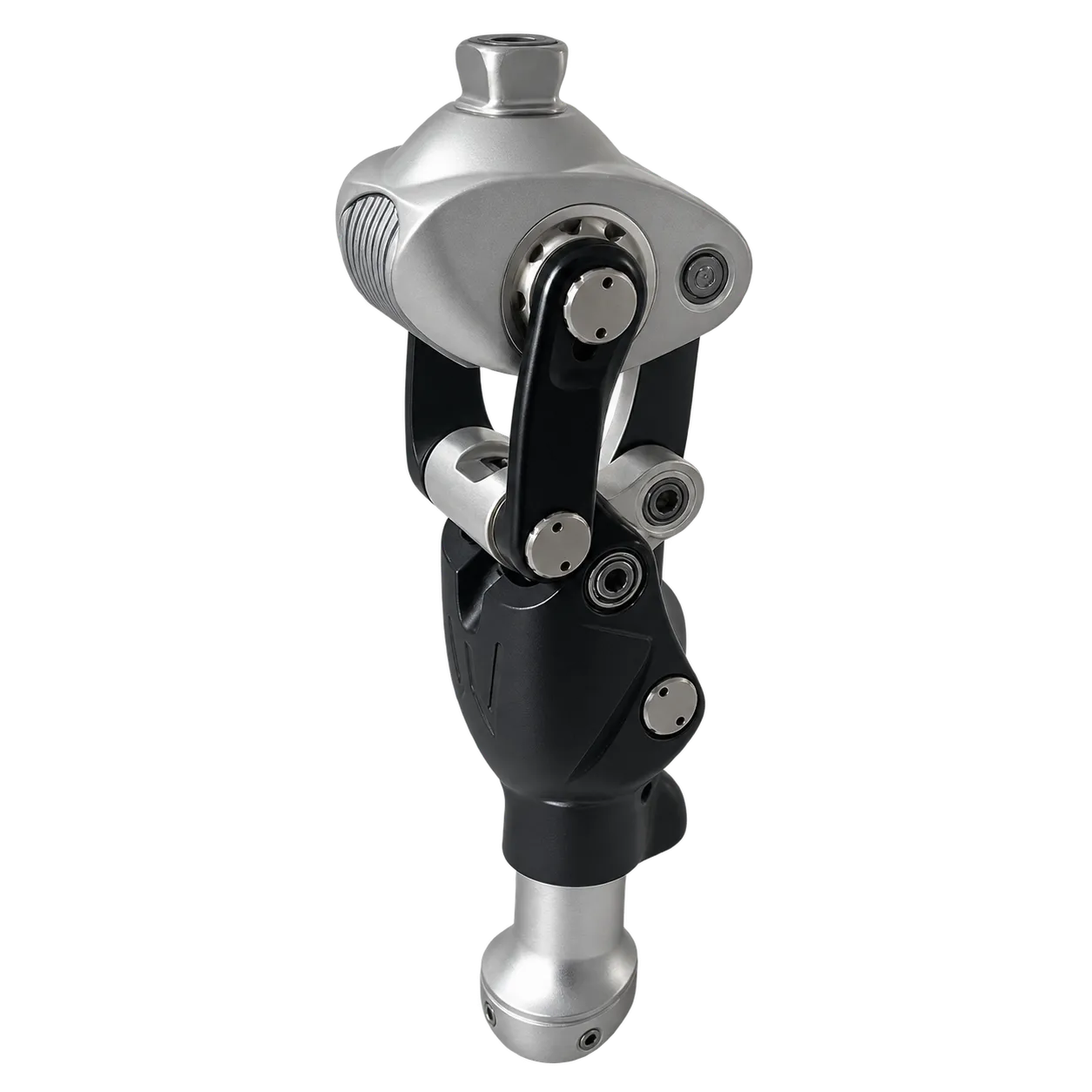
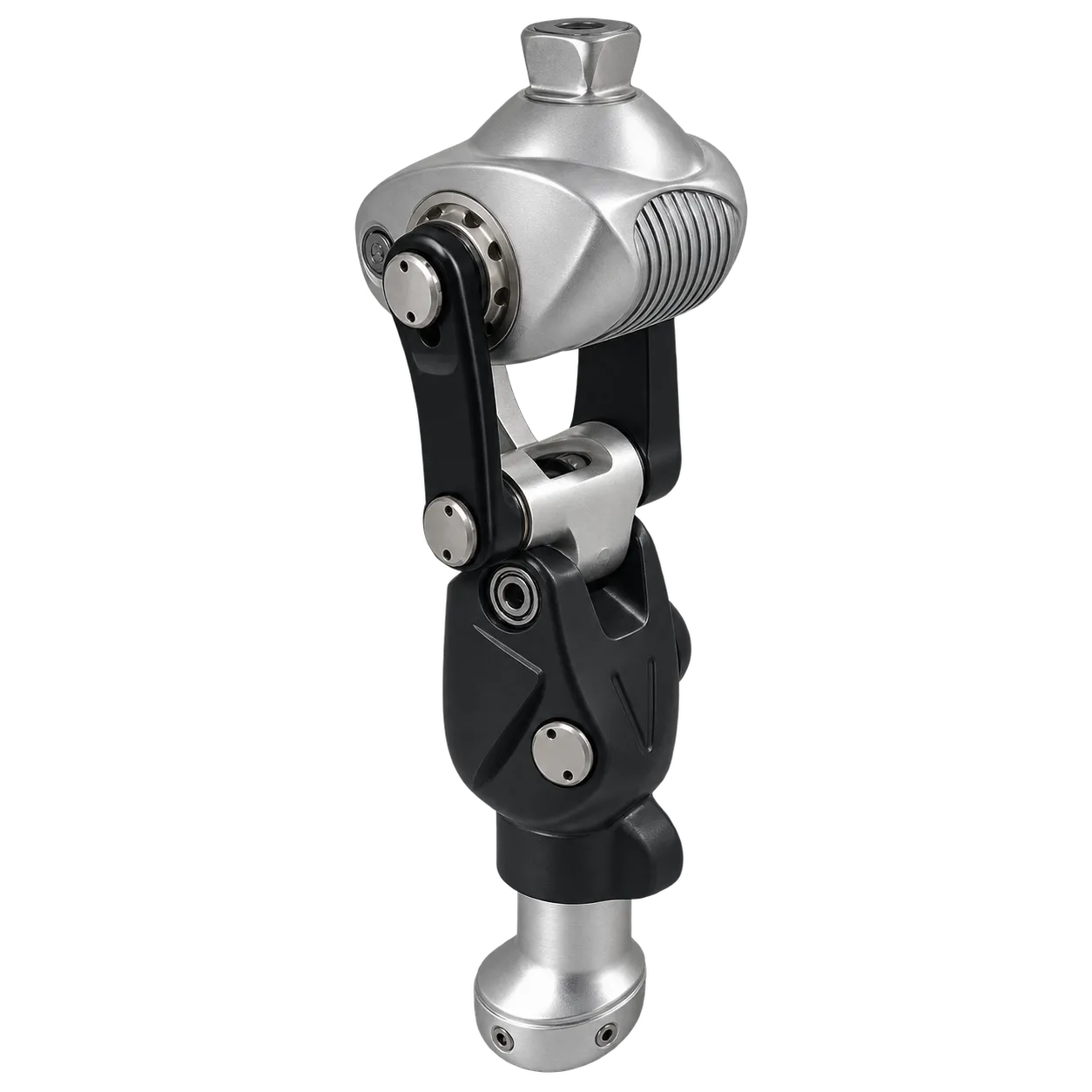
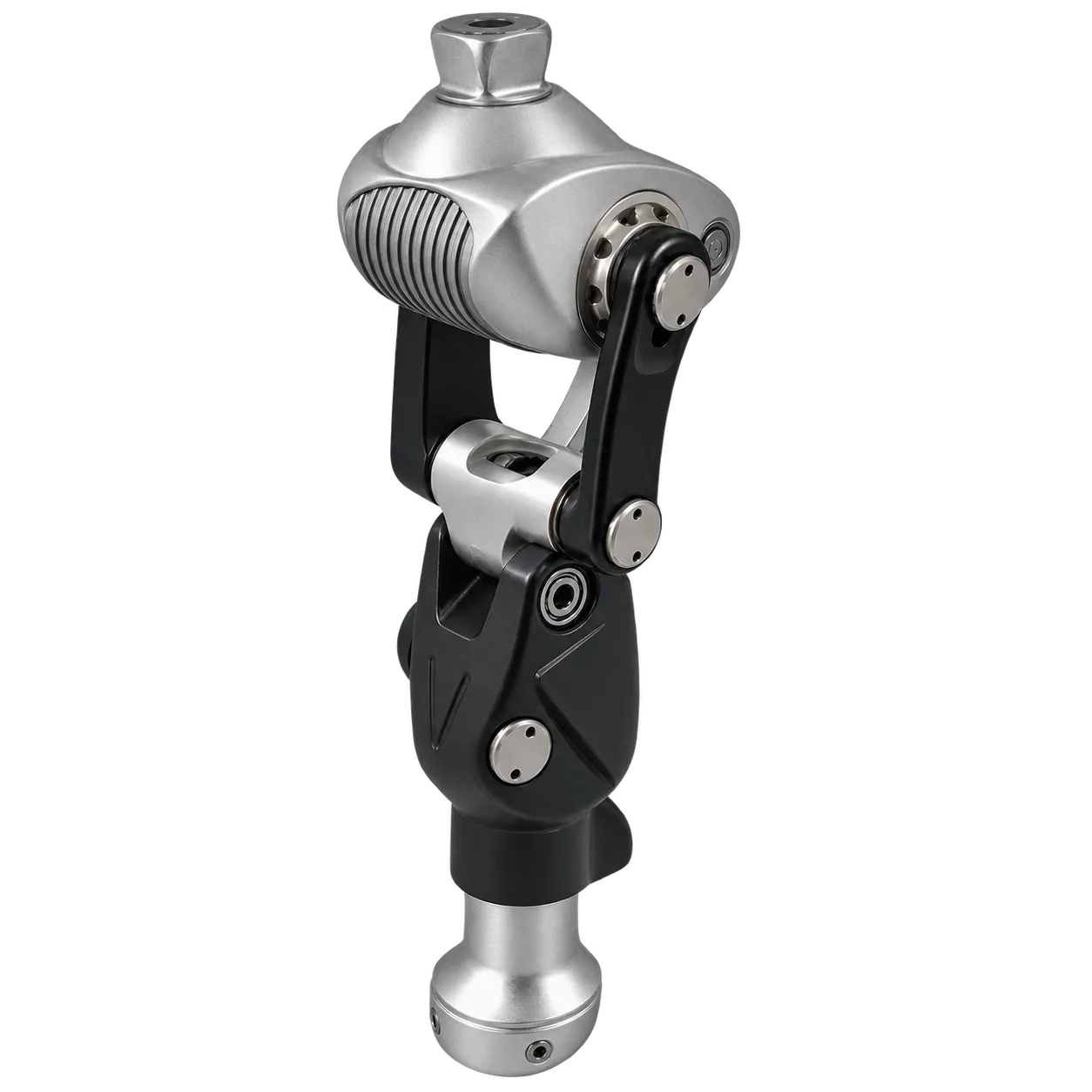
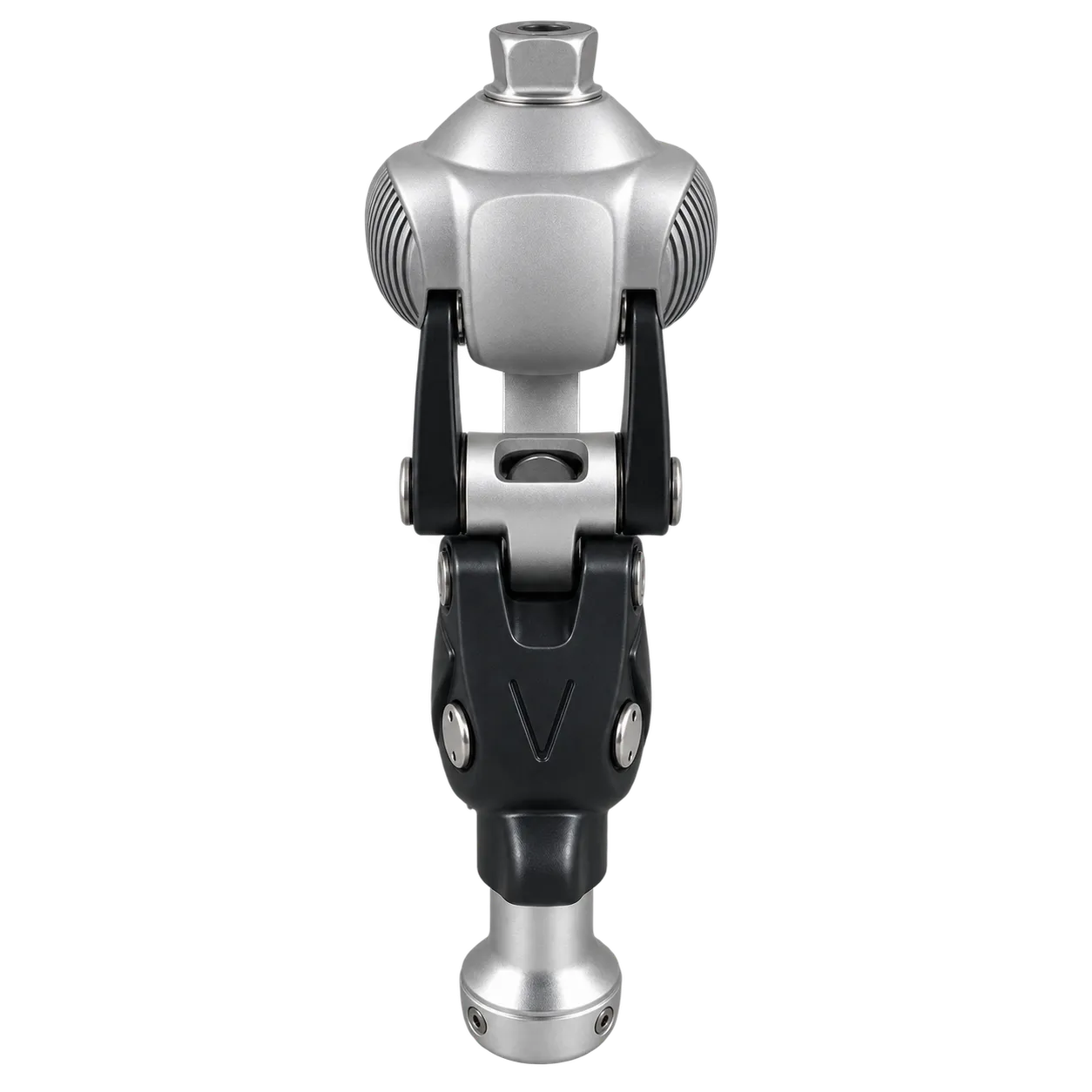
Transfemoral prosthetic fitting is the primary application, with the joint supplied as a component for a prosthetist to align and adjust within a complete limb.
Knee disarticulation and long residual limb fittings are where polycentric geometry is most often specified, since the linkage folds compactly and build height below the socket is limited.
Users needing toe clearance through swing are served by linkage geometry that shortens the shank as the knee flexes.
Stance stability is supported by an effective centre of rotation that sits behind and above the anatomical knee position in extension.
Users walking at varying speeds are served by hydraulic damping proportional to angular velocity, so the joint responds differently to a fast step and a slow one.
Kneeling and deep sitting are accommodated by flexion to 165 degrees.
Water-based activity is supported by a housing the manufacturer states as resistant to seawater, fresh water and chlorinated water, subject to the stated conditions of use.