
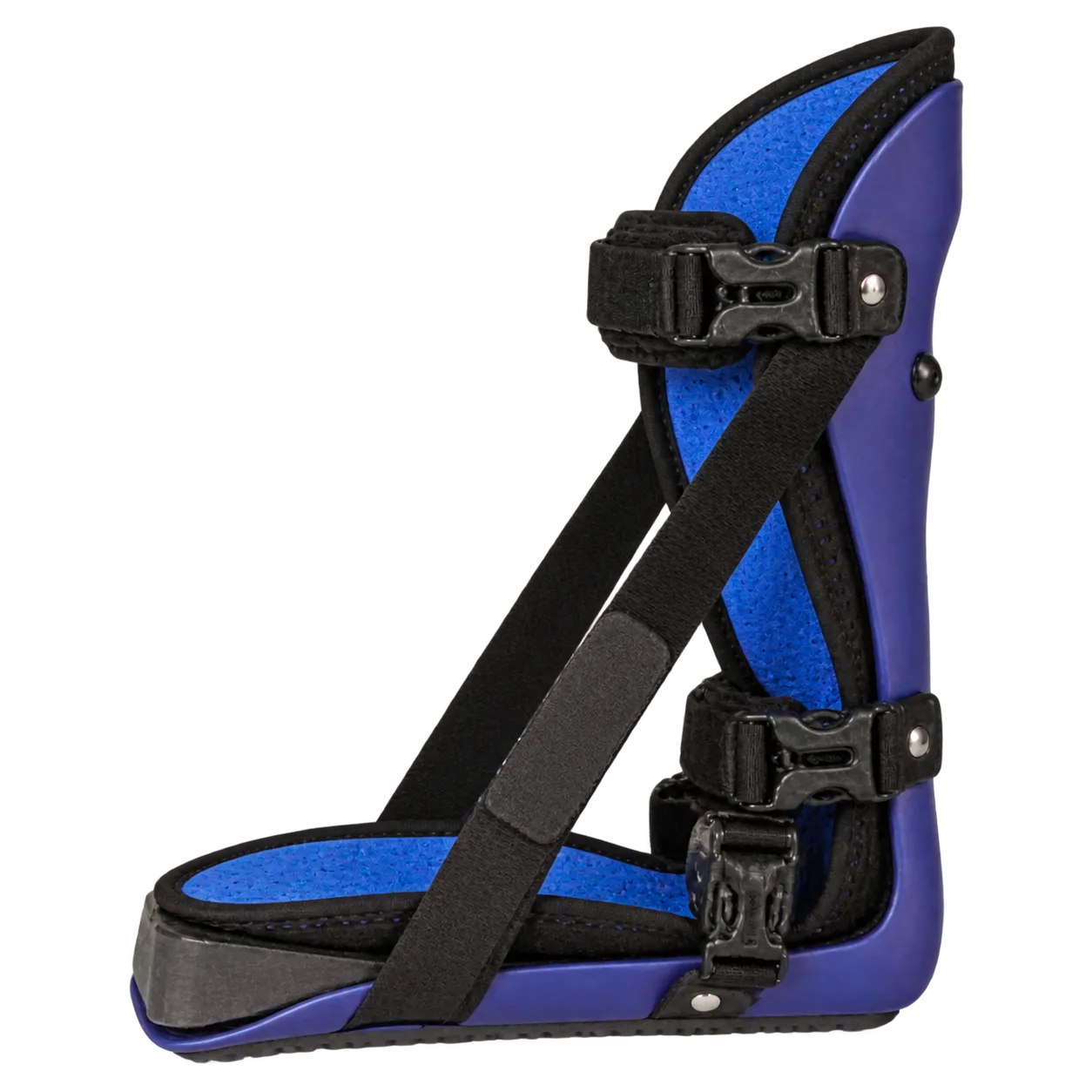
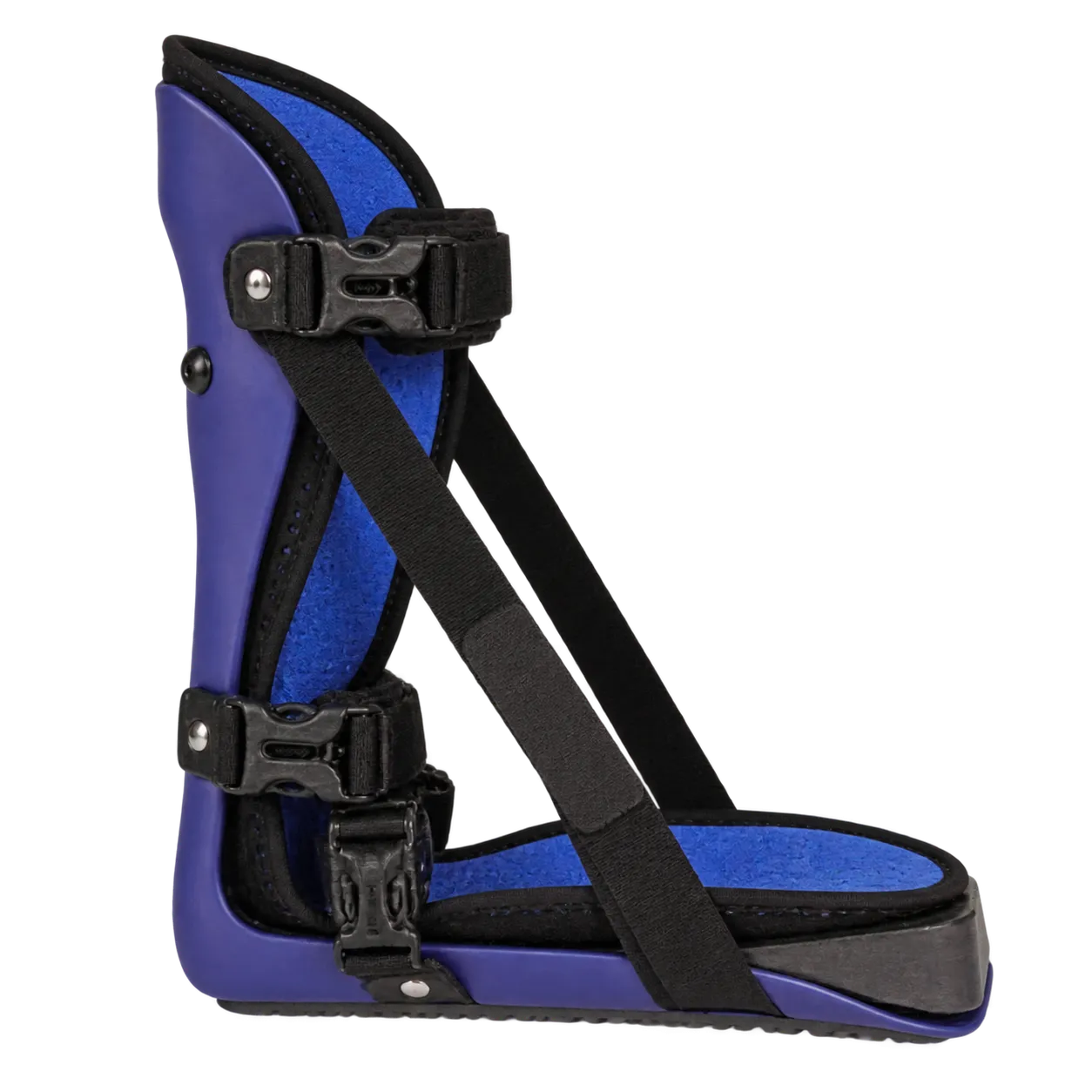
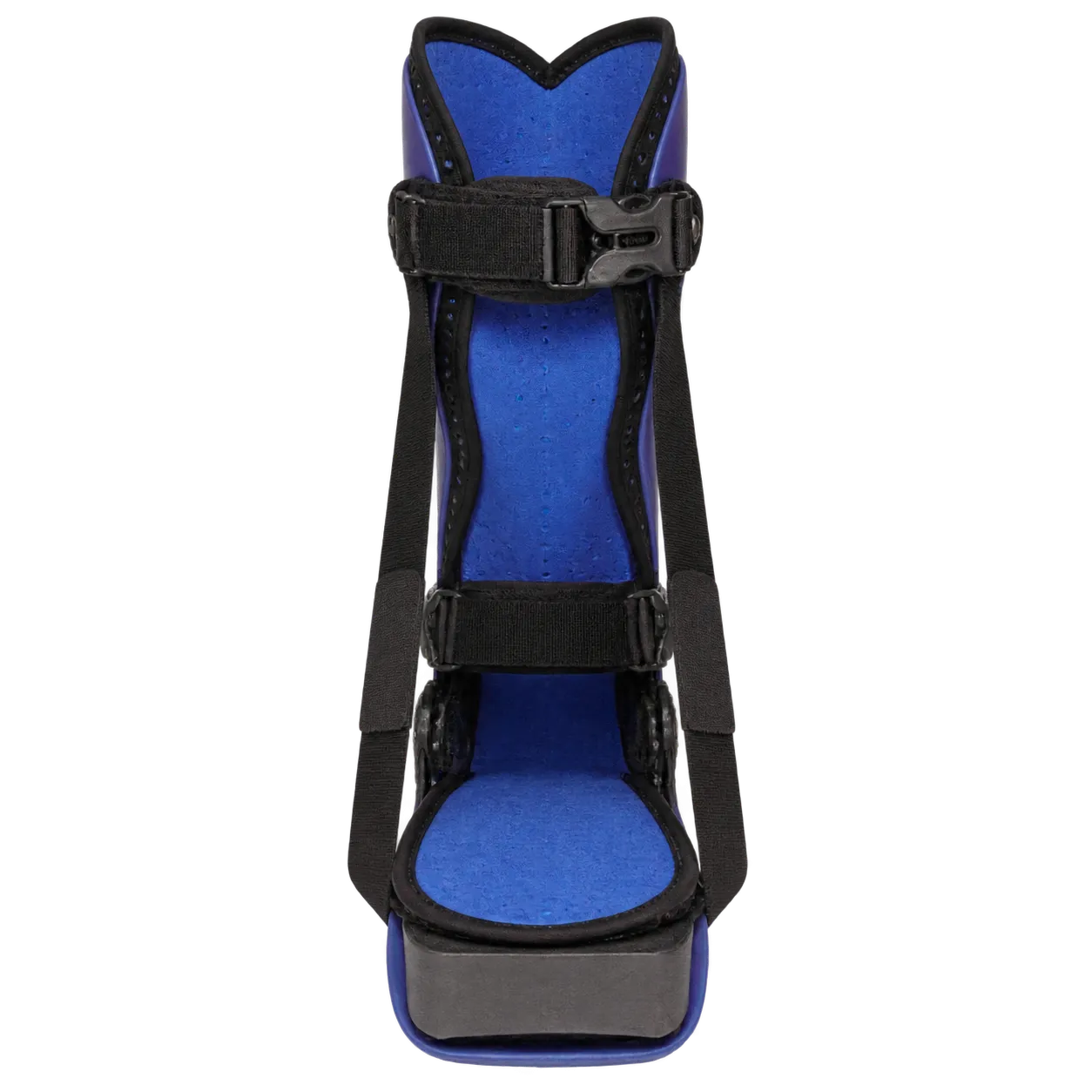
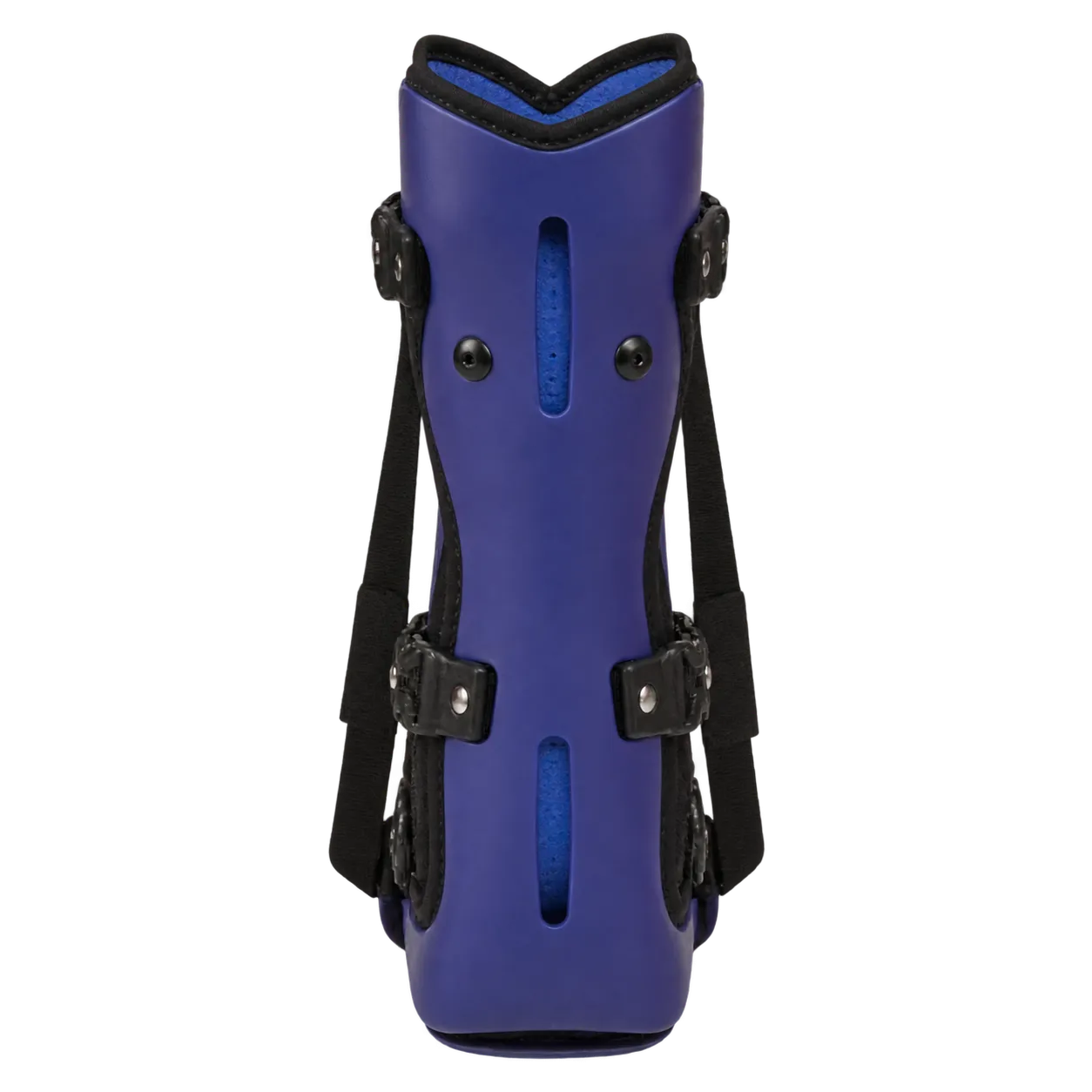
Orthopaedic and foot and ankle surgical units can consider the BL-52001 for protection after surgery or internal fixation, where the listed heel support suits a period of partial weight bearing. The open front makes it straightforward to apply over a dressing, and the high side panels hold the ankle from both sides.
Achilles tendon services should wait until the seller confirms the ankle angle. Protocols that begin with the foot pointing down need a boot that can hold that position, and nothing on this datasheet provides for it. If the angle is confirmed as suitable, the boot should still be checked against the service's own protocol.
Stroke and neurological rehabilitation units see foot drop daily, and the datasheet lists foot drop, gait training and walking training in neurological rehabilitation. Orthotists and physiotherapists should assess each patient before using an off-the-shelf boot, including ankle range, spasticity, sensation, and skin. Where the boot holds the ankle at a suitable angle, it may serve during early gait training while a longer-term orthosis is considered.
Physiotherapy services can use it during supervised walking practice. The TPR sole is listed for anti-slip grip, which supports patients relearning to walk, though sole height should be confirmed before stairs practice.
Community neurological and orthotic services may see patients using the boot at home. For patients with reduced sensation, skin checks under the padding and straps matter most.
NHS procurement routes ask for the device class and the declaration of conformity, and public buyers in other countries ask for the equivalent. The conformity documentation those procurement routes require is issued by the manufacturer and provided by the seller.