
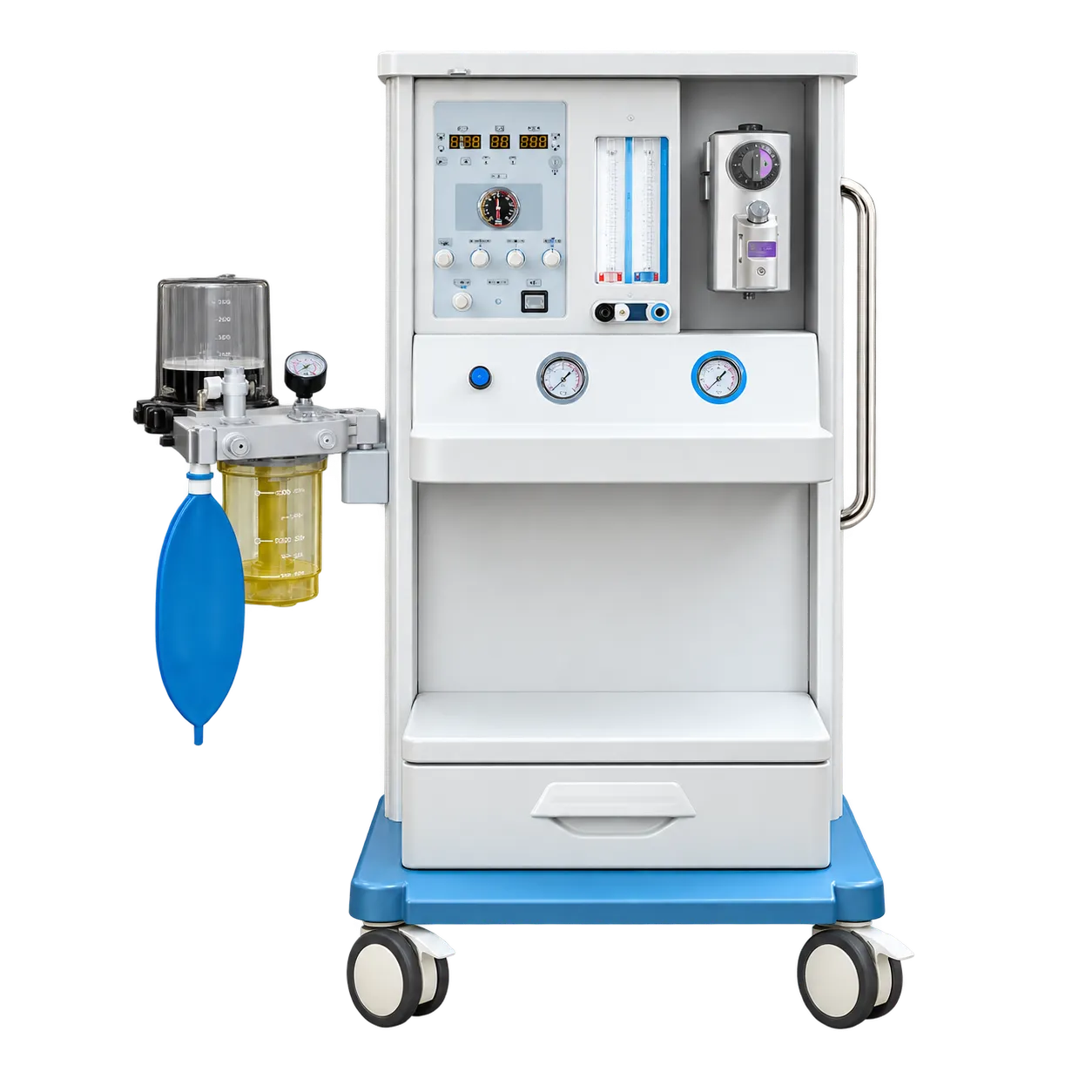
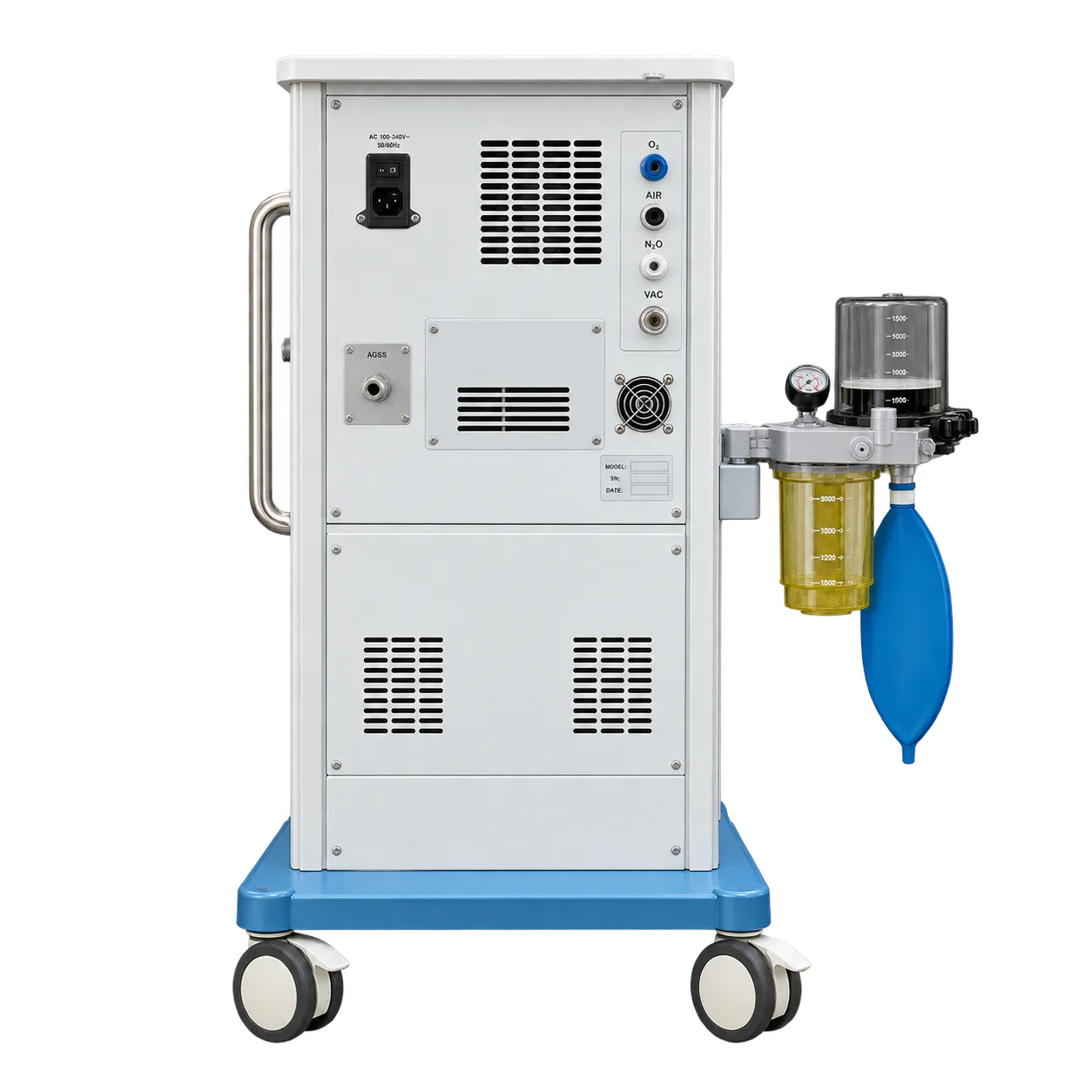
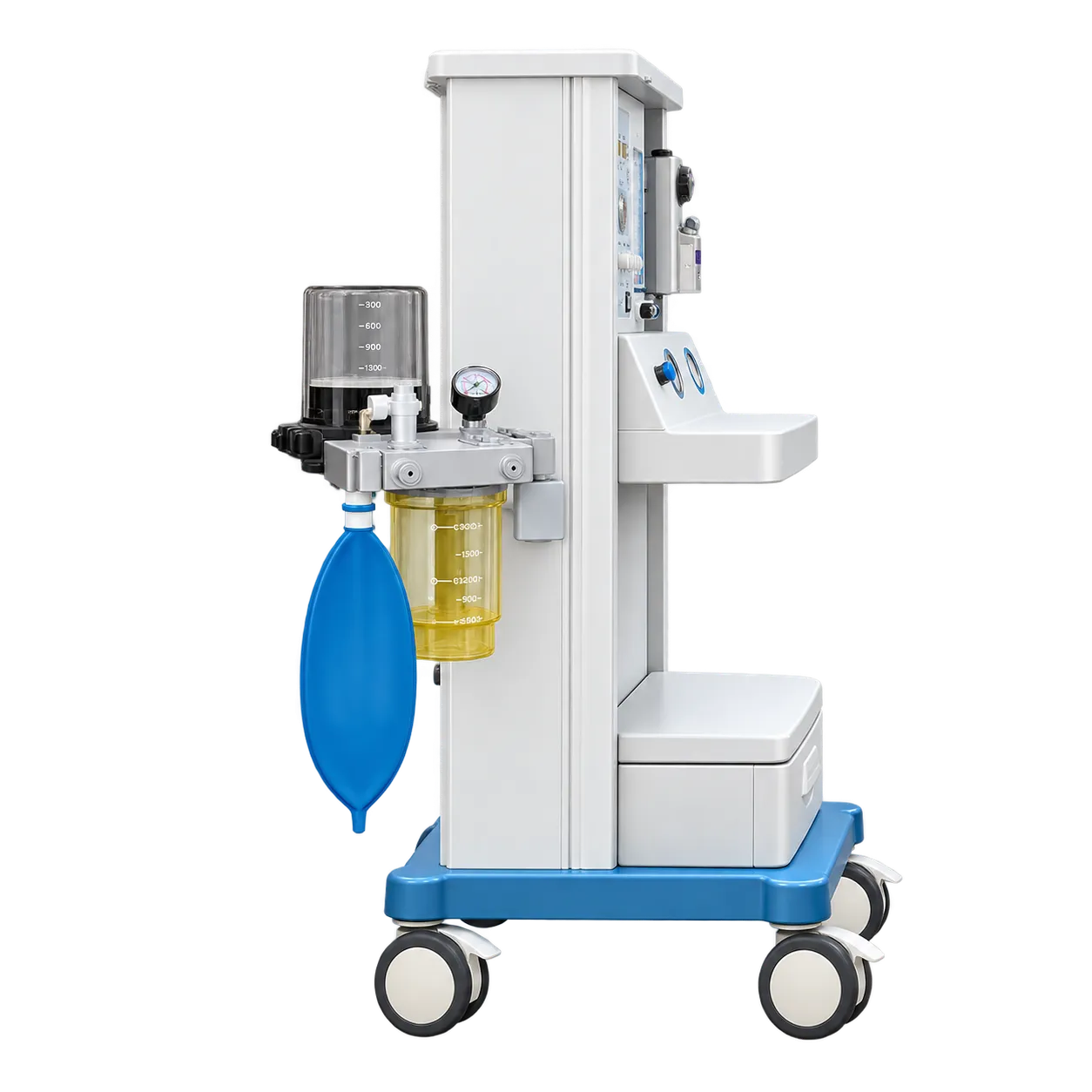
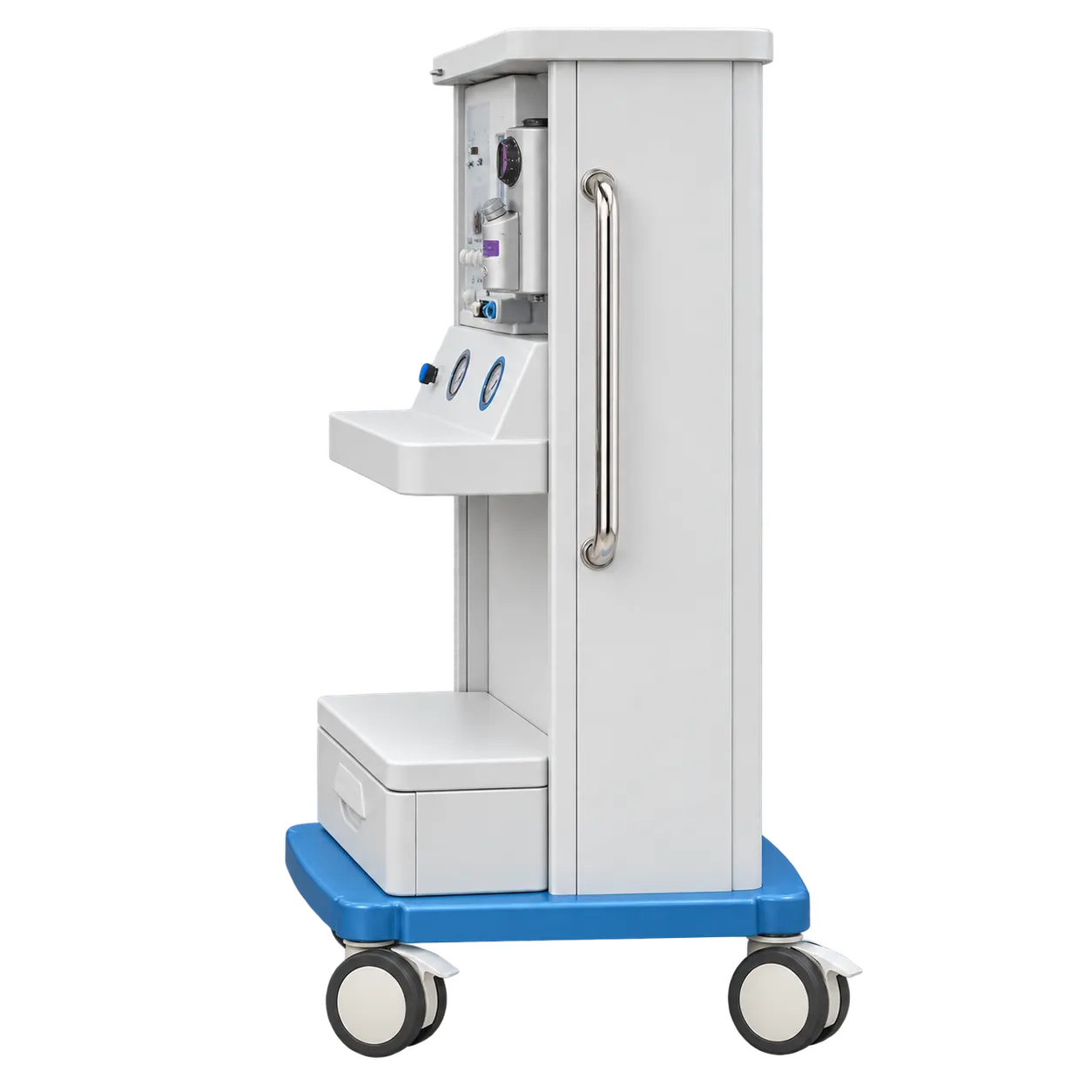
Straightforward adult anaesthesia is what this machine is built for, and within that scope it functions. A ratio of 1:2 is the ordinary setting for a healthy patient under general anaesthesia, and the published band accommodates it with room on either side. Six modes are given, running from assist control and IPPV through SIPPV, IMV and SIMV to bagging, and they cover a general list where nothing out of the ordinary is asked of the ventilator.
The boundary is respiratory disease. Obstructive conditions demand a longer expiratory phase to prevent gas trapping, and settings of 1:4 or 1:5 are routine rather than exotic in those patients. This machine stops at 1:3. A department running a general surgical list will meet asthmatic and COPD patients regularly, so the question is not whether the limitation will be encountered but how often, and what the plan is when it is. That is a conversation worth having before a machine is bought rather than after one is installed.
Everything else follows the pattern of the Blackstone base machines. Air is absent from the flowmeter block, leaving nitrous oxide to dilute every mixture. Volume starting at 50 ml leaves infant work beyond the range. PEEP does not appear among the modes, despite being applied routinely in modern practice. Capnography is unmentioned here as well, and British anaesthesia requires it continuously.
Medigear.uk settles the inspiratory band, the PEEP question, and how capnography is handled before this entry-level anaesthesia unit reaches any theatre.