
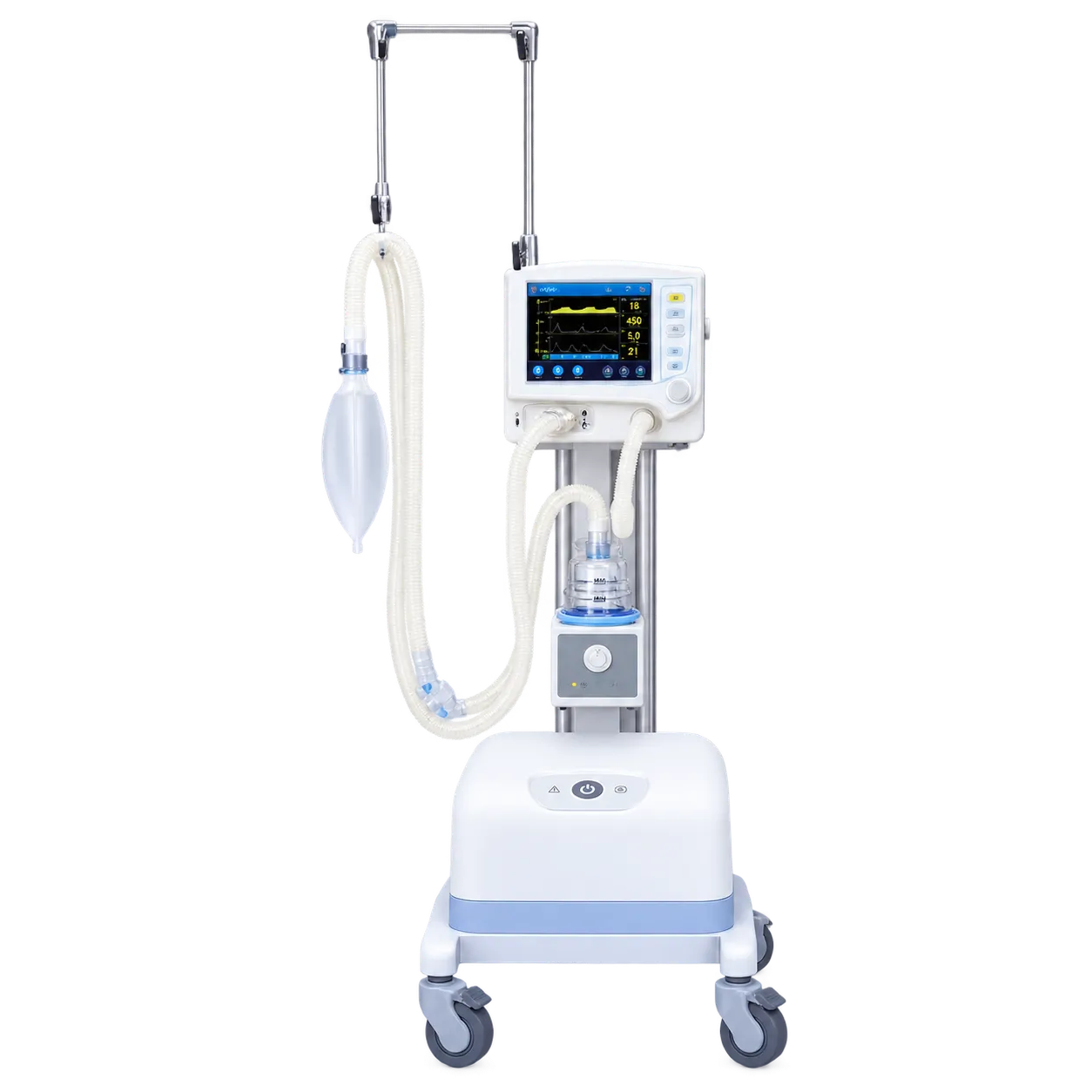
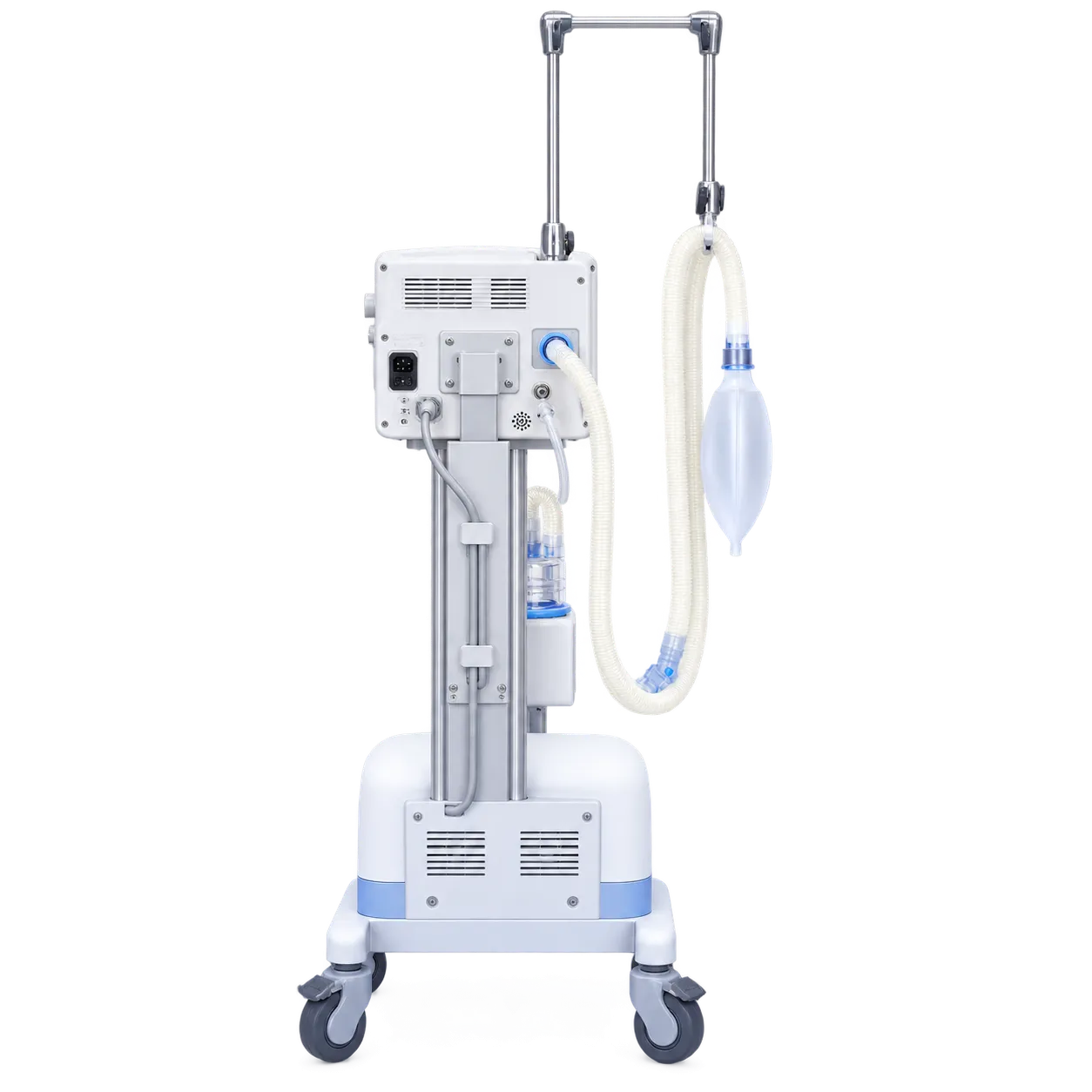
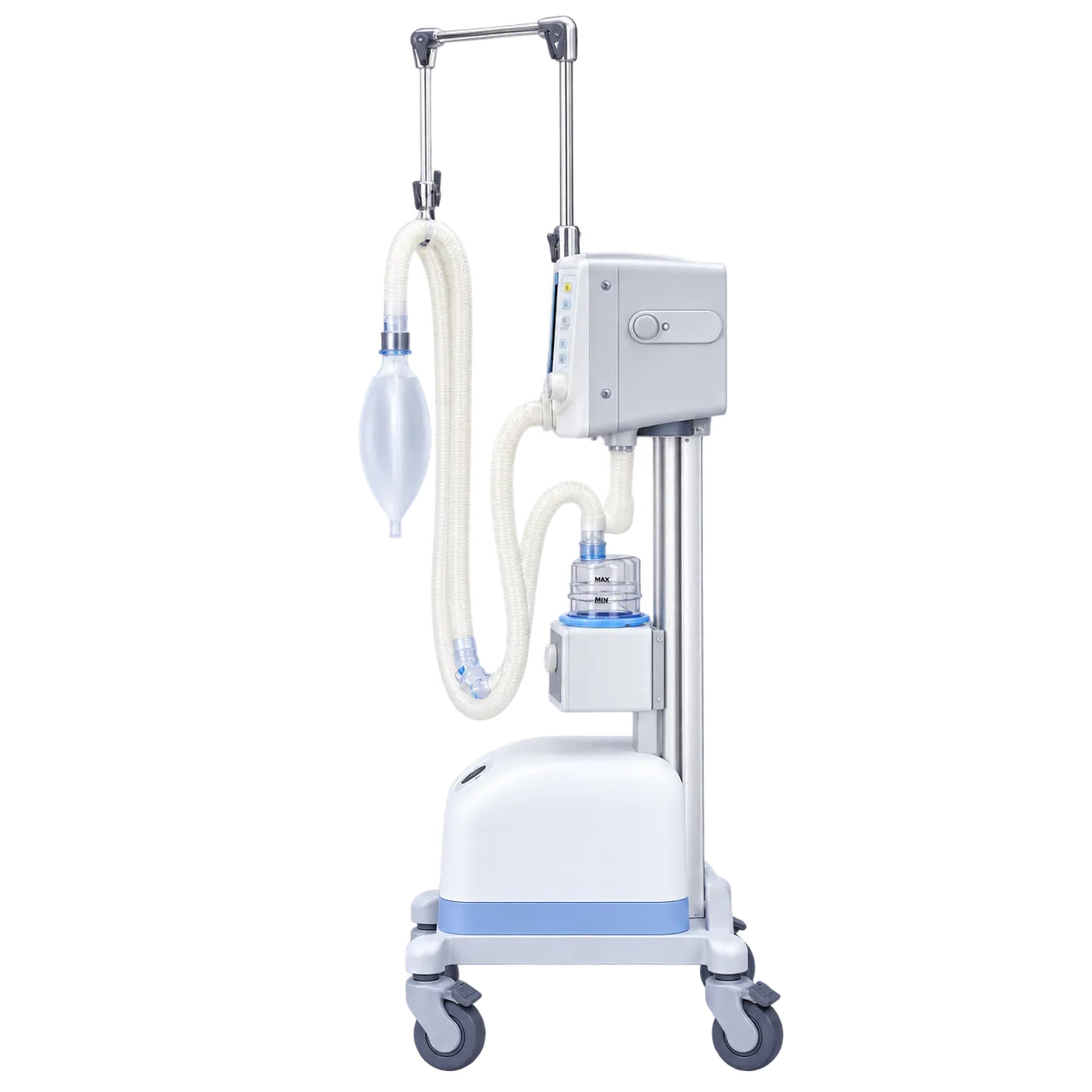
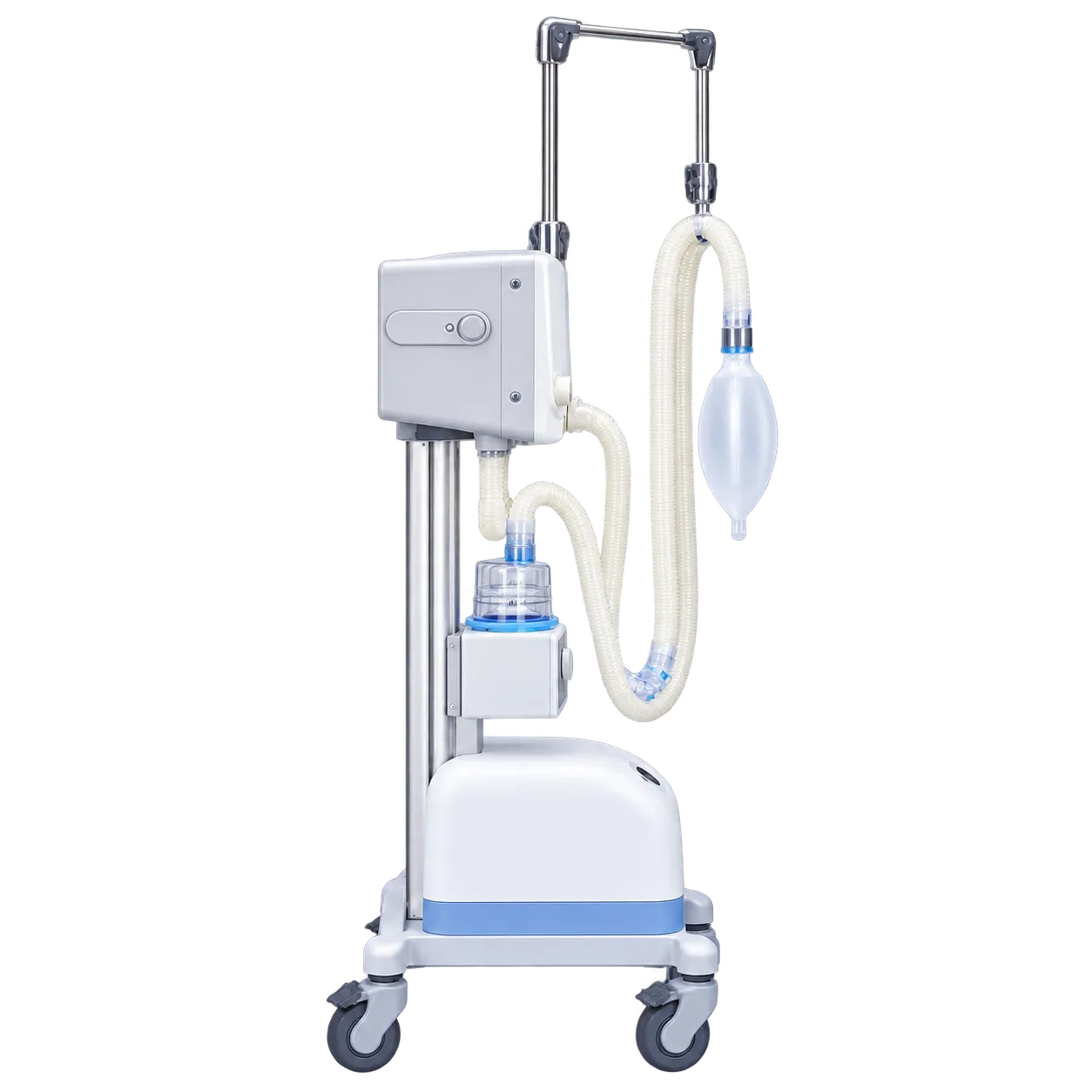
High-flow oxygen therapy is why you look at this critical care ventilator rather than the HS-320. When a patient becomes hypoxaemic, you start with oxygen, then high flow, then non-invasive ventilation, and then intubation if those fail. Each step buys time, and each can sometimes avoid the one that would otherwise follow. A ventilator delivering high flow, as well as the rest, means one machine follows a patient up that ladder and back down it again, rather than swapping over as the requirement changes. By contrast, non-invasive ventilation is optional here and standard on the HS-320, which carries six non-invasive modes versus the two offered here as extras. A department buying for non-invasive work should compare the two carefully rather than assume the lower model number means the lesser machine. On that particular capability, it does not.
The patient range warrants noting too. Adult, child and infant are claimed, whereas the HS-320 claims neonate, and those are different populations. An infant is not a newborn. A machine specified for infants may fail to deliver the very small volumes a premature baby requires, and that gap is wide rather than a technicality. Since no tidal volume range is published here at all, none of that can be judged from the sheet, and it is the first figure to request.
Medigear.uk obtains the volume range, the PEEP range, the gas source and the alarm set before this critical care ventilator reaches any unit at all.