
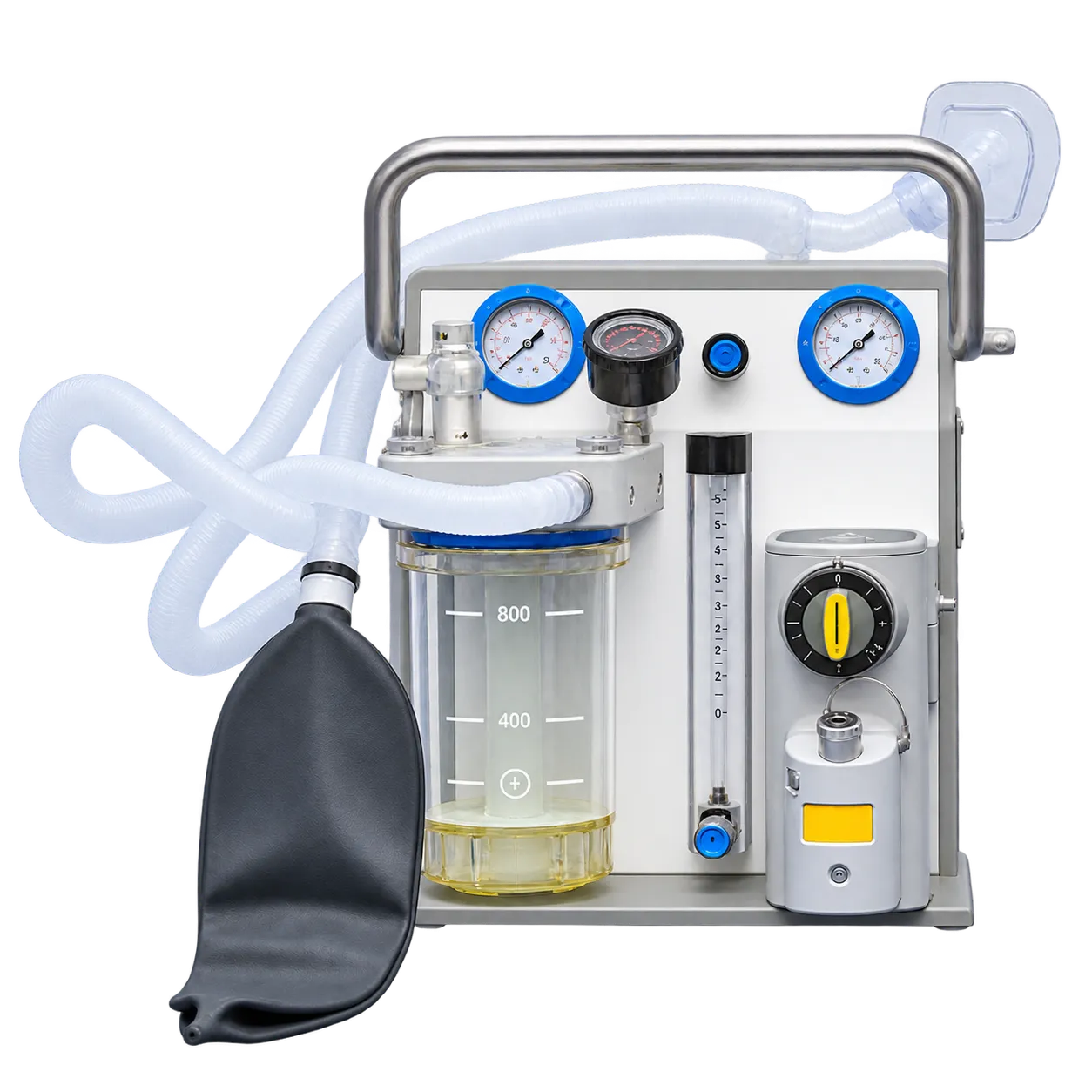
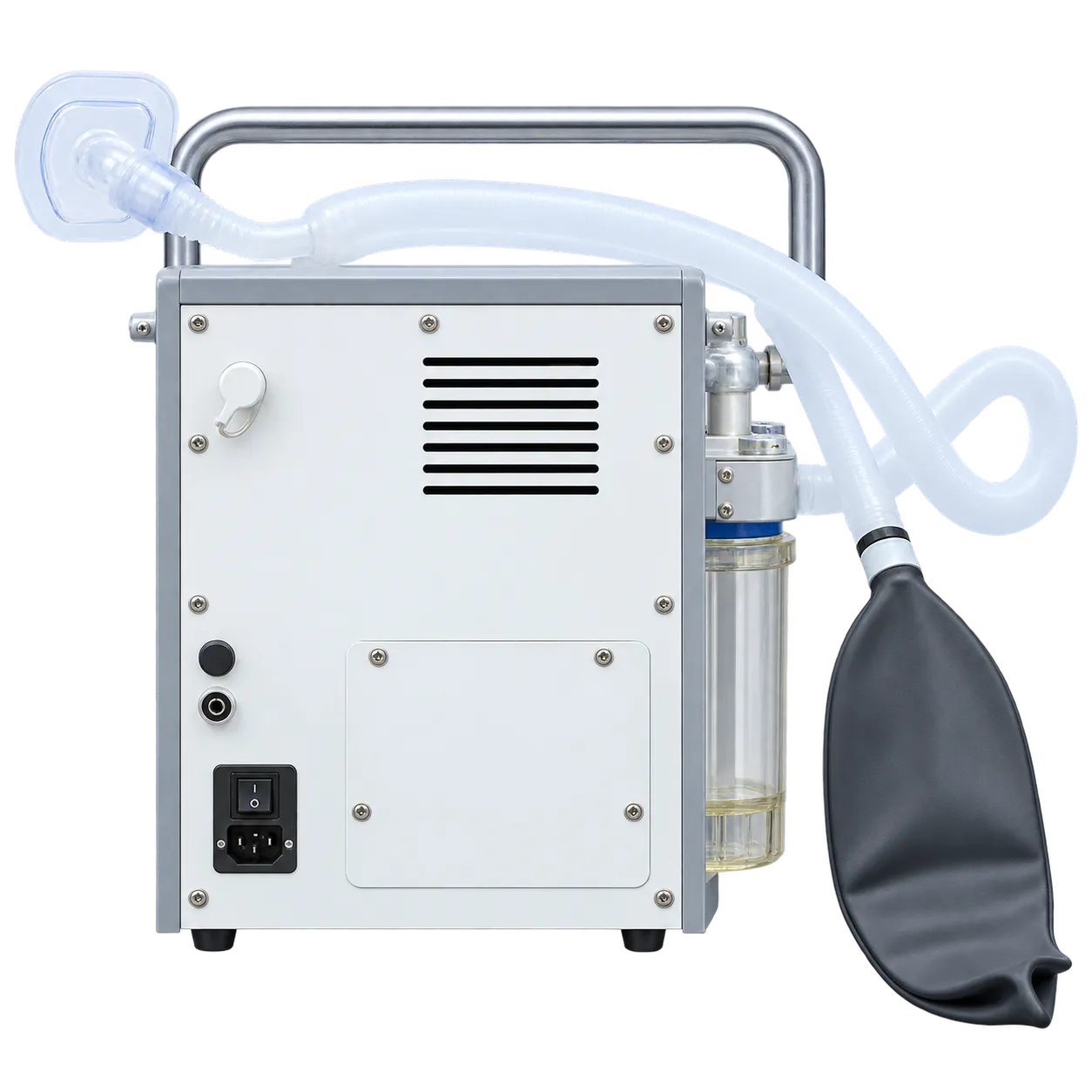
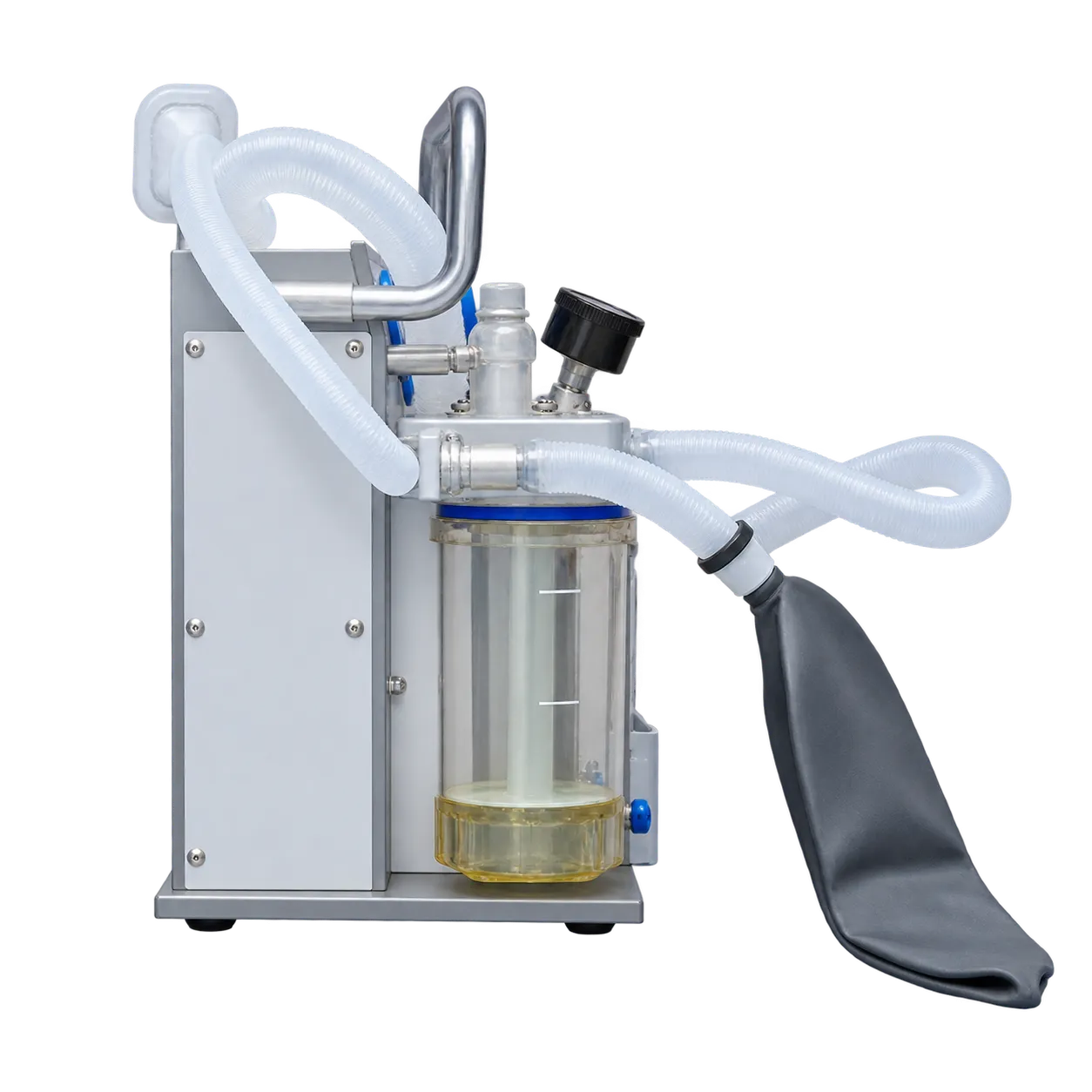
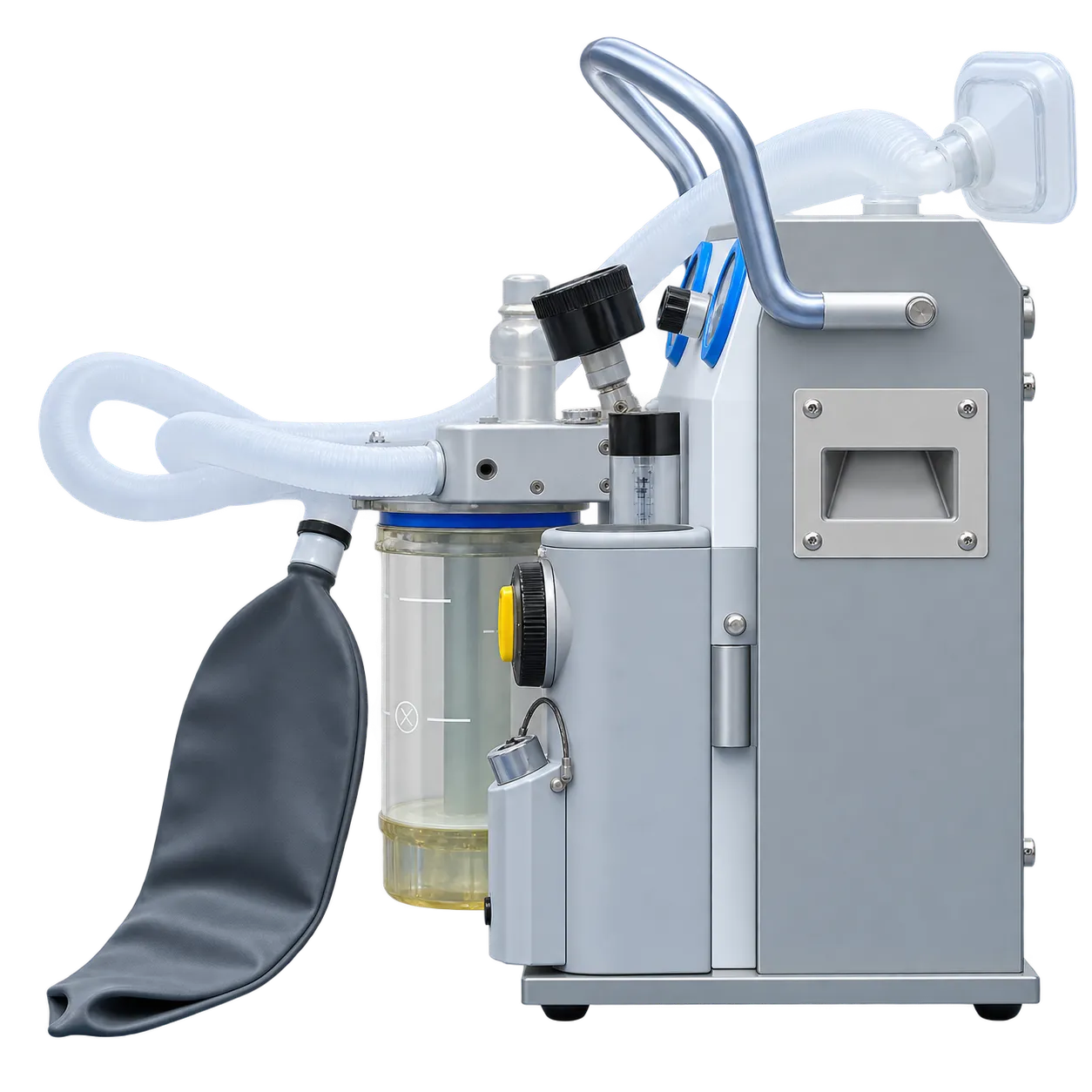
Placing this portable anaesthesia machine correctly matters more than assessing it against theatre equipment. A hand-ventilated oxygen-and-one-agent machine belongs where a workstation cannot go: a remote site, a field setting, a patient transfer, or a facility with no piped gases beyond a cylinder. Judged against a modern workstation, it falls short on every count by which a workstation is measured. Judged against having nothing at all, it is a working anaesthetic machine, and that is the comparison the manufacturer presumably intends a buyer to make.
The vaporiser range is the limitation a UK service would notice first. Zero to 5 per cent covers isoflurane, halothane and enflurane comfortably. It does not reach the 6 to 8 per cent ordinarily used for inhalational induction with sevoflurane, and that is the standard technique for children, and for adults in whom venous access cannot readily be had. A department planning gas induction needs that settled before ordering. The slot type and the concentration range together decide which agents can be given at all, and neither is something to discover after delivery.
Scavenging is the other thing missing from the sheet entirely. A machine used away from theatre has no piped extraction, so exhaled volatile agent enters the room air and stays there. Occupational exposure limits apply wherever anaesthesia is given, not only in theatres, and nothing here describes how waste gas is collected or where it goes.
Medigear.uk establishes the scavenging arrangement, the breathing system, and the two unexplained figures before this portable anaesthesia machine is supplied.