

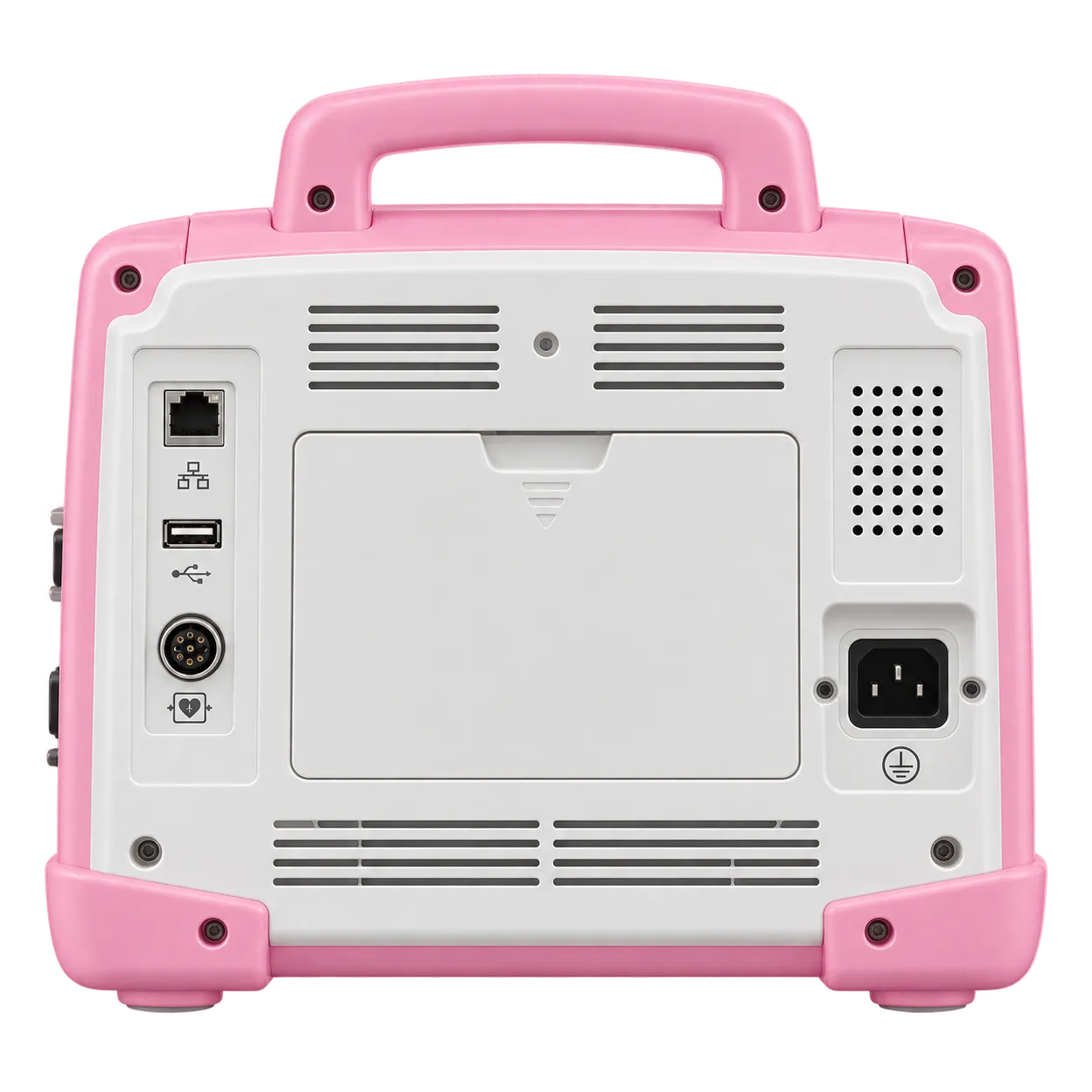
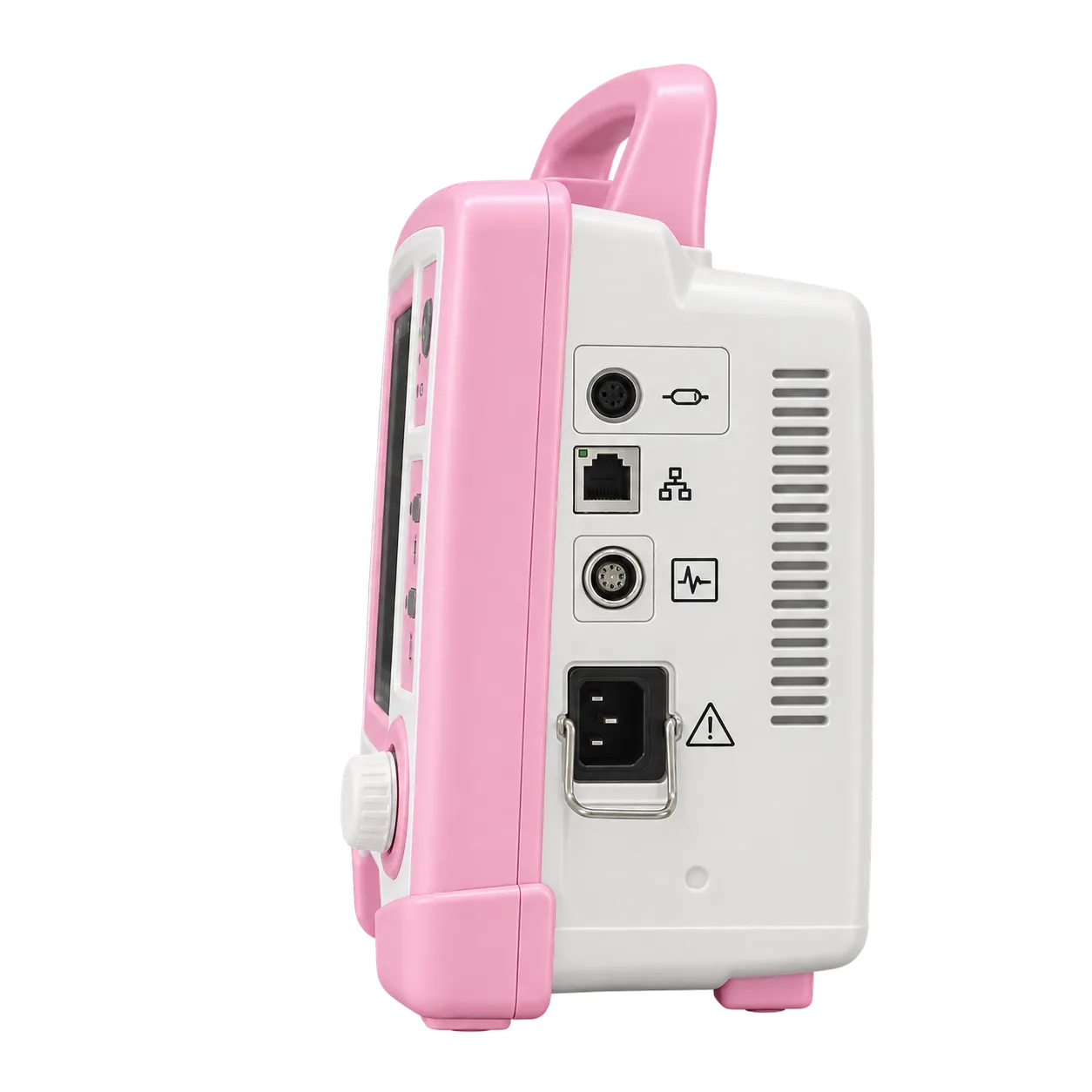
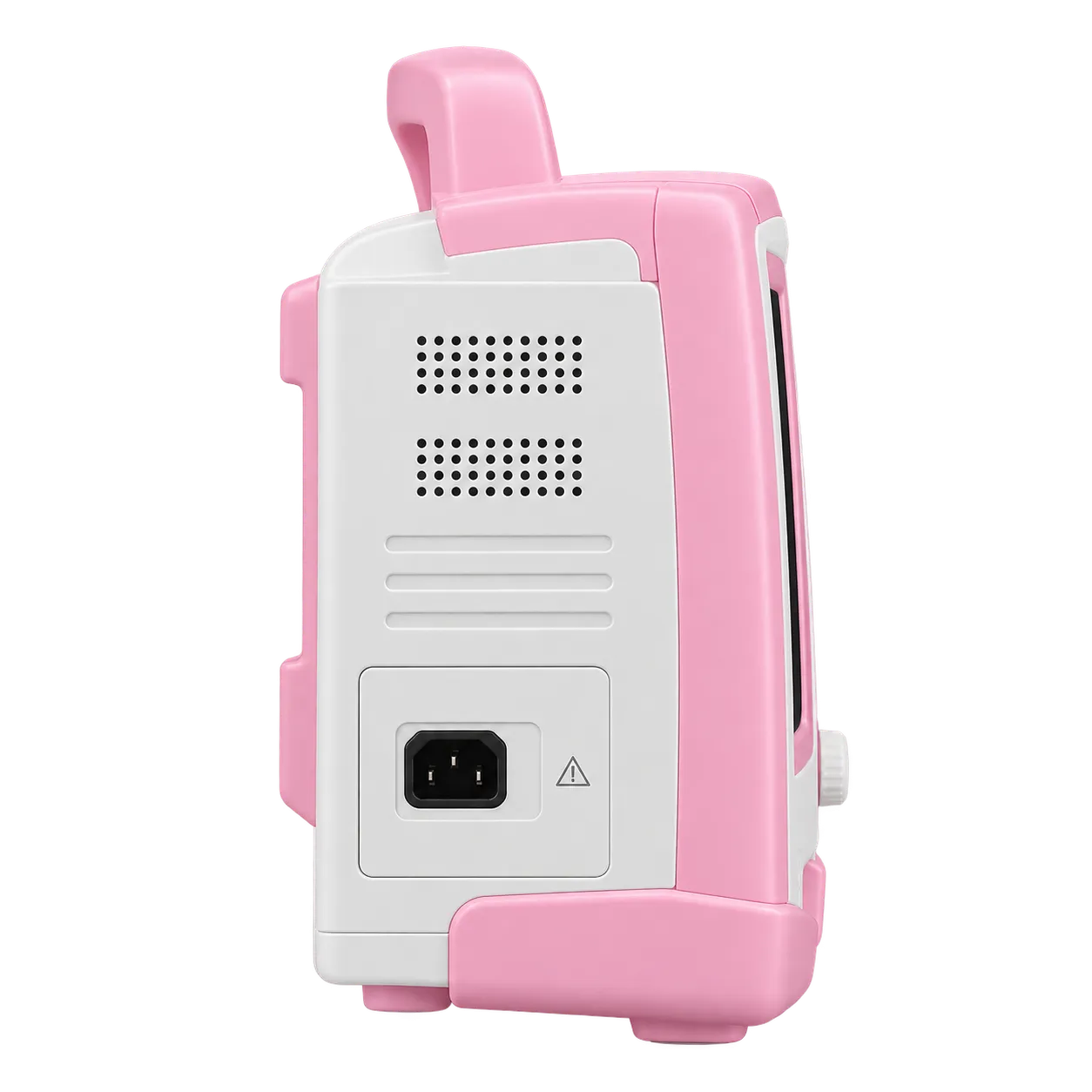
In neonatal intensive and special care, the Blackstone infant monitor keeps babies under continuous observation in incubators, cots and open warmers. ECG electrodes go on the chest, the SpO2 sensor wraps around a hand or foot, the temperature probe is placed, and a properly sized cuff goes on an arm or leg for intermittent blood pressure readings. Then set alarm limits for that baby before leaving the monitor to watch.
On paediatric wards and in high-dependency bays, the same set-up serves infants who need watching between routine observations, such as babies on oxygen or recovering after a procedure. Its carry handle lets staff move it to whichever cot needs it next, and its pink housing makes it easy to spot on a busy ward or in an equipment store.
How safe the arrangement is depends on the care around it. Staff check sensor sites when the baby is handled, use a cuff that fits the limb for a dependable reading, and review limits as the baby's condition changes. Movement or a loose electrode can trigger an alarm when the baby is well, so staff respond by checking the baby and the sensor together. Limits that are too wide stay quiet through a real change, which is why they are set for each baby and revisited.
As a separate unit, it sits beside an incubator, an open warmer or a cot without altering how that equipment works. Each measurement relies on its own accessory, so electrodes, sensors, cuffs and probes are kept in the right sizes.
Home nurseries, and any setting without trained staff to answer its alarms, call for a different kind of monitor.