
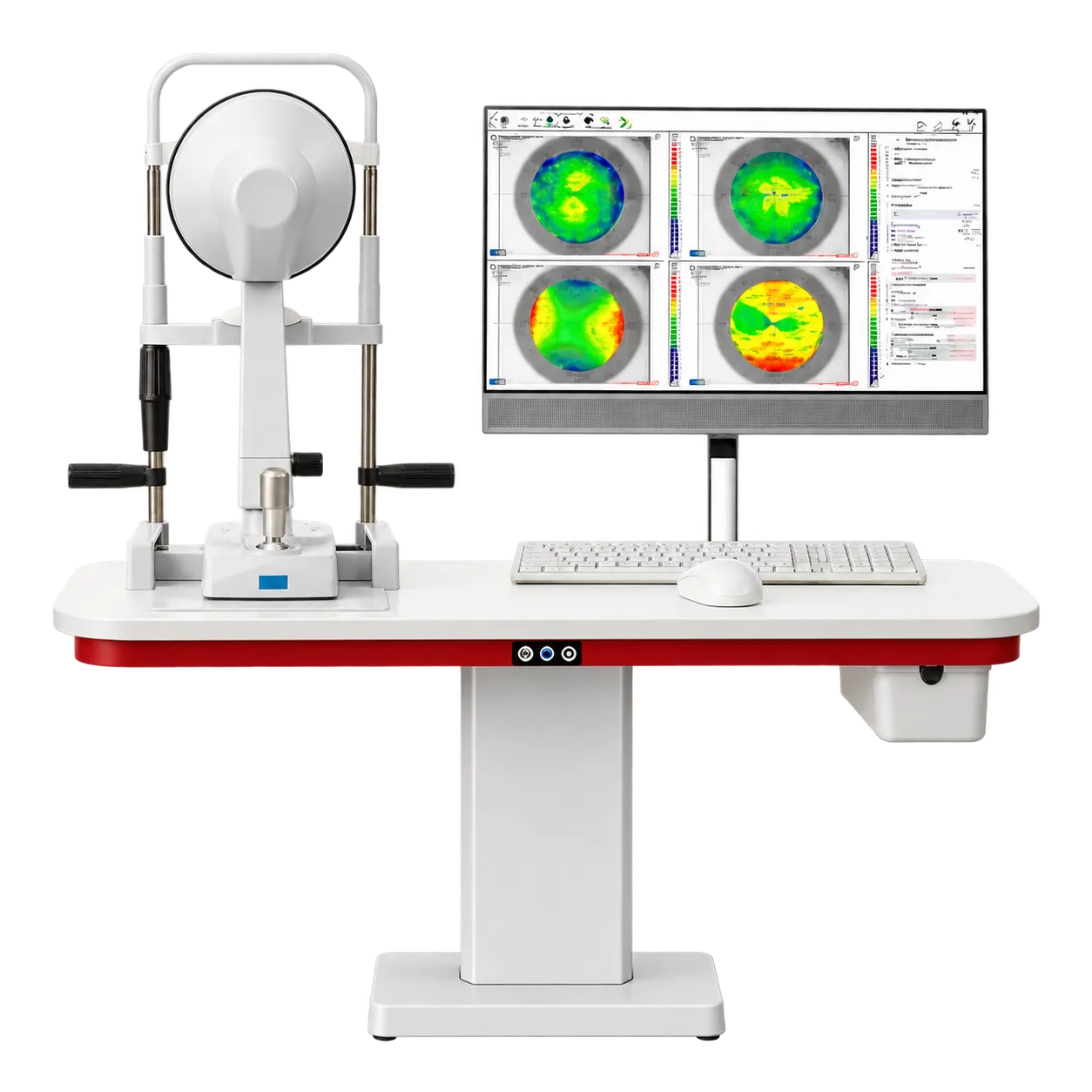
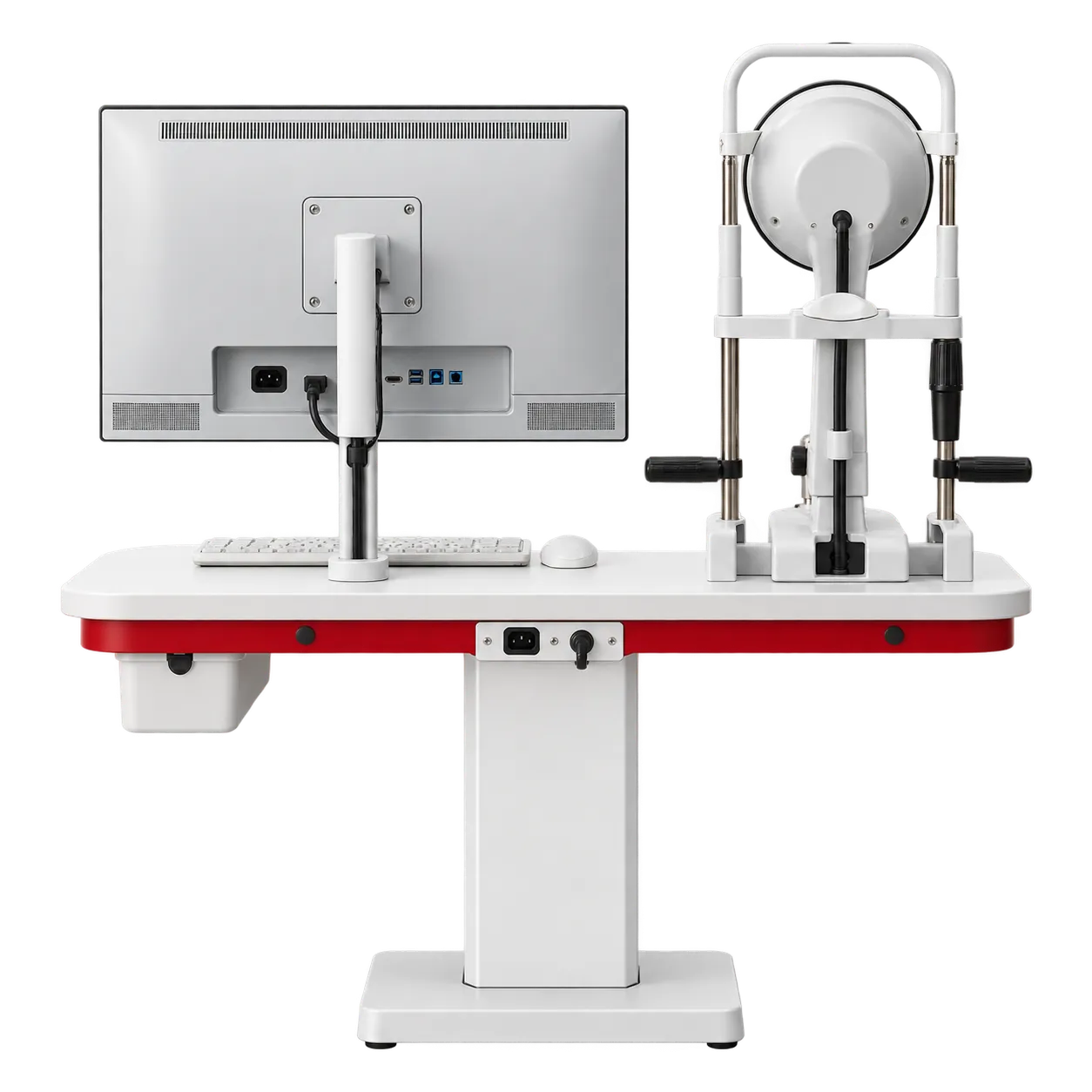
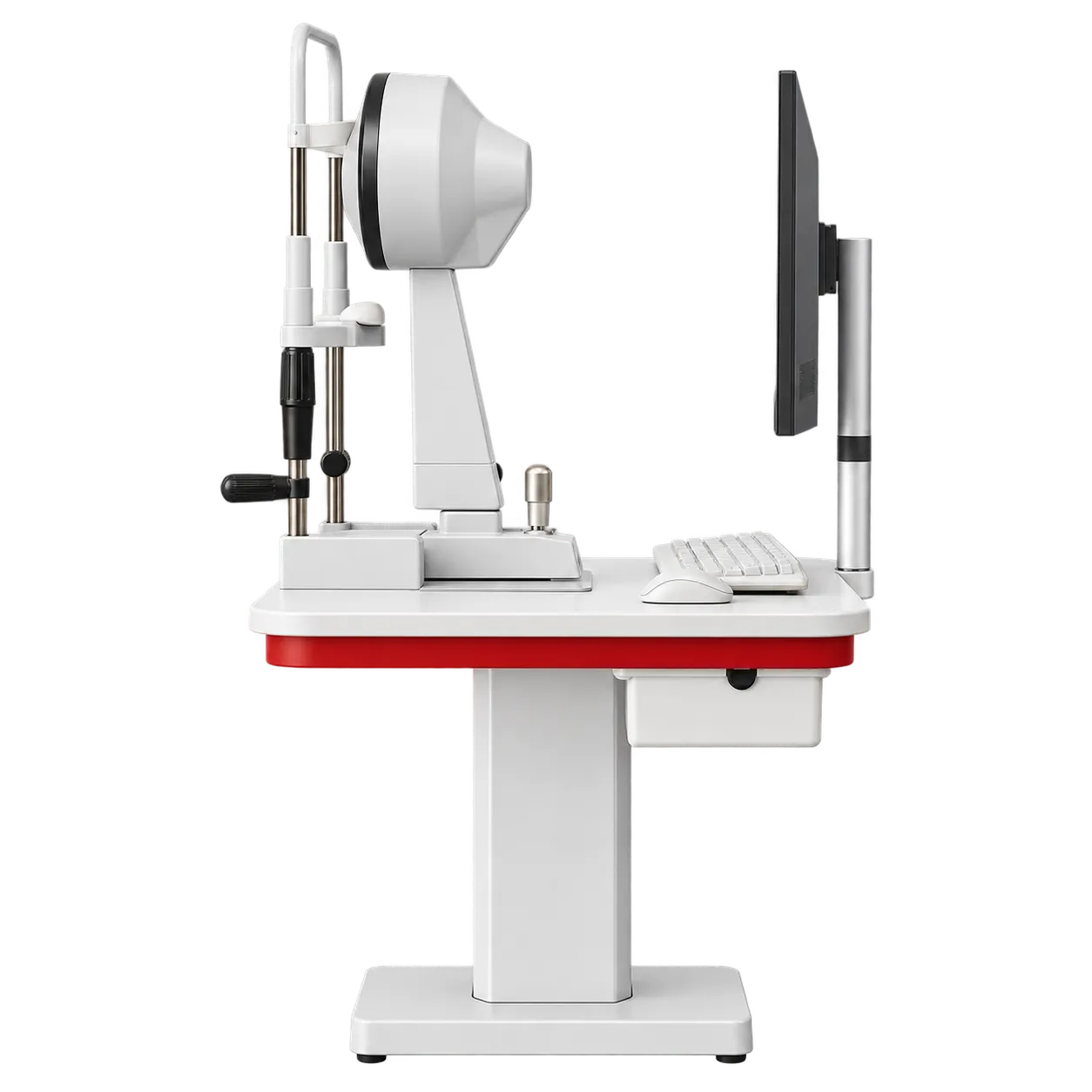
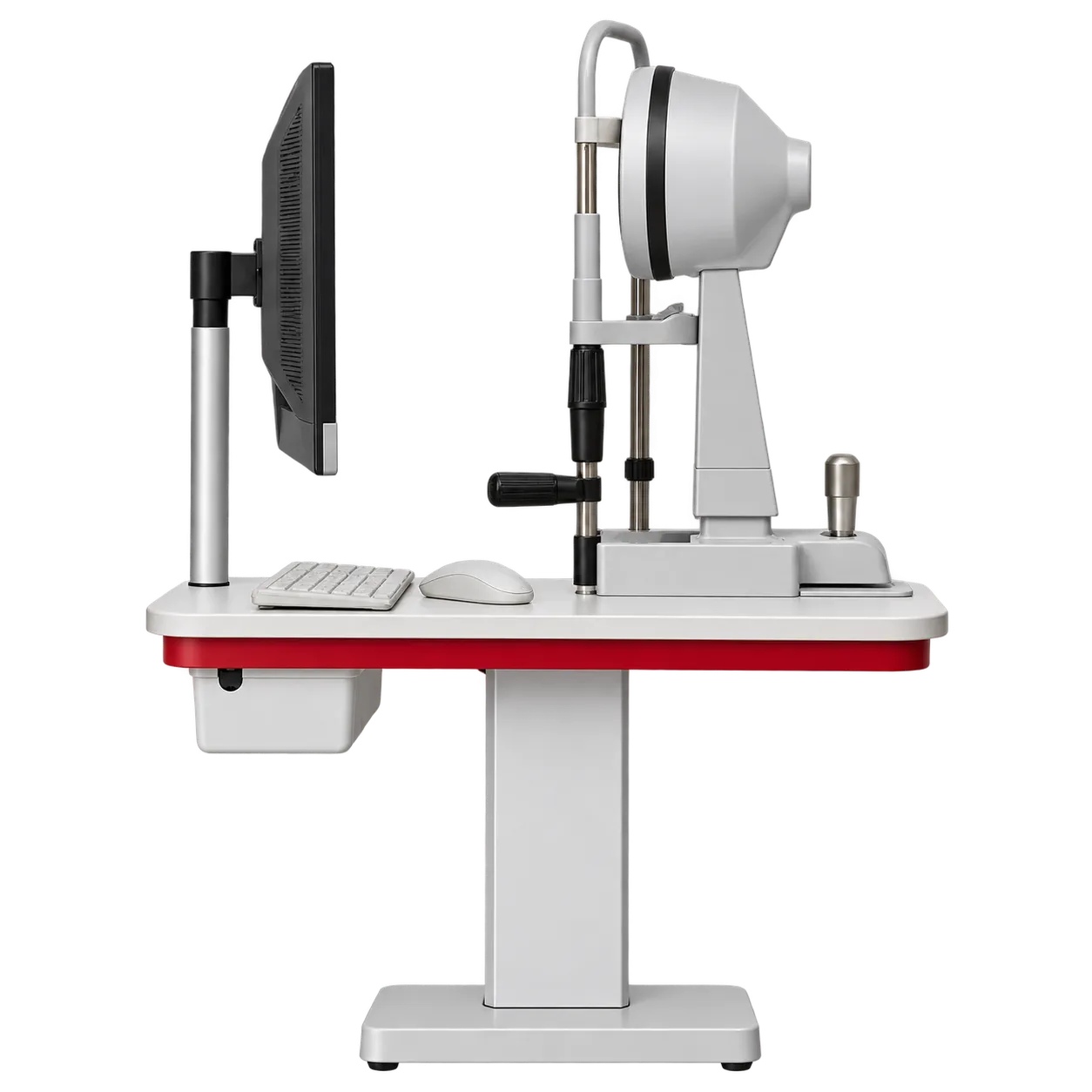
Optometry practices, contact lens clinics, ophthalmology clinics, and hospital eye departments use the Modì 02 to map the cornea. Optometrists, contact lens practitioners, ophthalmologists, and ophthalmic technicians take the measurements, and the maps inform lens fitting, screening,g and assessment before refractive surgery.
The instrument earns its place where room is short. It weighs 4.5 kg, stands 480 mm high on a 315 × 255 mm footprint and runs on power drawn from its computer through USB. A small table in a contact lens room, or a corner of a shared consulting room, is enough to run it. A practice that works across several rooms can carry it between them with a laptop, so one topographer serves more than one clinic session.
In contact lens work, Phoenix simulates rigid lens fits on the measured cornea, proposes designs by autofit from cornea heights,s and keeps custom lens sets as templates. Keratoconus screening indicates the risk of ectasia before refractive surgery, and difference maps follow a cornea from one visit to the next. Zernike analysis summarises the optical quality of the anterior surface, including corneal spherical aberration. Pupillography under scotopic, mesopic, photopic and dynamic conditions adds pupil size and position to the same examination.
The capture routine suits staff who are new to topography. The joystick centres the eye on the live image, and the frame is taken automatically once it is in focus. Several frames follow in sequence, so a clear image is ready for analysis. Records stay in Phoenix, and DICOM 3.0 compatibility allows examinations to join an imaging workflow.