
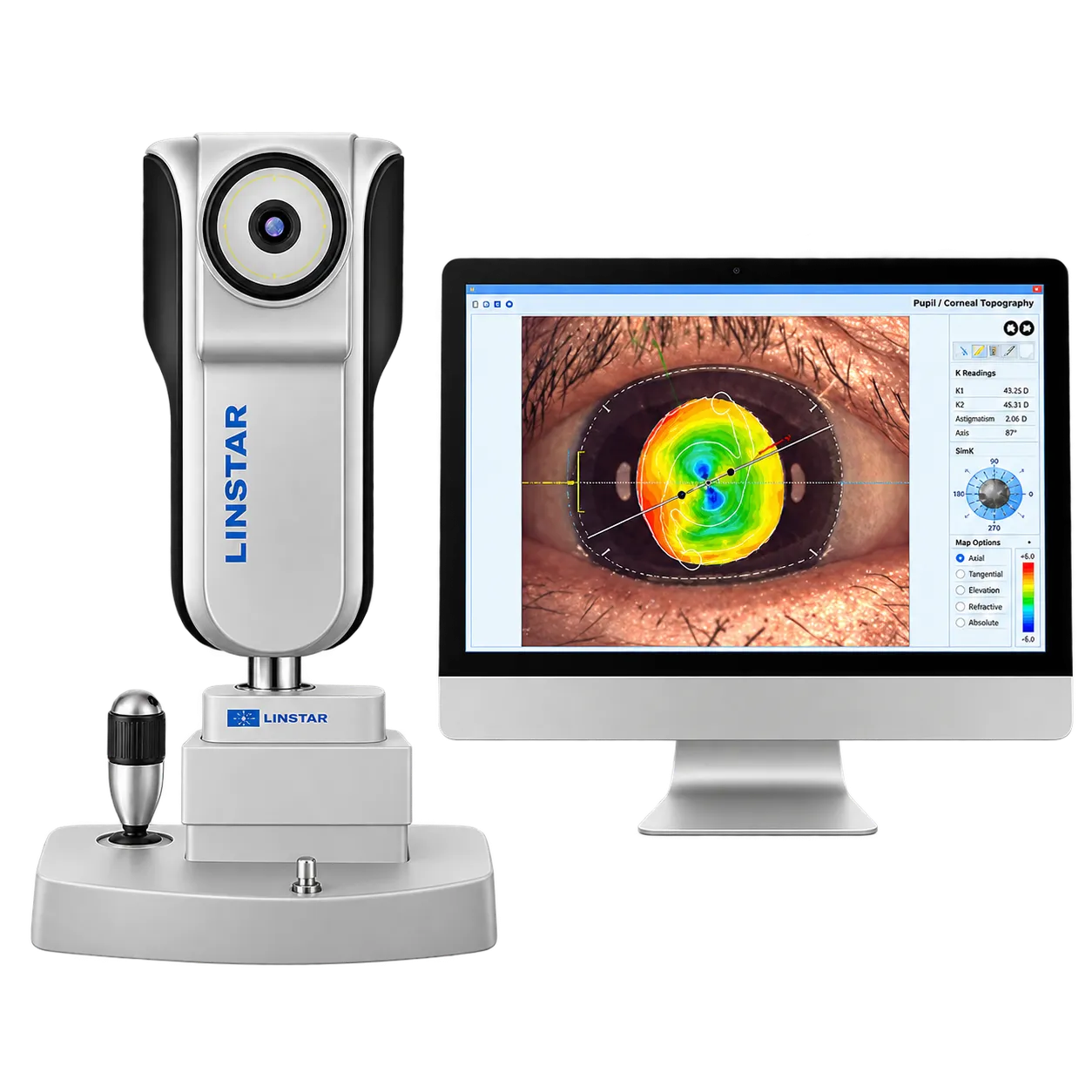
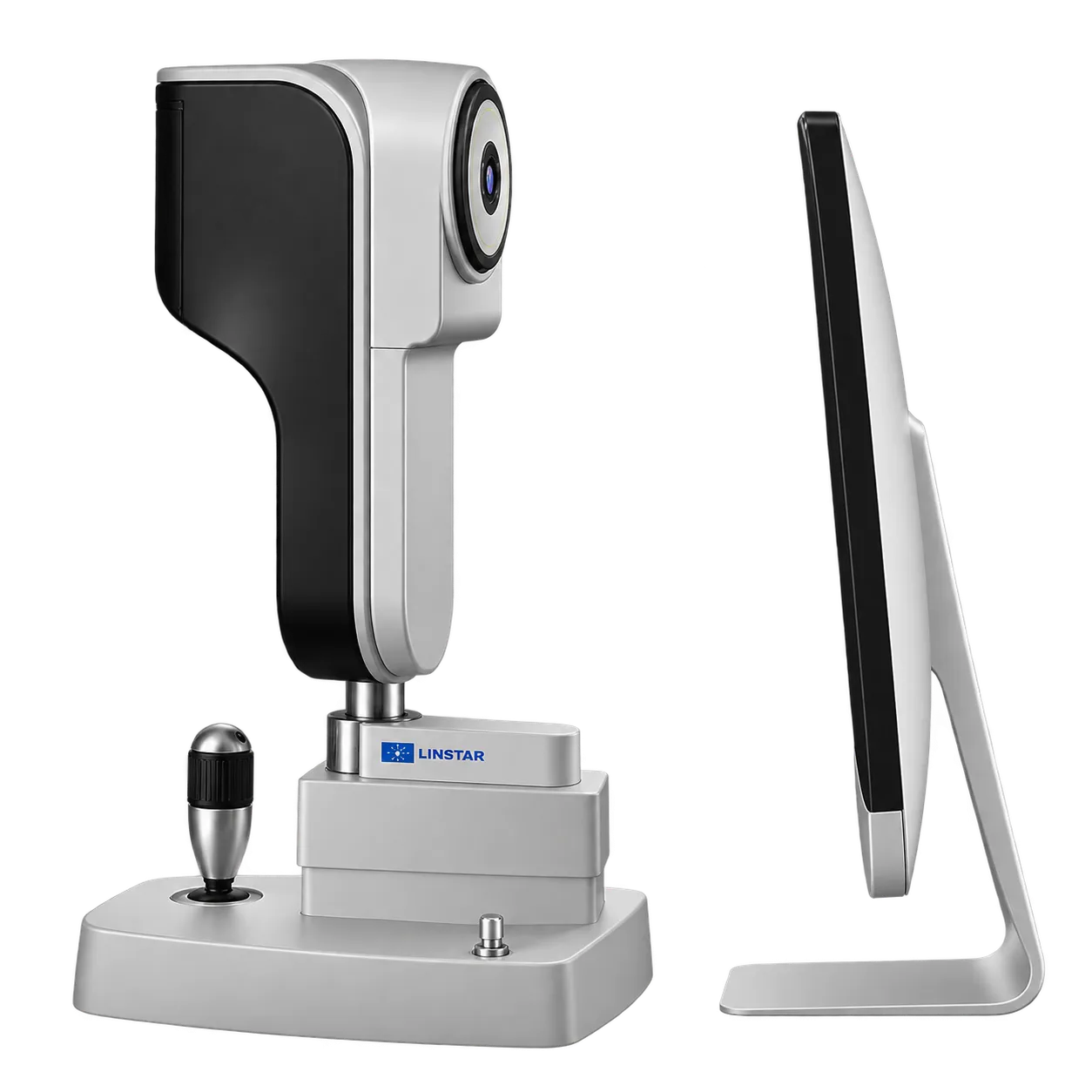
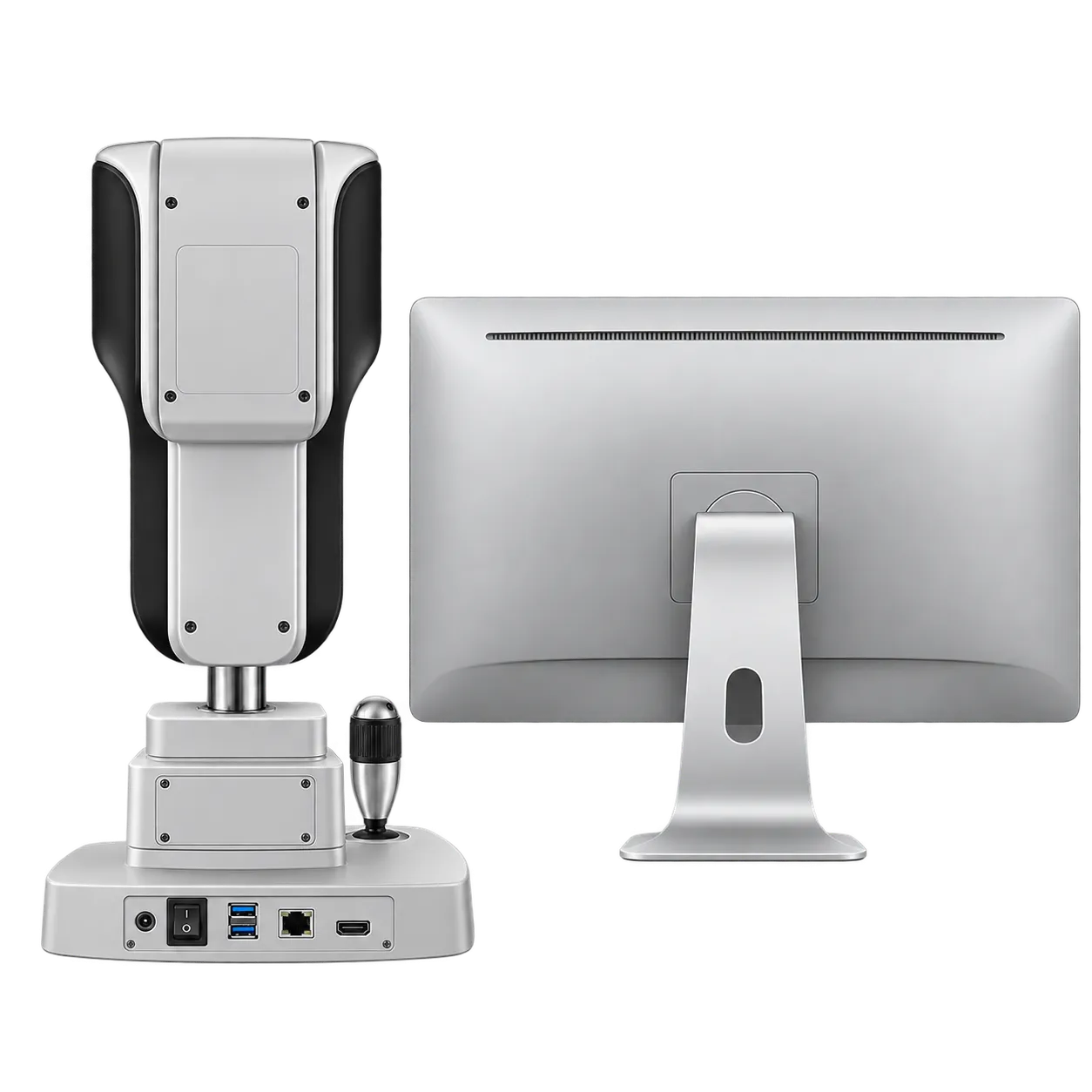
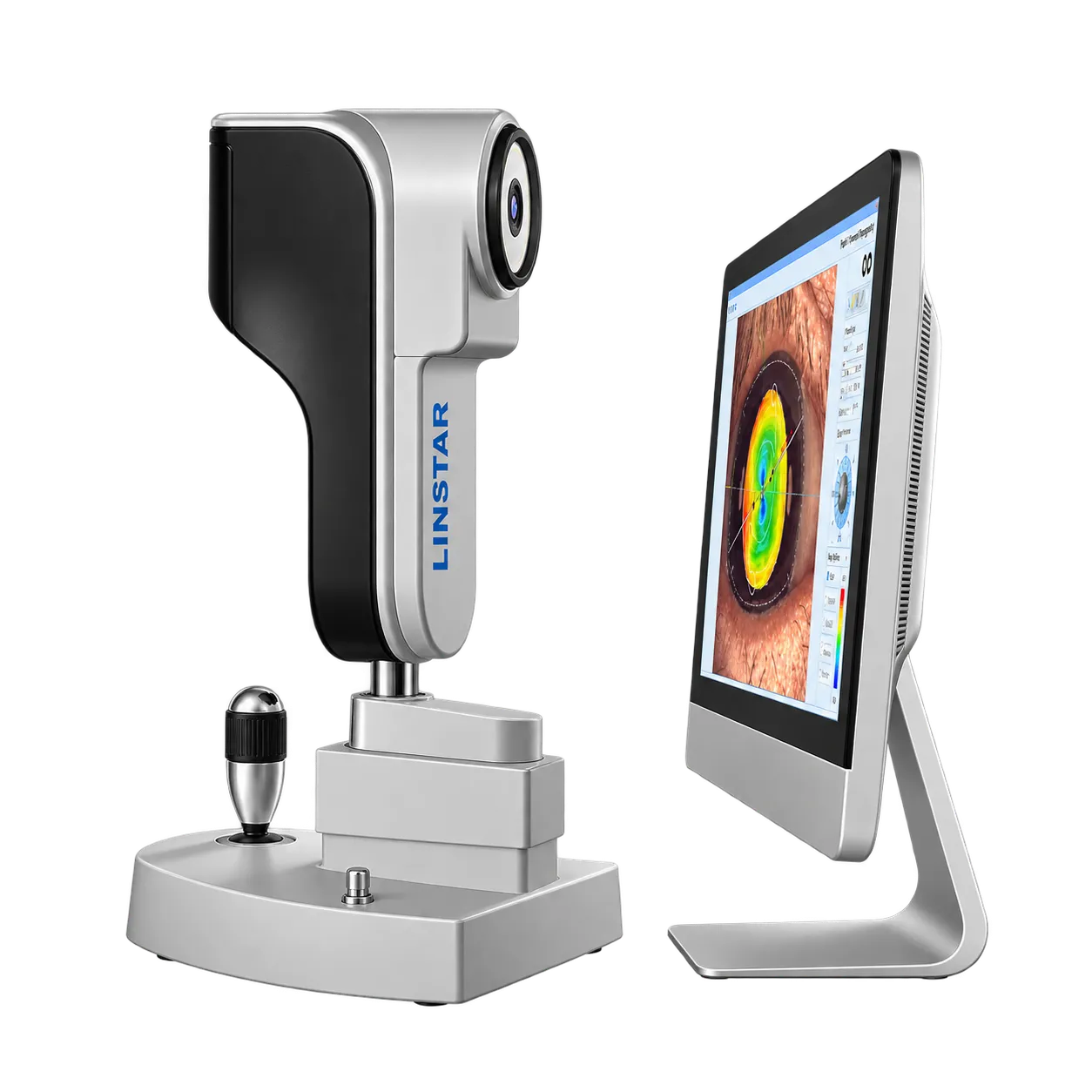
Ophthalmology clinics, cataract surgery services and eye hospitals use the LS 900 APS to measure the eye before lens surgery. Ophthalmologists, optometrists, opticians, nurses and researchers operate it, and the readings inform intraocular lens power selection, toric planning and the follow-up of corneal shape.
The LS 900 APS suits services where a biometry list is run by a small team. The APS gives hybrid positioning, and the measuring head moves autonomously during the automated measurement, so the operator seats the patient, starts the examination and watches the screen.
Axial length from 14 to 32 mm, central corneal thickness, lens thickness, keratometry, white-to-white and pupil size are gathered in one session, and phakic ranges are stated for each. EyeSuite then calculates IOL power with Haigis, Hoffer Q, Holladay I, SRK/T, SRK II and Olsen formulas, and the IOL Toric Planner supports toric cases.
Corneal work can be extended with optional T-Cone topography, which images the central 6 mm with 11 Placido rings. Pupil size and the shift of the visual axis come from digital photography. Keratometry points sit on two rings of sixteen, at 1.65 and 2.3 mm in diameter for a standard eye, and radius is reported from 5 to 10.5 mm with an axis from 0 to 180°. In vivo repeatability is stated at one standard deviation for each parameter, ±0.035 mm for axial length among them, so a service can judge each reading against a published figure. The unit weighs 6.6 kg and sits on a stable table in a pre-test room, with an external computer running EyeSuite. Its supply is 100–240 V at 50–60 Hz, and it is classified to EN 60601-1.