
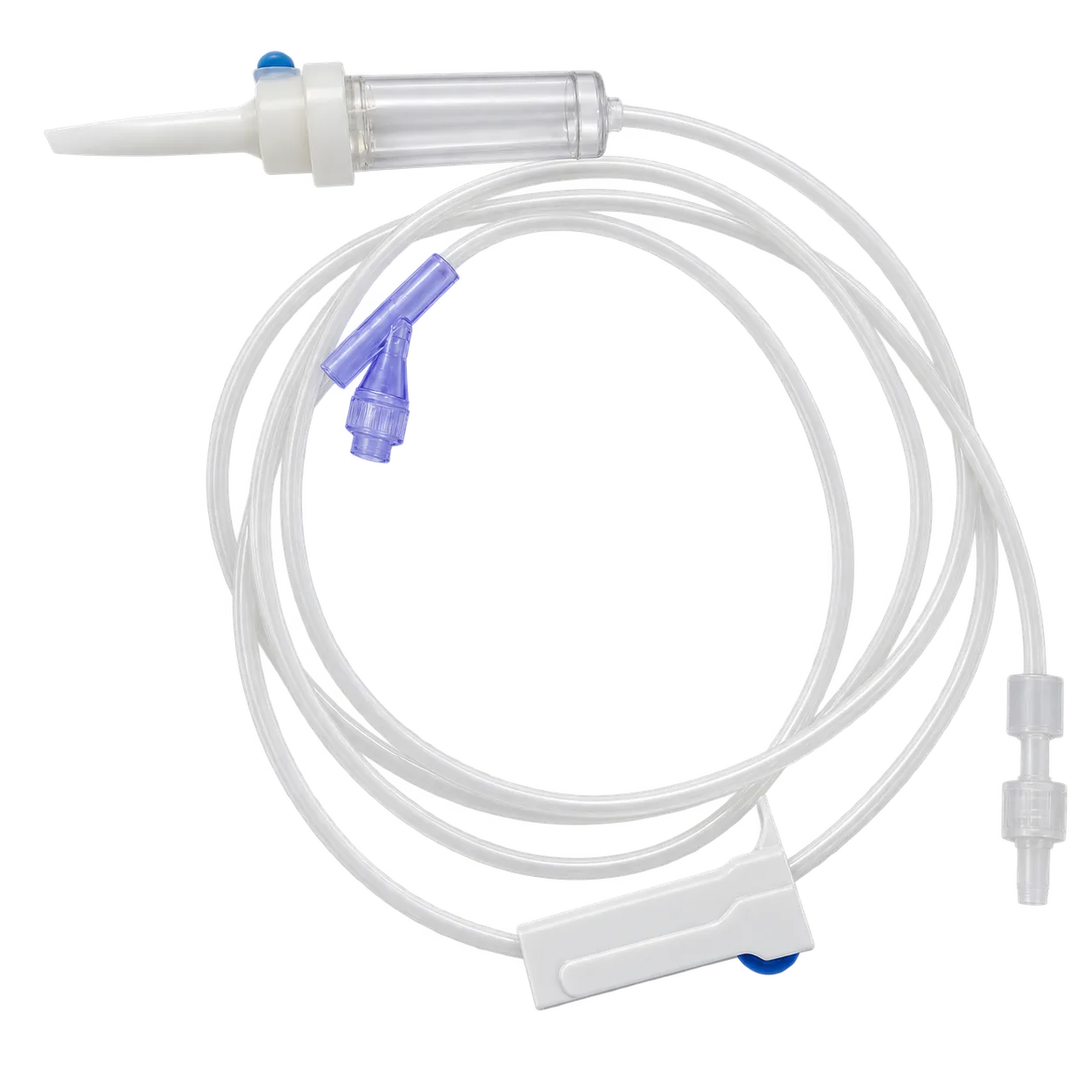
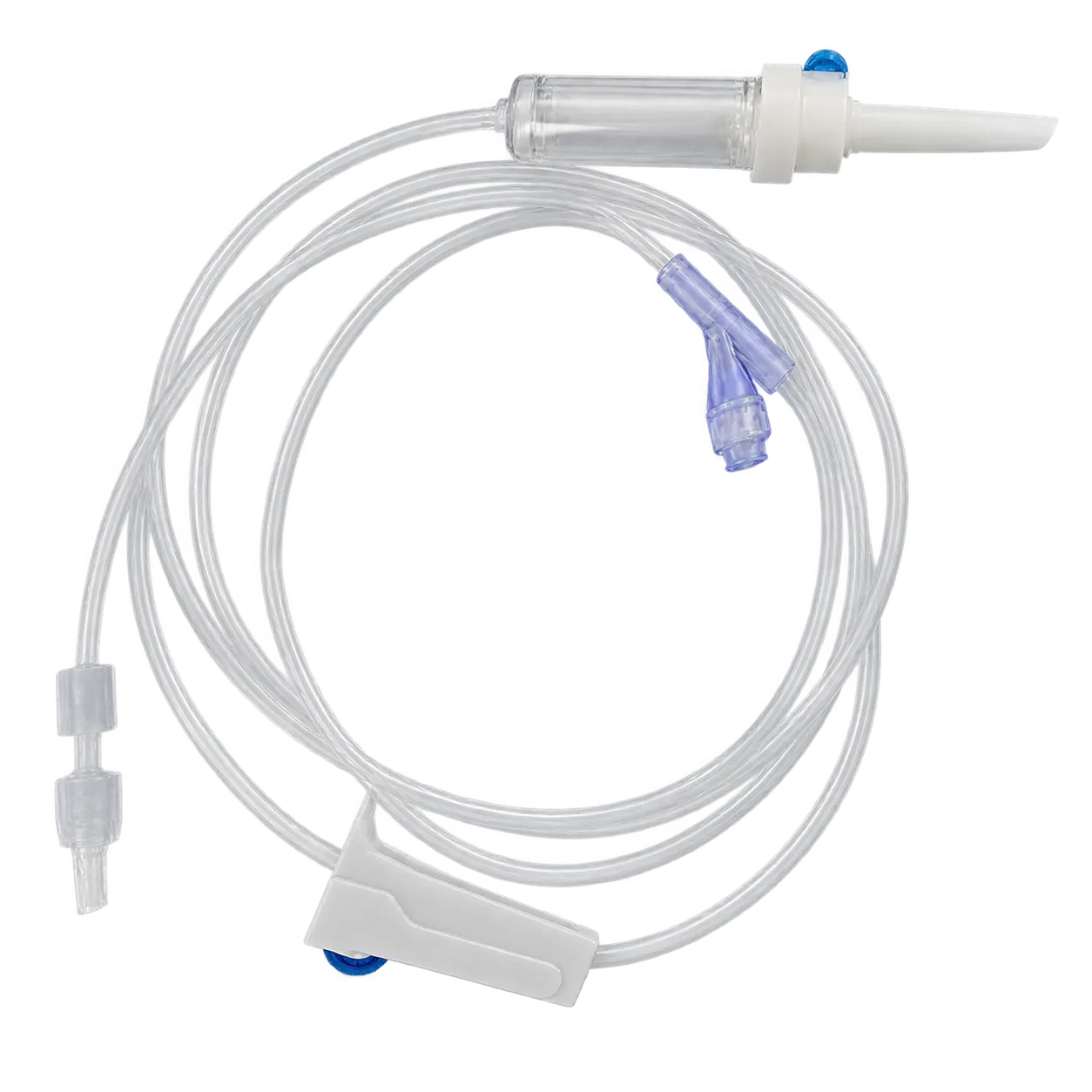
Most intravenous fluids given on a ward run by gravity. Maintenance hydration, routine antibiotics and a great deal of everyday therapy need a rate that is roughly right rather than precisely controlled, and a giving set delivers that at a fraction of the cost and complexity of a pump.
The drip chamber is what makes it workable. Fluid falls through it in visible drops so that a rate can be counted and set without any measuring device. That only works if the drop size is known, which is what the drop factor states. At 20 drops per millilitre, a nurse counting sixty drops in a minute knows the line is running at 180 mL per hour, and the same count on a paediatric set delivering sixty drops per millilitre would mean 60 mL per hour instead.
Two other elements matter for safety rather than rate. The filter catches particulate, which in practice means glass from snapped ampoules, rubber core from a stopper, and precipitate from a mixed drug. Fifteen microns removes what would otherwise reach the circulation without appreciably slowing gravity flow. The vent decides which containers the set will work with, since rigid bottles need air admitted as they empty and collapsible bags do not. Injection access then varies by preference and by infection control policy, with needle-free sites now the common choice because they remove a sharps exposure at a port accessed repeatedly.
Set choice therefore follows the container, the access policy and the drop factor the ward calculates against. Medigear.uk supplies the instructions for use with every order.