

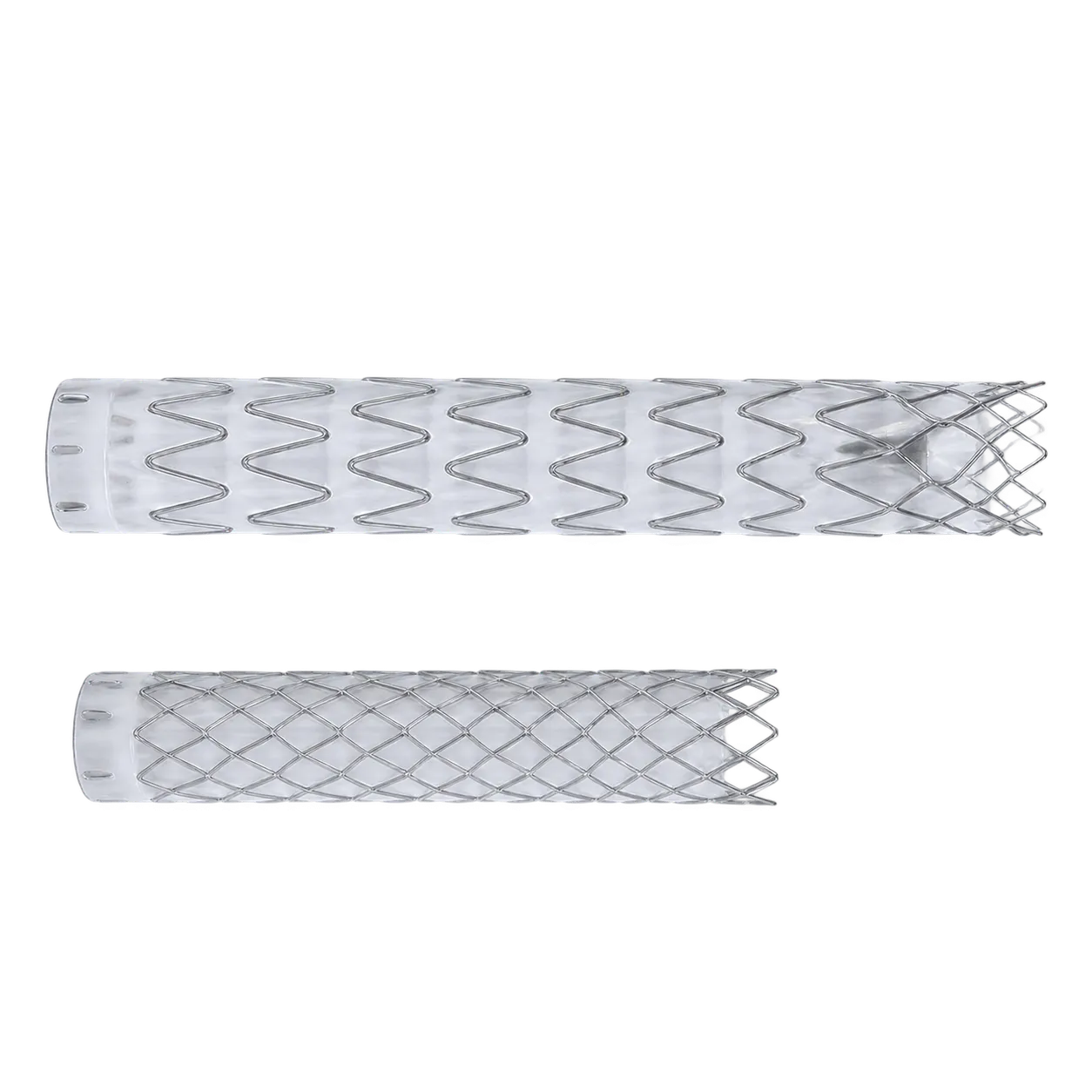
Disease of the distal aortic arch includes dissection, aneurysm and penetrating ulcer. Endovascular repair has largely displaced open surgery for suitable cases. The difficulty is anatomical. A stent graft needs a landing zone of healthy aorta to seal against. In arch disease, that zone often lies across the origin of the left subclavian artery.
Covering the subclavian is not a neutral act. It supplies the left arm. It contributes to spinal cord perfusion through the vertebral artery. In many people, the left vertebral artery is dominant for posterior brain circulation. Coverage without restoring flow carries known risks of stroke, paraplegia and arm claudication. Guidelines therefore favour preserving flow where the anatomy allows.
Three approaches have been used. Carotid-to-subclaviann bypass restores flow surgically. It adds an operation and a neck incision. Parallel or chimney stents run a covered stent alongside the main graft. That works, but leaves gutters that leak. Fenestration cuts an opening in the graft, which demands precise alignment. A branched graft avoids all three by building the limb into the device. Single-branched thoracic grafts have shown good anchoring and branch patency in published series. What determines success is fit. The branch must align with a vessel whose take-off angle varies widely between patients. The fenestration must sit at the right distance from the graft edge. The main body must seal against the aorta that tapers along its length. A range of sizes and a movable fenestration both address that variability directly.
Sizing is decided on preoperative CT, and the margin for error is small. Medigear.uk supplies the instructions for use with every order.