
A clot blocking a peripheral artery starves everything downstream, and the tissue does not wait. Acute limb ischaemia is a time-critical problem, and mechanical removal restores flow faster than drugs dissolve it while avoiding the bleeding risk that thrombolysis carries. In the deep veins, the same principle applies, but with different urgency, since the aim is to prevent post-thrombotic damage rather than save tissue immediately.
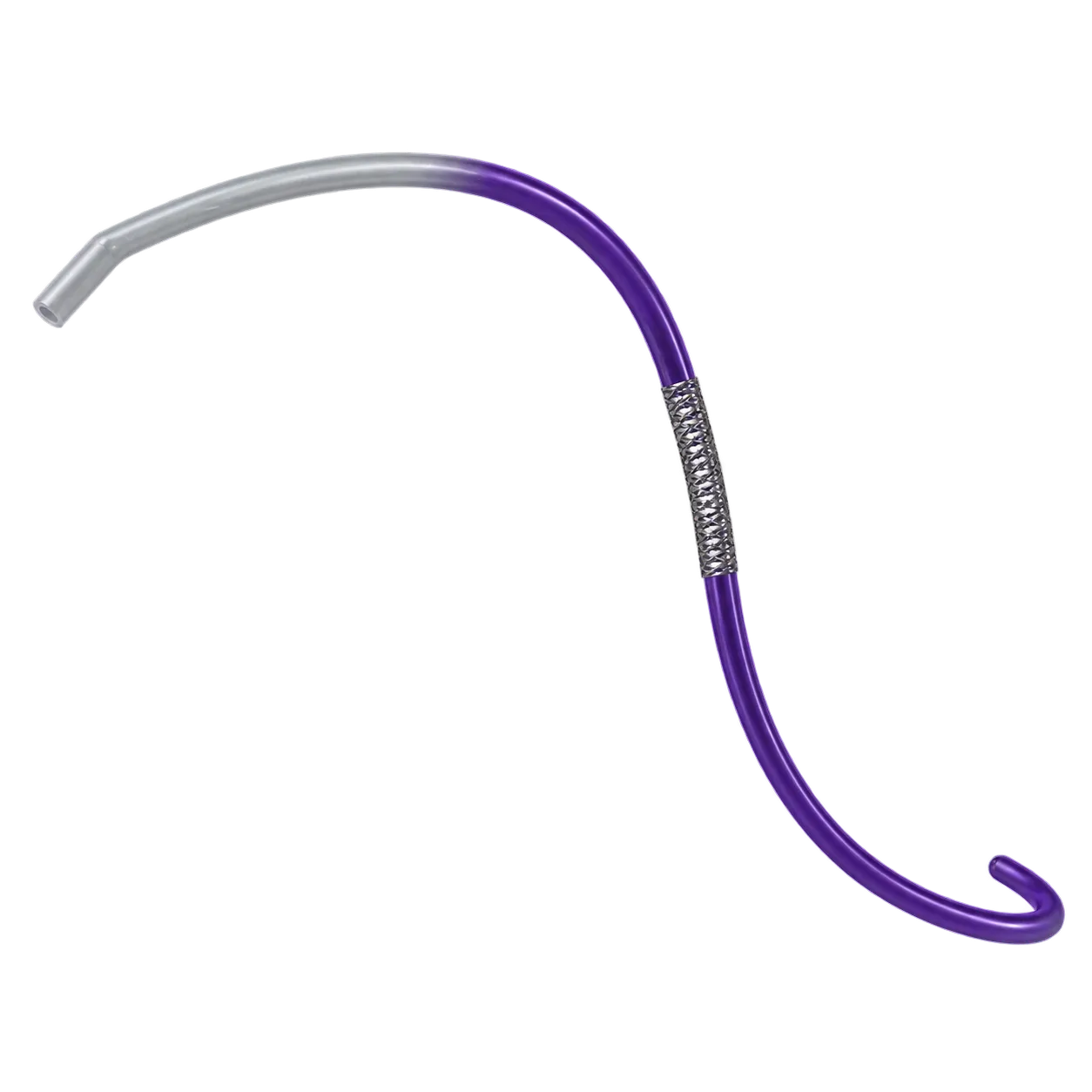
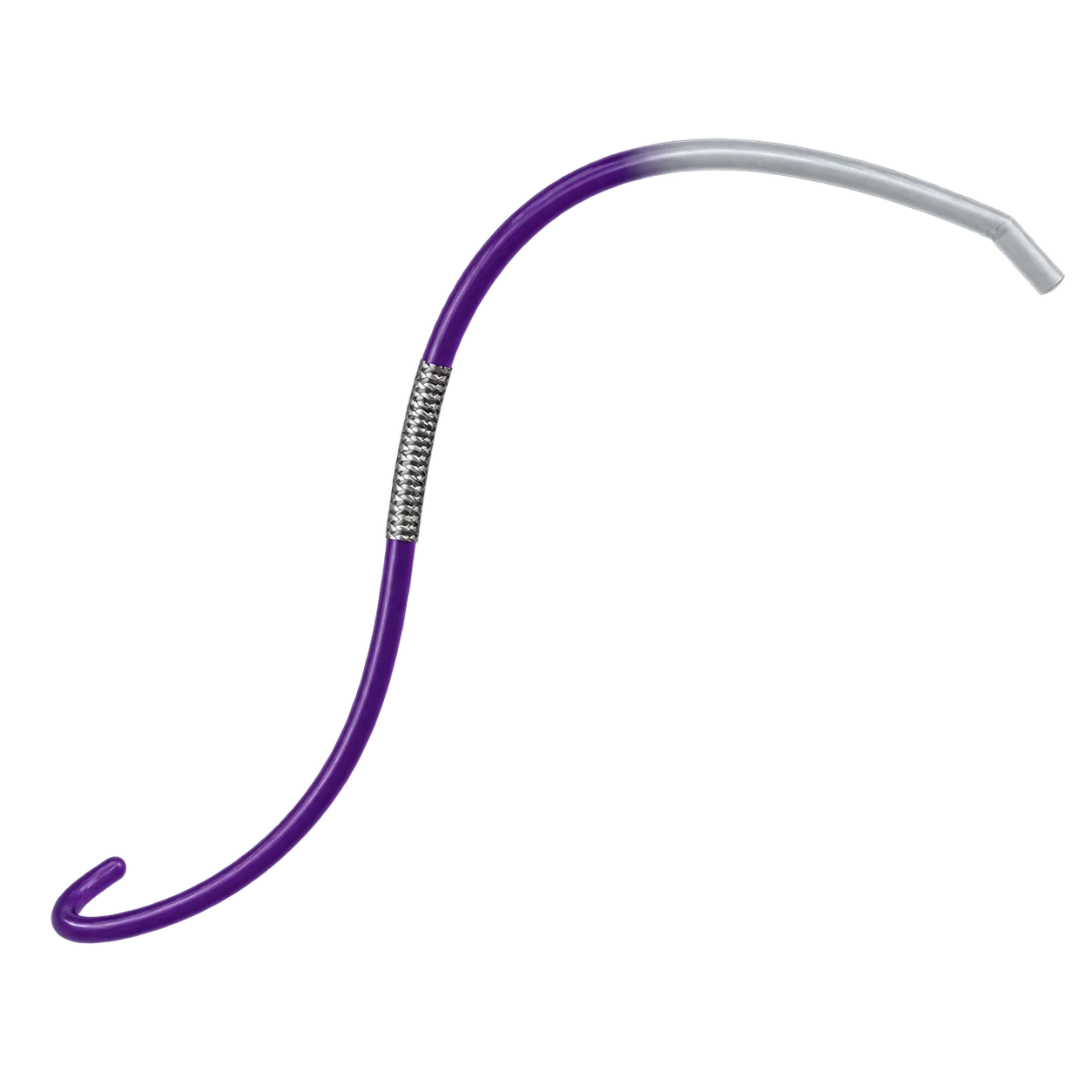
Aspiration is the most direct mechanical method. Suction applied through a catheter draws the clot into the lumen and out of the body. Whether it works depends on reaching the clot properly and on the physics at the tip. Flow through a tube falls steeply as the tube narrows, and the force pulling a clot onto the opening depends on the area of that opening and the vacuum behind it. This range addresses reaching the clot properly. Peripheral anatomy branches repeatedly, and a thrombus may sit in a vessel leaving at an angle or lie against one wall of a larger one. A catheter aimed down the centre of the vessel meets such a clot edge-on rather than face-on, and suction applied to a partial contact does less than suction applied squarely. A pre-shaped tip lets the opening be turned toward the clot, and varying the length over which that bend occurs allows the shape to match the take-off being entered.
Getting there also requires the shaft to push without buckling proximally and to follow the vessel distally, which is what a graded stiffness profile provides. Medigear.uk supplies the instructions for use with every order.