
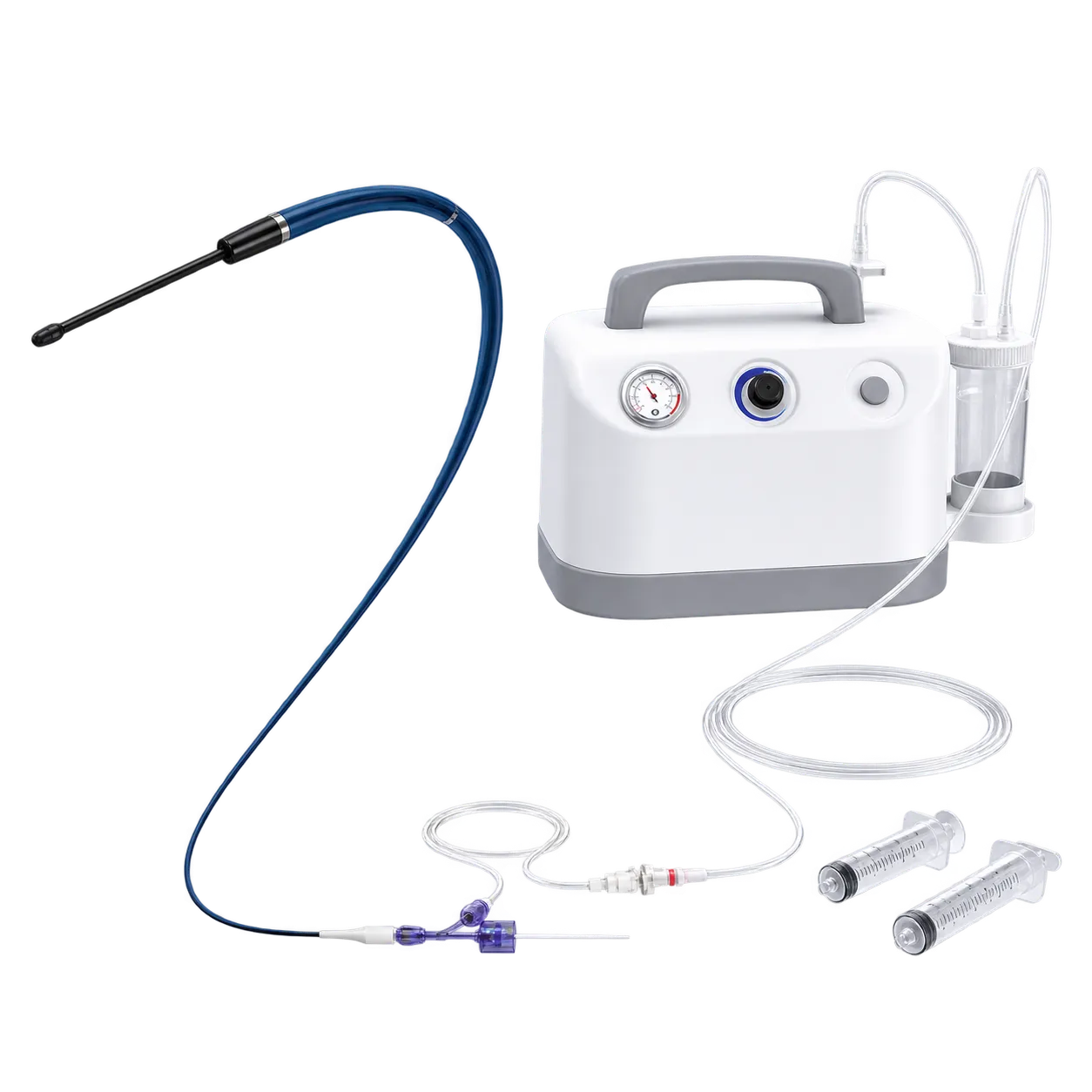
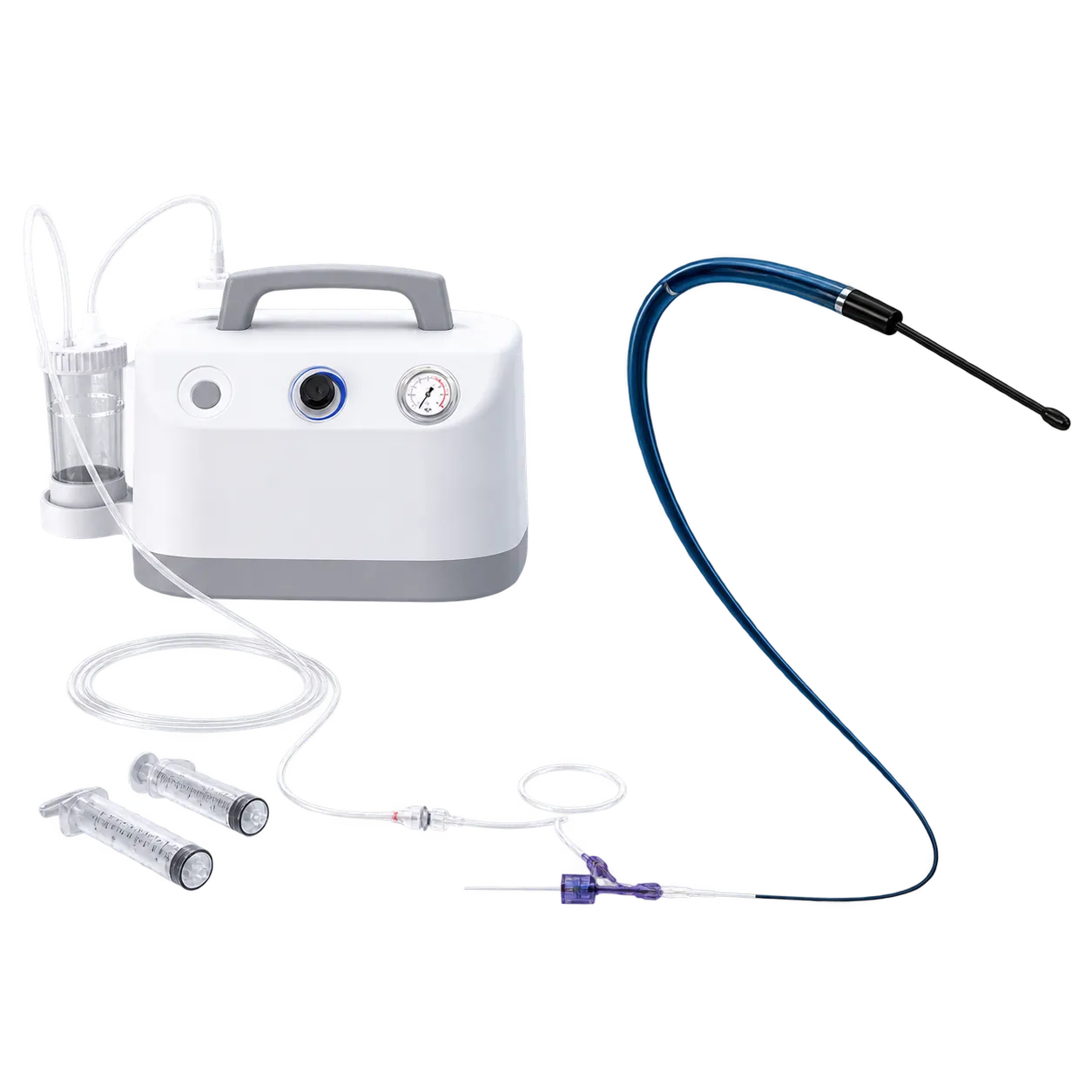
A thrombus blocks vessels suddenly, and the tissue beyond it starts to suffer immediately; in a limb, this means acute ischaemia; in the lungs, a pulmonary embolism; in the deep veins, a thrombosis with its own consequences. Removing the clot mechanically restores flow faster than waiting for drugs to dissolve it, and avoids the bleeding risk that thrombolysis carries.
Aspiration is the simplest mechanical approach. A catheter reaches the clot, suction is applied, and the clot comes out through the lumen. The physics is unforgiving, though. Flow through a tube falls sharply as the tube narrows, so a small increase in lumen size makes a large difference in how quickly a clot can be drawn. Tip force follows the same logic, since the force pulling a clot onto the catheter depends on the opening area and the vacuum behind it. Catheter diameter, vacuum pressure, and clot softness all determine whether a pass succeeds.
The failure mode is well described. A clot enters the tip but does not pass through, sitting corked in the opening while the vacuum is wasted holding it there. Stiffer and larger clots do this more readily, because a clot has to deform continuously as it travels into a lumen narrower than itself. Design answers to that problem run in two directions, easing the clot's path inward and keeping flow alive when the tip is sealed.
This catheter attempts both through an internal taper and side holes behind the tip. Medigear.uk supplies the instructions for use with every order.