
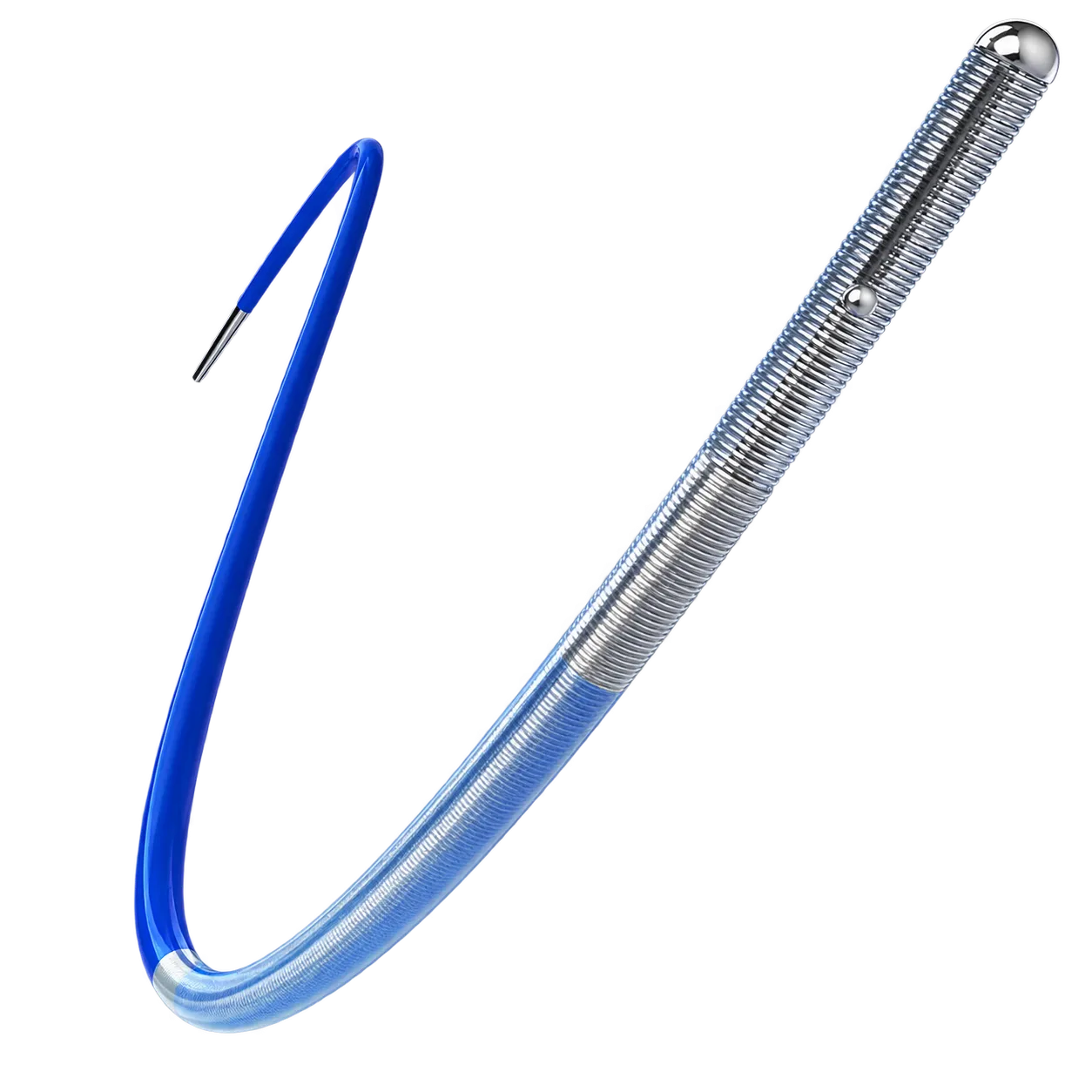
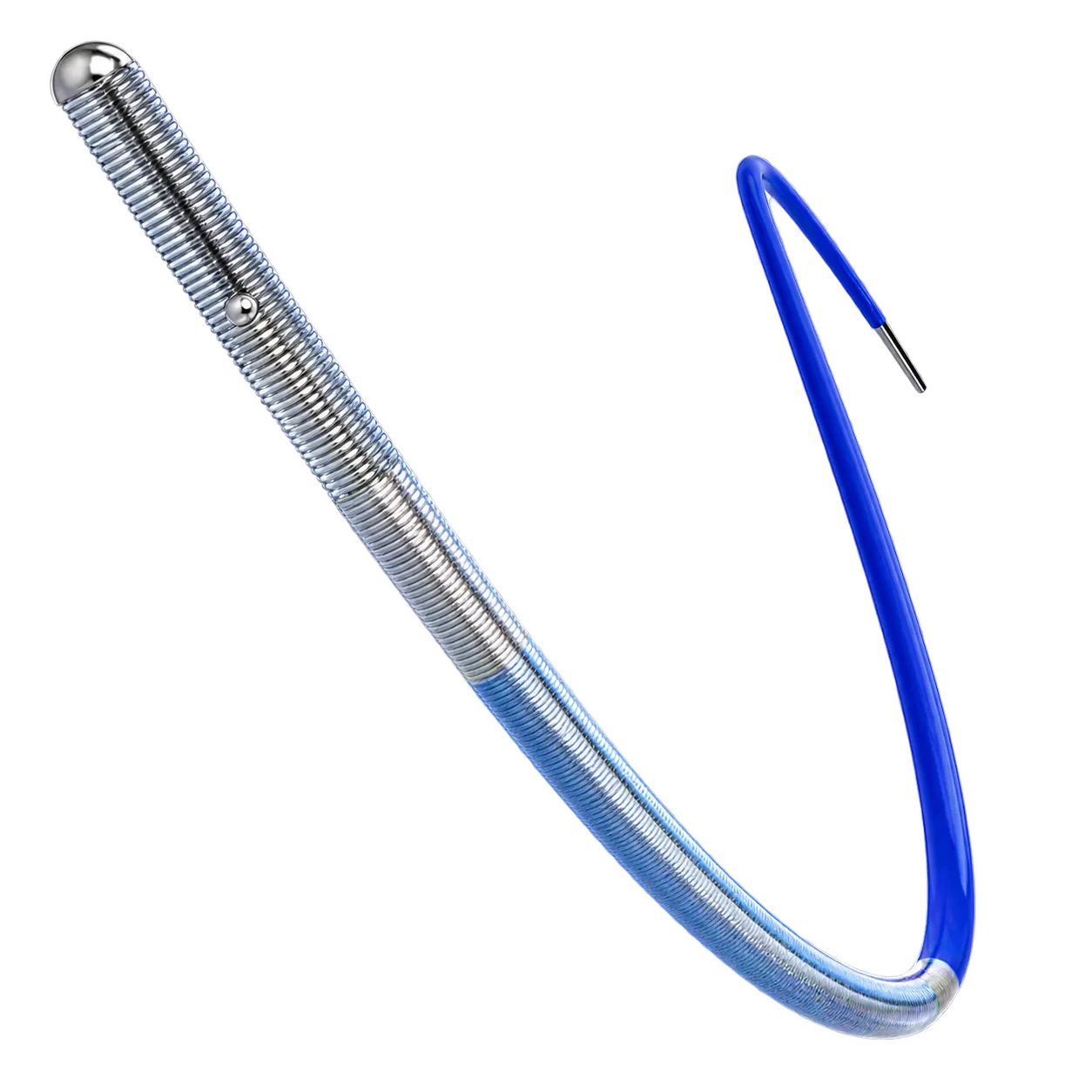
Every coronary intervention begins with a wire crossing the lesion. Nothing else can be delivered until that happens, and once it has, the wire holds the route open for everything that follows. Wires in the 0.5 to 0.7 gram-force band are the workhorses that handle most routine cases, reserved for straightforward and moderately complex anatomy rather than occlusions.
Tip load is the specification that defines behaviour. It measures the force the tip applies when pushed against tissue. A lighter tip probes a vessel gently and is less likely to enter a false channel or perforate, which is why softer loads are used first. A slightly firmer tip crosses a resistant segment more readily. Choosing between 0.5 and 0.7 gf is therefore a decision about how much the wire pushes back, made against the lesion in front of the operator.
Tip shape covers a second decision. A straight tip can be shaped by the operator and directed precisely, while a J tip is inherently atraumatic and rounds off contact with the vessel wall. Coating placement supports both. A hydrophilic distal section slides through tight and irregular anatomy, while the PTFE proximal shaft moves cleanly inside a guiding catheter and microcatheter. The 300 cm references are for over-the-wire work, where a device must come off the wire completely while the wire holds its position across the lesion.
The wire also remains across the lesion for the whole of the case, so holding position reliably matters as much as crossing easily in the first place. Medigear.uk supplies the instructions for use with every order.