
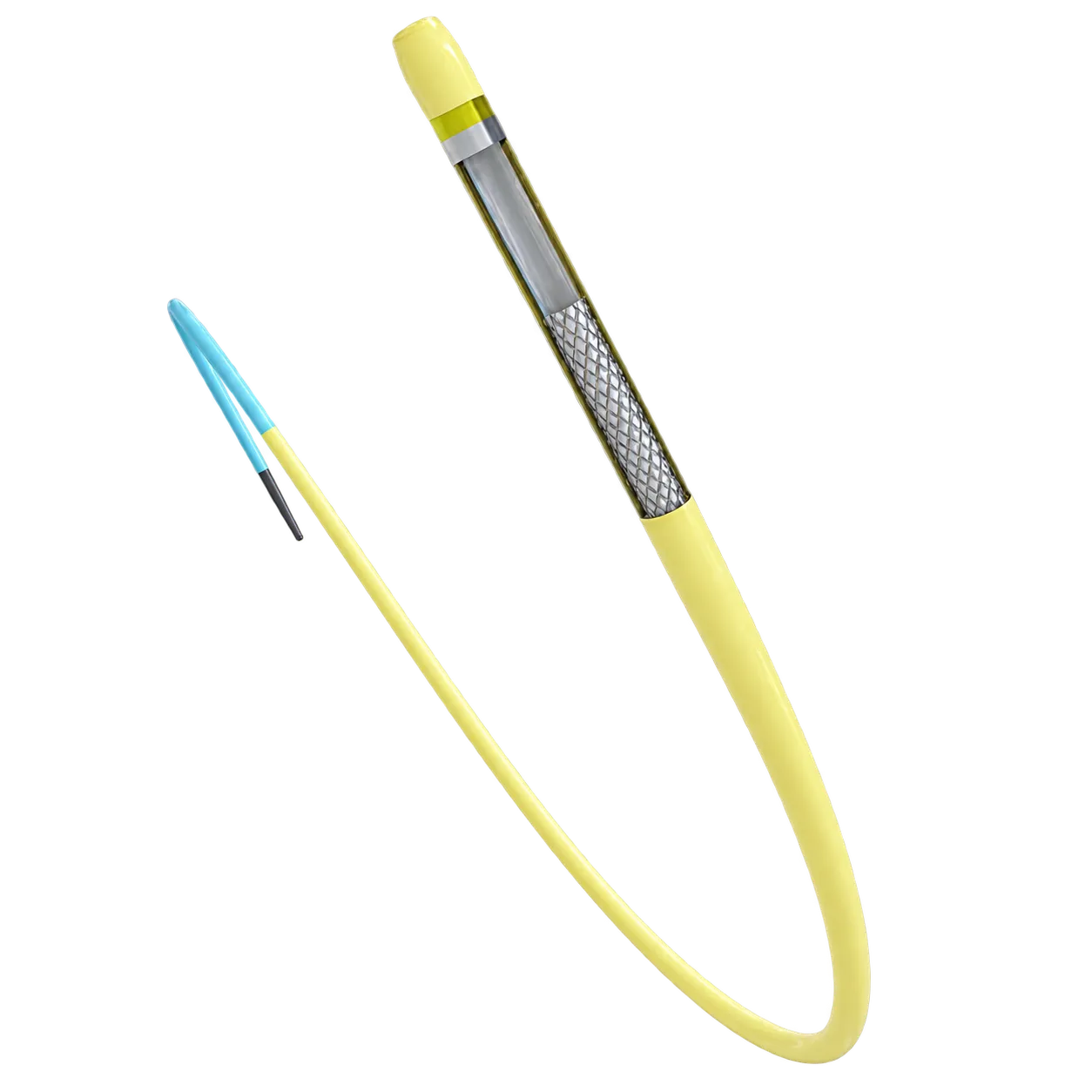
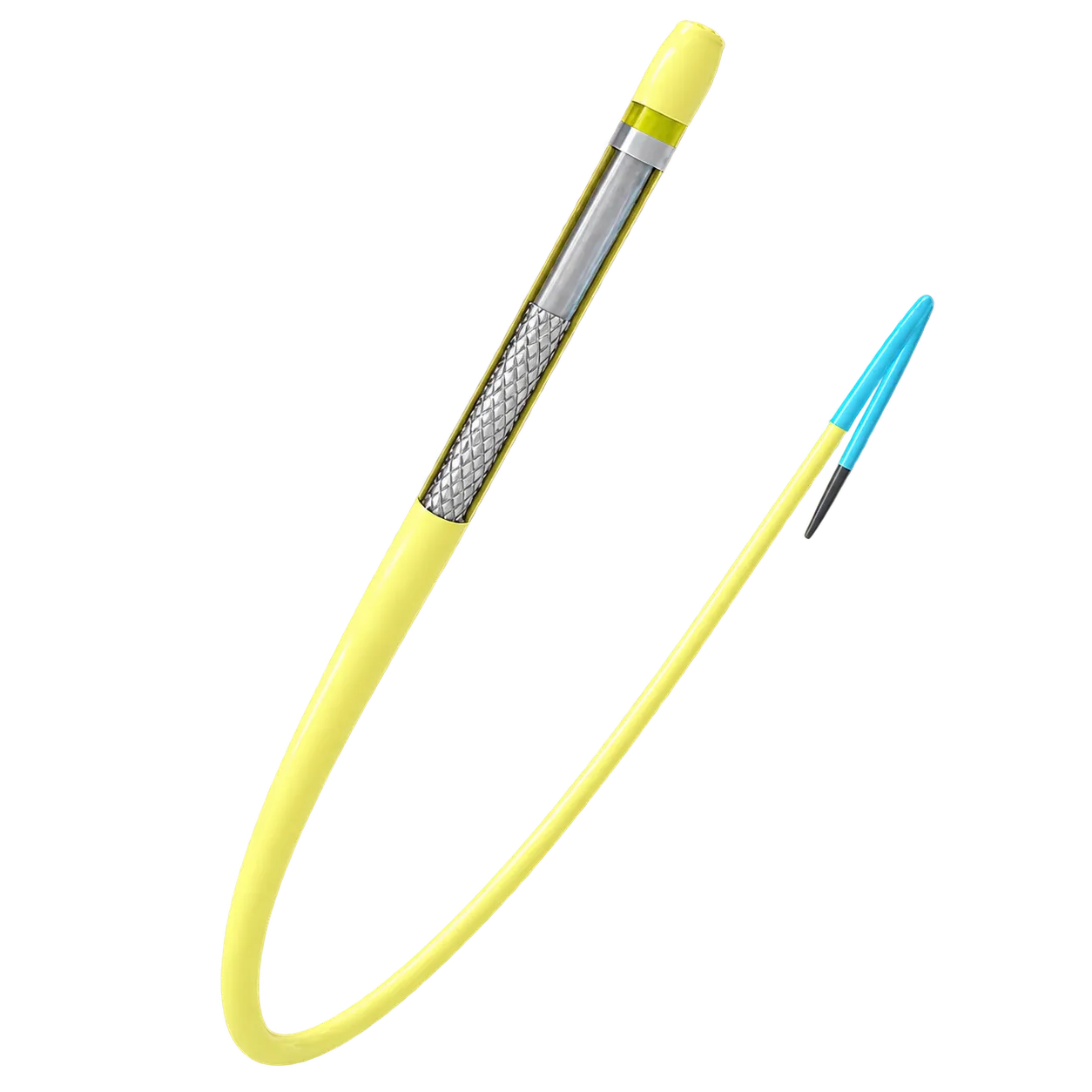
Percutaneous coronary intervention usually starts with a guidewire alone. When the wire will not cross, or will not stay where it is put, a microcatheter is added. It runs over the wire and stops just short of the tip, converting a floppy wire into a supported one. That extra backing is often the difference between crossing a lesion and abandoning the attempt.
Chronic total occlusions are the clearest case. These lesions are fibrous or calcified and resist a wire on their own, so crossing them often means trying several wire types in sequence. A microcatheter allows that, because a wire can be withdrawn and replaced through the catheter without losing the position already gained. Tortuous and heavily calcified vessels benefit for the same reason, since a wire that buckles rather than advancing will often track once supported.
Two further uses matter in routine work. In bifurcation cases, a microcatheter helps direct a wire into a side branch, and it can be used to reshape or redirect a wire tip mid-procedure. Selective contrast injection through the lumen shows distal anatomy that a guide injection will not reach, though the operator has to respect the catheter's pressure limit. The microcatheter is withdrawn once the wire is across the lesion. The wire then stays in place as the rail for balloons and stents to follow. Profile choice follows the lesion.
A 1.6Fr tip enters tighter channels than a 1.8Fr, while the larger option gives a marginally wider lumen. Medigear.uk supplies the instructions for use with every order.