
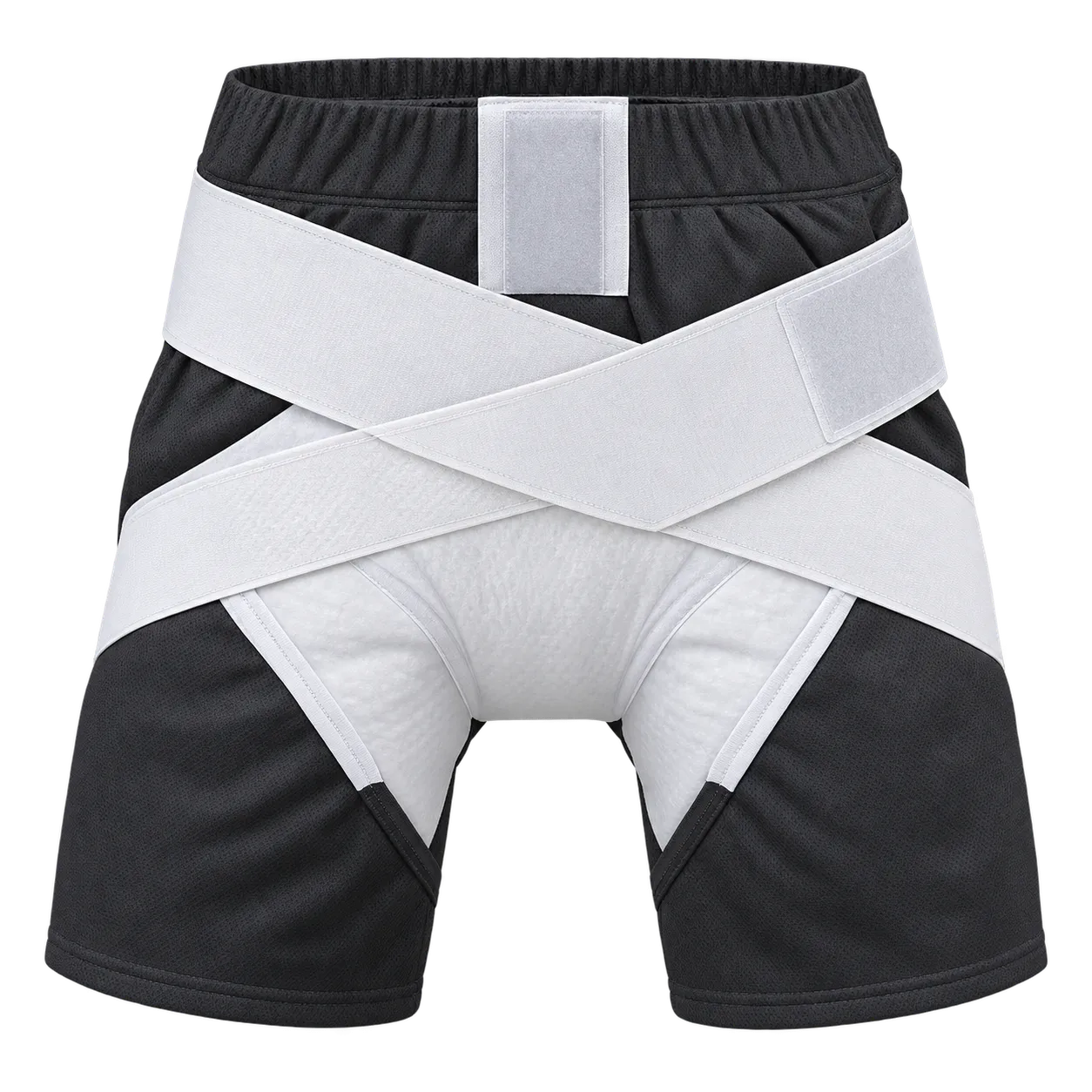
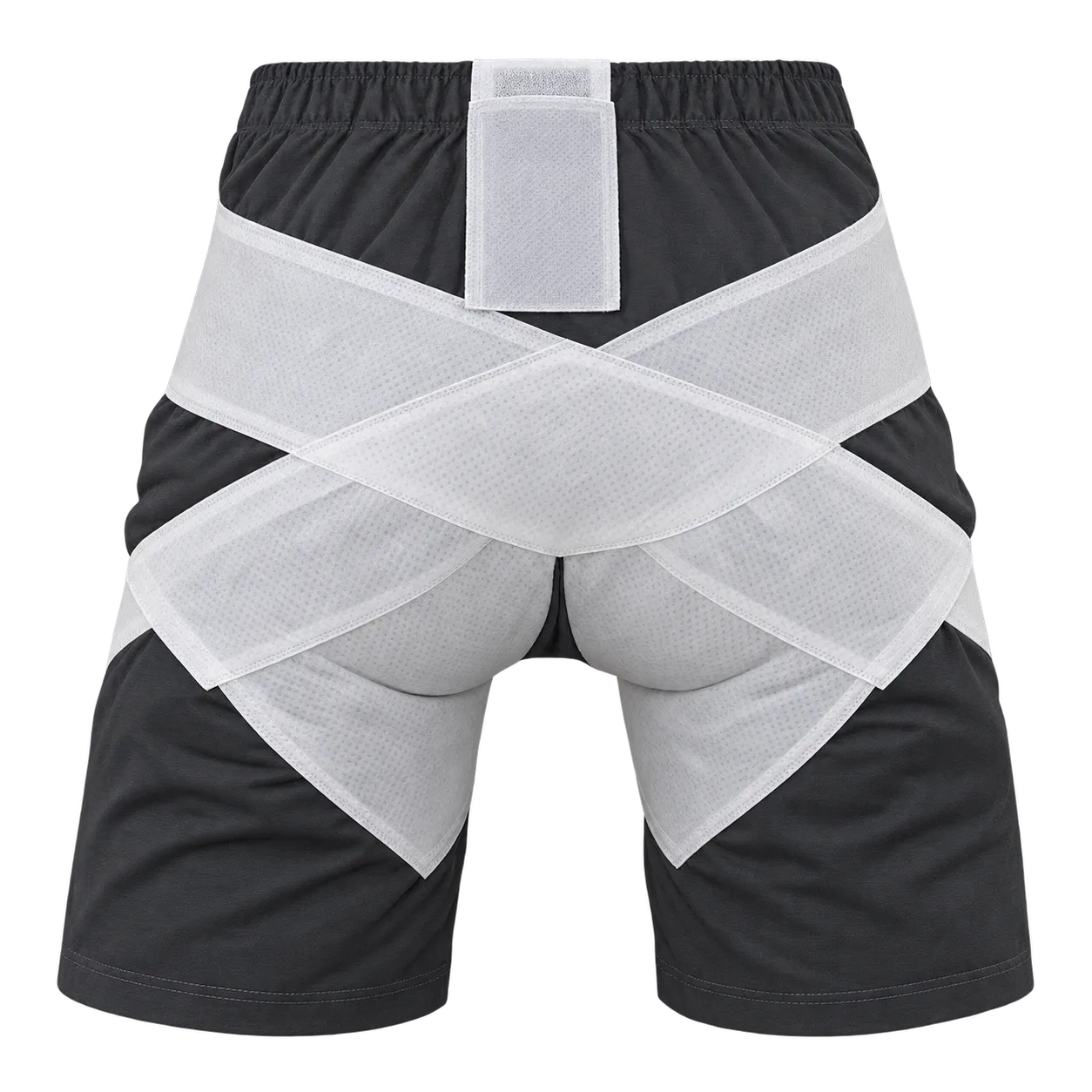
Compression at a groin puncture site is the use this class of product is built around. After a femoral arterial or venous access procedure, the site needs sustained pressure. At the same time,e haemostasis develops, and holding that pressure by hand ties up a clinician for as long as it takes. A belt applied in a figure-8 across the site transfers the job to the device. Adjustable tension matters here, because the pressure needed differs between a diagnostic angiogram and a larger sheath. INT Medical does not state indications on this sheet, so the intended procedures are confirmed rather than assumed.
The shorts change how a patient spends the hours afterwards. A dressing held under a belt alone tends to shift when the patient is repositioned or begins to mobilise. Shorts hold the pad in place, and because they're fully expandable, you can open them to inspect the site without the whole arrangement coming apart. That is the practical argument for the two-part design: observation is a recurring task on a groin site, not a one-off.
Two cautions belong on any groin elastic bandage. Compression that is too high or held too long risks limb ischaemia and skin damage, and no maximum wear time is published here. The elastic content is also unstated, which means latex is neither confirmed nor excluded, and that is a screening question in any unit.
Medigear.uk obtains the wear-time guidance, the material breakdown, and the latex position before this system reaches a clinical area.