
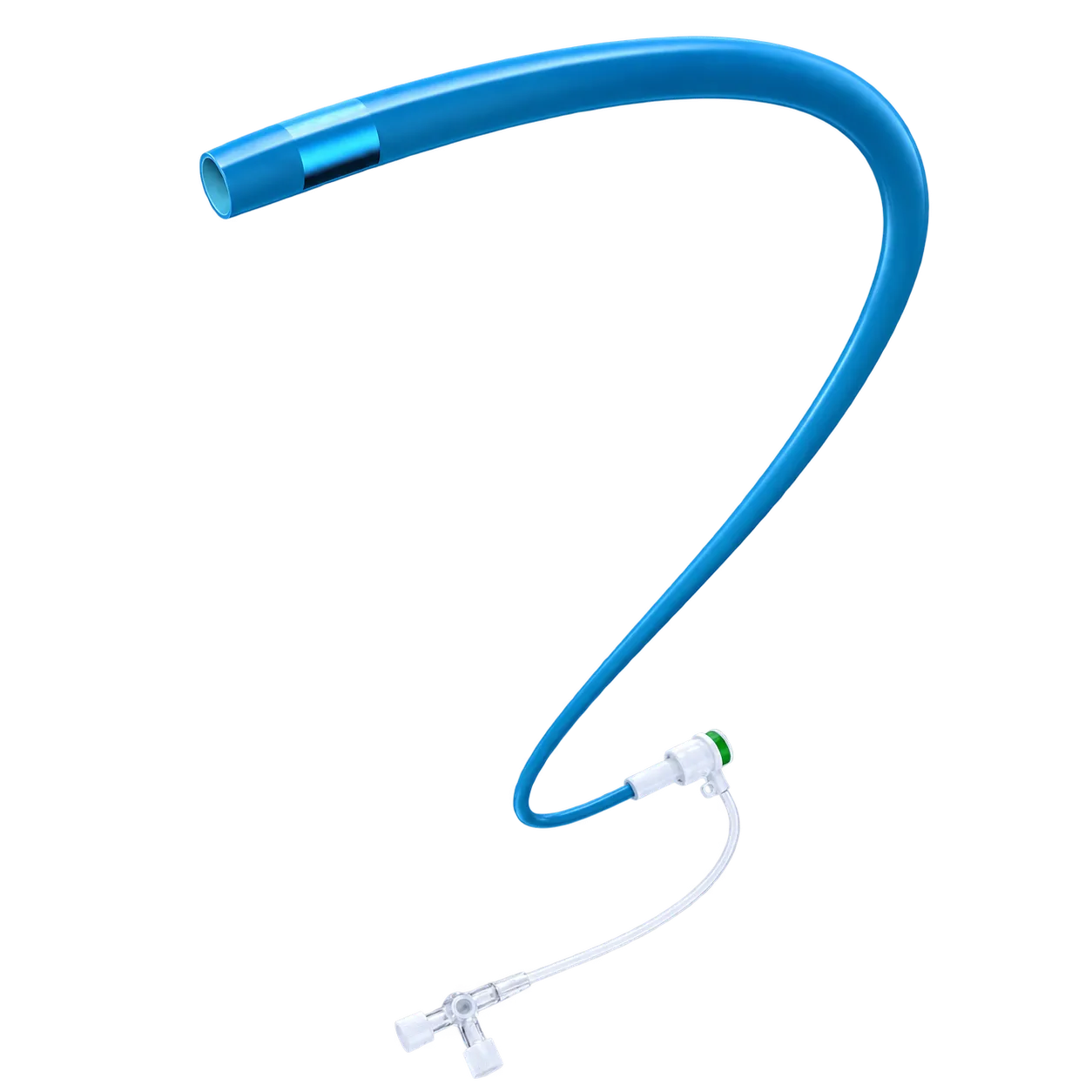
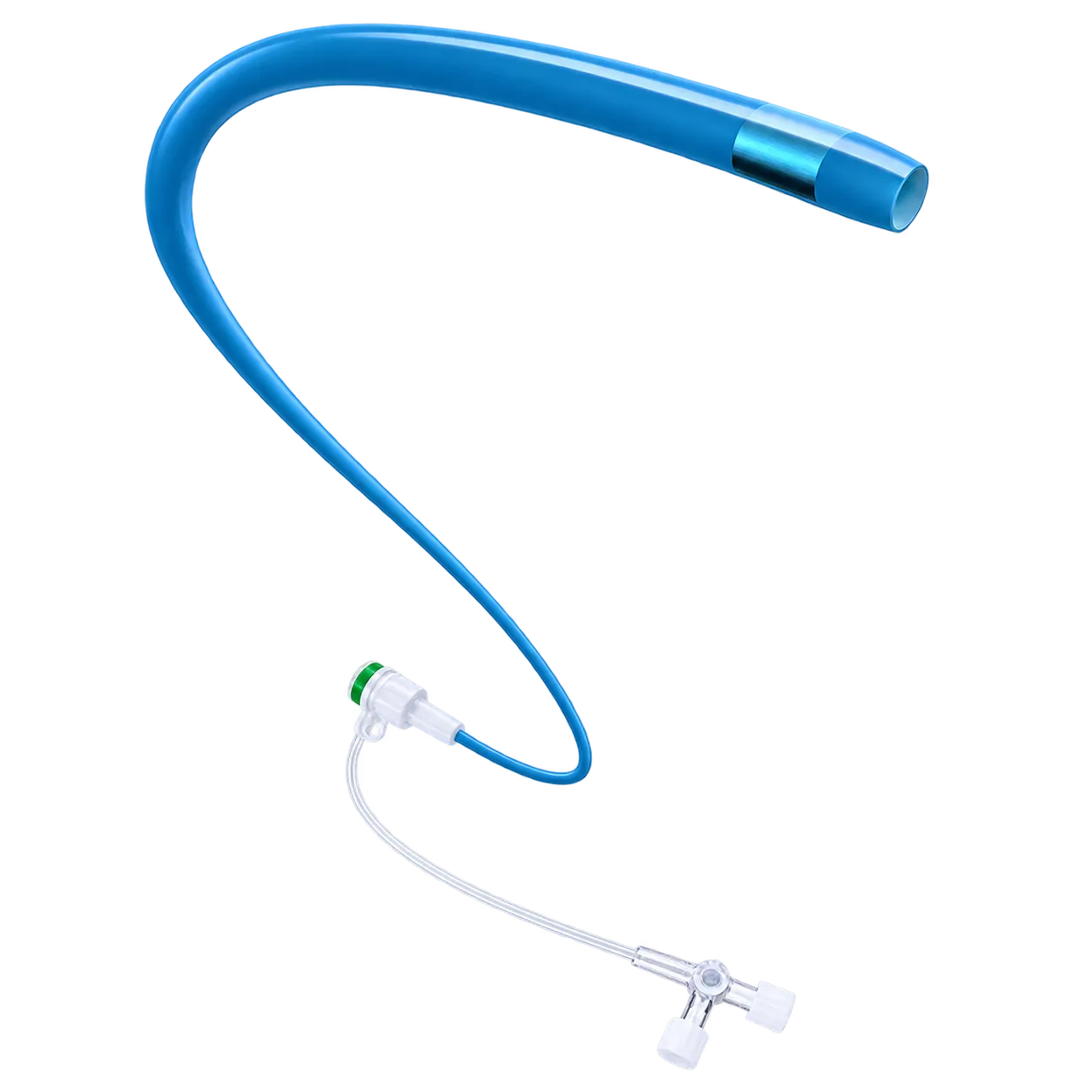
Some targets are far from the access site. Treating a vessel below the knee from a groin puncture, or reaching abdominal branches from the wrist, means working at the end of a metre or more of anatomy. A short access sheath leaves everything beyond it unsupported, and devices pushed along that distance lose force to friction and to the catheter bowing against vessel walls.
A guiding sheath moves the starting point. Advanced over a wire until its tip sits near the target, it gives a lined channel that begins where the work does. Devices then travel a short supported distance rather than a long unsupported one, and the operator gains a stable platform to push against. The same channel allows contrast to be injected close to the target and devices to be exchanged without losing position.
Building a tube that does this well is not simple. It has to be thin enough not to occupy the vessel, flexible enough to follow bends, and stiff enough not to collapse when a device is forced through it. Coil reinforcement is the usual answer for the middle requirement, since a wound coil keeps the lumen round where a plain tube would flatten at a bend. A low-friction liner handles the third, and an outer coating handles the first by reducing the sheath's drag against the vessel.
Vasospasm matters where the access vessel is small, which is why the coating is placed distally. Medigear.uk supplies the instructions for use with every order.