
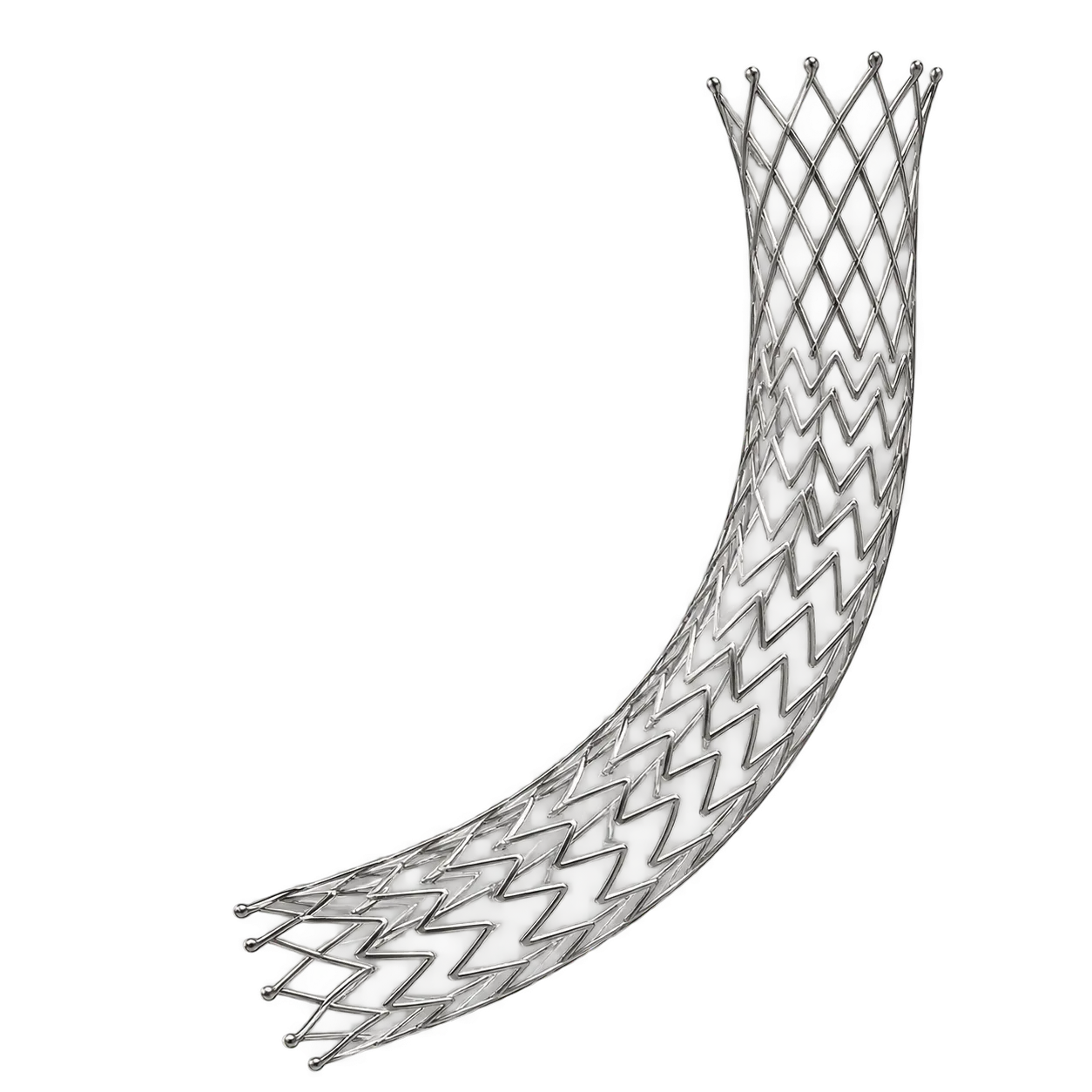
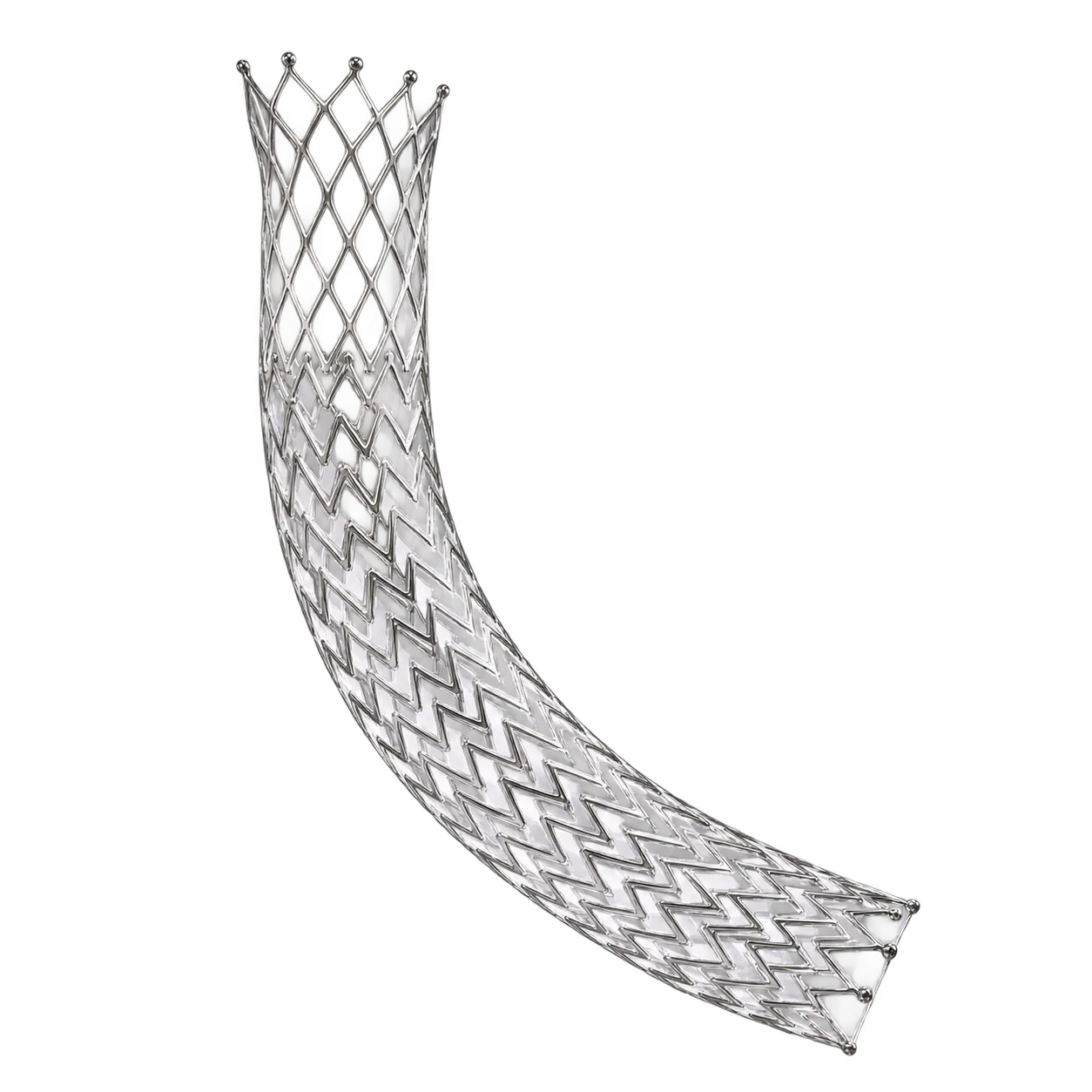
Blood leaves the leg through the iliac veins, and anything narrowing them backs pressure up into the limb. Two causes dominate. The right common iliac artery crosses over the left common iliac vein and can compress it against the spine, which is common enough that many people have some degree of it without symptoms. The other is scarring left behind after a deep vein thrombosis, where the clot organises into fibrous webs that never fully clear.
Either way the result is the same. The leg swells, aches and feels heavy, and in severe cases the skin breaks down into venous ulcers that heal poorly while the pressure persists. Compression stockings help symptoms without addressing the cause. Opening the vein does address it, and stenting has become the standard way to keep it open, since a vein squashed by an artery simply collapses again after balloon dilatation alone.
What the stent has to do is unlike arterial work. It must resist an external squeezing force rather than a wall trying to recoil inward, and it must do so at diameters twice those of most arterial stents. It has to bend where it crosses the hip without kinking, because the segment moves every time the patient walks. It has to sit precisely at the confluence with the vena cava, since stopping short leaves the lesion untreated while overshooting obstructs the opposite leg. And it must not fracture over years of that movement.
Every design point on this range answers one of those demands. Medigear.uk supplies the instructions for use with every order.