

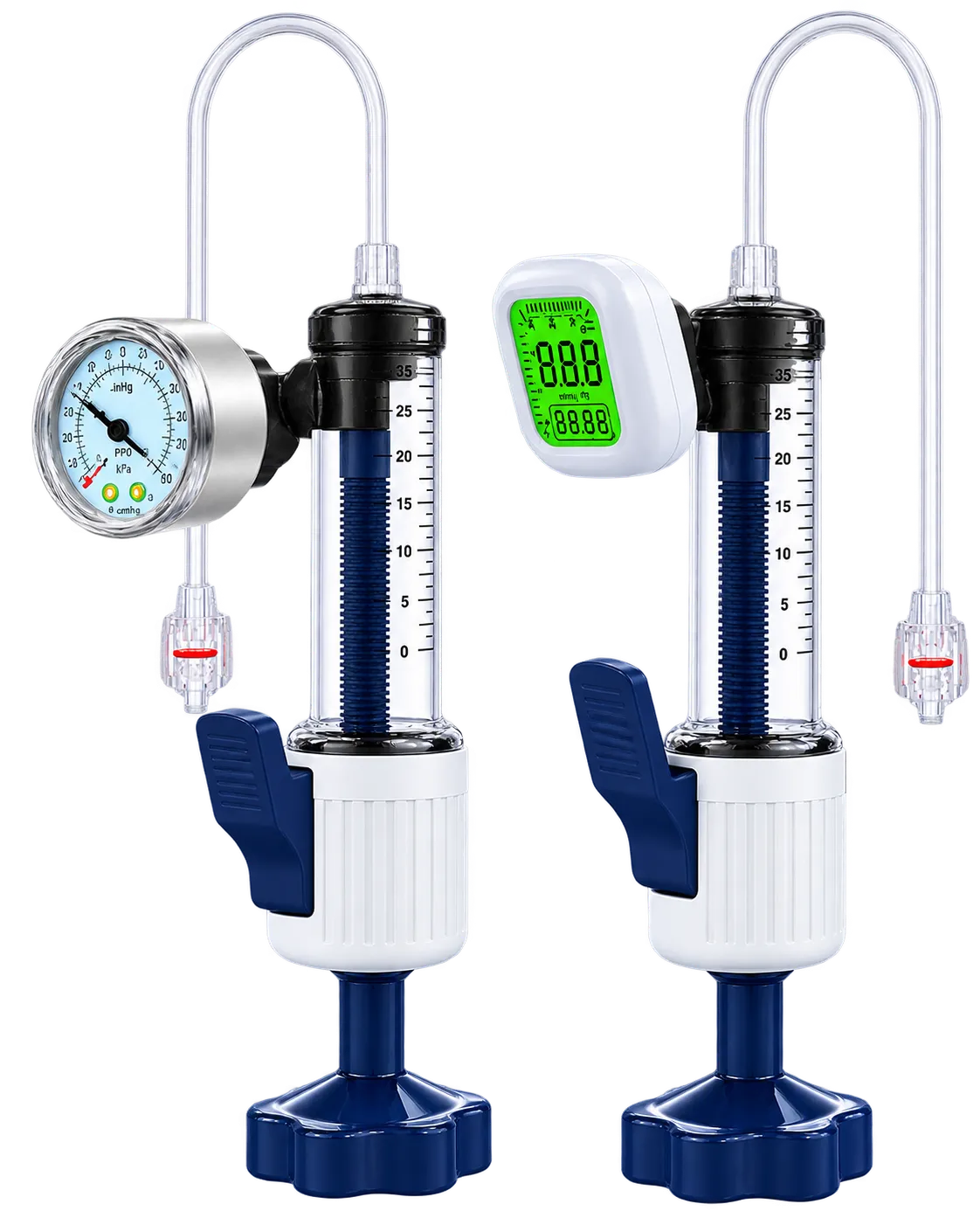
Balloon angioplasty is the primary use. A dilatation balloon is advanced to a narrowed vessel and inflated to open it. This device supplies and holds that pressure. Getting the pressure right matters. Too little leaves the lesion under-dilated. Too much risks the vessel wall or the balloon itself. Each balloon carries a rated burst pressure, and the operator works below it while reaching the pressure the lesion needs.
Inflation speed carries clinical weight in this setting. While a coronary balloon is inflated, flow through that vessel is interrupted, and patients may experience chest pain or ischaemic changes. Reaching target pressure in fewer handle turns shortens that window. The quick-release deflation works the same way at the other end of the inflation. This is the practical argument for the second-generation mechanism over a conventional threaded plunger.
Balloon-expandable stent deployment uses the same equipment. The stent sits on a balloon and is expanded against the vessel wall. Post-dilatation to improve apposition often calls for higher pressure, which is where the 40 atmosphere AI25A reference fits. Drug-coated balloon procedures add a timing requirement, since the balloon is held inflated for a defined period, and the digital reference carries a timer for this. Peripheral interventional radiology uses the same device class outside the coronary tree. Contrast handling runs through the 3-way stopcock during a case. An operator switches between drawing contrast, purging air, and closing off the balloon line. Trapped air in the inflation system is a genuine hazard, which is why purging is done with care.
These are single-use devices and must not be reprocessed. Medigear.uk supplies the instructions for use with every order.