
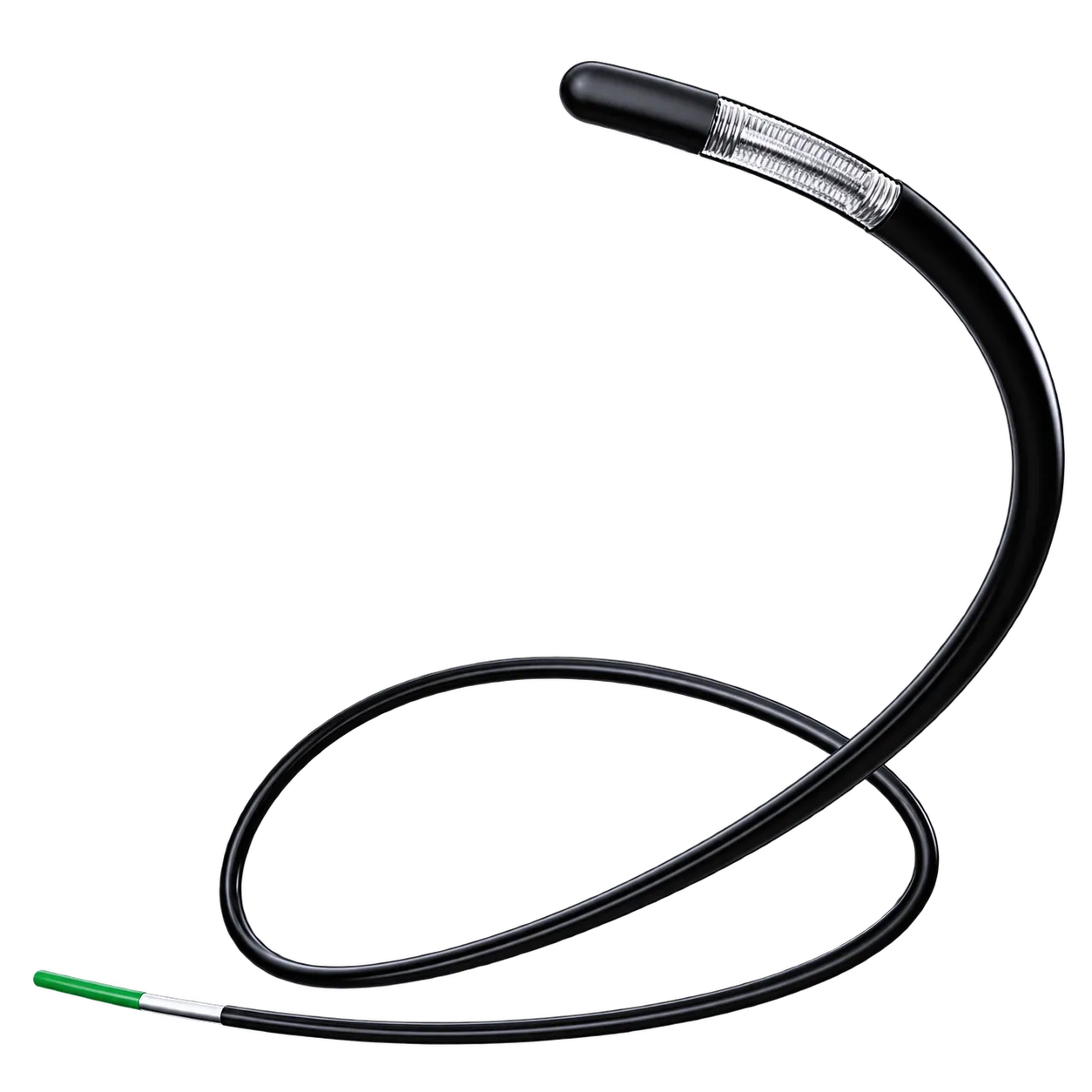
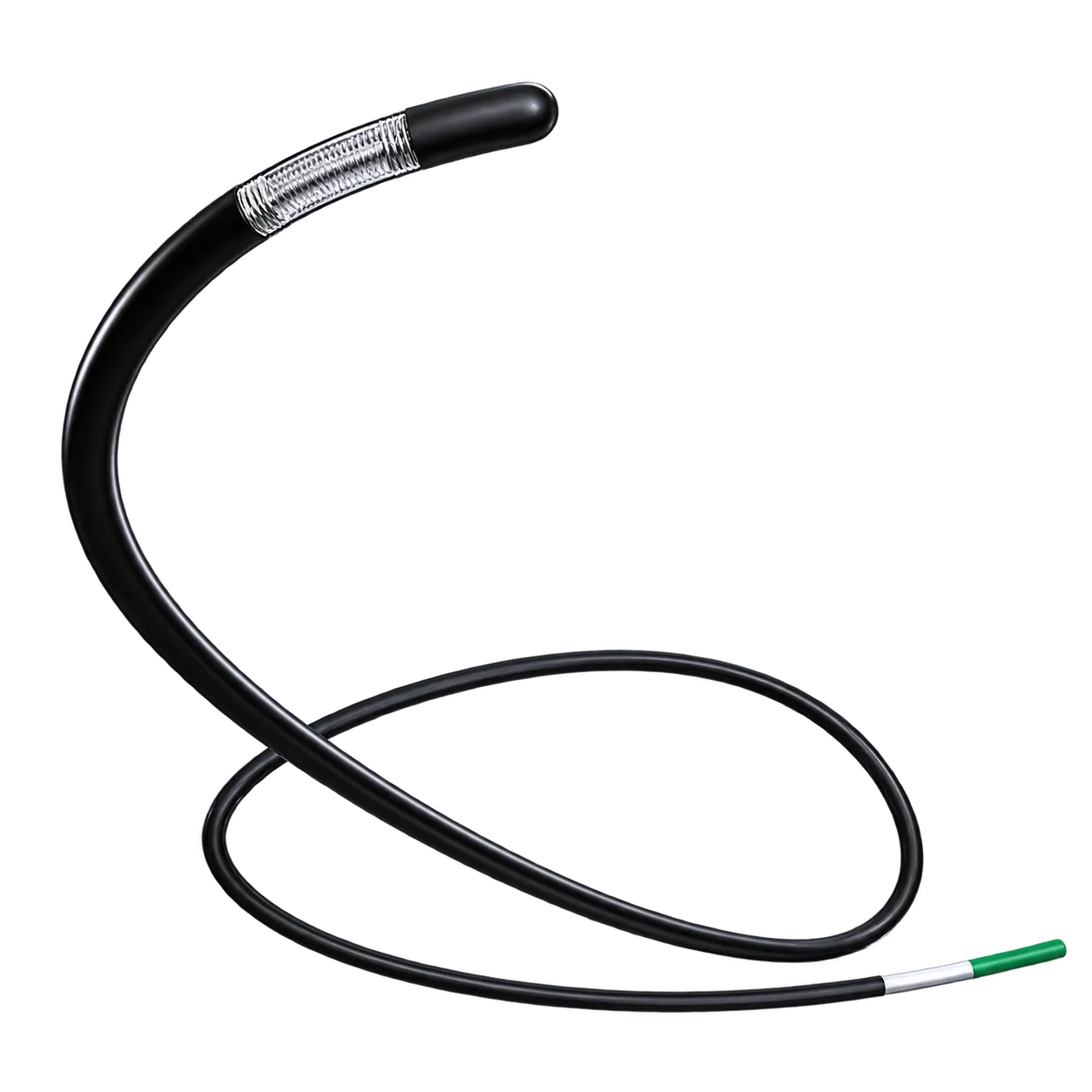
Neurointerventional work happens in vessels that tolerate very little. Cerebral arteries are thin-walled. They branch repeatedly. They curve in ways that make a straight wire useless. Beyond that, injuring one damages the brain rather than a limb or an organ. The margin for error is smaller than anywhere else in vascular practice.
The wire leads everything. It finds the route, and a microcatheter follows it. The target may be an aneurysm to be coiled, a malformation to be embolised, or a clot to be retrieved. Reaching it means turning into branches that leave at sharp angles, sometimes several in succession. The tip has to be shaped to make each turn.
Shaping is done at the table, by hand, immediately before use. The operator bends the tip to an angle judged from the imaging, and if that shape fails to find the branch, bends it again. A core that will not hold a shape forces a wire exchange instead. So does one that fatigues after a couple of attempts. That is why a flattened distal section matters, and why reshaping repeatedly is worth more than shapeability alone. Visibility matters for the same reason. The operator works entirely from the screen. A wire that shows poorly cannot be steered accurately, and tungsten in the jacket addresses that. Wire choice also has to account for what follows it down the same route, since the microcatheter tracks over whatever wire has found the way.
Compatibility between the two is checked before either is opened. Medigear.uk supplies the instructions for use with every order.