
Reaching an intracranial target from a femoral puncture means travelling more than a metre through anatomy designed to bend. The aortic arch turns, the carotid rises and curves, and the siphon doubles back on itself before the vessel enters the brain. Every one of those bends absorbs some of the force applied at the other end.
That matters because neurointerventional devices are delicate and the distances are long. A stent retriever, a coil delivery system or an aspiration catheter arrives with a fraction of the force applied at the groin. The last few centimetres are where resistance is greatest. Losing the platform at that point means the device stalls, and forcing it risks the vessel.
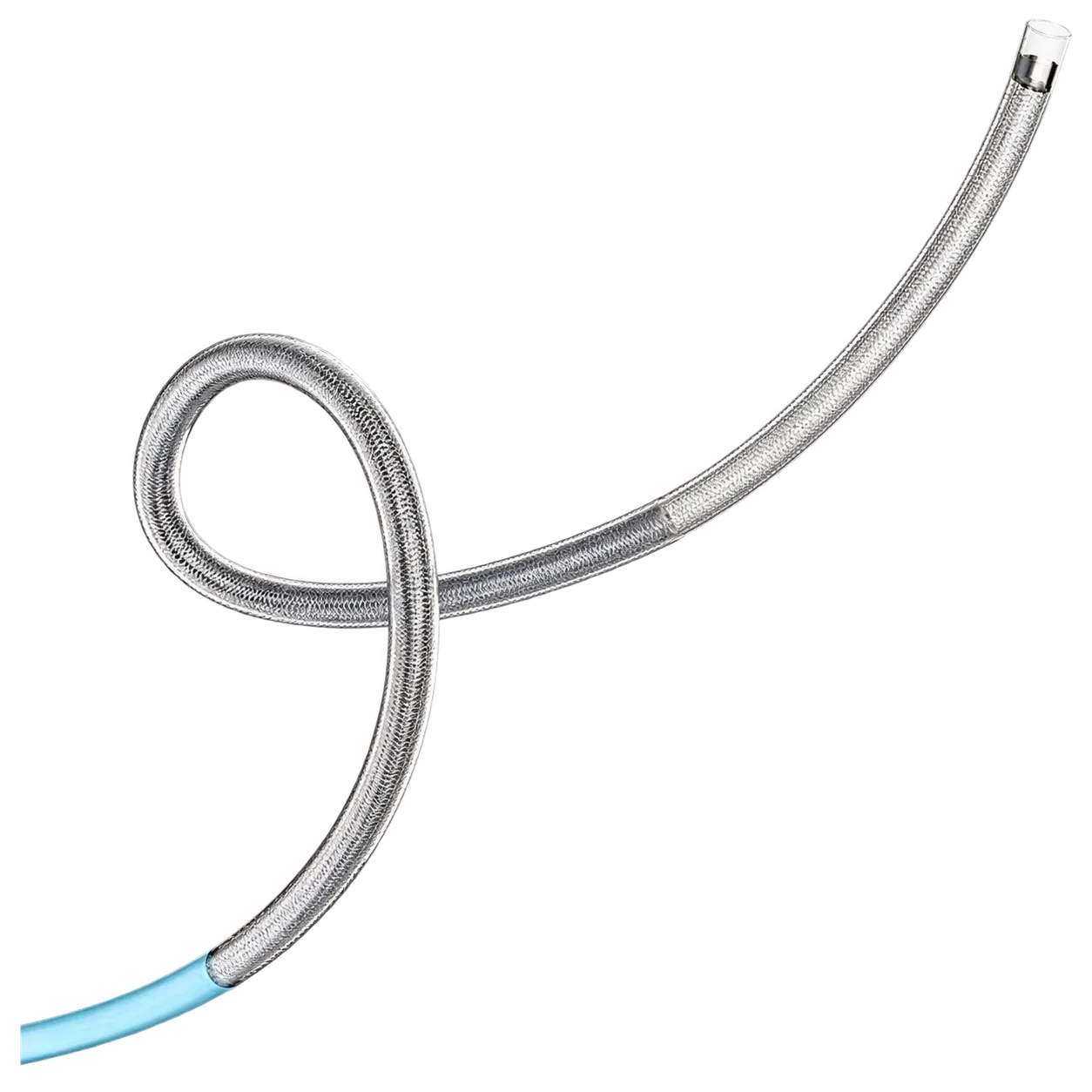
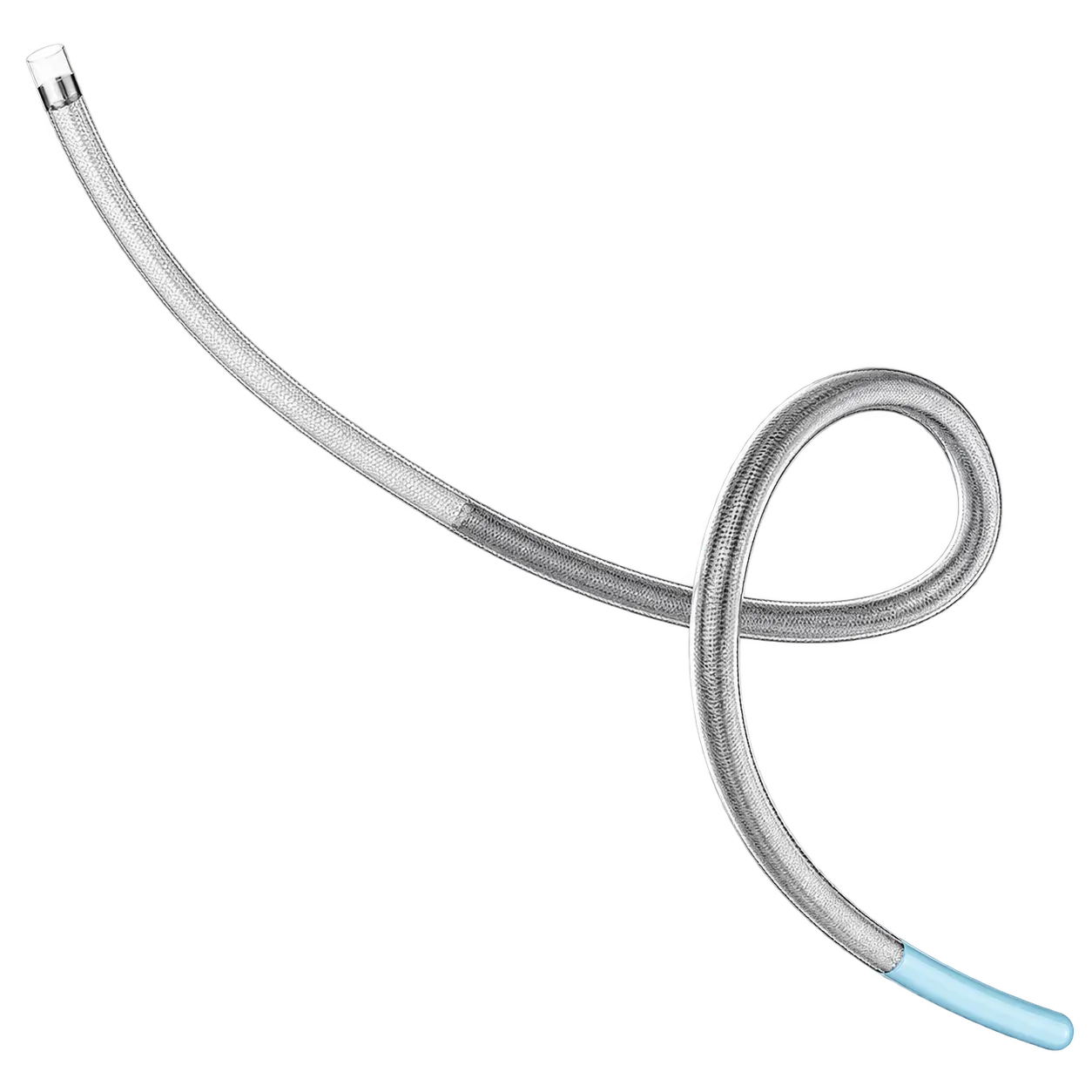
A support catheter solves the geometry. Advance it up the carotid and as far distally as the anatomy allows; it becomes the new starting point. As a result, devices travel a short supported distance rather than a long unsupported one. The design addresses the challenge of getting the catheter there. It has to be firm proximally, or it buckles instead of advancing. It has to be compliant distally, or it straightens the vessel it is trying to follow. Hybrid reinforcement provides both. The transition between them matters as much as either, since an abrupt change in stiffness creates a point that catches or kinks. Tip length scaling with catheter length follows the same logic, giving the longest catheter the longest compliant section. Catheter choice is made against two things.
The target vessel and the device to be delivered through it. Both are assessed on imaging beforehand. Medigear.uk supplies the instructions for use with every order.