
Peripheral arterial disease narrows the vessels carrying blood to the legs, and the pattern differs from coronary disease in ways that change the equipment. Lesions are longer, often running many centimetres rather than a few millimetres. Vessels vary enormously in calibre along their course, from iliacs of ten millimetres or more down to tibial vessels of two or three. Calcification is frequently heavy.
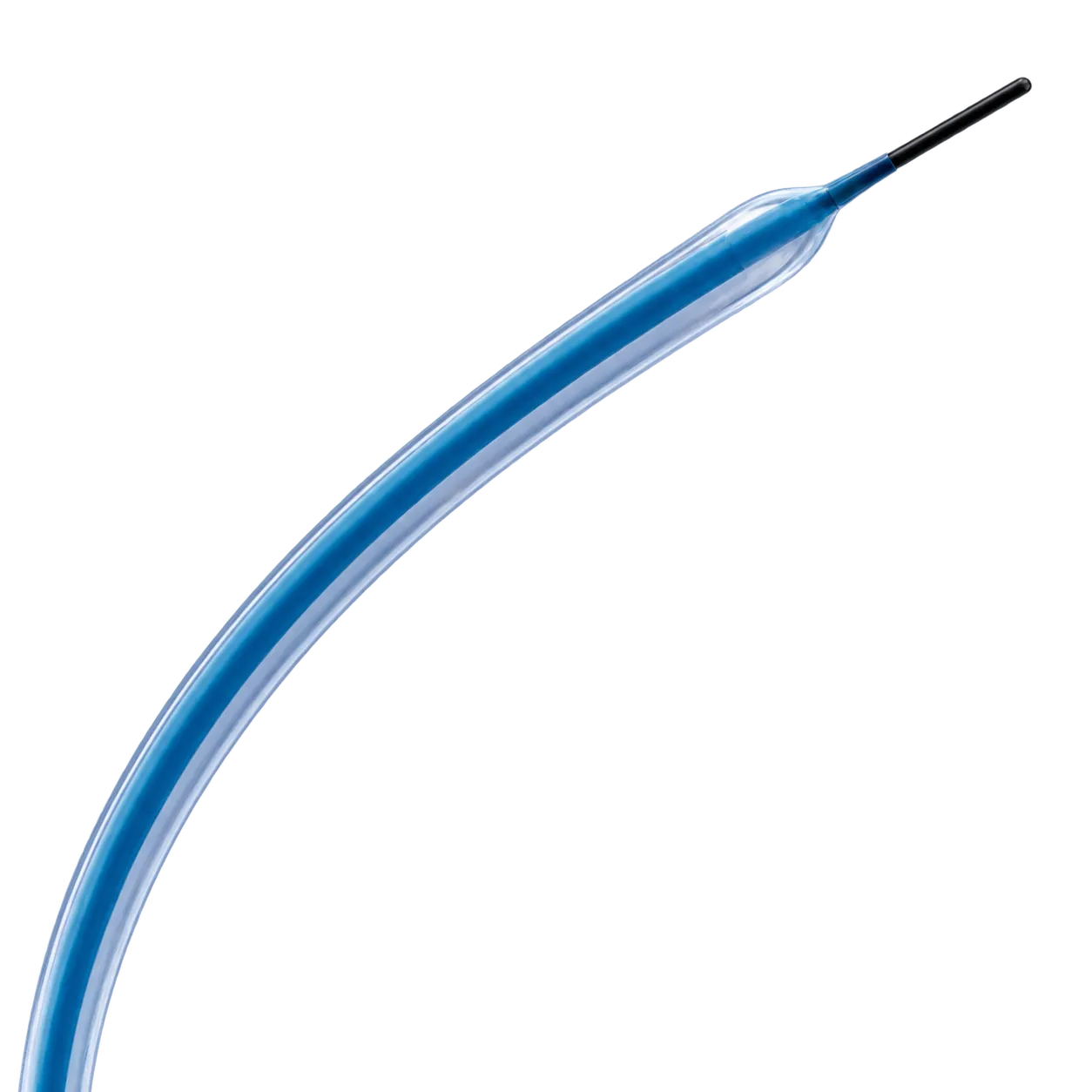
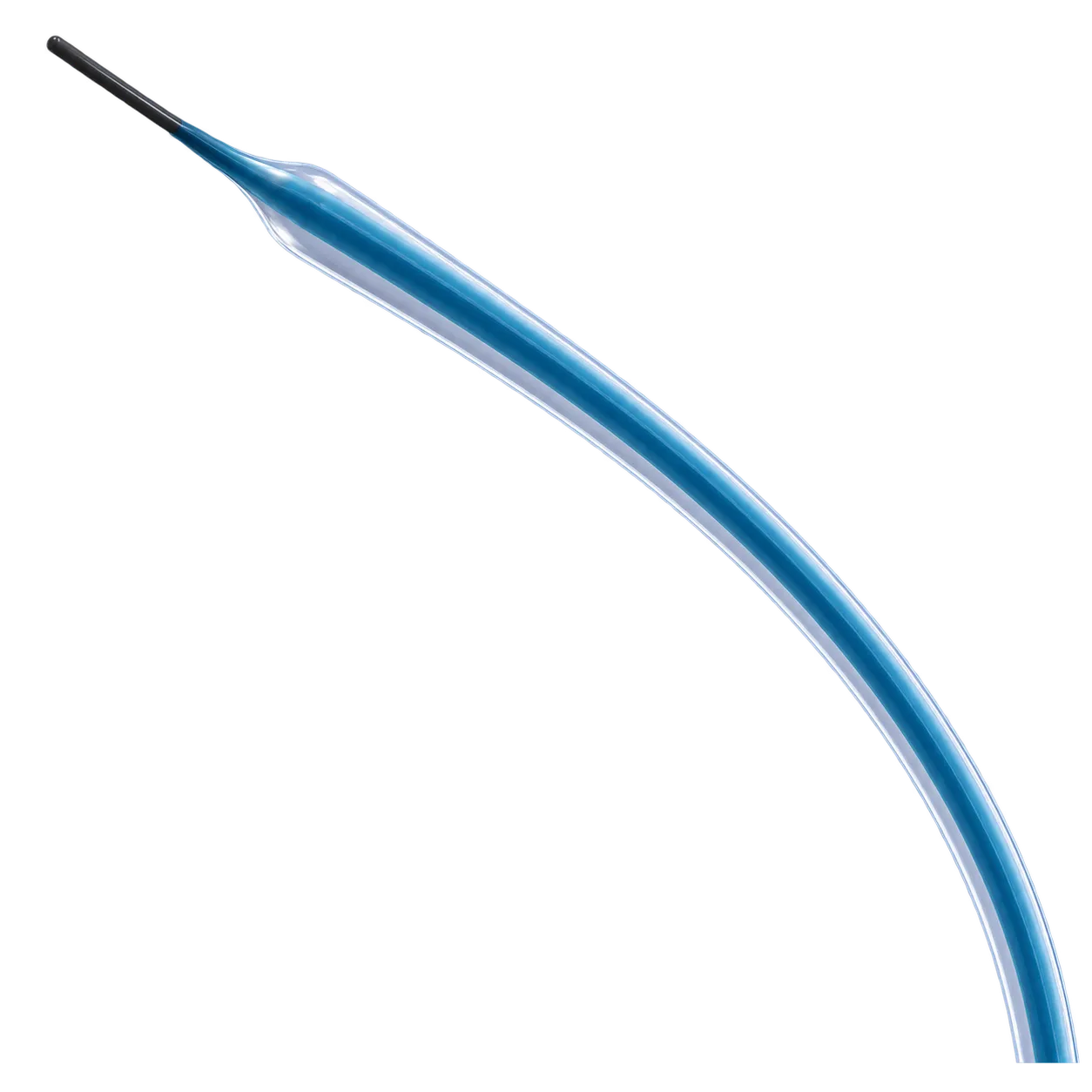
Balloon angioplasty opens those narrowings, either as the definitive treatment or as preparation before a stent. Sizing follows the vessel, which is why a peripheral range needs both a wide diameter span and long working lengths. Treating a fifteen centimetre superficial femoral lesion with a twenty millimetre balloon would mean repeated overlapping inflations, each with its own risk of a gap or a dissection at the join. A 150 mm balloon does it in one.
Pressure is the other half of the decision. Every balloon has a nominal pressure at which it reaches its labelled diameter and a rated burst pressure beyond which it must not be inflated. Between those, diameter grows with pressure according to the compliance of the material. Calcified lesions resist and demand higher pressure, which is where knowing the ceiling matters most. Inflating past the rated figure risks rupture, and a balloon rupturing in a calcified artery can dissect or perforate it.
Inflation is therefore done through a device with a gauge rather than by feel, and the operator works to the numbers the manufacturer has published. Medigear.uk supplies the instructions for use with every order.