
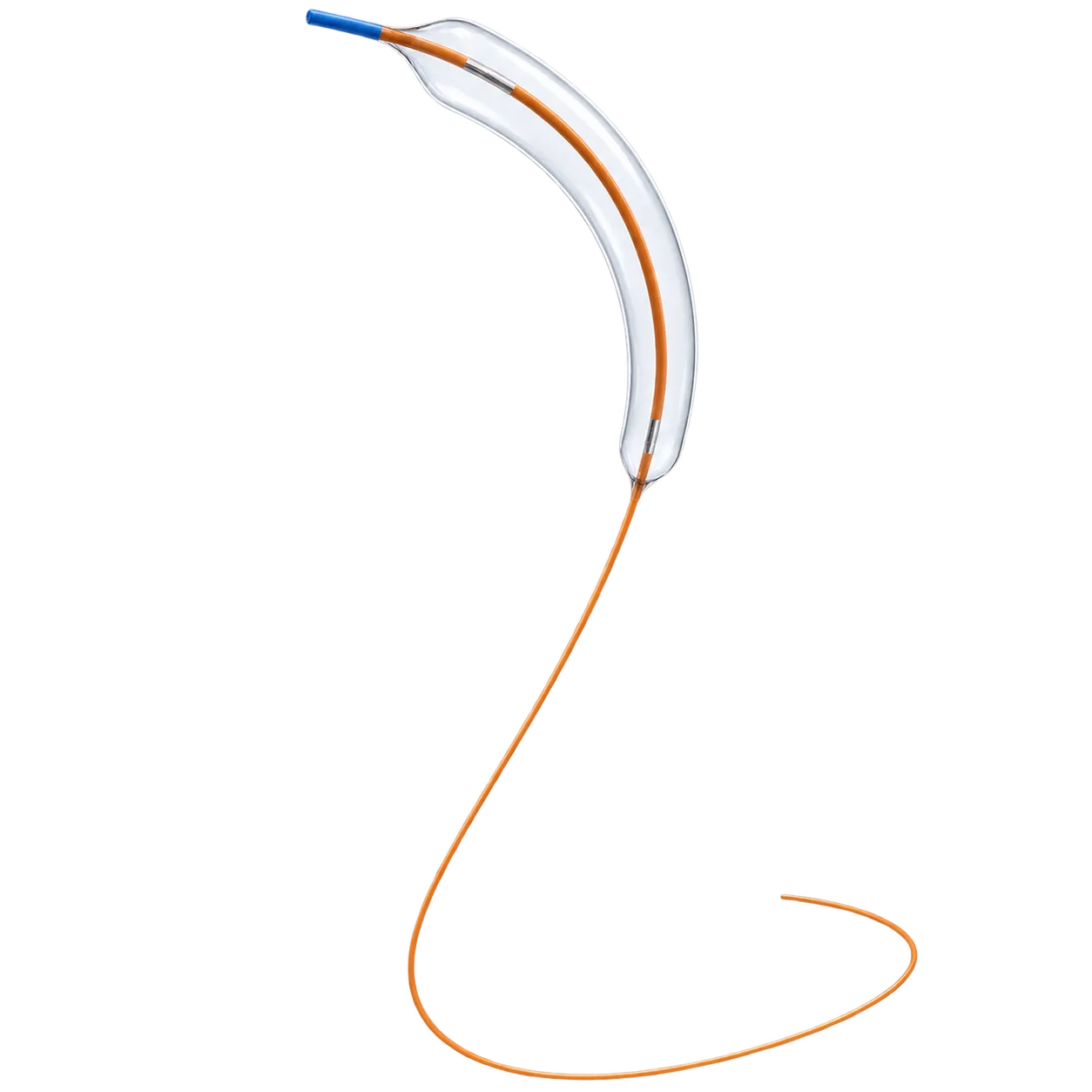
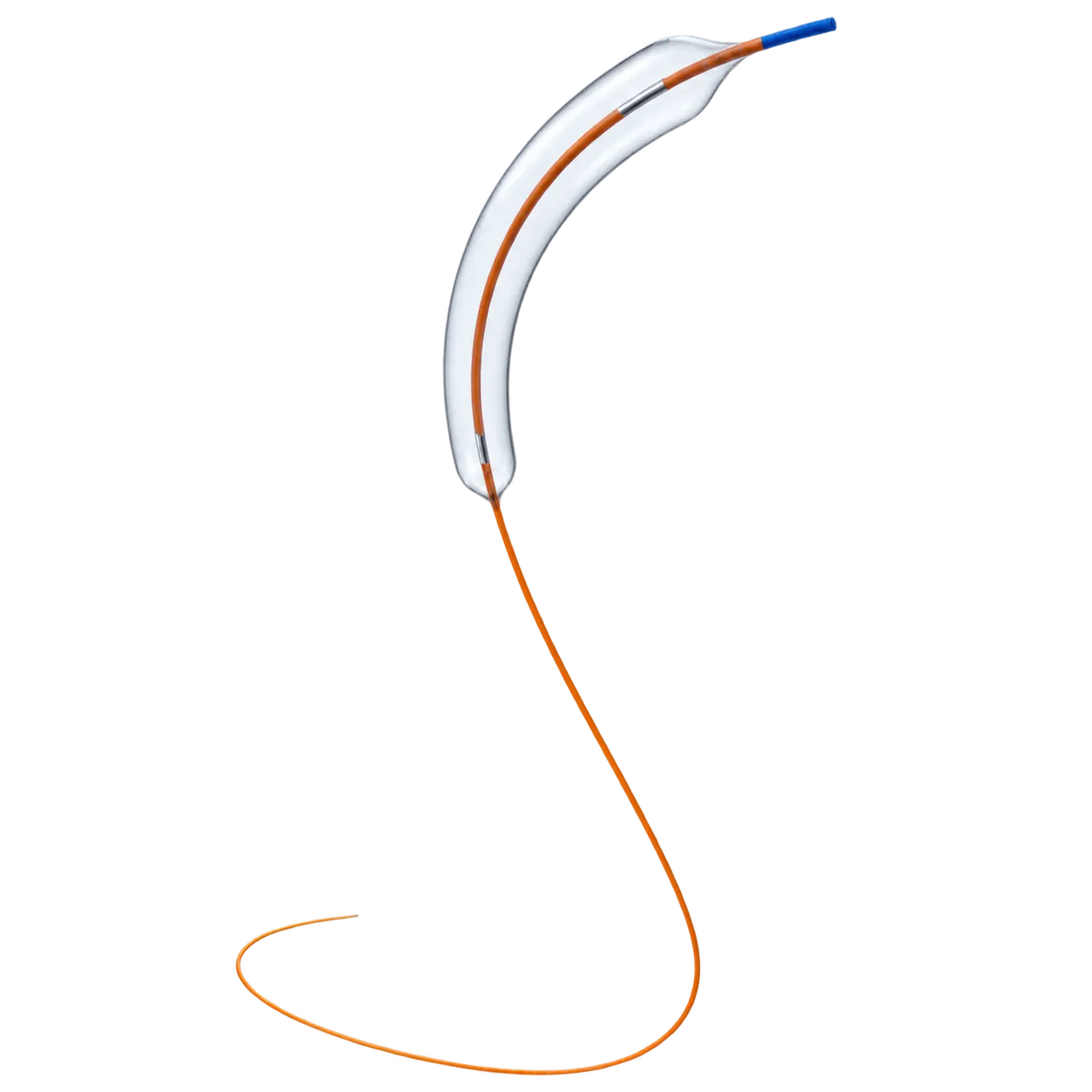
Stent deployment does not reliably produce a fully expanded stent. Work using digital stent enhancement measured this directly. At standard deployment pressure, only about a fifth of stents met the criterion for optimal expansion. Adding a non-compliant post-dilatation raised that figure substantially. Under-expansion is linked to restenosis and to stent thrombosis, so correcting it during the same procedure is worthwhile.
A non-compliant balloon is the tool for that correction because of how it behaves under pressure. Pressure has to be raised well above stent deployment levels to push struts into the vessel wall. A semi-compliant balloon would keep growing as that pressure climbed. It would over-expand wherever the vessel offers least resistance. That is the dog-boning effect, and it causes edge dissection and, at worst, perforation. Holding diameter allows the pressure to act where the resistance actually is.
The second use is the resistant lesion. Calcified segments do not yield to a semi-compliant balloon at normal pressures, and forcing one is unsafe. A non-compliant balloon delivers higher pressure with predictable geometry. Sizing follows the vessel and the stent rather than the original lesion. That is why quarter-millimetre steps and the additional 3.75 mm size matter. Length selection differs from pre-dilatation too. Post-dilatation targets a segment rather than a whole lesion, and the short 5 mm and 8 mm balloons exist for that. Inflation is done through a device with a pressure gauge, and the rated burst pressure must not be exceeded.
The balloon is then withdrawn, and the result assessed angiographically before the case ends. Medigear.uk supplies the instructions for use with every order.