
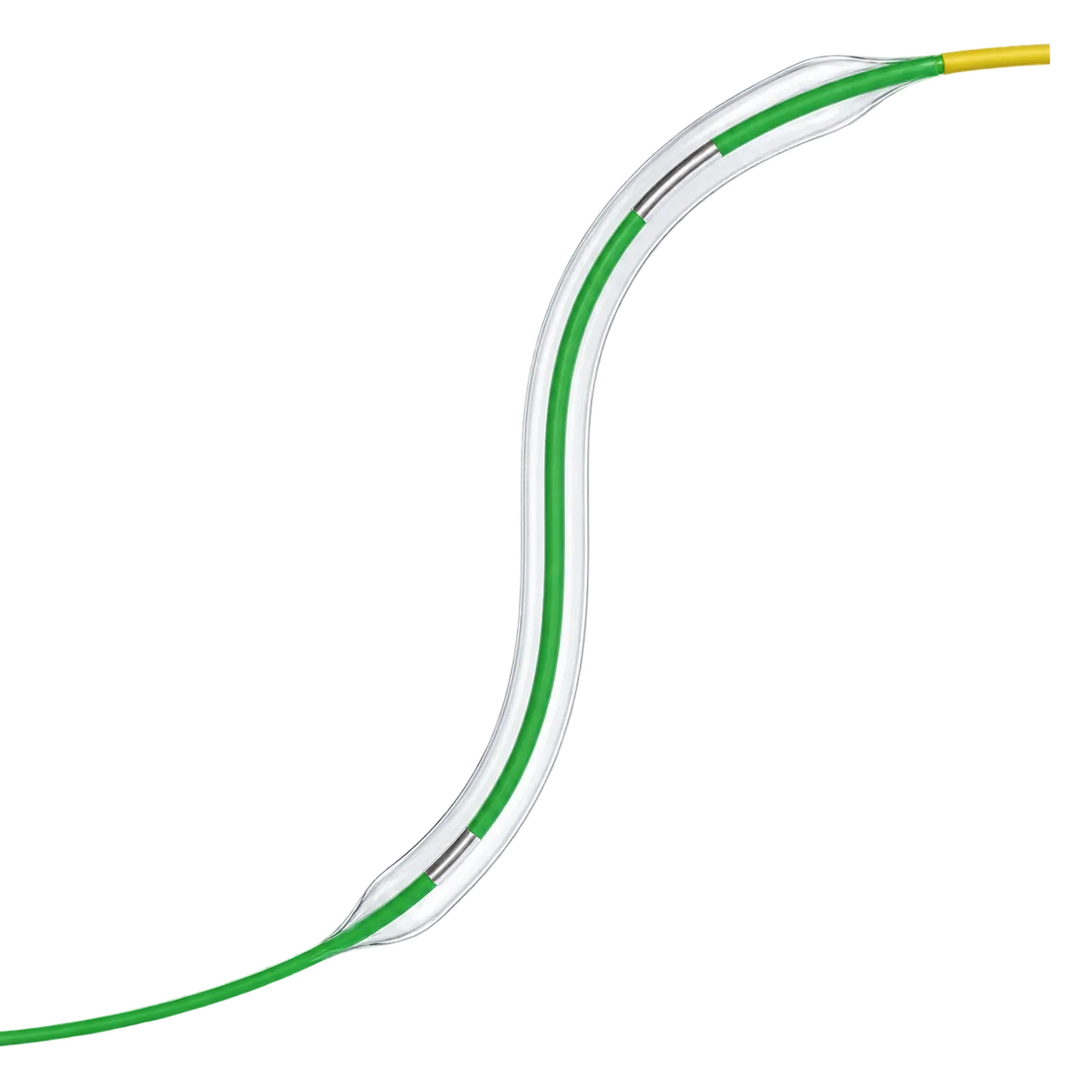
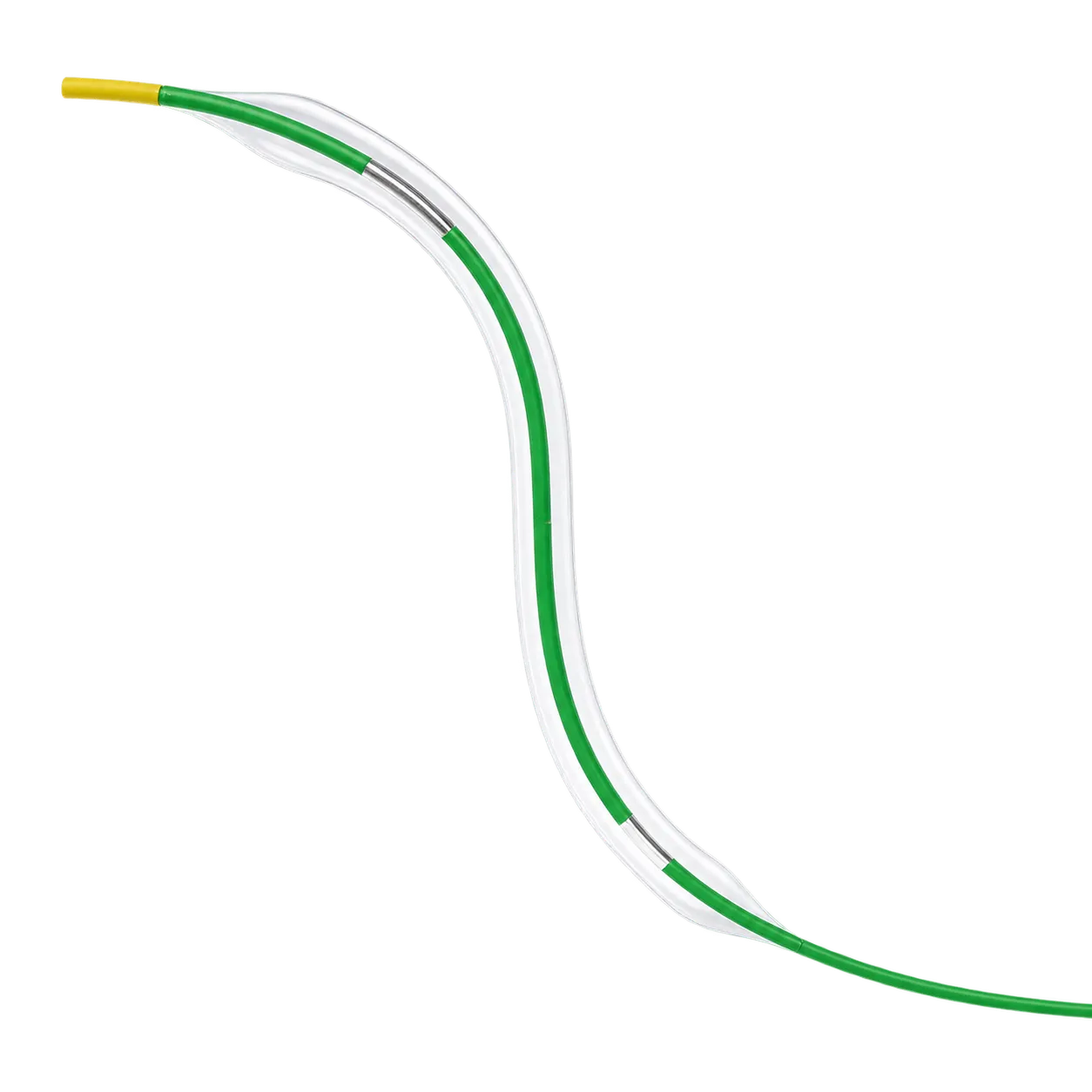
Balloon angioplasty opens a narrowed coronary artery by inflating a balloon inside it. In current practice, this is usually preparation rather than definitive treatment. The lesion is dilated so a stent can be delivered and expanded fully against the vessel wall, because a stent forced into an unprepared lesion may not expand evenly. Plain balloon angioplasty without a stent still has a place in small vessels and in-stent disease.
Balloon sizing is the central decision, and it rests on two numbers the operator must have. Nominal pressure is the pressure at which the balloon reaches its labelled diameter. Rated burst pressure is the point beyond which it must not be inflated, and it is calculated statistically from mean burst pressure and its standard deviation rather than being chosen as a round figure. Between those two pressures, a semi-compliant balloon grows, and the compliance chart states by how much at each step. Sizing the balloon to the reference vessel therefore means reading a chart, not reading the label alone.
The consequences of getting it wrong run both ways. An undersized or underinflated balloon leaves the lesion inadequately prepared. An oversized balloon, or one taken past its rated pressure, risks dissection, perforation, or rupture, which is why inflation is done through a device with a pressure gauge rather than by feel. Diameter selection follows the vessel, from 1.25 mm for very small or tightly narrowed segments up to 5.00 mm for large proximal arteries.
Length follows the lesion, with longer balloons treating a diseased segment in one inflation. Medigear.uk supplies the instructions for use with every order.