
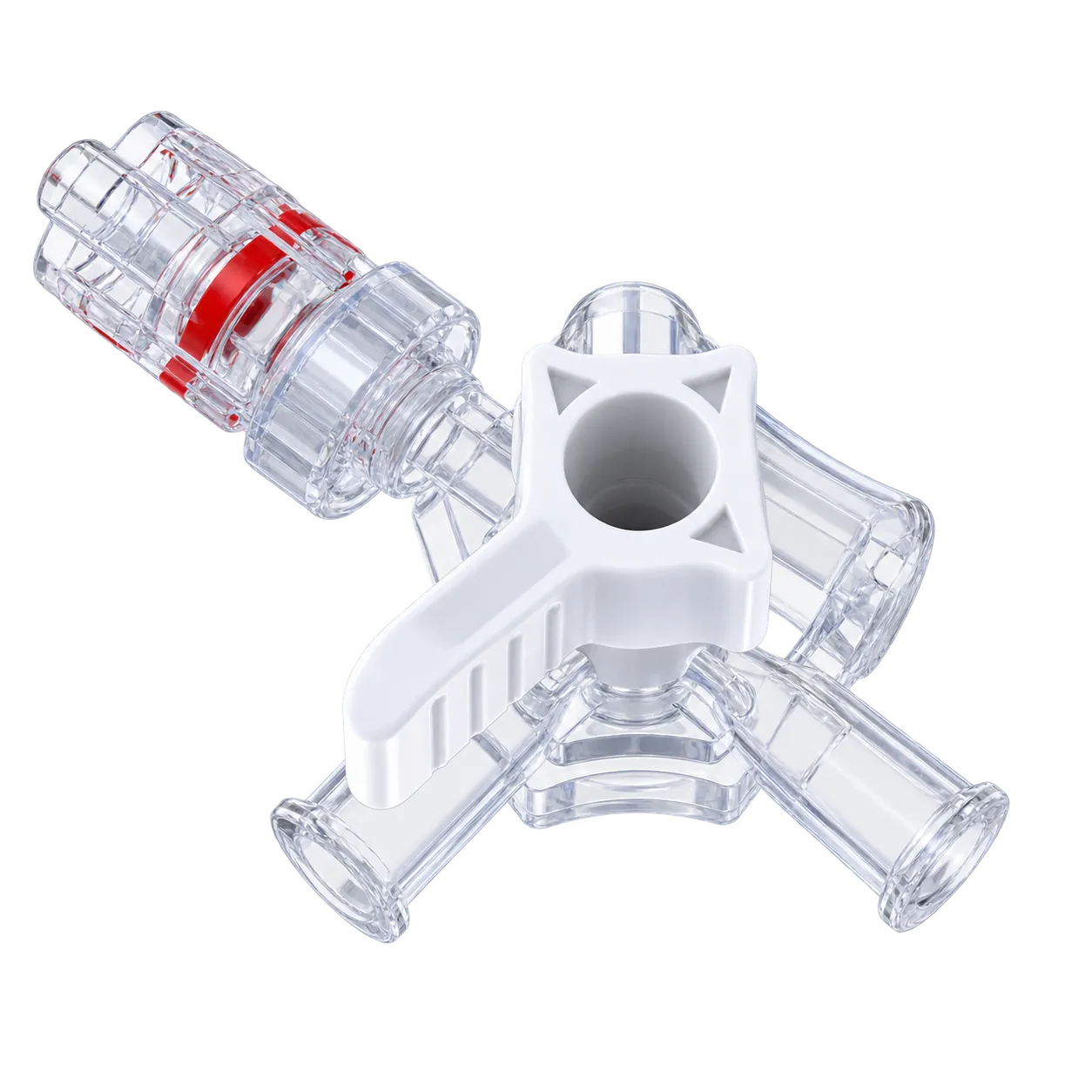
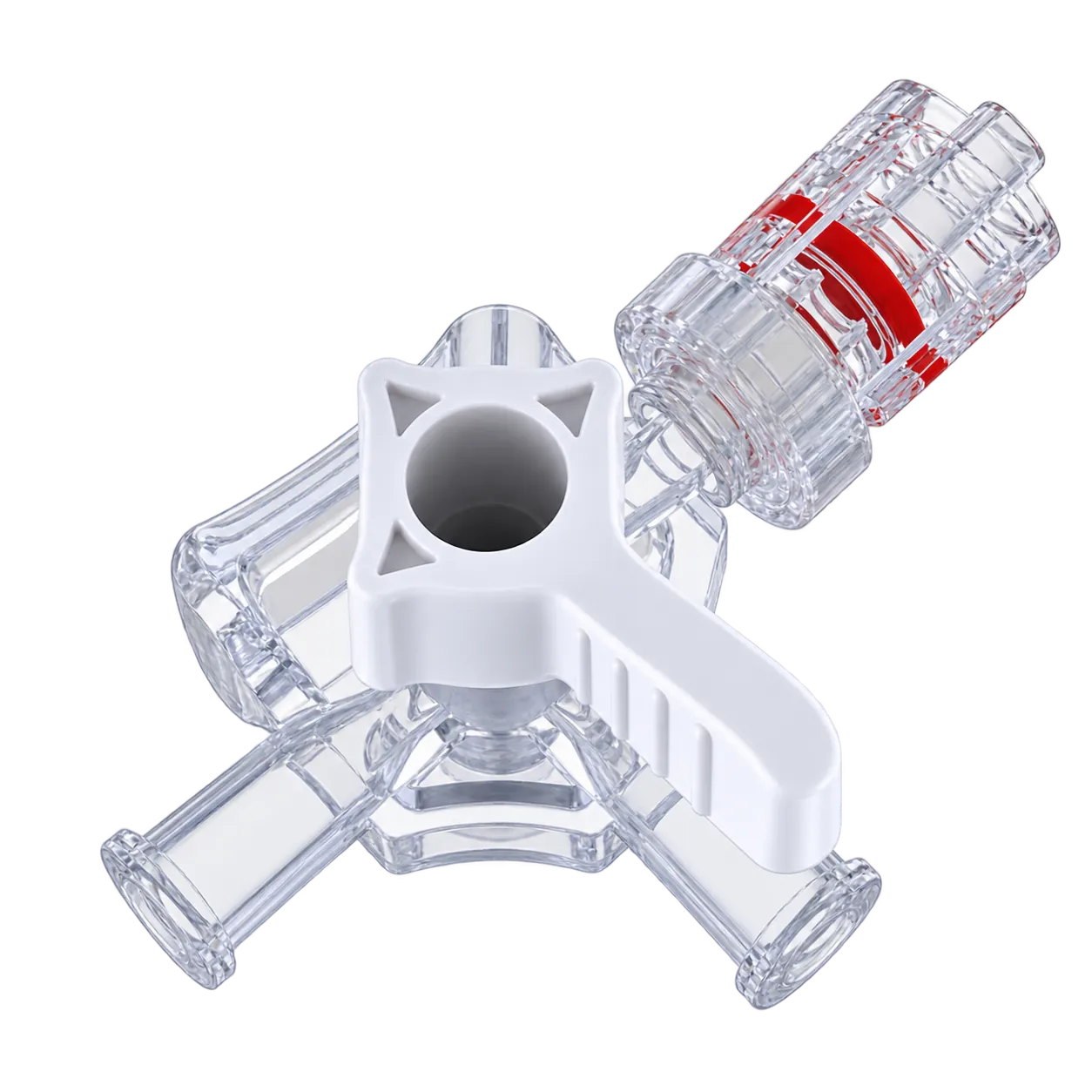
Almost every infusion or injection circuit has a point where flow must be switched. A syringe is connected without interrupting an infusion, a line is shut while a connection is changed, or contrast is directed toward the patient rather than back toward the source. A stopcock does all of that from a single component that stays in the circuit.
Two failures matter. The first is leakage, which is a nuisance at gravity infusion pressures and not at powered injection pressures. A stopcock in a contrast circuit sees several hundred psi during an injection, and a component that seals at infusion pressure may not hold at that. Pressure rating therefore has to match the application, not be assumed.
The second is a drug attacking the component. Polycarbonate is widely used in Luer fittings because it is clear and rigid, and it is vulnerable to stress cracking when exposed to lipid formulations. Propofol is a common example, and cracking has caused leaks and disconnections in practice. A material is chosen to resist, removing a failure mode rather than mitigating it. Beyond material and pressure, the practical detail is the handle. An operator reading a stopcock at a glance is relying on a convention, and a department running both conventions side by side has a hazard rather than a preference. Selection therefore turns on three things: the pressure the circuit will see, the drugs it will carry, and the handle convention already in use. I
NT Medical Stopcocks are offered against all three. Medigear.uk supplies the instructions for use with every order.