
Aortic dissection tears the layers of the aortic wall apart, so blood travels in two channels instead of one. In type B disease, the tear begins beyond the left subclavian artery. The false channel presses on the true one. Branches feeding the spinal cord, gut and kidneys may arise from either. Untreated, the aorta can rupture. Those organs can also lose their supply.
Endovascular repair covers the entry tear so the false channel loses its inflow and clots. That works well over the covered segment. Follow-up imaging has repeatedly shown the problem. True lumen expansion and false lumen clotting often stop where the graft ends. The aorta below stays dissected, and reintervention rates reflect it.
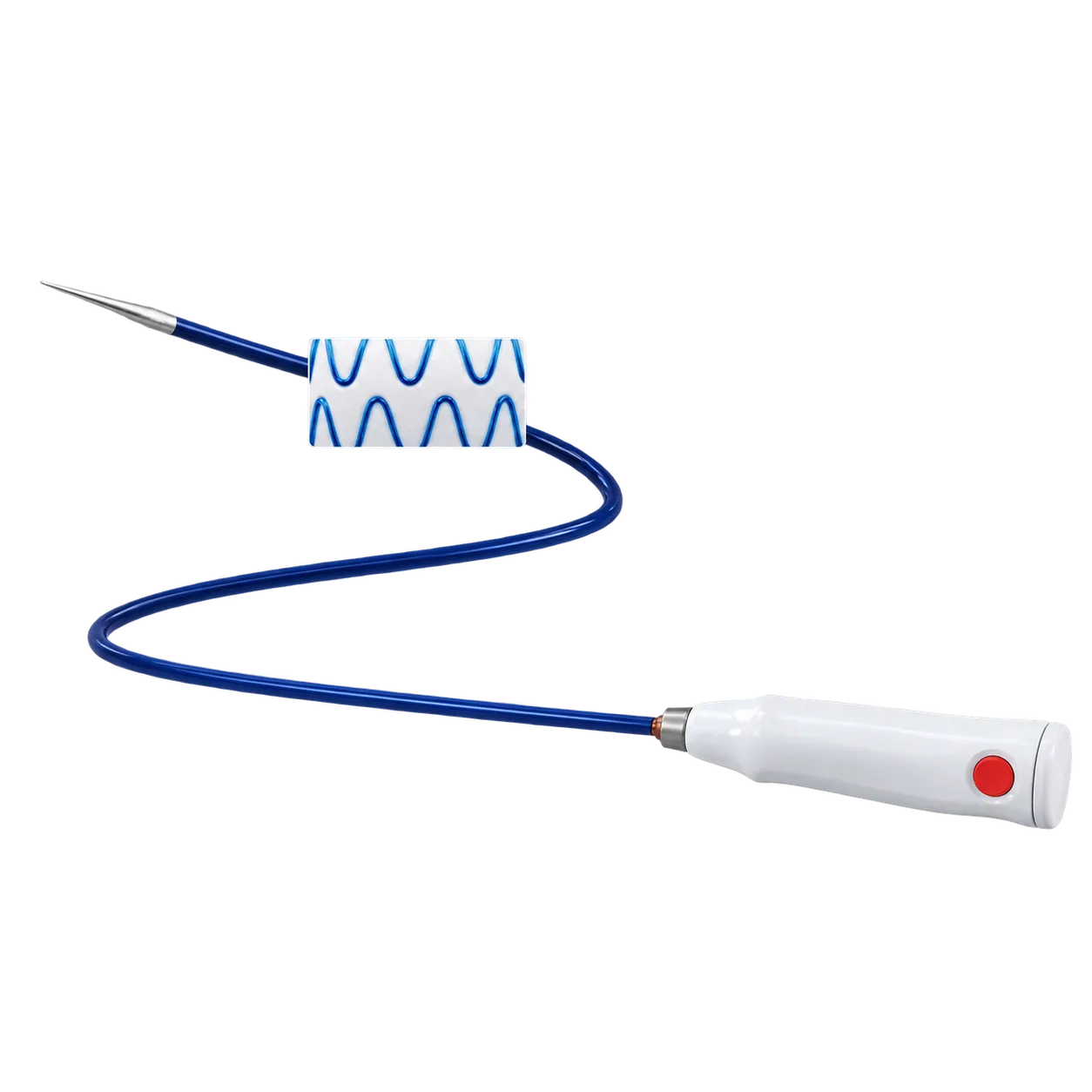
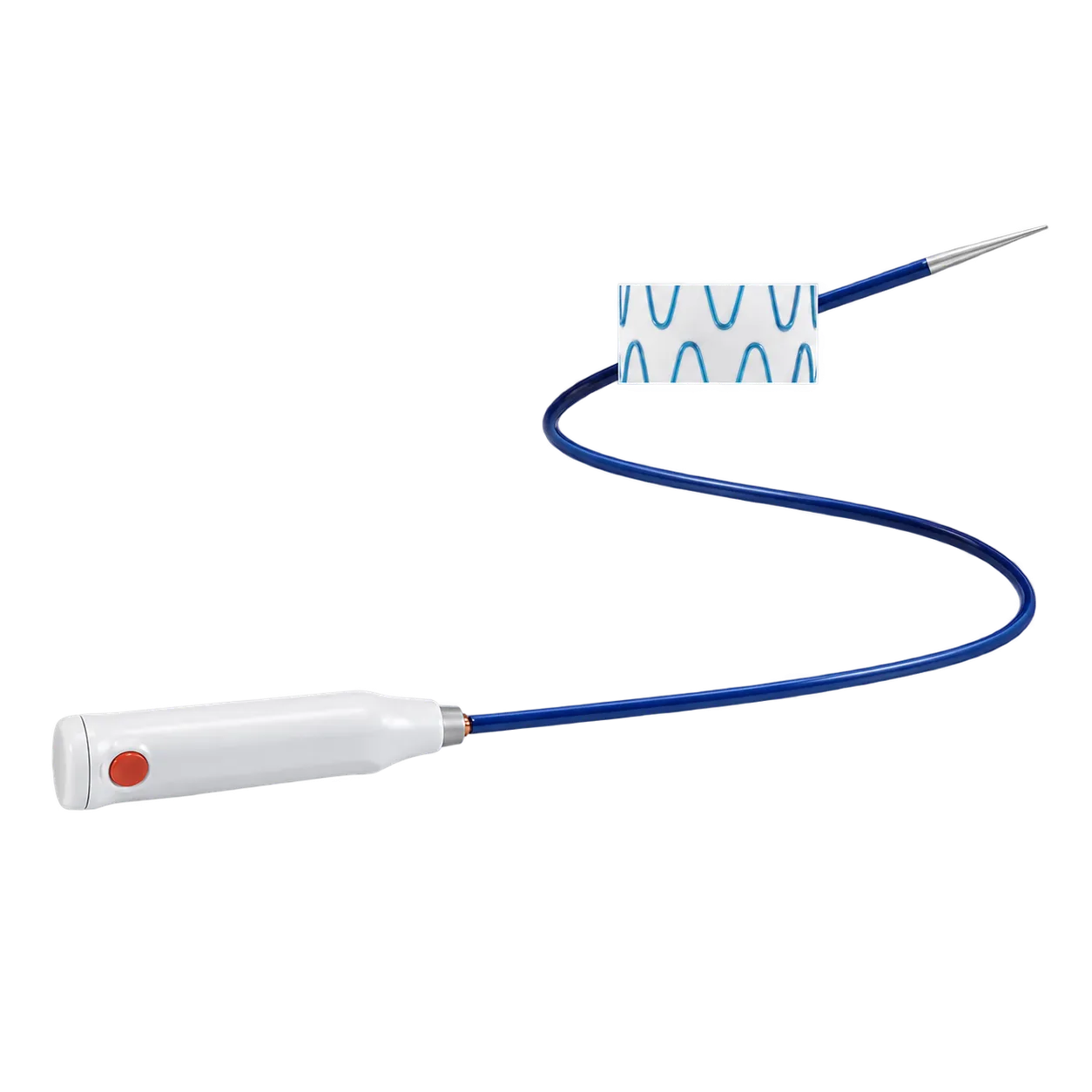
The obvious fix is a longer graft, but coverage has a cost. The intercostal arteries supplying the spinal cord leave the descending aorta along its length. Covering enough of them causes paraplegia. Visceral branches face the same risk lower down. The staged approach resolves the tension by changing what covers the lower segment. An uncovered stent mechanically props the true lumen open. Blood still passes through its struts into every branch it crosses. Remodelling extends below the covered zone without the ischaemic penalty. Taper matters here too. The true lumen is compressed and narrows as it descends, so a device sized for the proximal seal would be too large further down. Device sizing is planned on preoperative CT, and both the seal diameter and the taper are chosen from those measurements.
Overlapping components are used where one graft cannot cover the segment. Medigear.uk supplies the instructions for use with every order.