
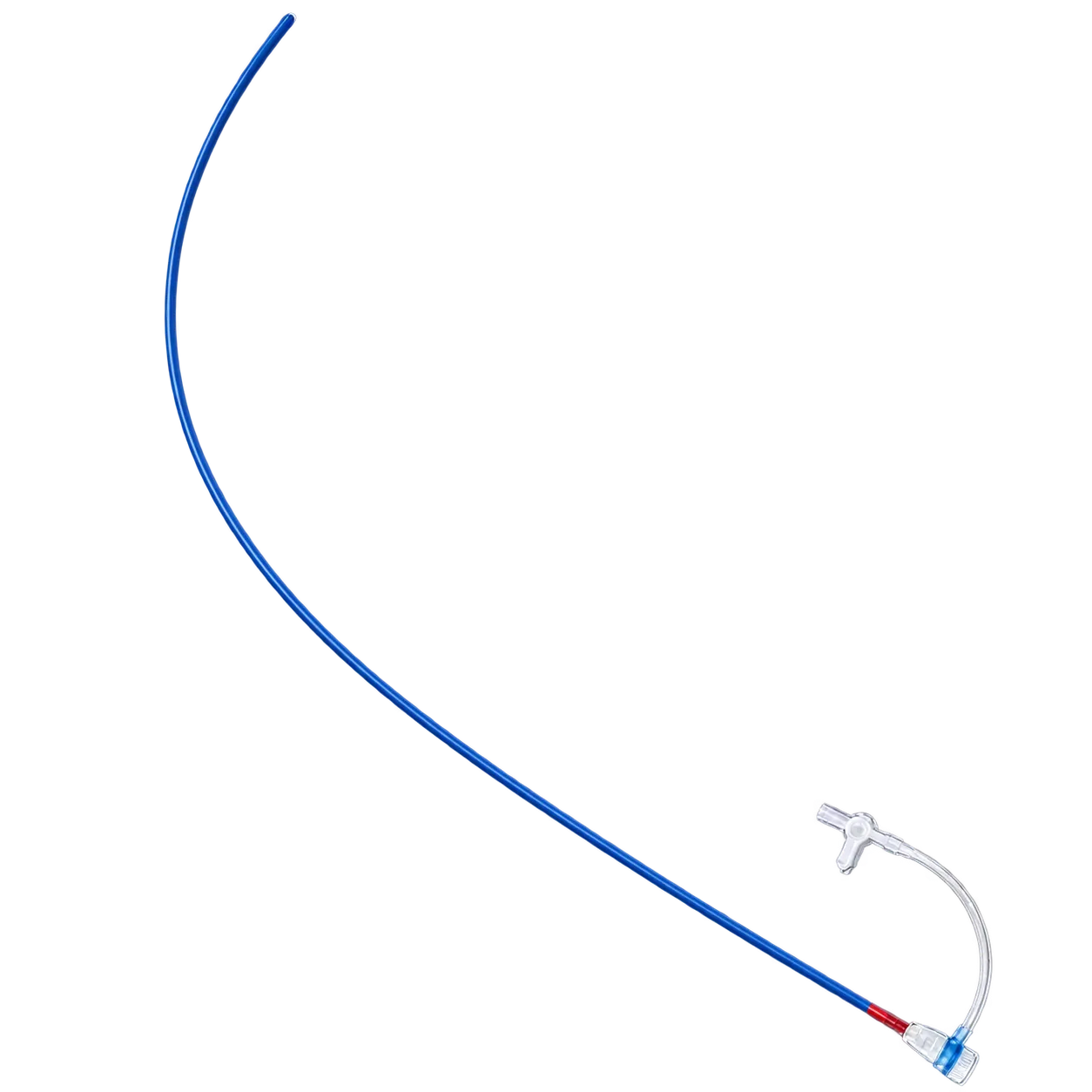
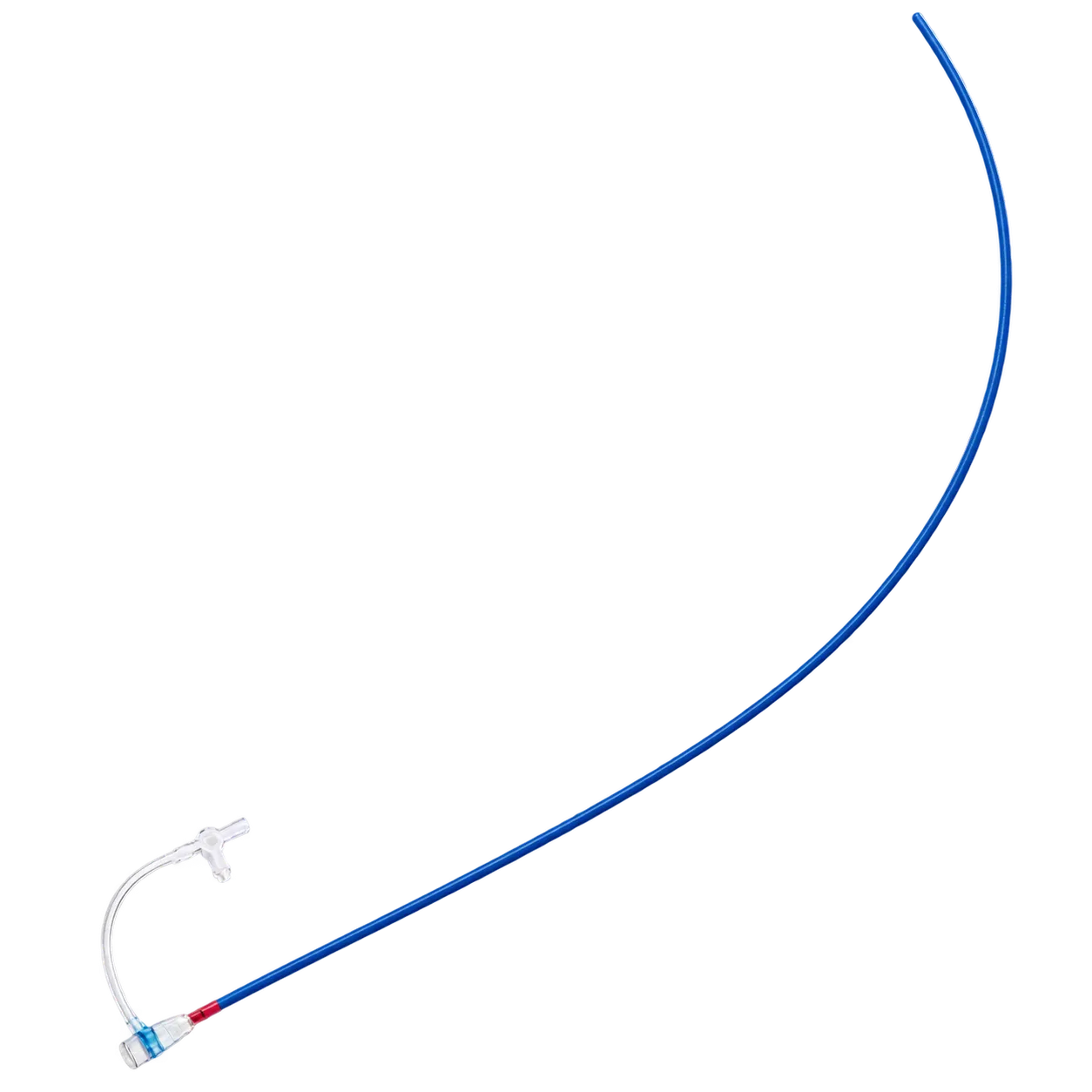
A short access sheath holds the puncture open and nothing more. Everything beyond it is unsupported, so a device pushed toward a distant target loses force to friction and to the catheter bowing against vessel walls. Over a metre of anatomy, that loss becomes the difference between delivering a device and failing to.
A guiding sheath moves the working channel forward. Advanced over a wire until its tip sits near the target, it gives a lined path that starts where the work does. Devices then travel a short supported distance instead of a long unsupported one, and the operator has a stable platform to push against. The same channel allows contrast injection close to the target and device exchange without losing position.
Three numbers decide whether a given sheath suits a case, and this range publishes all three. Inner diameter governs what fits through, so a 10Fr lumen accommodates equipment that a 6F sheath would not. The introducer requirement governs what the access site must accept, and 14Fr is a meaningful commitment at a femoral puncture. Guidewire compatibility governs what the sheath tracks over, and 0.038 inch is the standard peripheral working size. Beyond those, construction determines behaviour on the way in. A braided shaft transmits rotation, which matters when the tip has to be turned toward a branch, and resists the kinking that a plain tube would suffer at a bend.
Sheath choice is planned against the access vessel and the equipment to be delivered, and both figures have to be known in advance. Medigear.uk supplies the instructions for use with every order.