
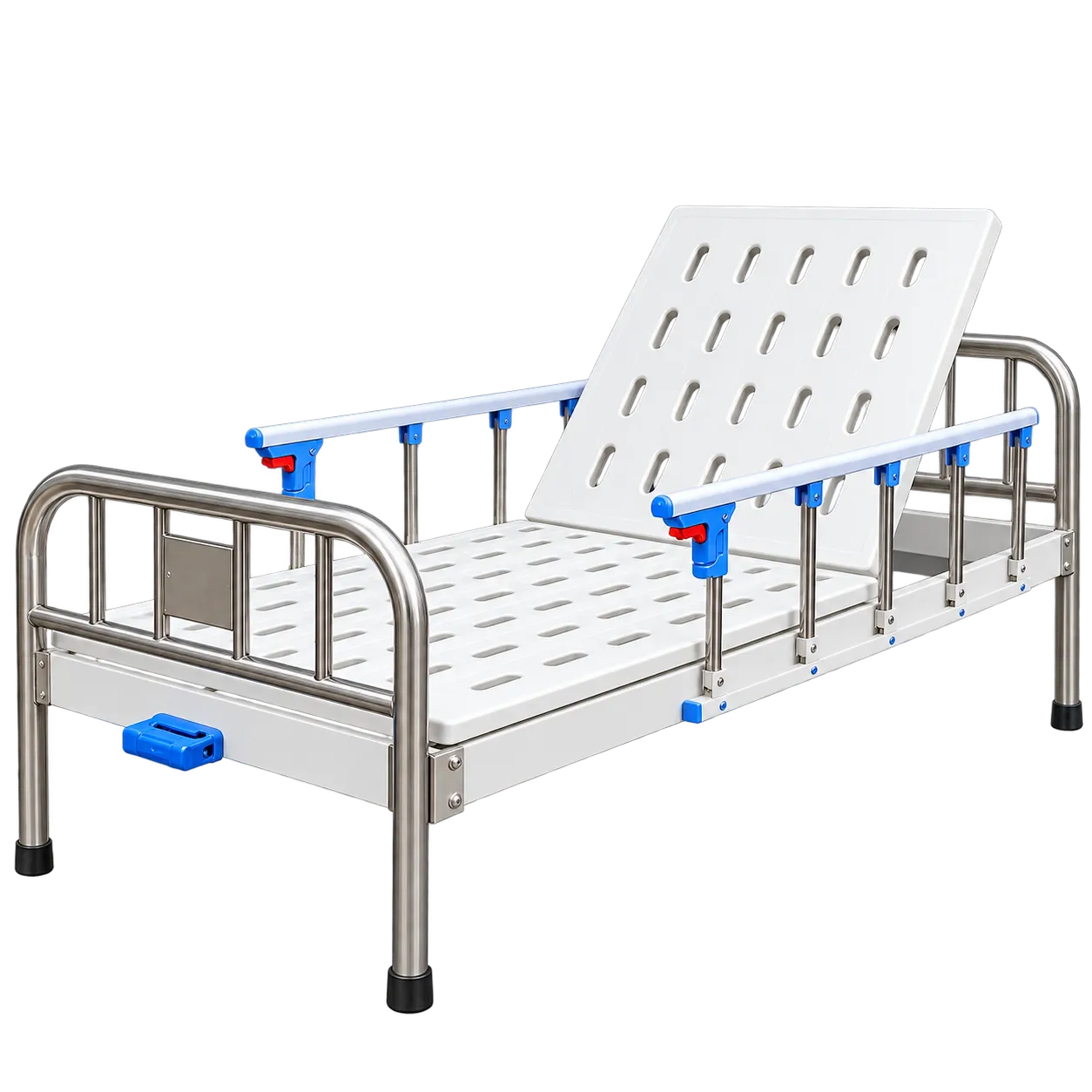
Care homes running a mixed dependency caseload get the most from a specification this specific. A home that records what each of its frames does can place the narrow ones where they fit and reserve the more capable ones for residents who need them, which uses both better. The band this frame serves is short enough to write on the equipment record: one adjusted position, one fixed location, assisted operation.
Long-stay and continuing care settings suit it where a resident's condition has settled. Months of stable need are exactly the circumstance a fixed specification serves well, and the absence of castors takes a check out of every transfer. Build a review point into the care plan so the allocation is revisited when dependency changes, rather than left until it is obvious.
Community equipment services and loan stores banding their stock by capability can use this frame as a defined tier. Recording the driven section, the deck height and the guardrail count once, at the point of purchase, means every subsequent placement decision is a lookup rather than an investigation.
Estates and facilities teams should be consulted before installation. Four fixed feet load the same points of floor continuously, so floor covering, protection pads and any making-good obligation belong in that conversation. Procurement routes across NHS trusts, local authority equipment services and independent providers each ask for their own evidence. The conformity documentation those procurement routes require is issued by the manufacturer and provided by the seller.