
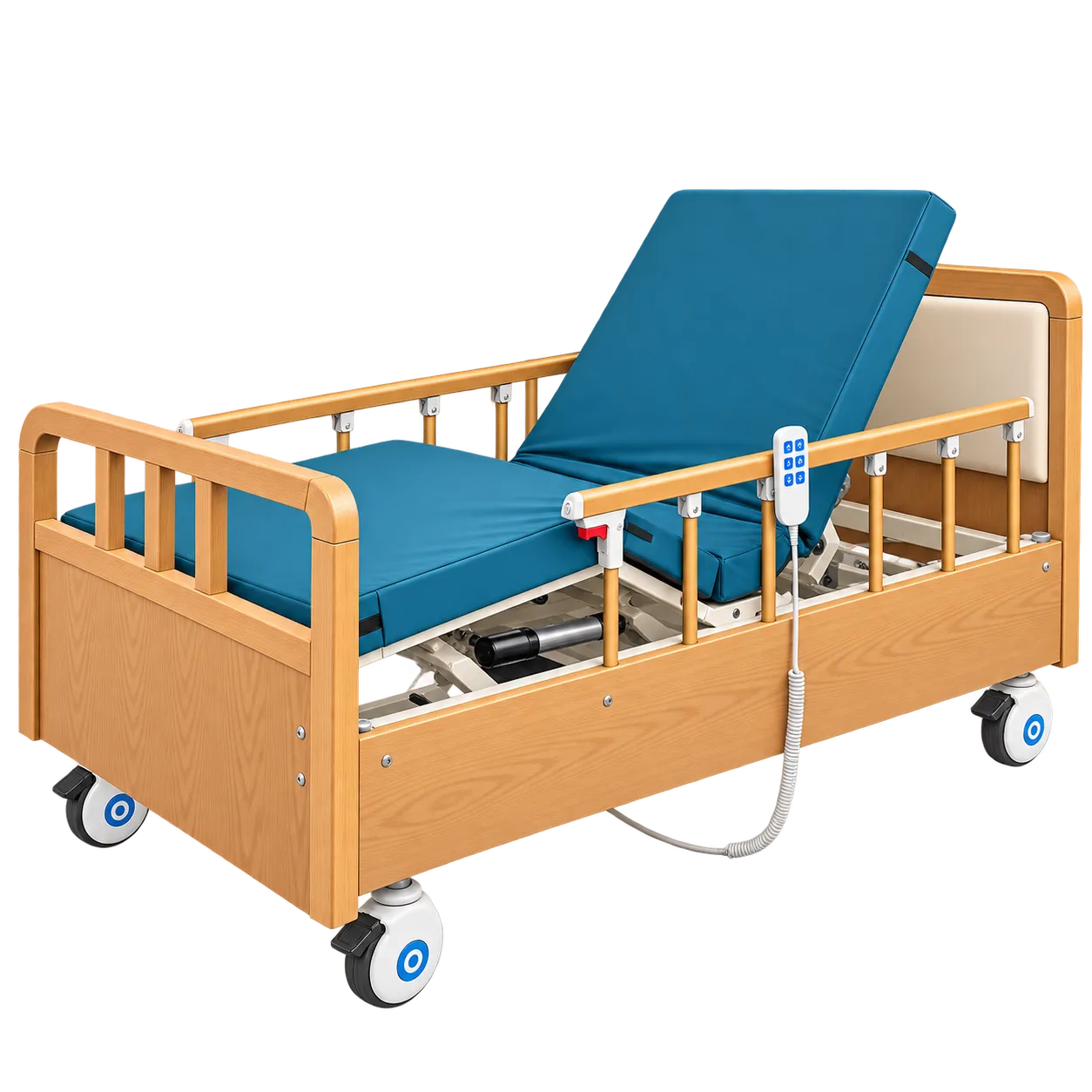
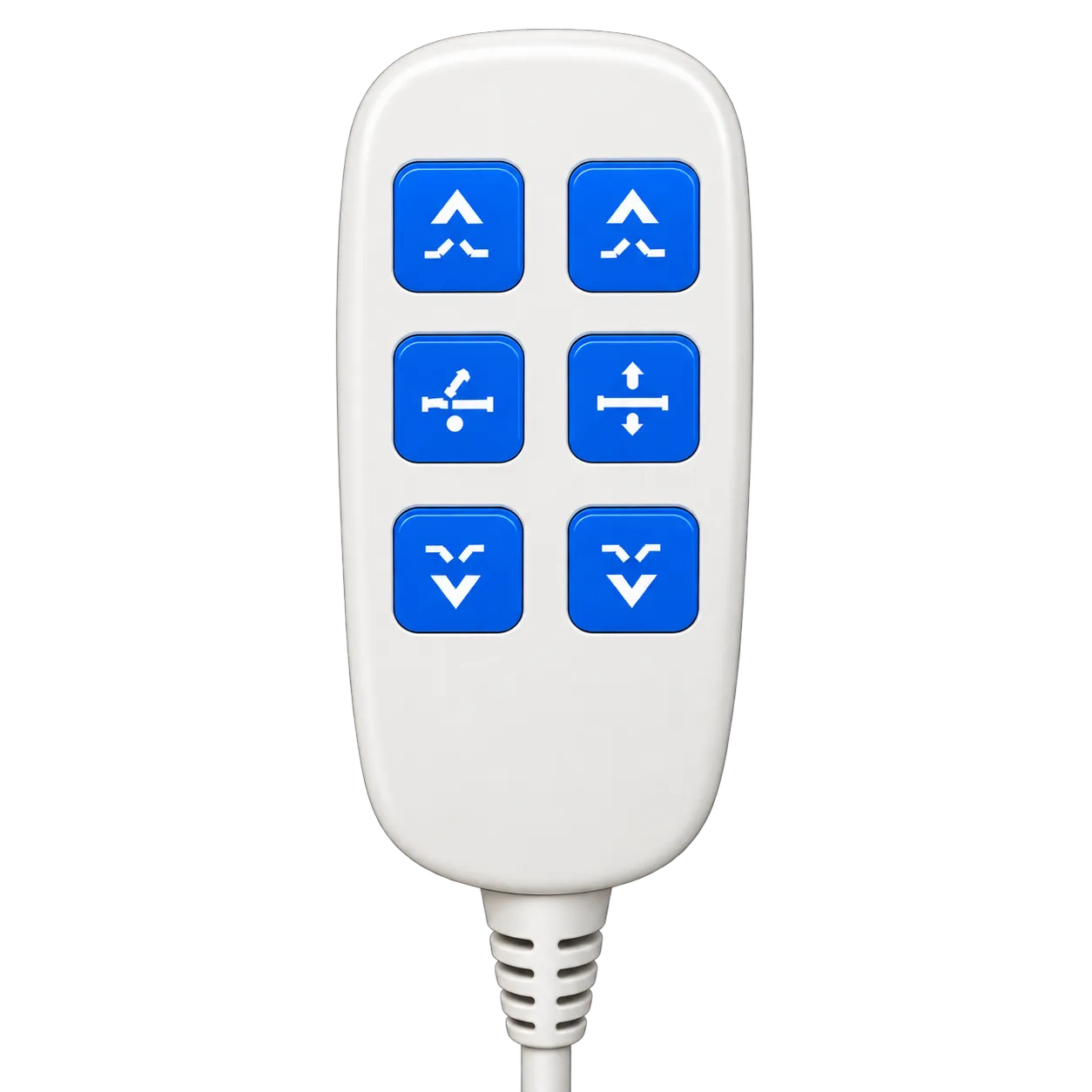
Community and home placements depend on the handset more than any other setting, because there is nobody else to press it. A resident who cannot read the symbols or tell the buttons apart has a bed they cannot use, and the failure is silent — they simply stop adjusting it. Trial the handset with the person before delivery.
Occupational therapy assessments should cover the control as a piece of equipment in its own right, alongside reach and grip. Button size, spacing, force and tactile differentiation are the same considerations that apply to any hand-operated device, and they change as sight and dexterity change.
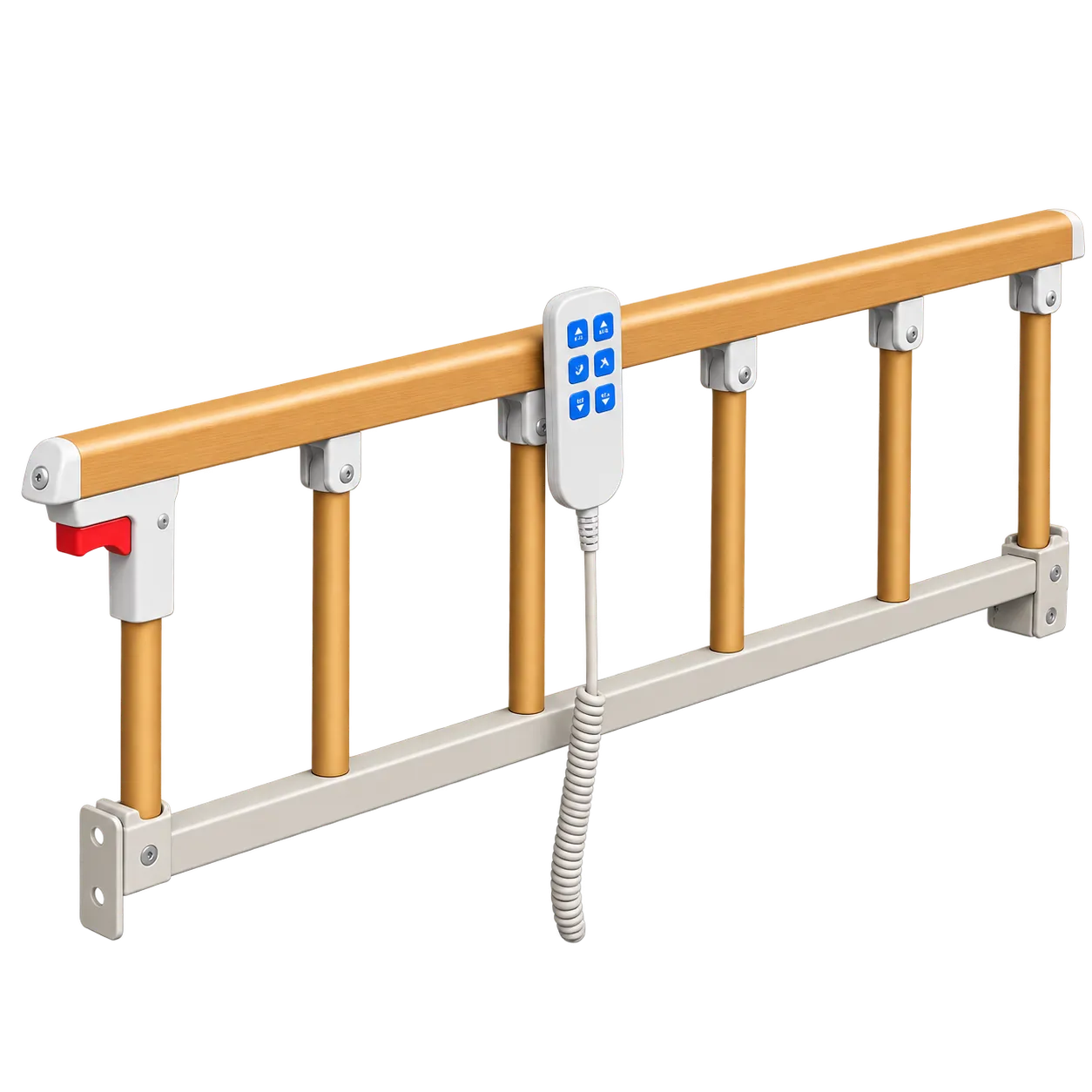
Care planning should record where the handset lives when not in use. A control that is clipped stays reachable; one that is loose ends up on the floor, and retrieving it may involve leaning past a rail. Agree the arrangement and tell whoever makes the bed.
Equipment services should hold the handset part number and lead time on file from the day of delivery, since a failed control makes the whole bed immobile. Procurement routes across NHS trusts, local authority equipment services and independent providers each ask for their own evidence. The conformity documentation those procurement routes require is issued by the manufacturer and provided by the seller.