


Everyday Centration Measurement
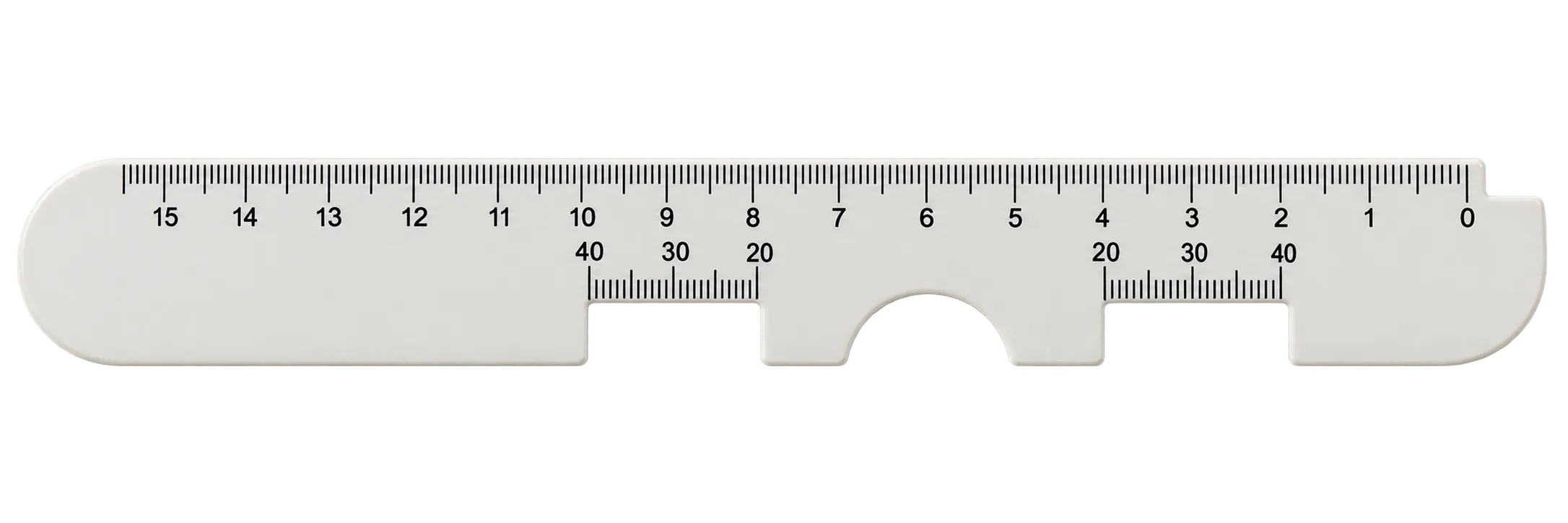
Pupillary distance is measured many times a day in a dispensing practice, and a rule handles that task without any preparation whatsoever. There is no instrument to fetch, switch on or wait for. For quick measurements during frame selection, when a patient is trying several options and an approximate figure is needed before a final measurement is taken, a rule is often quicker than anything else available. Immediacy has a value of its own during frame selection.
Independent Verification of a Doubtful Figure
When a centration figure looks wrong, or when finished spectacles do not sit as the record suggests they should, repeating the measurement on the same instrument tends to reproduce the same answer. Measuring again by a different method is a more useful check. A rule provides that second opinion immediately, and disagreement between the two is itself worth knowing about before the lenses are ordered.
Domiciliary and Mobile Dispensing
Nothing about a rule complicates a visit. It needs no power, no case and no consideration of battery life, and it weighs almost nothing in a bag already carrying frames and other equipment. For practices visiting care homes or housebound patients, having a reliable measuring tool that imposes no requirements at all is genuinely useful.
Teaching and Student Practice
Learning to locate the centre of a pupil by eye and read the figure from a graduated scale builds an understanding of centration that a digital readout can obscure. Students who have measured this way tend to interpret electronic figures more critically afterwards, and are quicker to notice when a displayed value looks implausible for the face in front of them.