
Progressive Lens Dispensing
Progressive lenses depend on the optical centre sitting where the wearer actually looks through, and the corridor is narrow enough that a centration error of a millimetre or two produces noticeable distortion at the edges. Because monocular pupillary distances are rarely symmetrical, halving a binocular figure guarantees an error on at least one eye. Measuring each side separately removes that, and for a practice dispensing progressives regularly it is the single most useful thing this instrument does.
High Prescription Dispensing
The stronger the lens, the more a displaced optical centre matters, because prismatic effect at any point away from the centre scales with the power of the lens. Patients with high prescriptions are therefore the ones most affected by approximate centration, and they are also the ones most likely to notice and least able to adapt. Accurate monocular figures are worth taking properly for exactly this group.
Routine Spectacle Dispensing
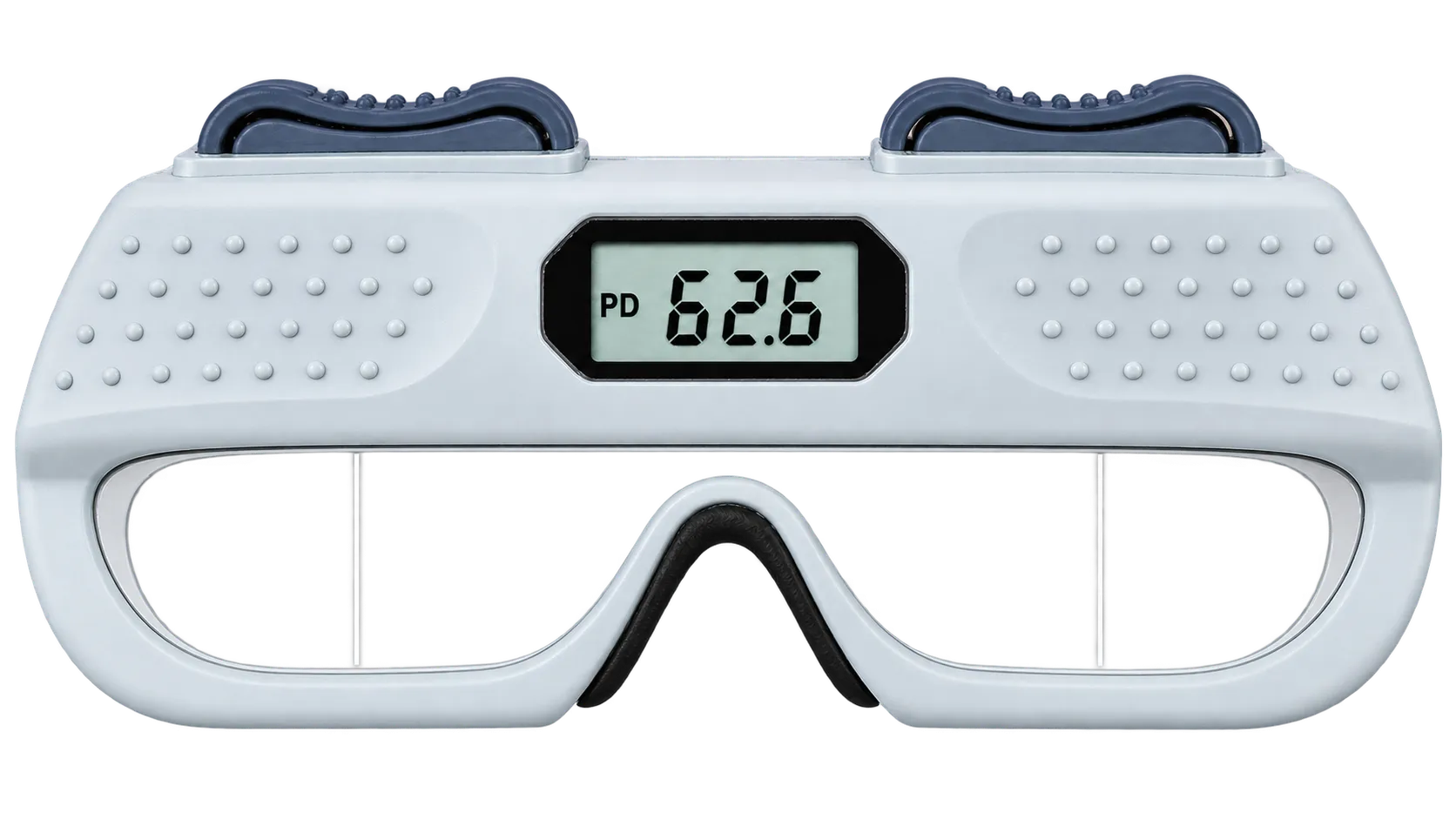
For everyday work the instrument replaces a ruler held against the patient's face, which is awkward for both parties and depends on the dispenser reading a scale at arm's length while keeping the rule steady. A digital readout and an alignment line make the measurement quicker and more comfortable, and remove the interpolation between millimetre marks that a printed rule requires.
Domiciliary and Mobile Dispensing
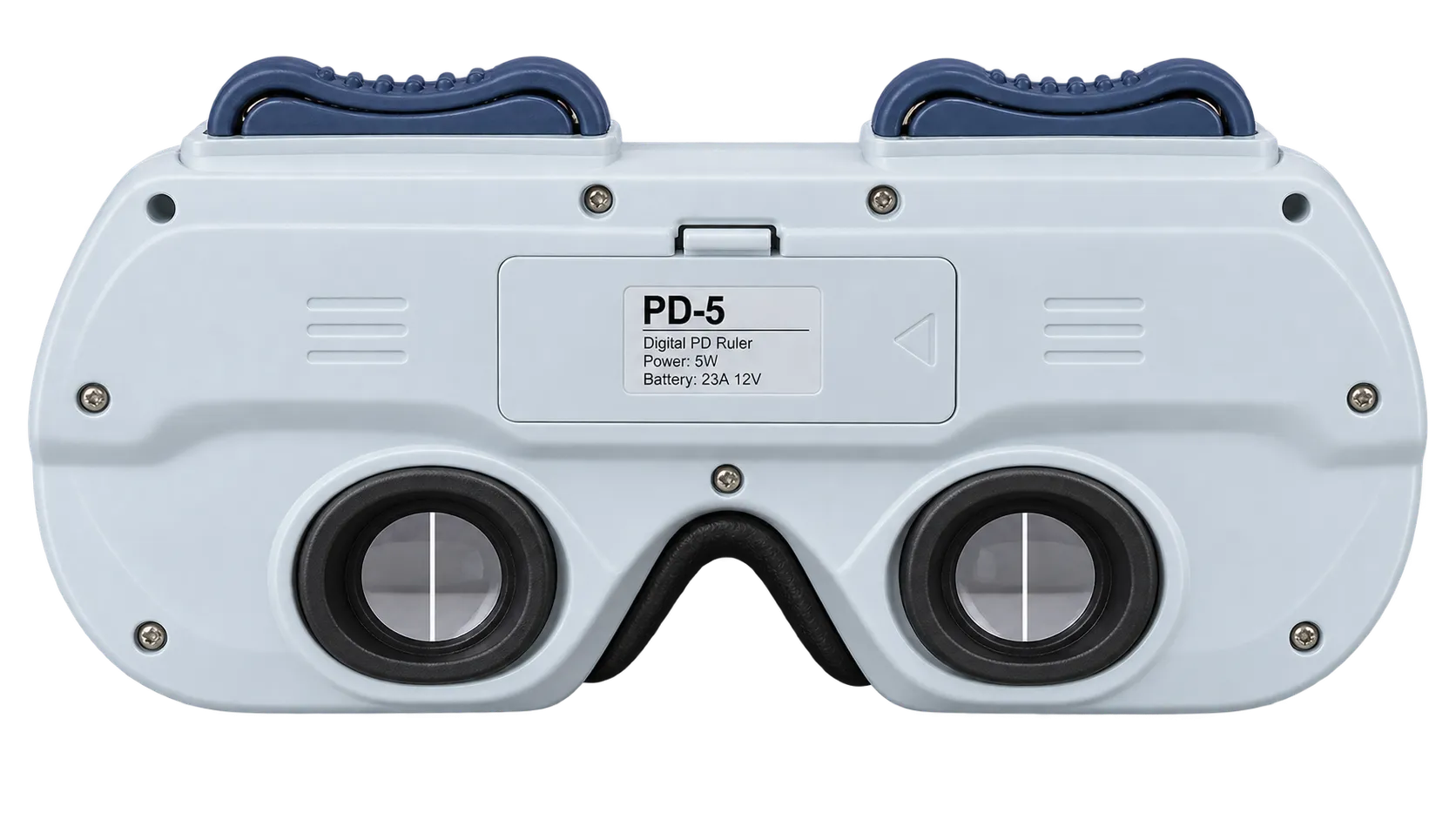
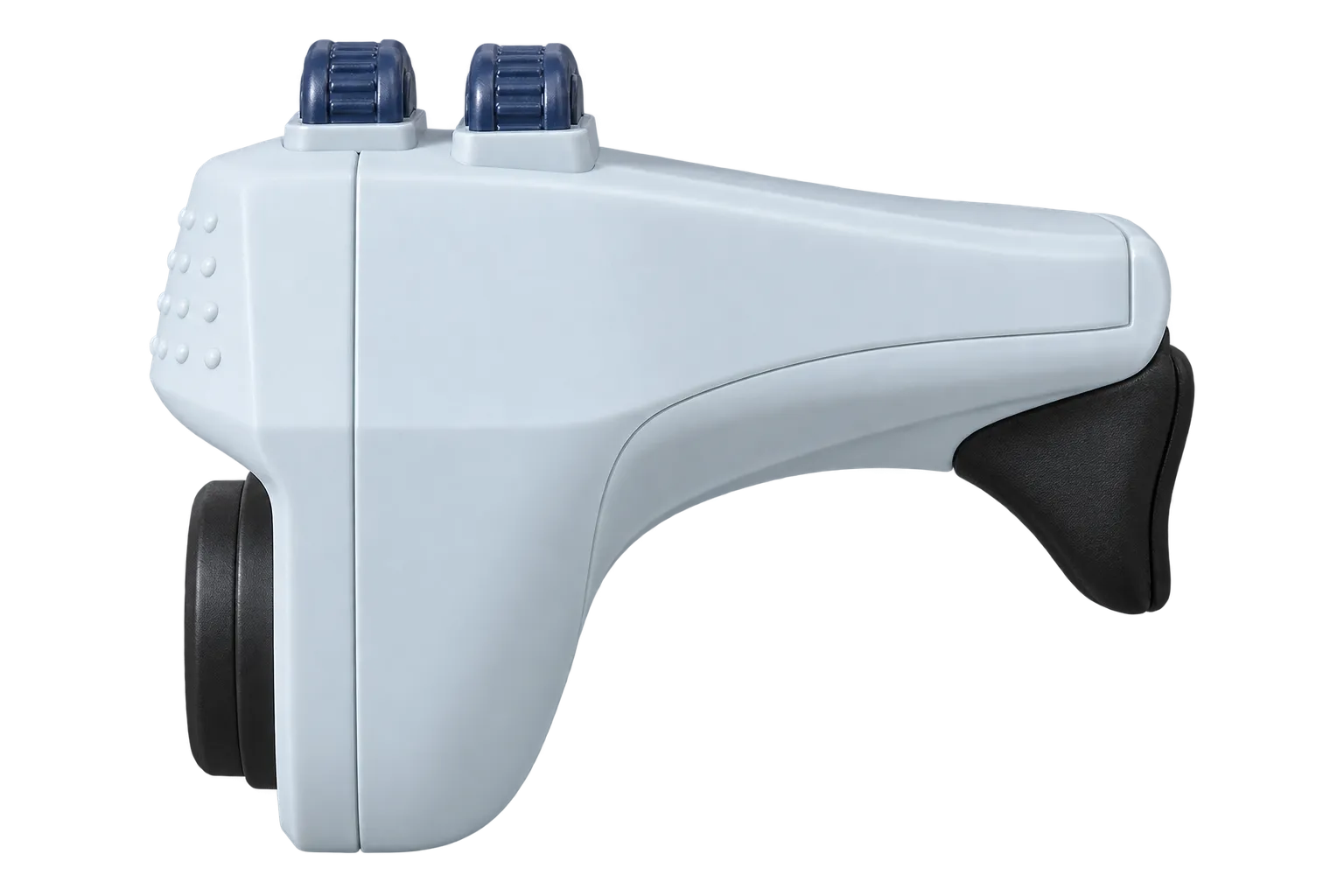
Battery operation and a 0.2kg weight mean the instrument travels without any consideration of power supply. Domiciliary visits, care home dispensing and outreach clinics can take proper centration measurement with them rather than relying on a rule, which matters because those patients frequently receive higher prescriptions and are least able to tolerate poor centration.