
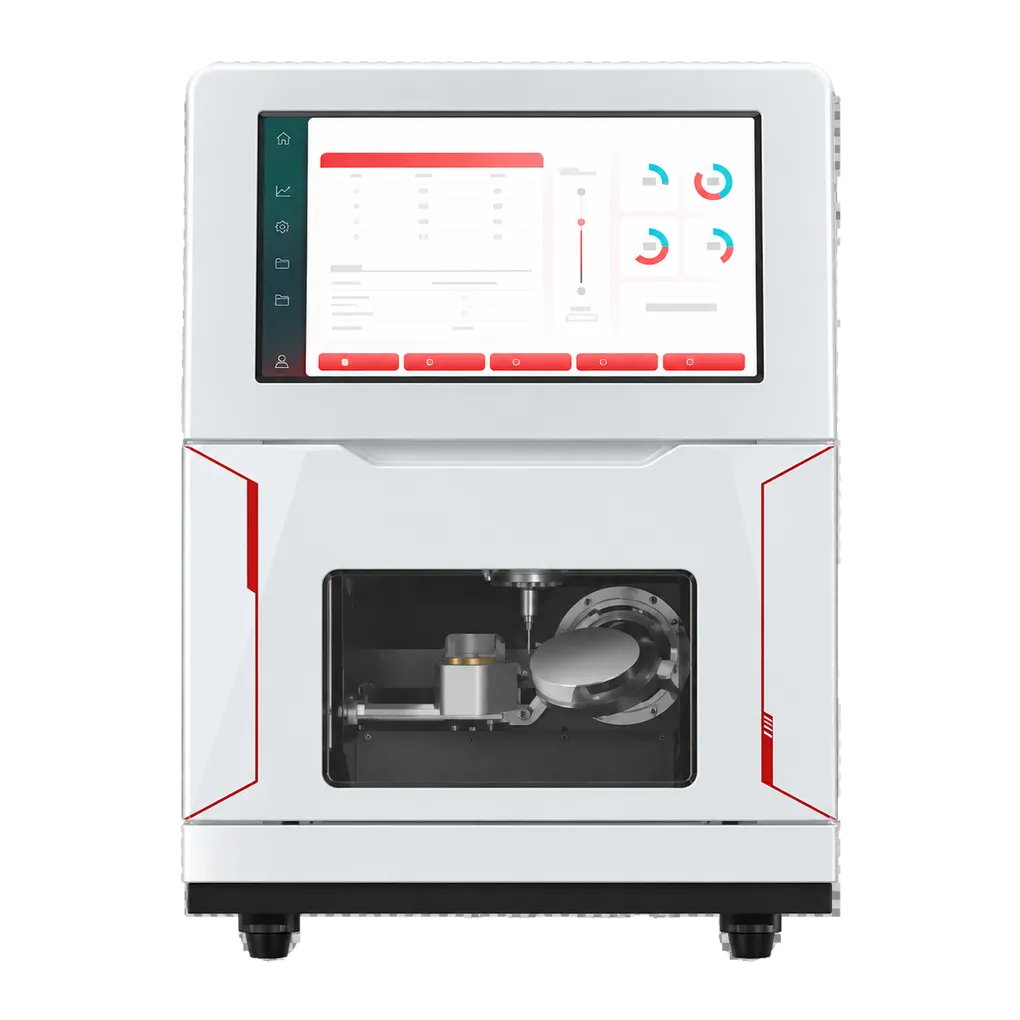
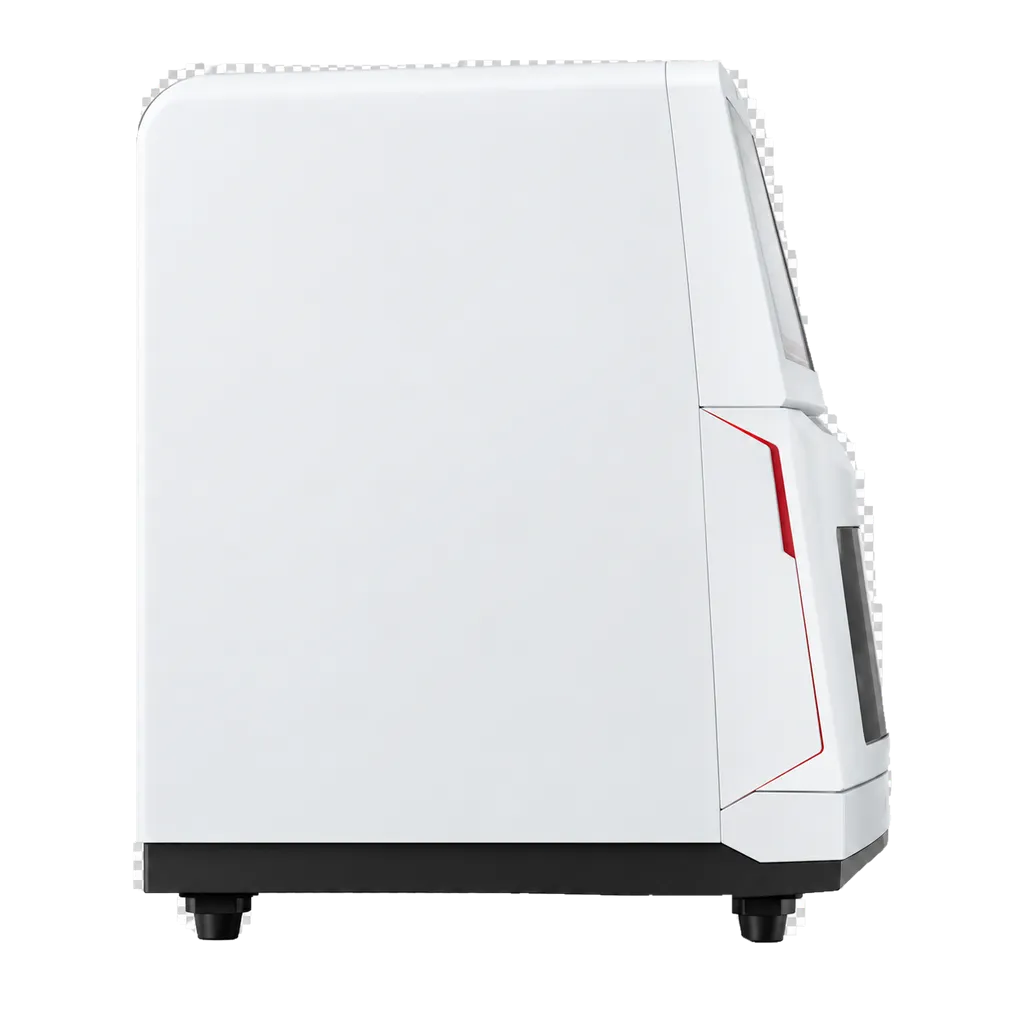
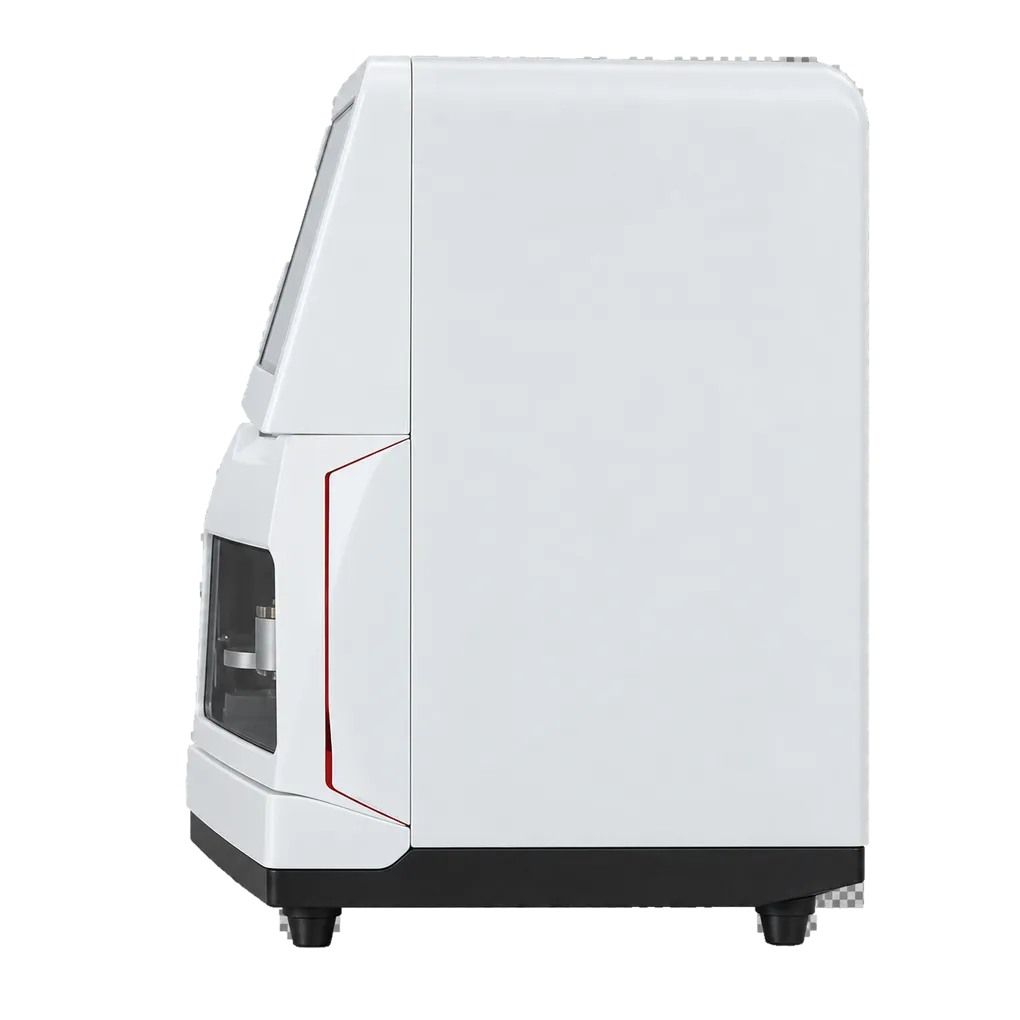
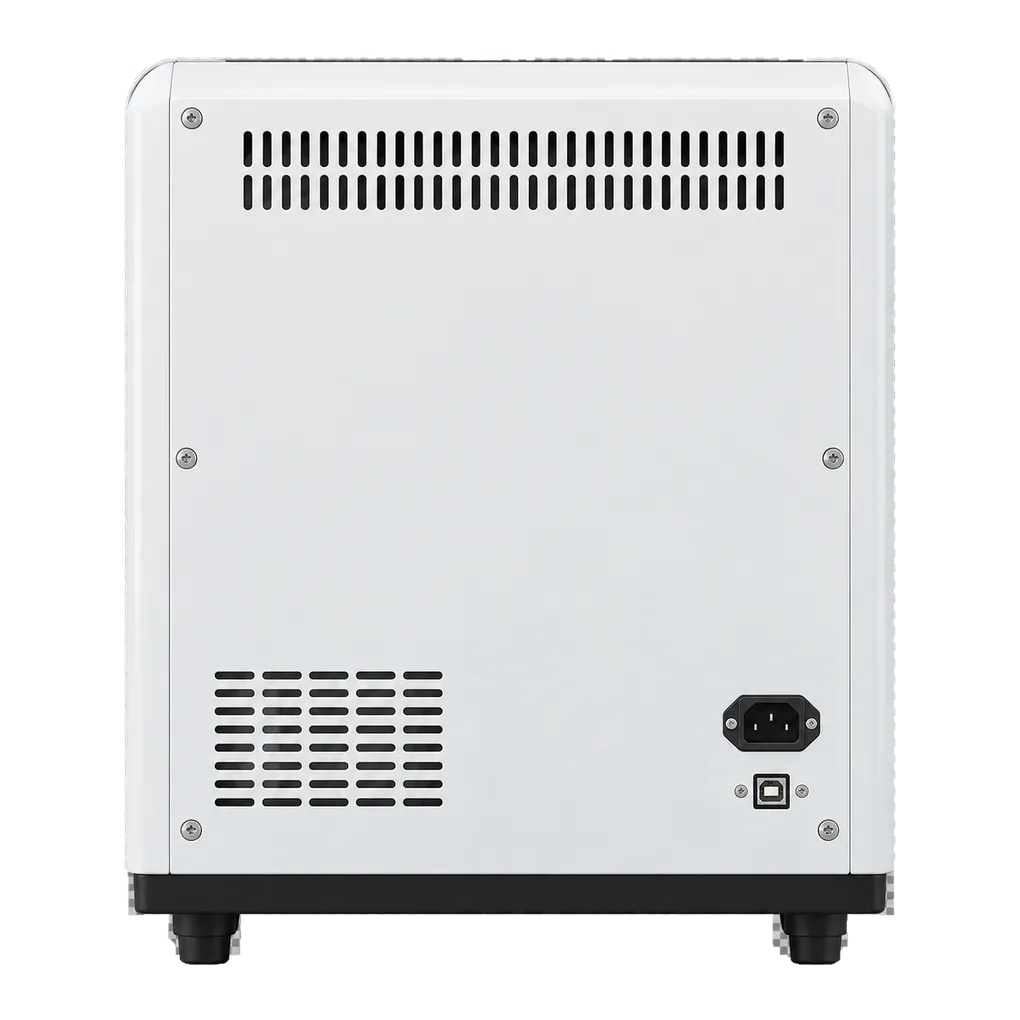
Laboratory CAD/CAM production covers most of the fixed prosthodontic workload in UK dentistry, and the 52D addresses the portion of it that runs dry. The manufacturer's published application list marks crown and coping, crown and coping bridge, screw-retained bridge in crown and coping form, customised abutment, hybrid abutment, inlay and onlay, model and denture as compatible.
The material list defines that scope precisely: zirconia, PMMA, PEEK and wax are supported, while pre-milled blanks, cobalt chrome discs, titanium discs and glass ceramic are not. For a laboratory whose output is monolithic and layered zirconia, polymer temporaries, PEEK frameworks, wax patterns for casting and milled models, the machine covers the work. For one that also mills glass ceramic inlays or metal substructures, it covers part of it, and those materials need another route.
Abutment work sits in an interesting position. Customised and hybrid abutments are marked compatible, which points to zirconia and PEEK components rather than titanium, while implant bars are marked not compatible — consistent with bars being milled in metal. A laboratory taking implant work should read that boundary carefully against what it actually produces.
Bite splints are marked not compatible, which is worth querying directly. Splint blanks are typically thicker than crown discs, and the machine's Z travel is 105 mm, so blank height is the likely constraint. Confirm with the manufacturer before planning splint production on this machine.
Dust control is where a dry machine places its demands. Dry cutting of pre-sintered zirconia produces a large volume of respirable dust, which falls within COSHH, and local exhaust ventilation carries statutory examination and testing duties. Laboratory obligations sit alongside MHRA registration for manufacturers of custom-made devices, GDC registration for technicians, material conformity documentation and batch traceability.