
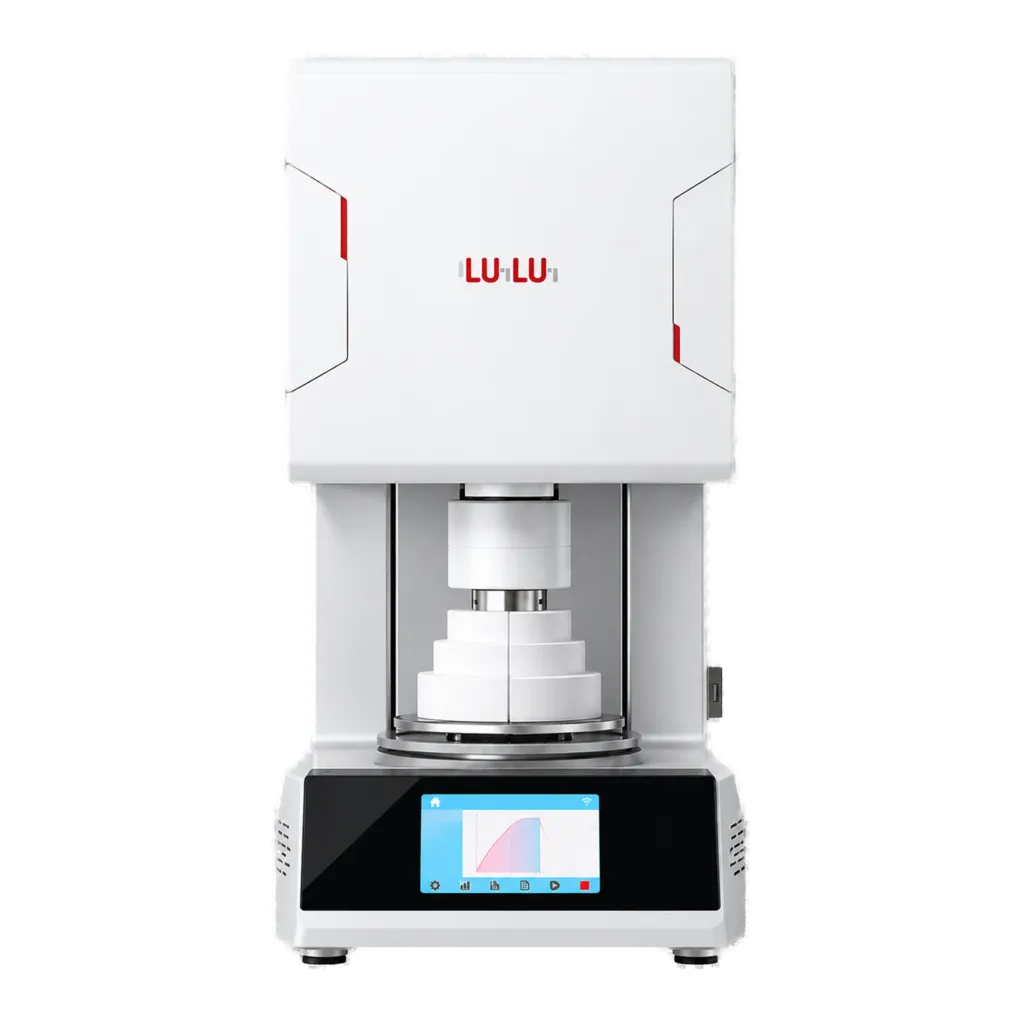
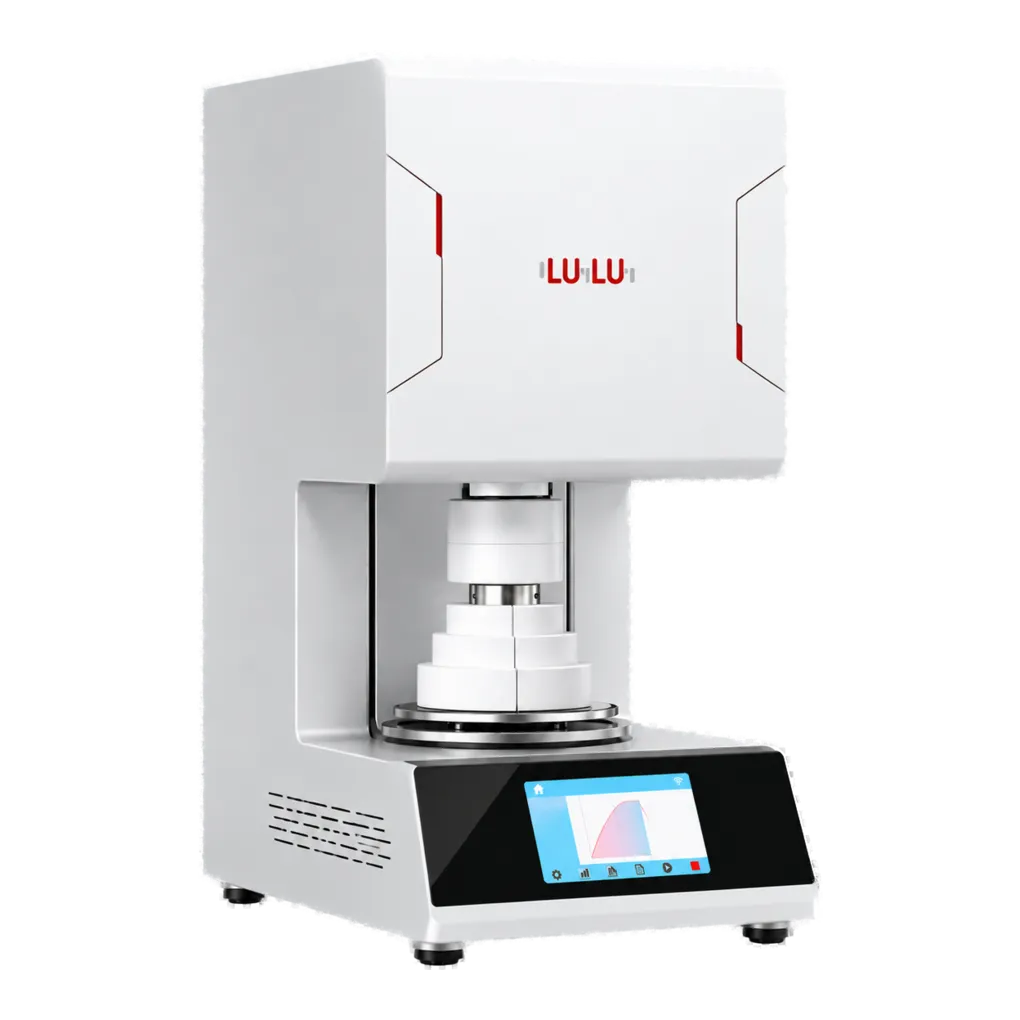
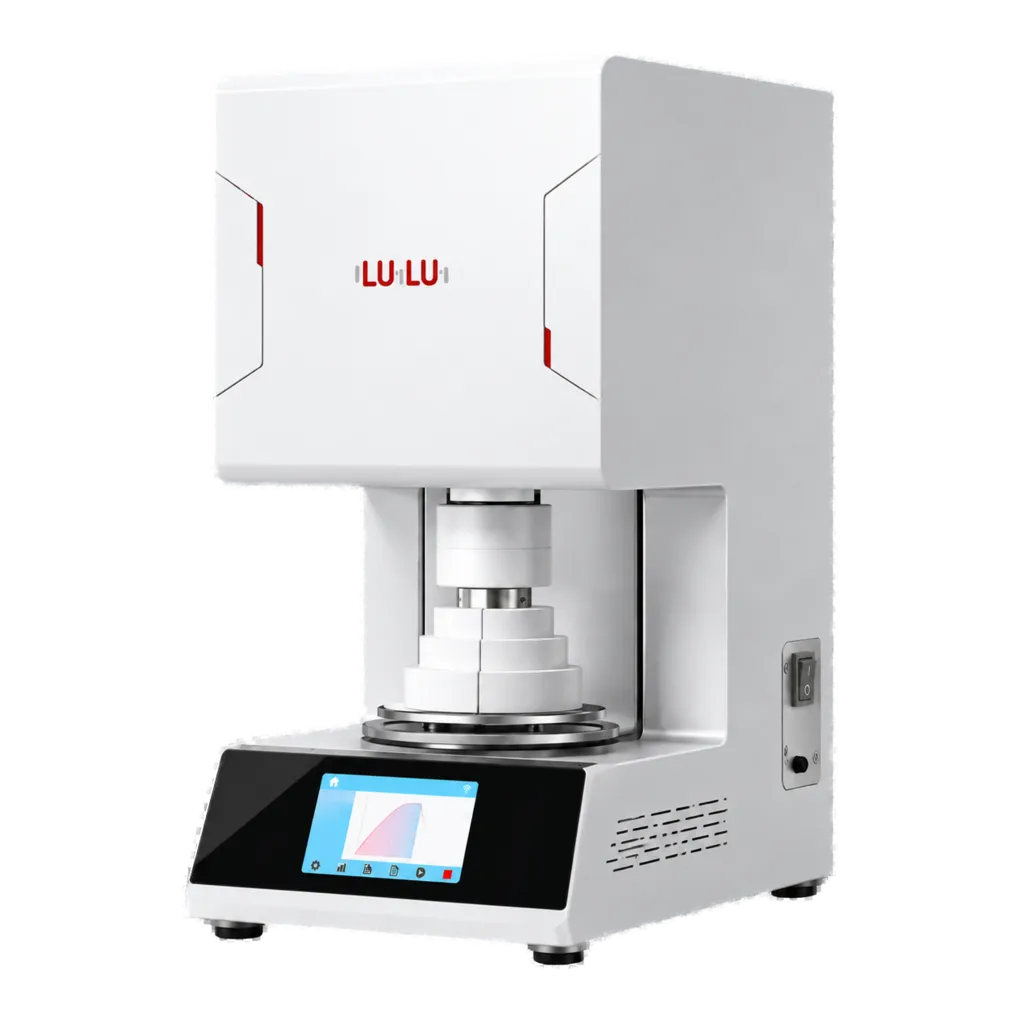
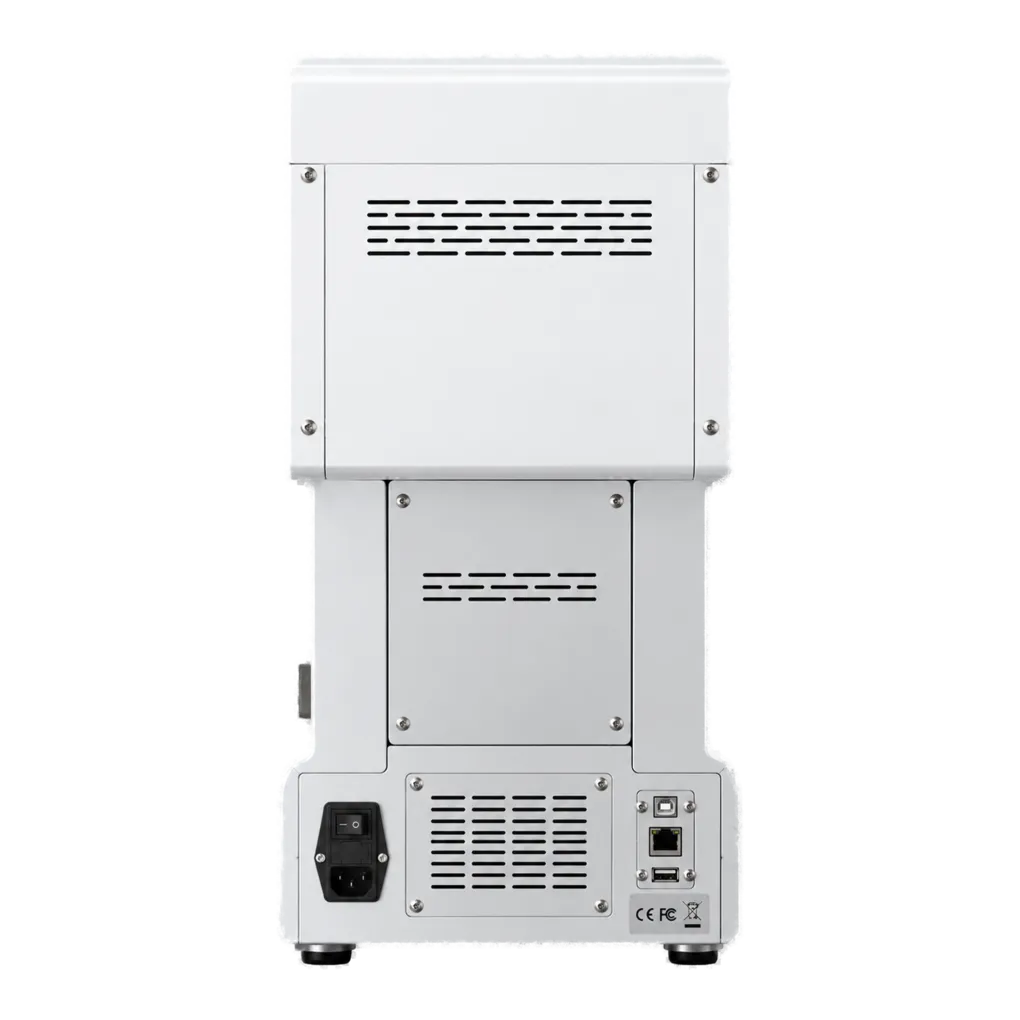
Zirconia has become the dominant material for fixed prosthodontics in UK laboratories, and every zirconia restoration passes through a sintering furnace between milling and finishing. The SF7 is specified for that step: crowns, copings, bridge frameworks, inlays and onlays, implant superstructures and full-arch work all mill in the pre-sintered state and reach their final dimensions and properties in the furnace.
Turnaround is where the dual-mode capability earns attention. A 150-minute cycle brings same-day and next-morning delivery within reach for laboratories under pressure from referring practices, and a conventional long cycle remains available for materials and cases where it is the validated route.
The validation point governs how that capability can actually be used. Sintering parameters determine grain growth, and grain growth determines the strength, translucency and shade a zirconia reaches, so the cycle a material manufacturer has validated is the one that delivers their published figures. High-translucency and multilayer zirconias tend to be the most sensitive, since translucency depends on controlled grain structure. Laboratories should hold a named programme per material rather than a single house cycle, and the 500-programme storage supports exactly that discipline.
Capacity suits laboratories running batches. Two stacked crucibles and a stated maximum of 80 pieces allow a day's milled work to sinter overnight, with power interruption protection reducing the risk that an outage costs the batch.
Laboratory obligations sit alongside throughout. A manufacturer of custom-made devices carries MHRA registration obligations, technicians are registered with the General Dental Council, and materials carry their own conformity documentation and instructions for use — including the validated cycles. Traceability from blank batch through sintering programme to finished device is part of the same duty, and recording which programme a batch ran is worth building into the procedure.