
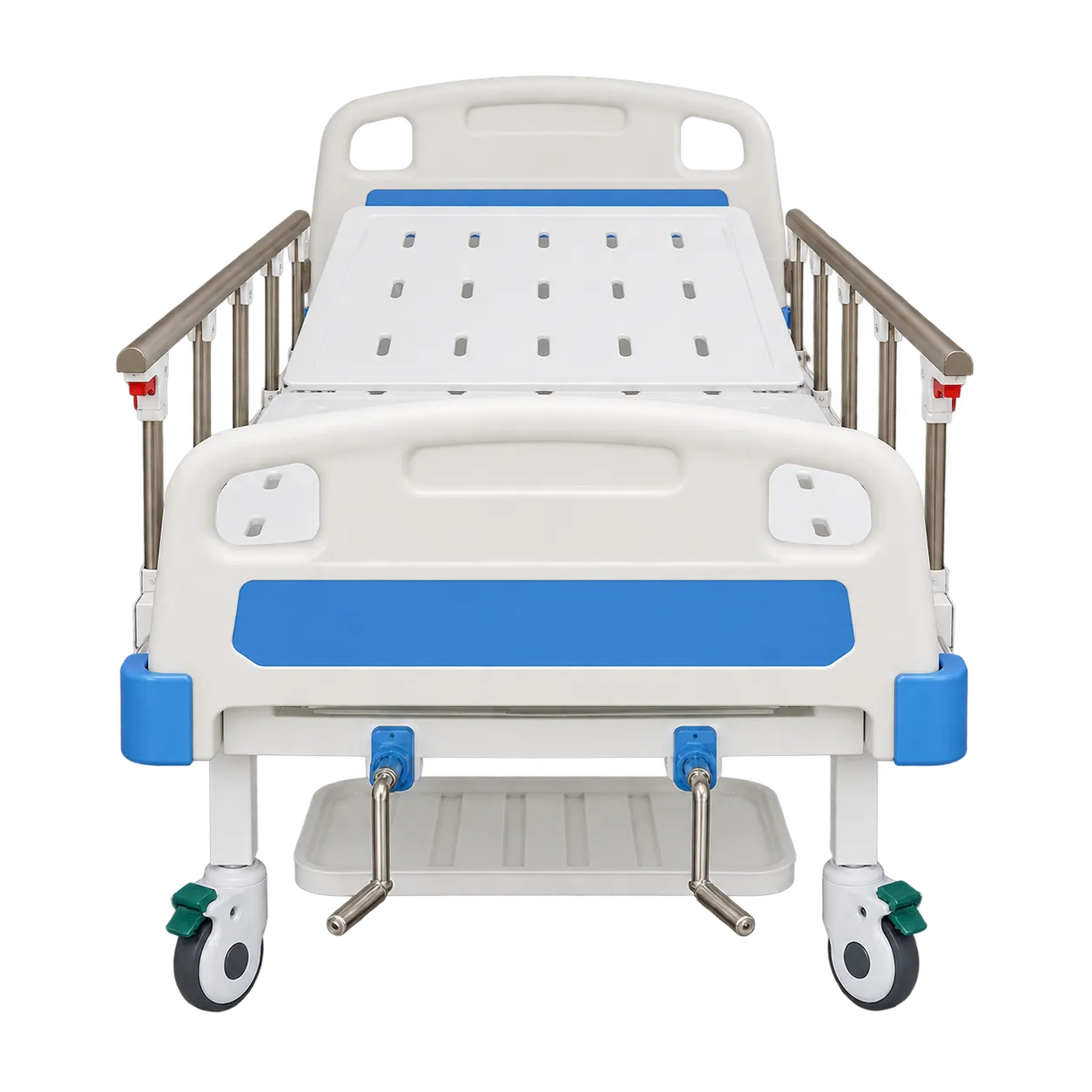
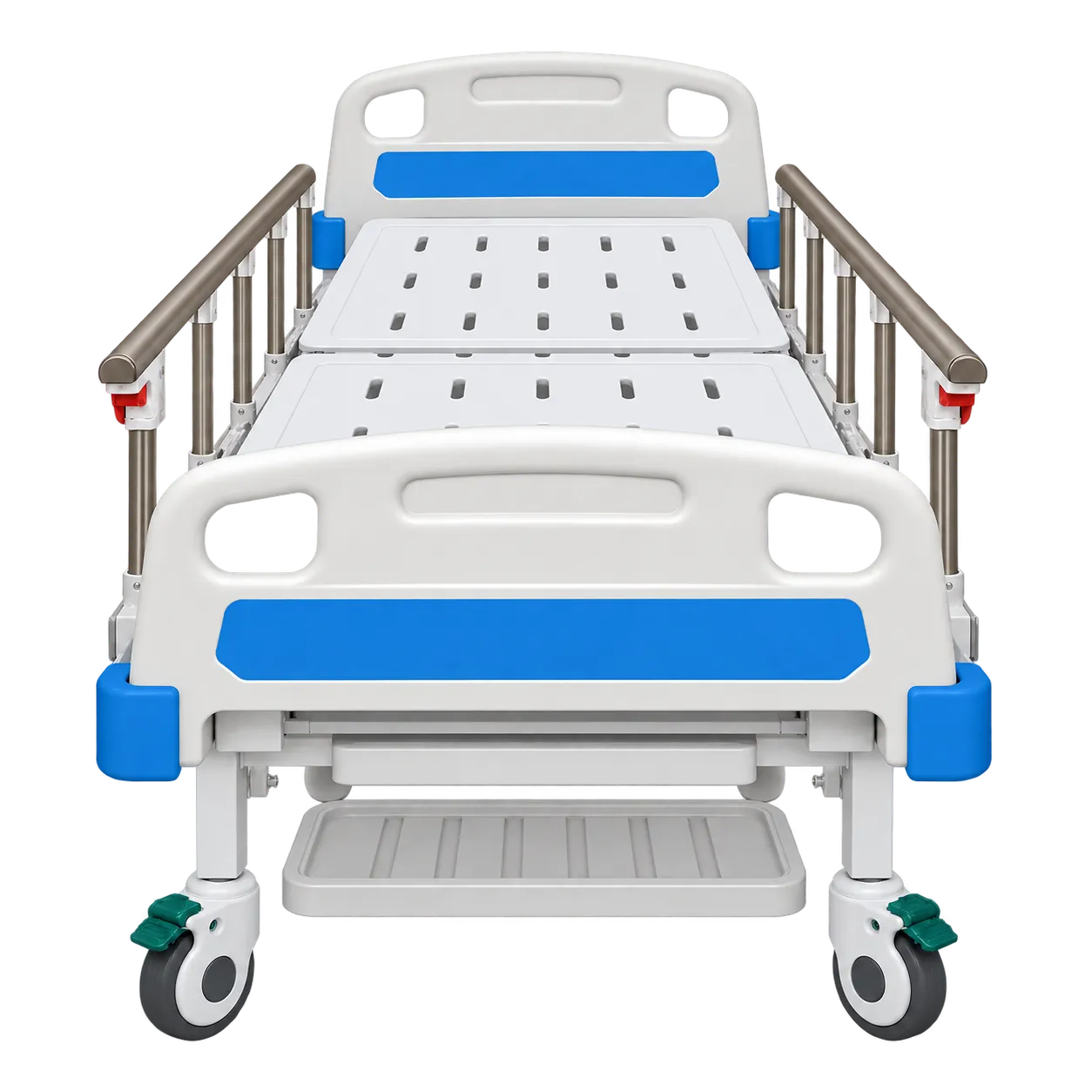
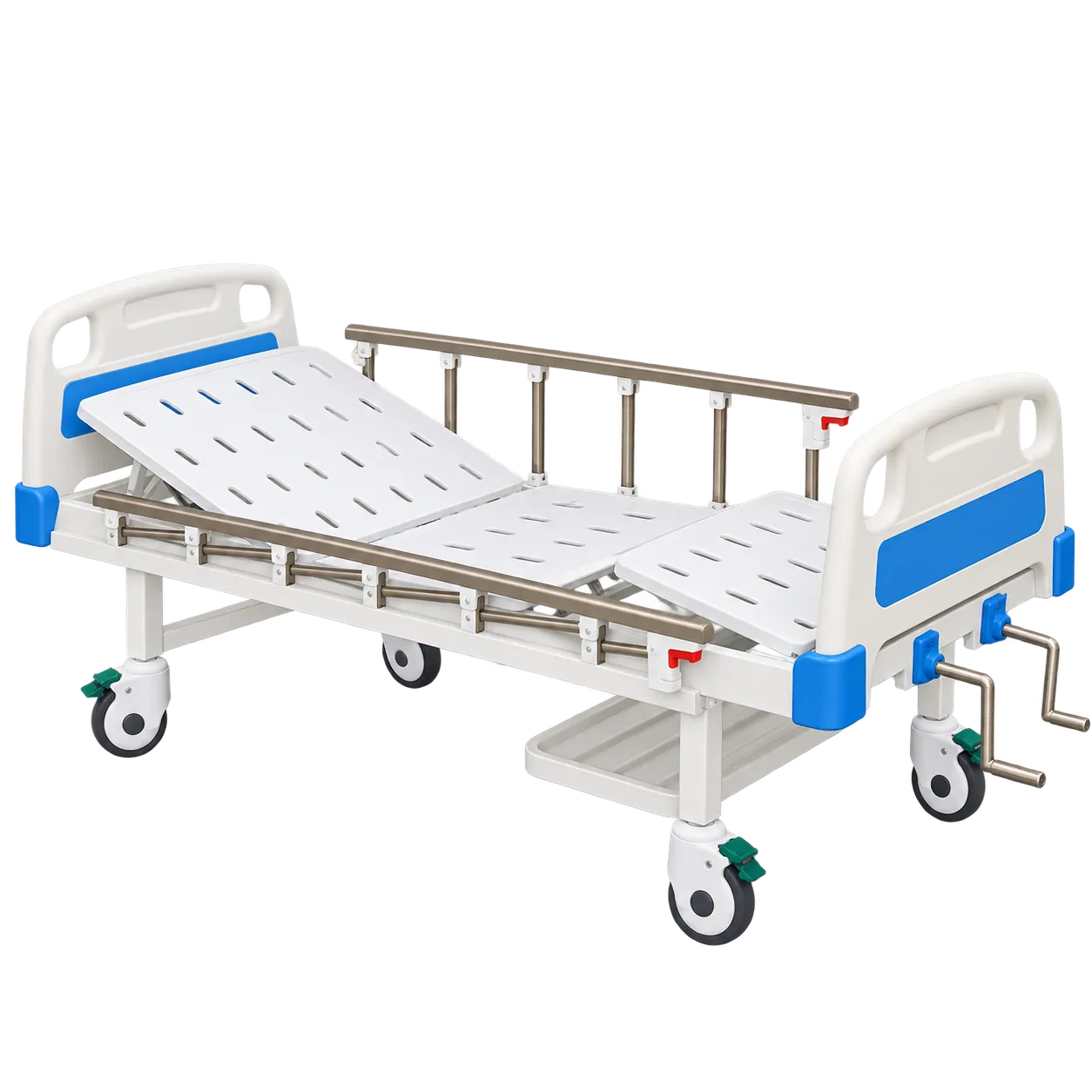
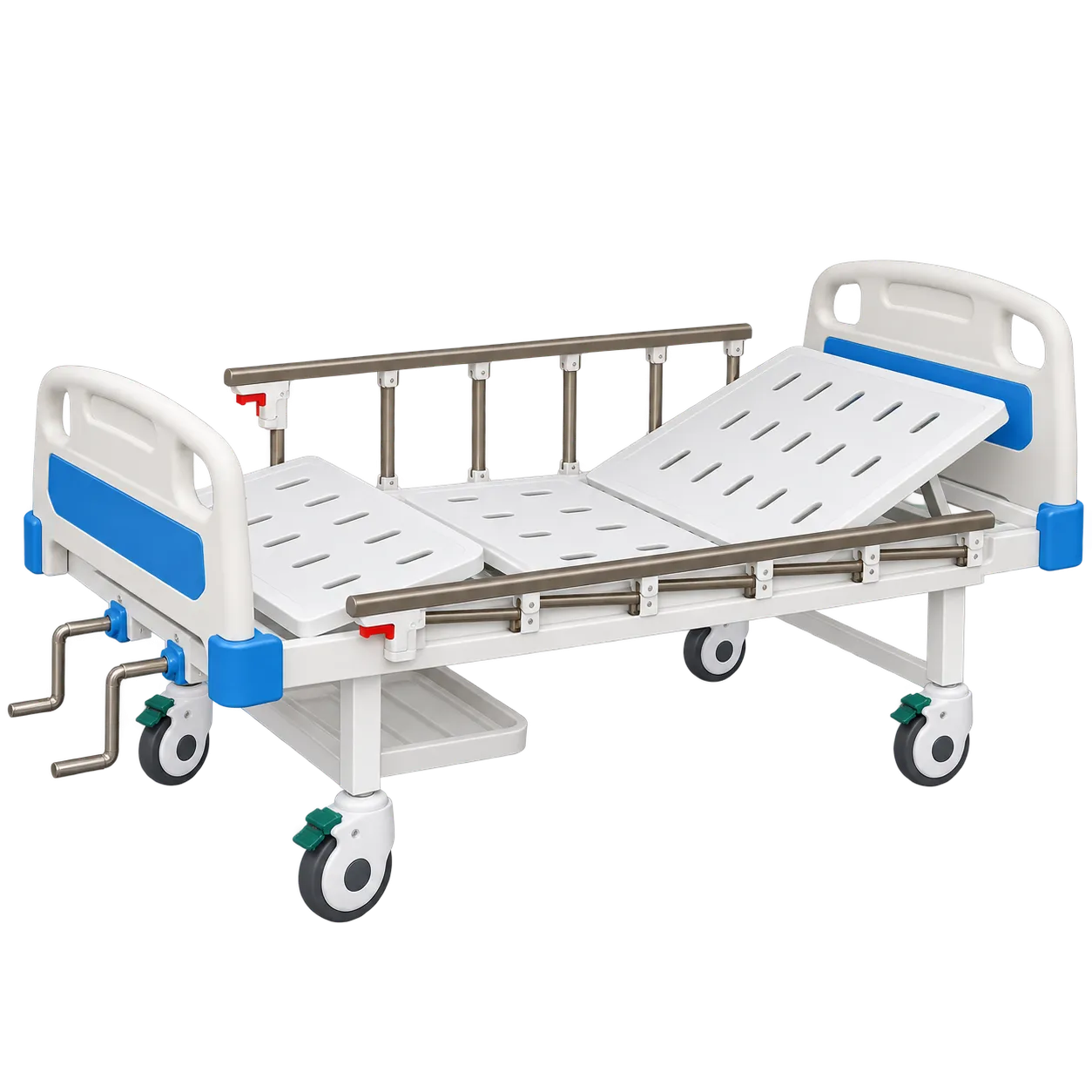
Fixed-height beds have a defined place. Where patients are largely independent, mobilise themselves and are not lifted or repositioned frequently, a two-function frame is entirely adequate. It carries neither the purchase outlay nor the servicing burden of a profiling bed with motors. Rehabilitation wards, step-down units and some community settings run them for exactly that reason, and a backrest reaching 70 degrees covers sitting up to eat, to read or to receive visitors through an afternoon.
It does not belong anywhere staff regularly work over the patient. A deck fixed at 500 mm cannot be raised to a comfortable working height for dressing changes, personal care or transfers, and cannot be dropped to reduce fall injury for a confused patient. Both are routine manual handling considerations on an acute ward, and no crank on this bed addresses either. That is a limitation of the type rather than a fault in this reference, but it determines whether the bed suits a given area.
The guardrails need a specific question. LUVXOM describes a five-bar aluminium alloy rail that sits slightly proud of the mattress when lowered, with a quick positioning catch, and says nothing about entrapment. Bed rails are governed by defined dimensional requirements covering the gaps a patient's head, neck or limb could pass through, and compliance is not something to infer from a photograph.
Medigear.uk establishes the rail standard applied, the castor braking arrangement, and the deck section count before this two-crank nursing bed reaches a ward.