
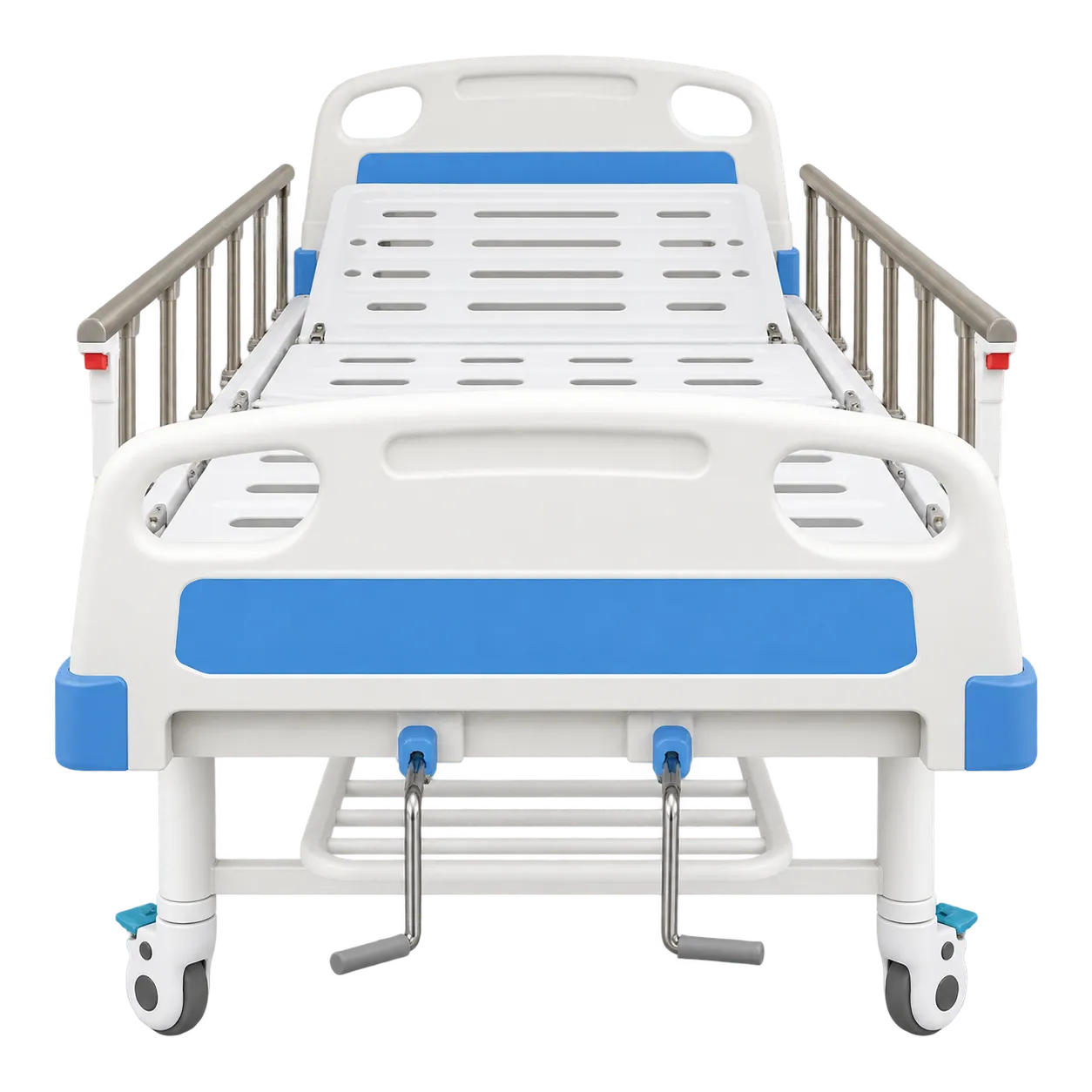
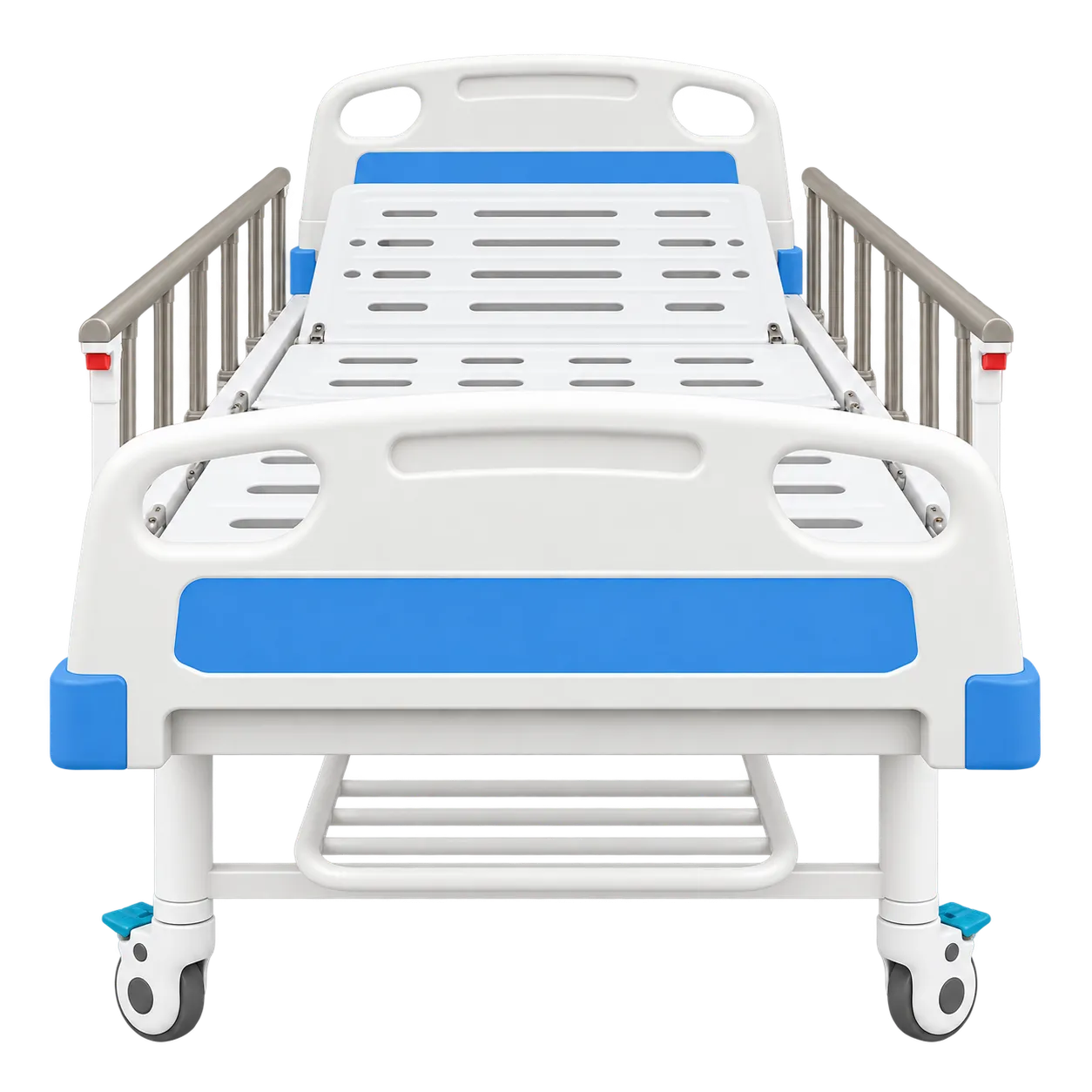
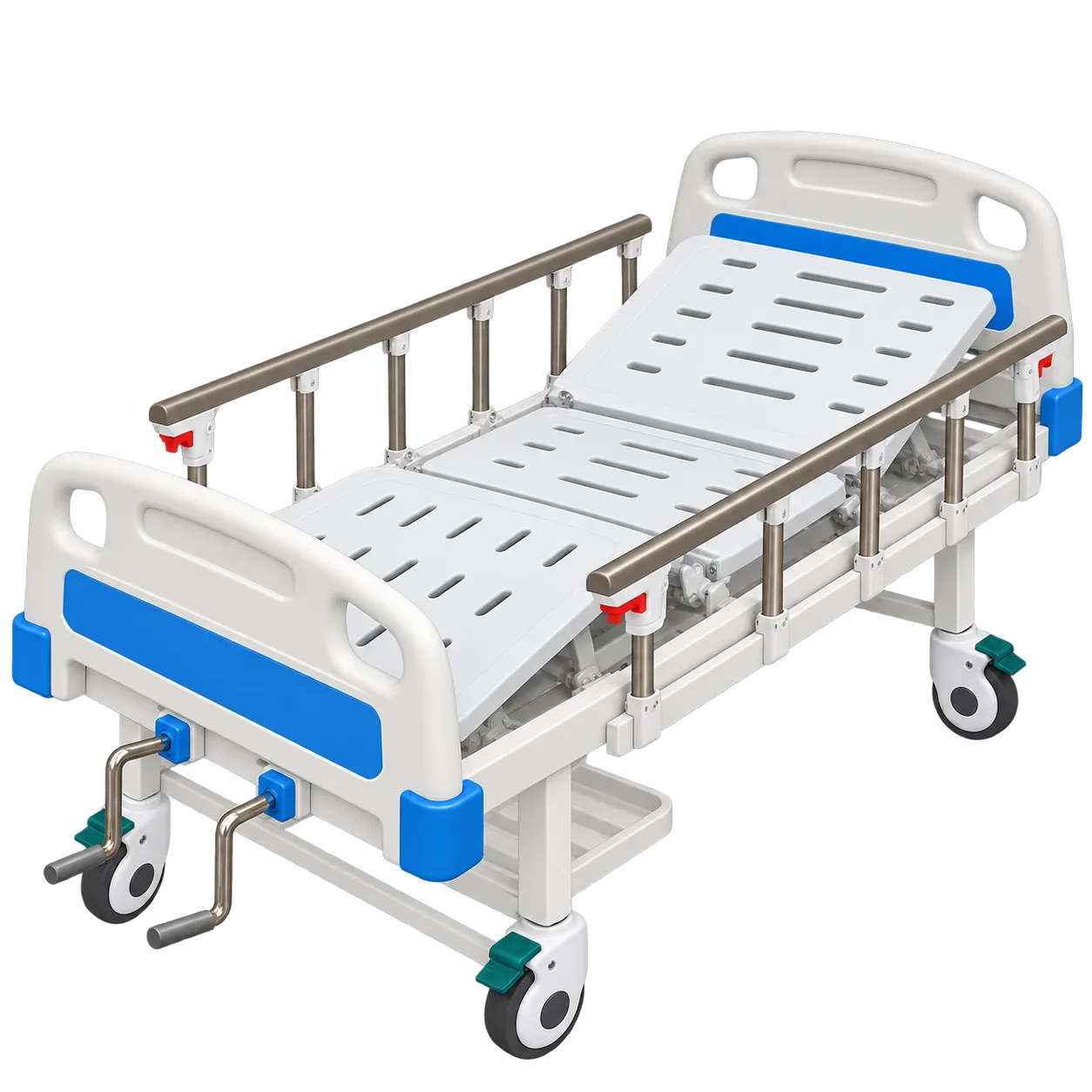
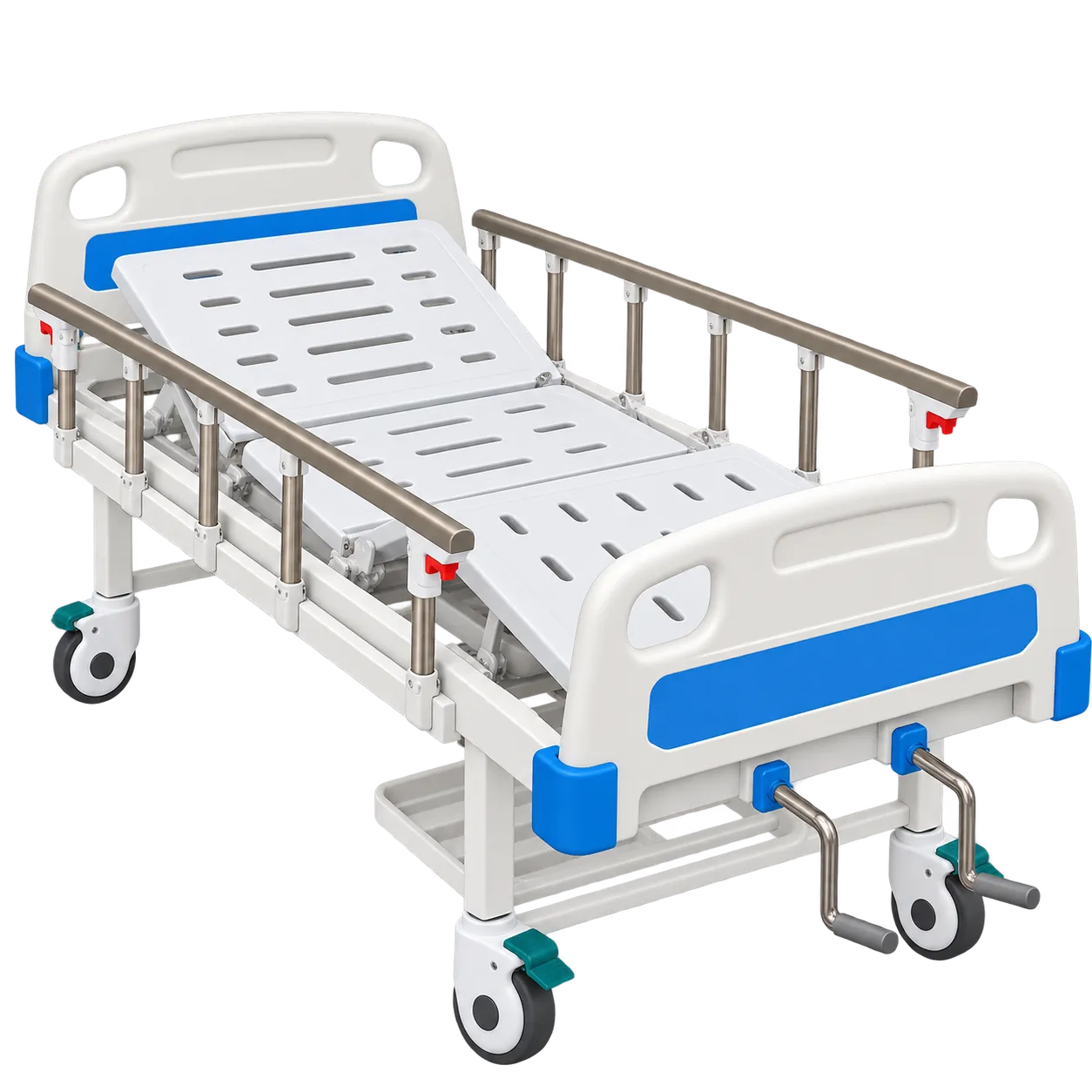
Airflow beneath a mattress isn't trivial on a bed used for long periods. Heat and moisture build between a patient and the surface below, and a deck that lets air move helps rather than hinders. Open slats do this better than a punched sheet. Where humidity or long occupancy is a concern, the A4 is the stronger of the two decks on that count, since the gaps between strips are wider than any hole a punch will make.
Decontamination pulls the other way, and it should be weighed openly. Fourteen strips present far more edge than one sheet, and edges are where fluid sits and where a cloth passes over rather than into. Where a ward cleans beds thoroughly between patients and has time to do it, that is manageable. Where turnaround is quick, or where the unit handles isolation cases, a continuous punched surface is easier to be confident about. LUVXOM offers no cleaning guidance for either.
The constraint common to both beds still applies. The height figure stands alone at 500 mm, so this slatted deck nursing bed will not raise for staff working over a patient nor lower to reduce fall injury. It provides only two crank functions. As on the A3, entrapment goes unmentioned, and bed rails answer to defined dimensional limits rather than to how a rail looks.
Medigear.uk establishes the rail standard, slat spacing, and castor braking arrangement before this bed reaches a ward, along with whether a mattress is supplied.