
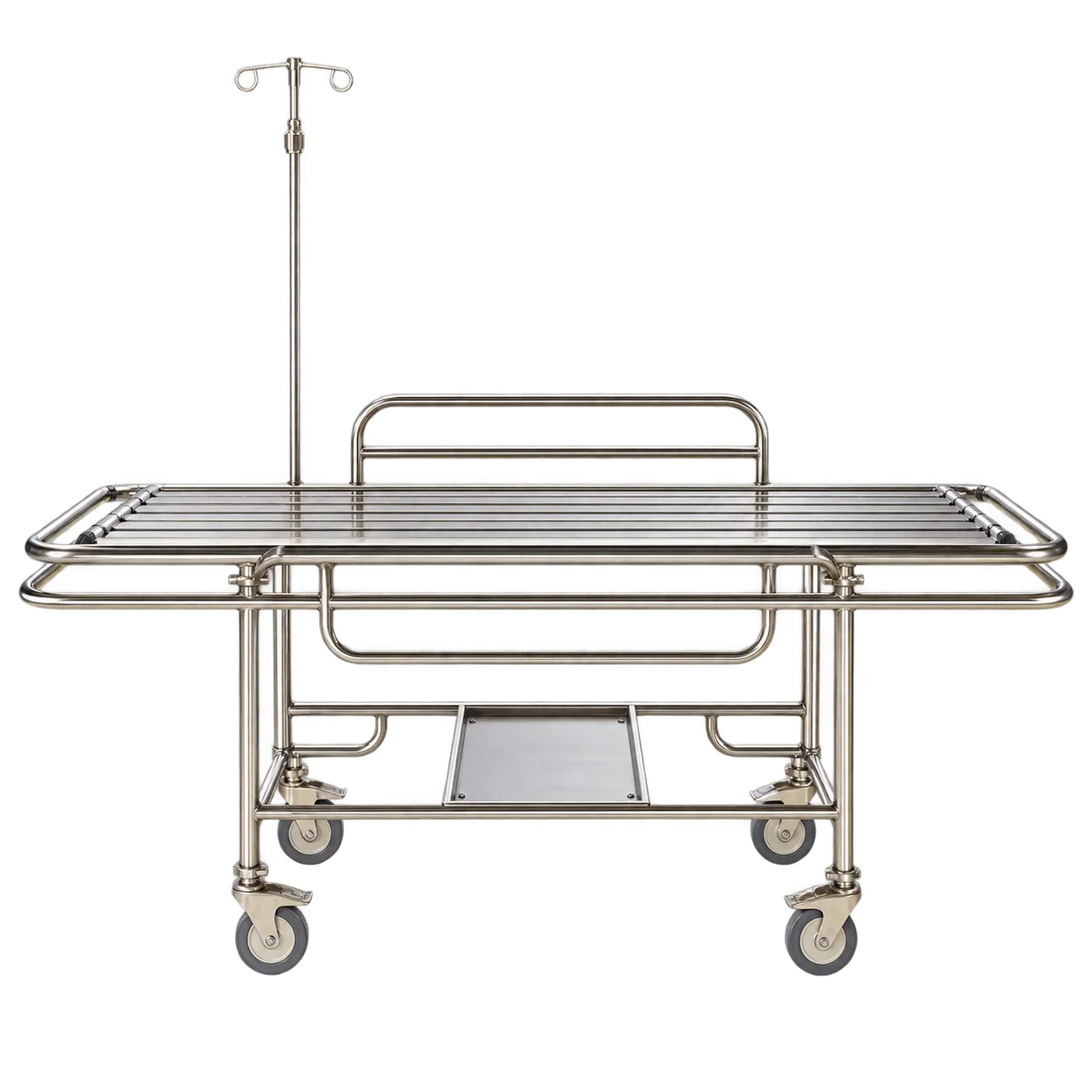
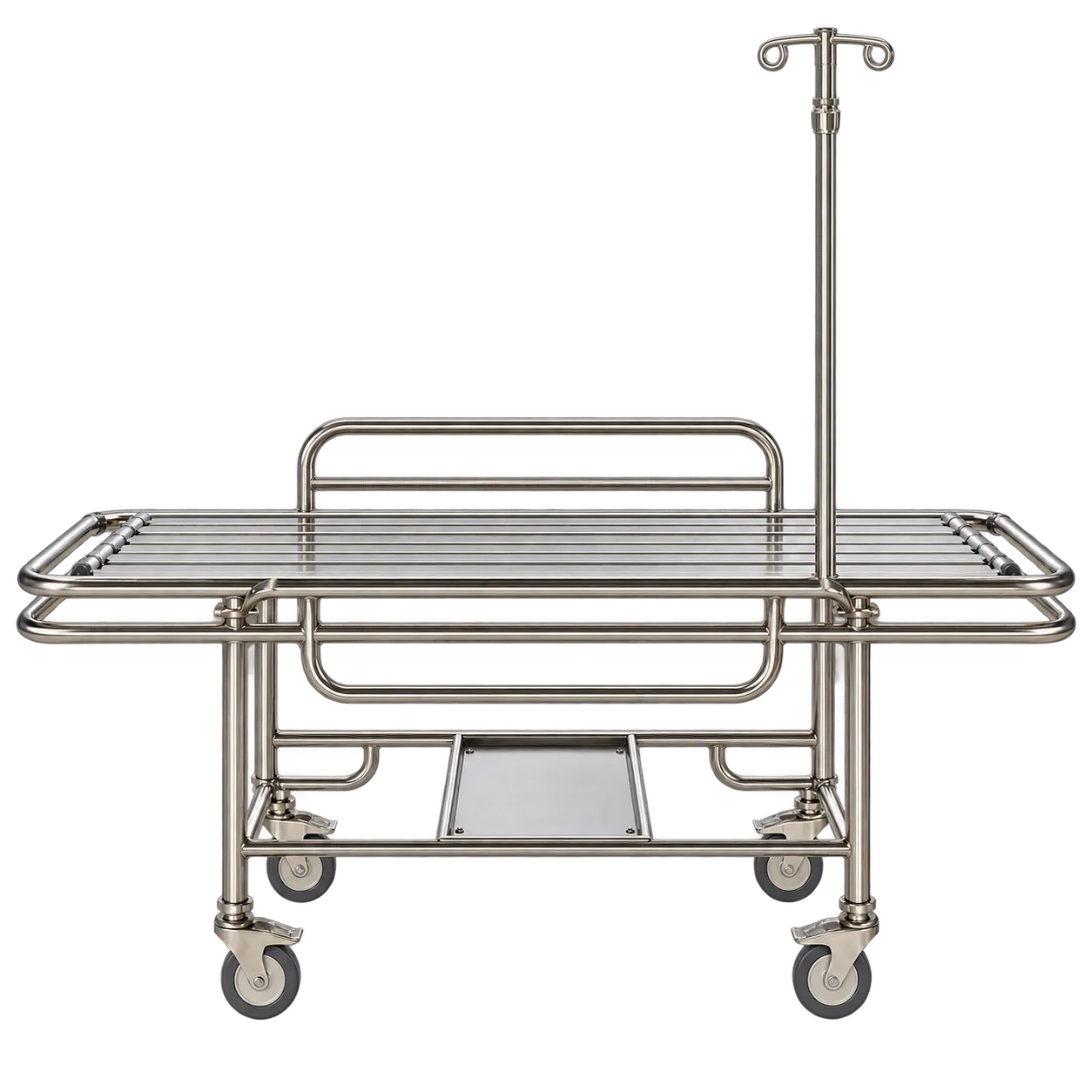
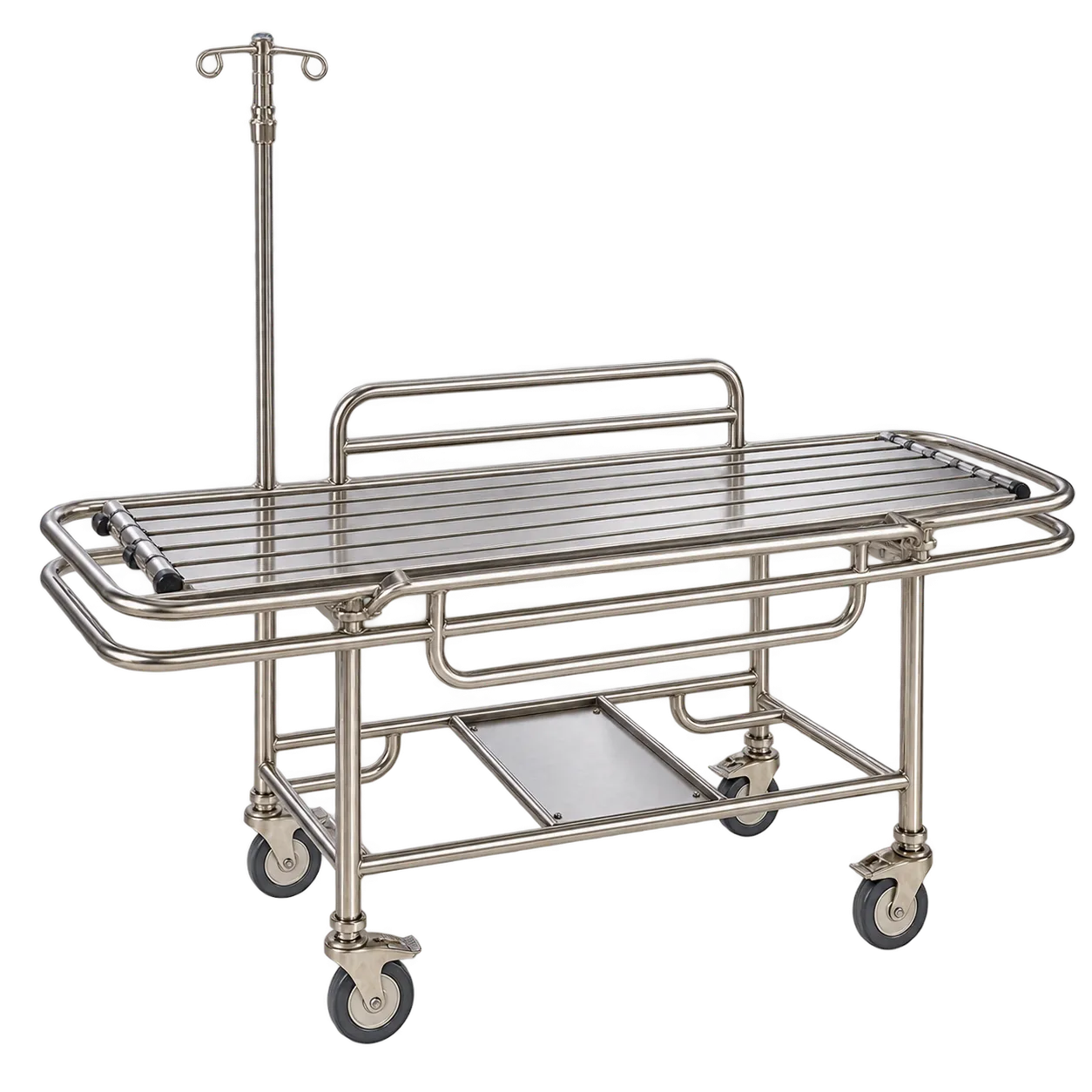
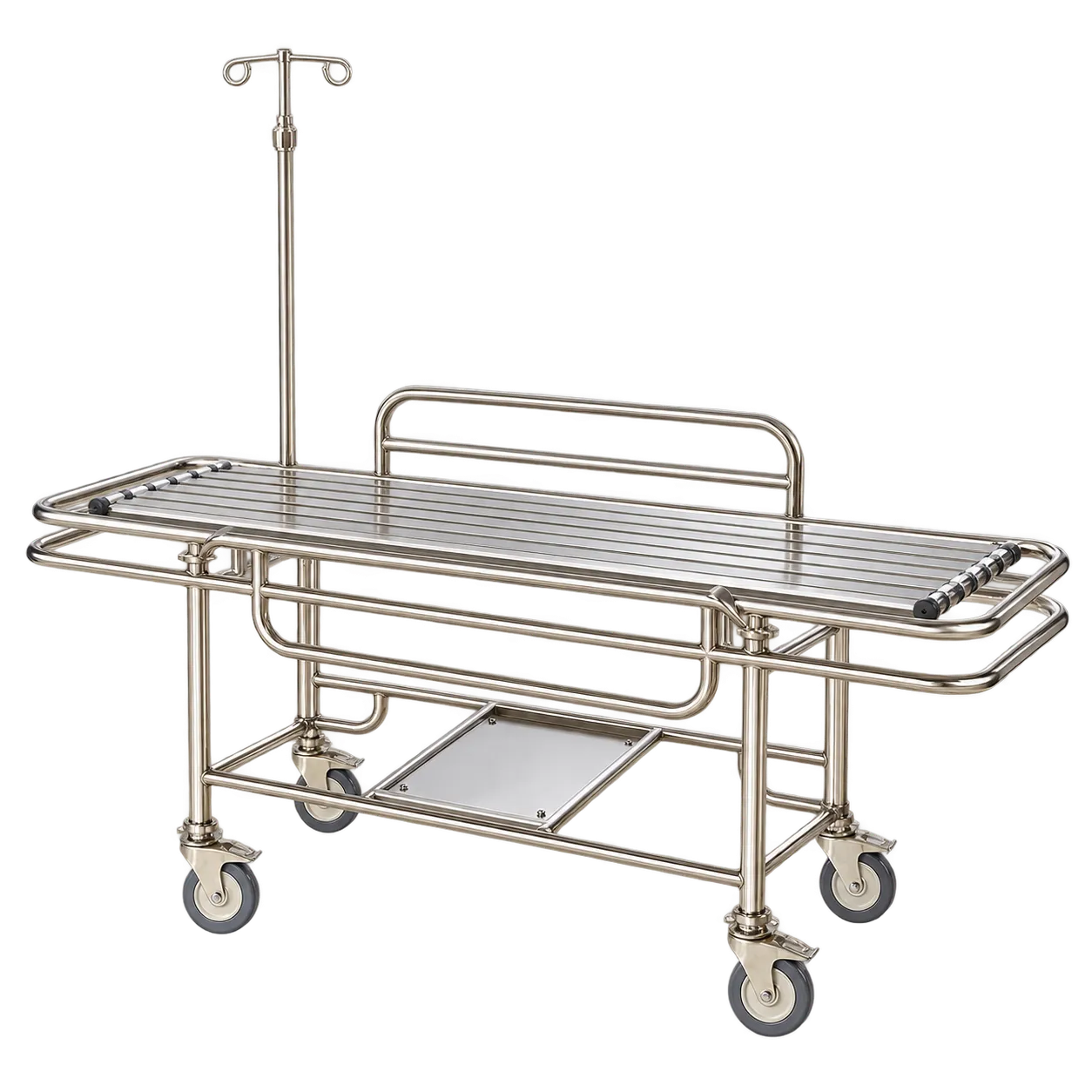
The stated purpose is internal patient transfer: moving people between wards, imaging, theatres, and recovery. Stainless steel is the right material, since a trolley used that way is cleaned constantly and often thoroughly, and a frame that tolerates repeated washing without corroding lasts where a painted one does not. The sprung deck is an unusual touch: springs under the bed surface take some of the jarring out of a threshold or a lift edge, which a rigid deck transmits straight to the patient.
Height is where a department needs to think carefully. The deck sits at 800 mm and does not move. That is a comfortable pushing and working height for staff, but it creates a step at every transfer. The LUVXOM nursing beds in this same catalogue stand at 500 mm and are also fixed, so moving a patient between the two means bridging 300 mm with neither surface adjusting to meet the other. Any service running both needs to plan that transfer rather than discover it.
The 650 mm deck width is worth measuring against the patients a service actually moves. It is a narrow surface by stretcher standards, which helps in tight corridors and lift cars but limits who can be transported comfortably or safely. Without a published safe working load to sit alongside it, the suitable patient range cannot be defined.
Medigear.uk establishes the load figure, the braking arrangement and whether side rails are fitted before this stainless steel stretcher trolley enters service.