
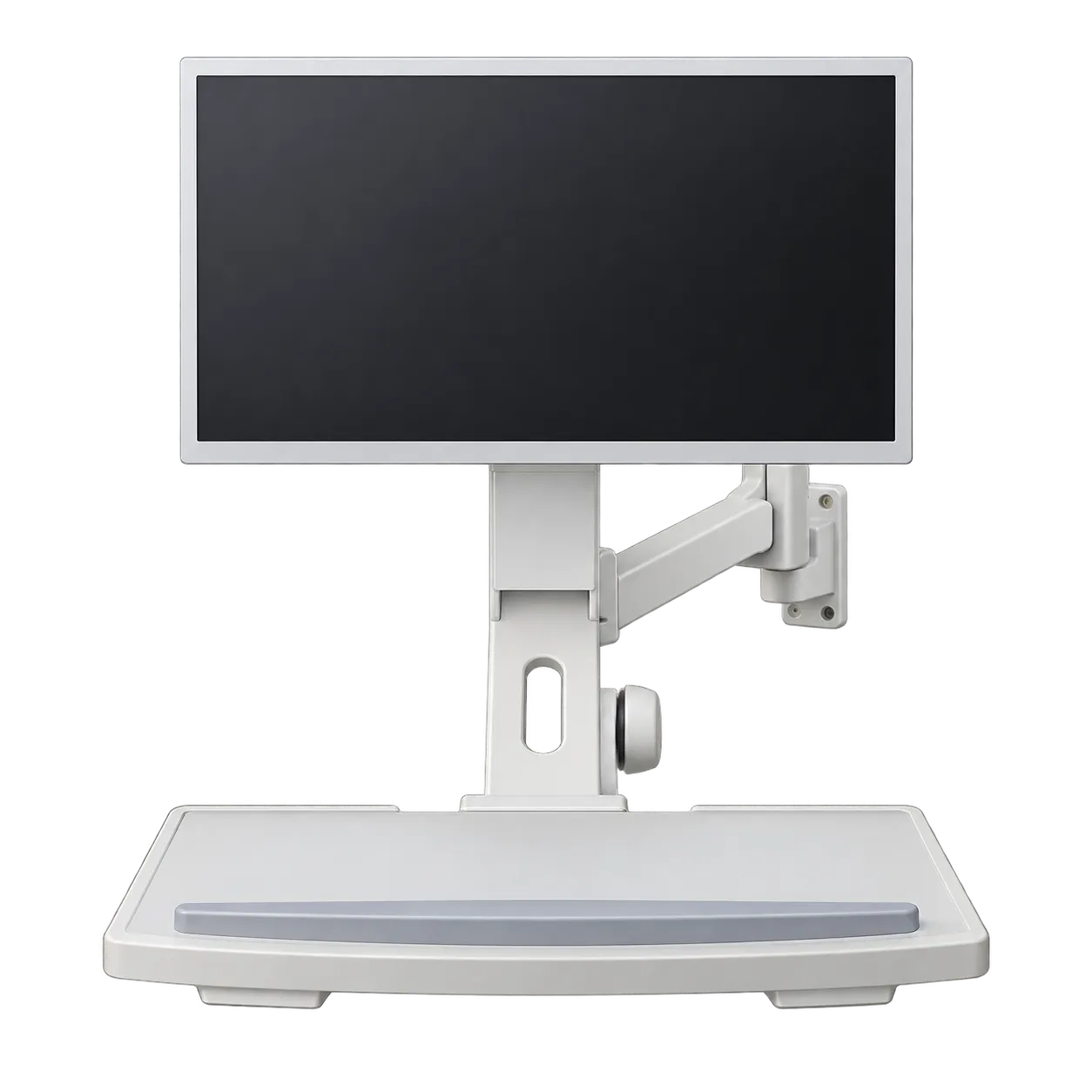
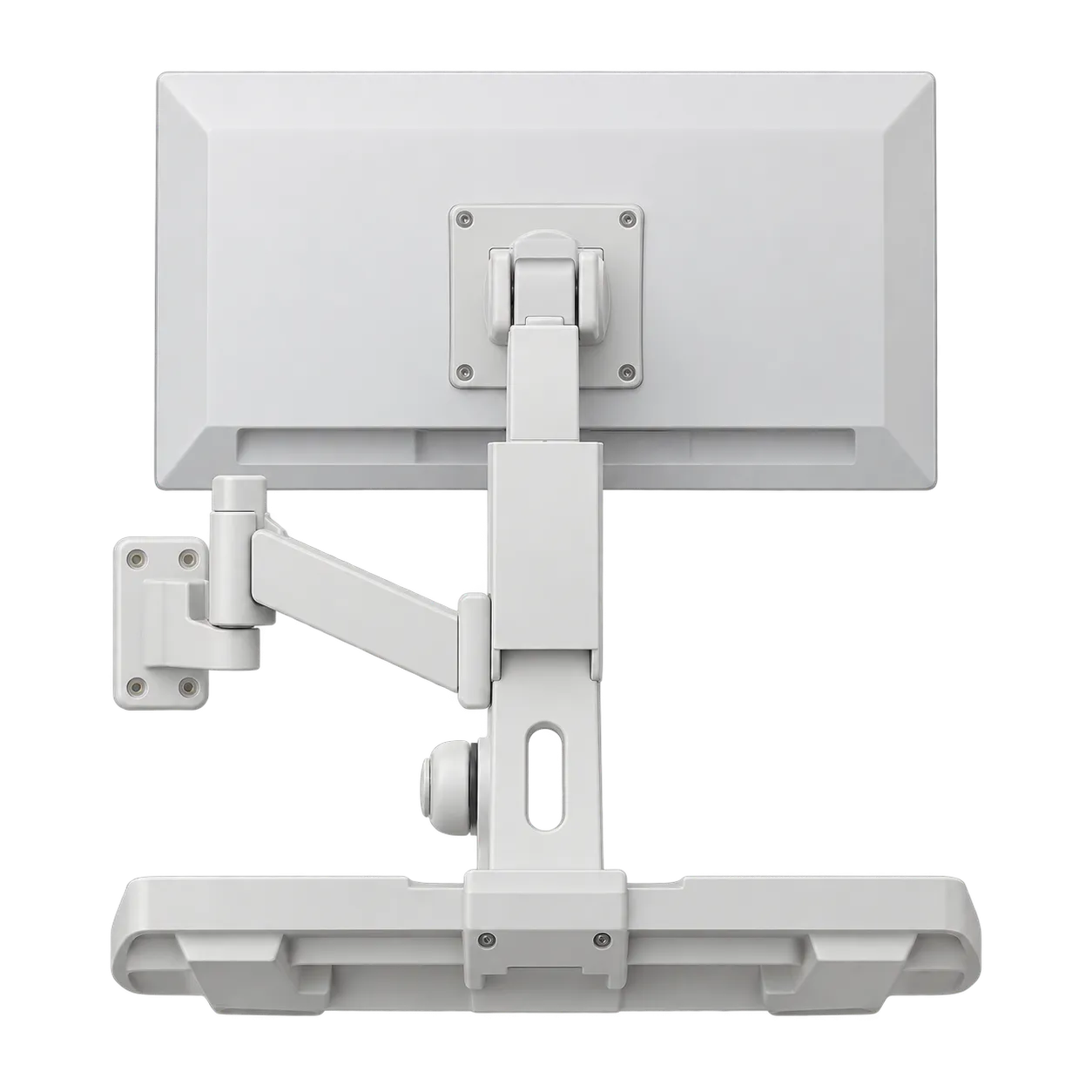
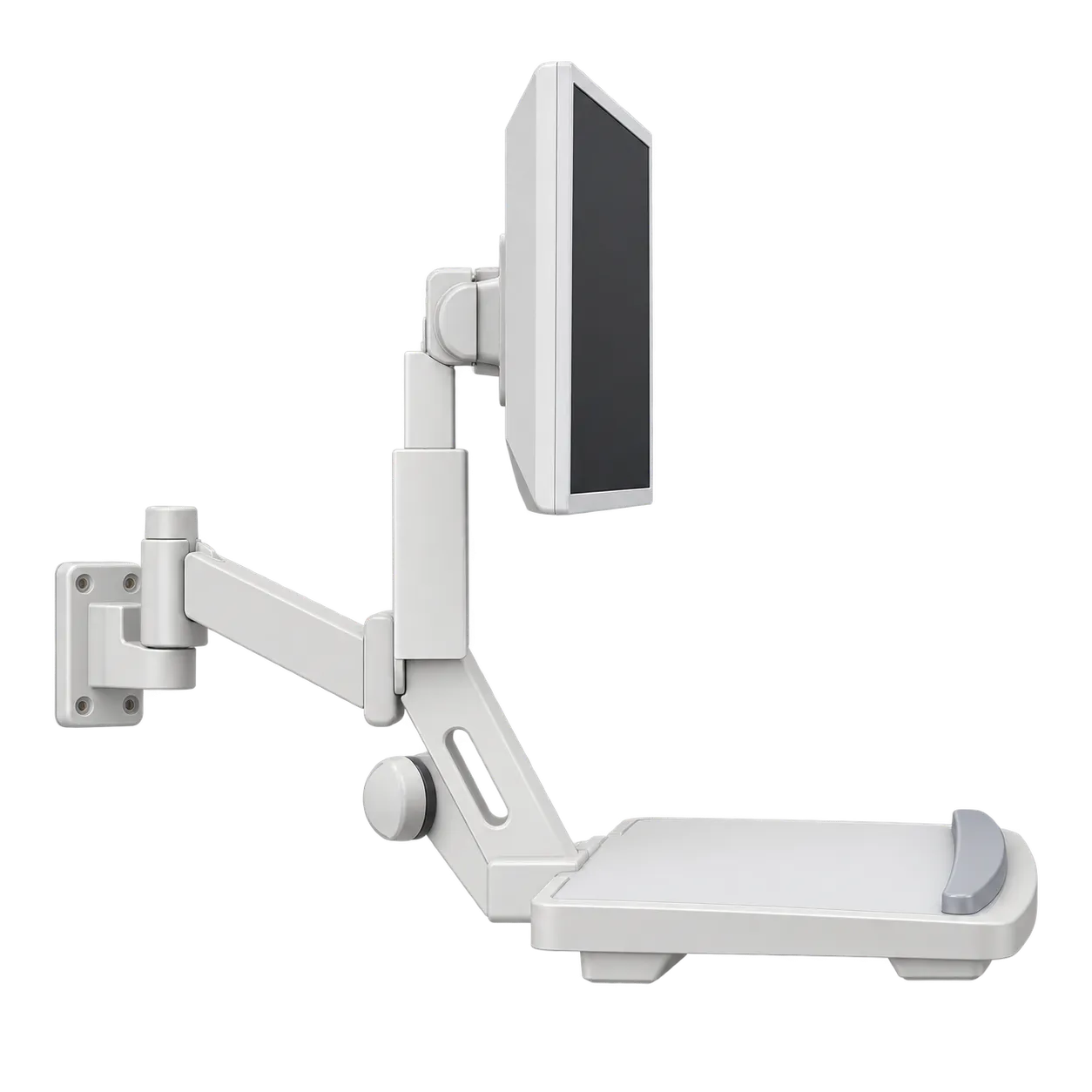
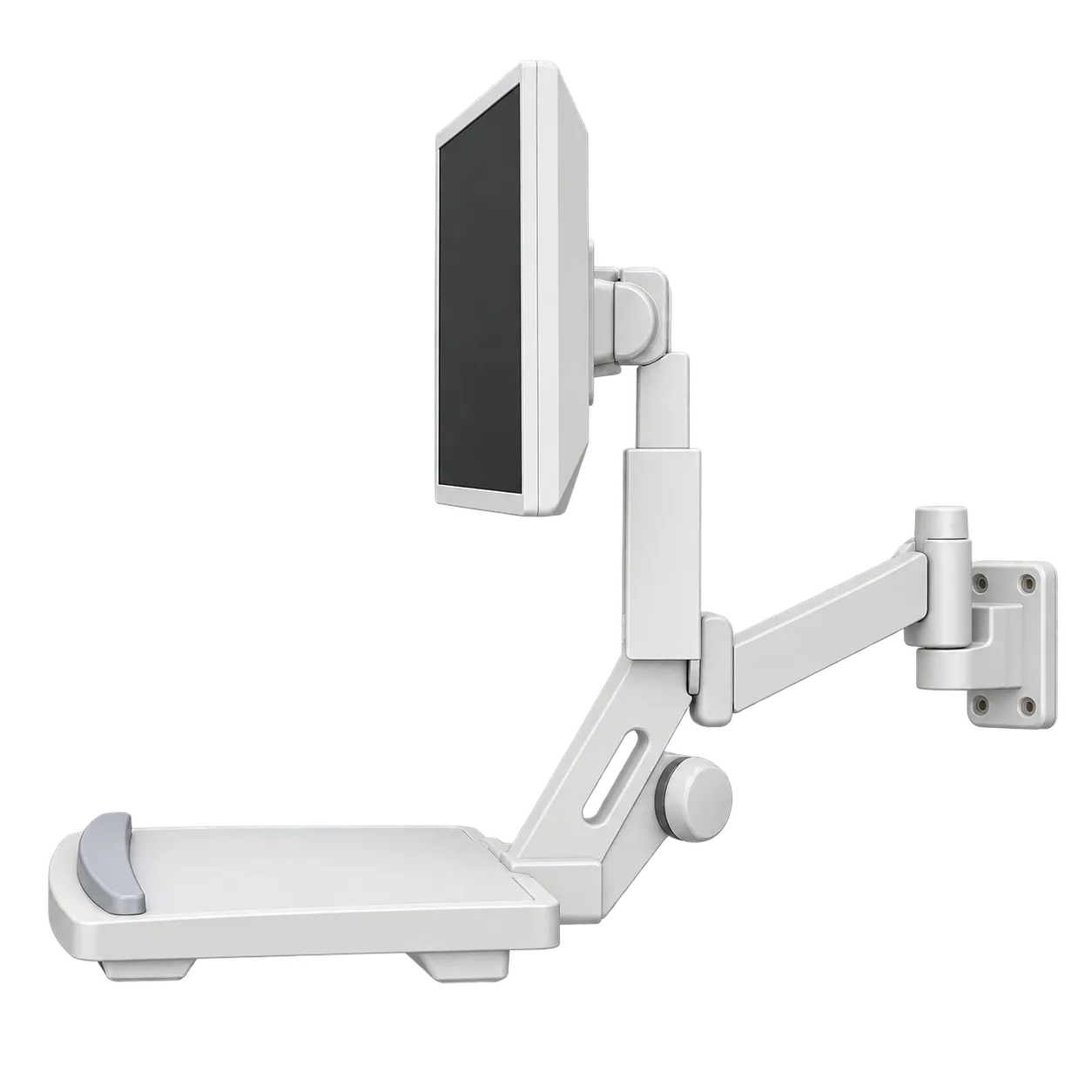
Anaesthesia positions and suspension towers are named alongside walls, which tells you where this is meant to go. In an operating room, the workstation cannot occupy floor space a team needs to move through, and mounting it to a machine or tower already there keeps it from moving further away. Rated beyond 20 kg, the bracket allows room for a substantial all-in-one unit alongside whatever else a theatre chooses to attach.
The removable pad deserves particular note. Silicone hand rests appear on both brackets in this family, but only here does the sheet say the pad comes off. A fixed pad is wiped around; a removable one is removed, cleaned properly, and replaced, which is a materially different proposition on a surface touched by gloved hands between cases. It is the sort of detail that separates equipment designed for a clinical room from equipment merely adapted to one, and it is the strongest argument for this reference over its relative.
Handedness is again accommodated, the mouse tray drawing 219 mm toward whichever side suits and hiding between uses. By contrast, this reference omits two things its relative provides: it describes no cable routing, and it lists no mouse or scanner boxes. In a theatre, trailing leads from a wall bracket are more than untidy: they snag on gloves and gather where nobody wants them.
Medigear.uk establishes the cable arrangement, lifting range, and fixing specification for each named mounting position before installing this folding computer wall bracket, along with the screen weight limit.