
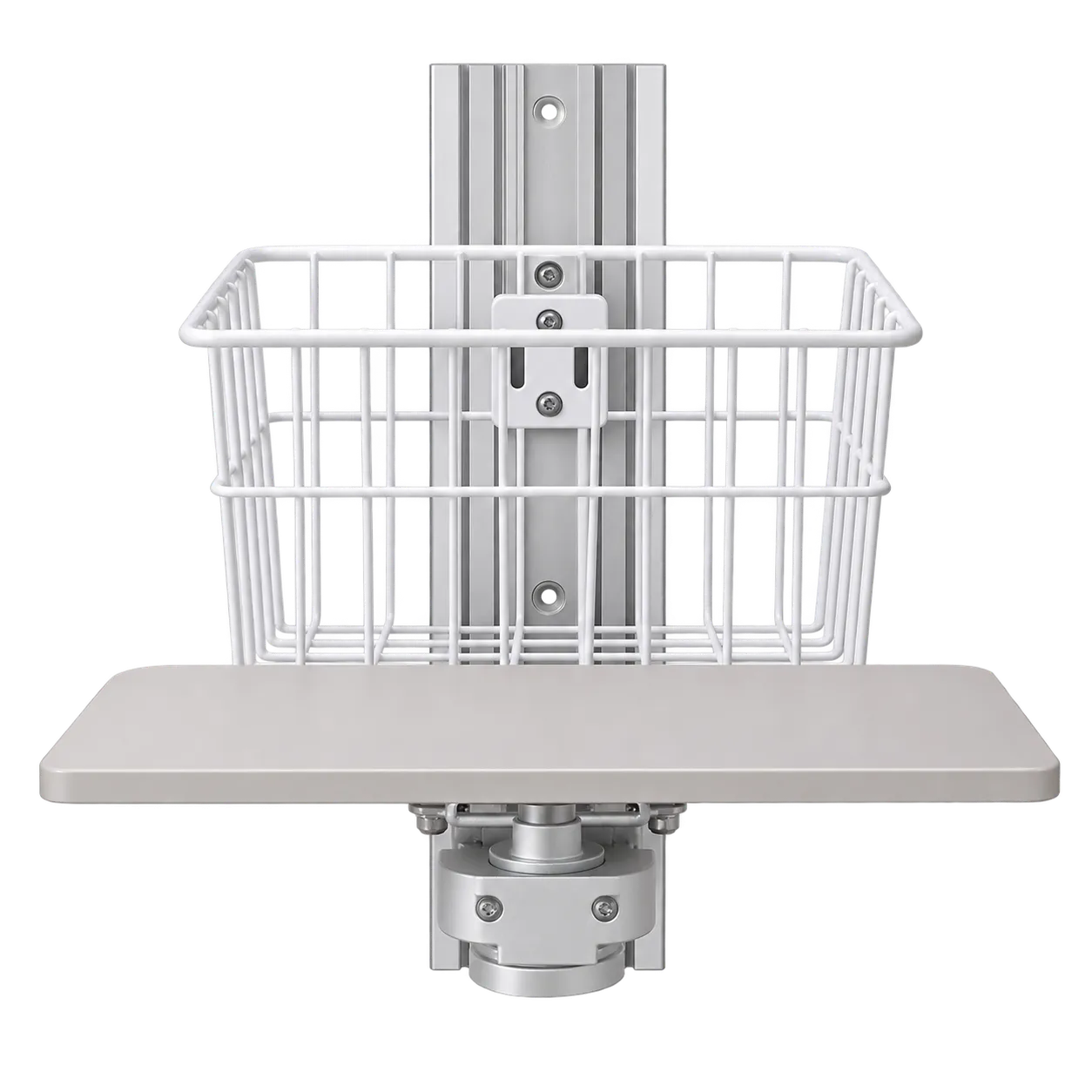
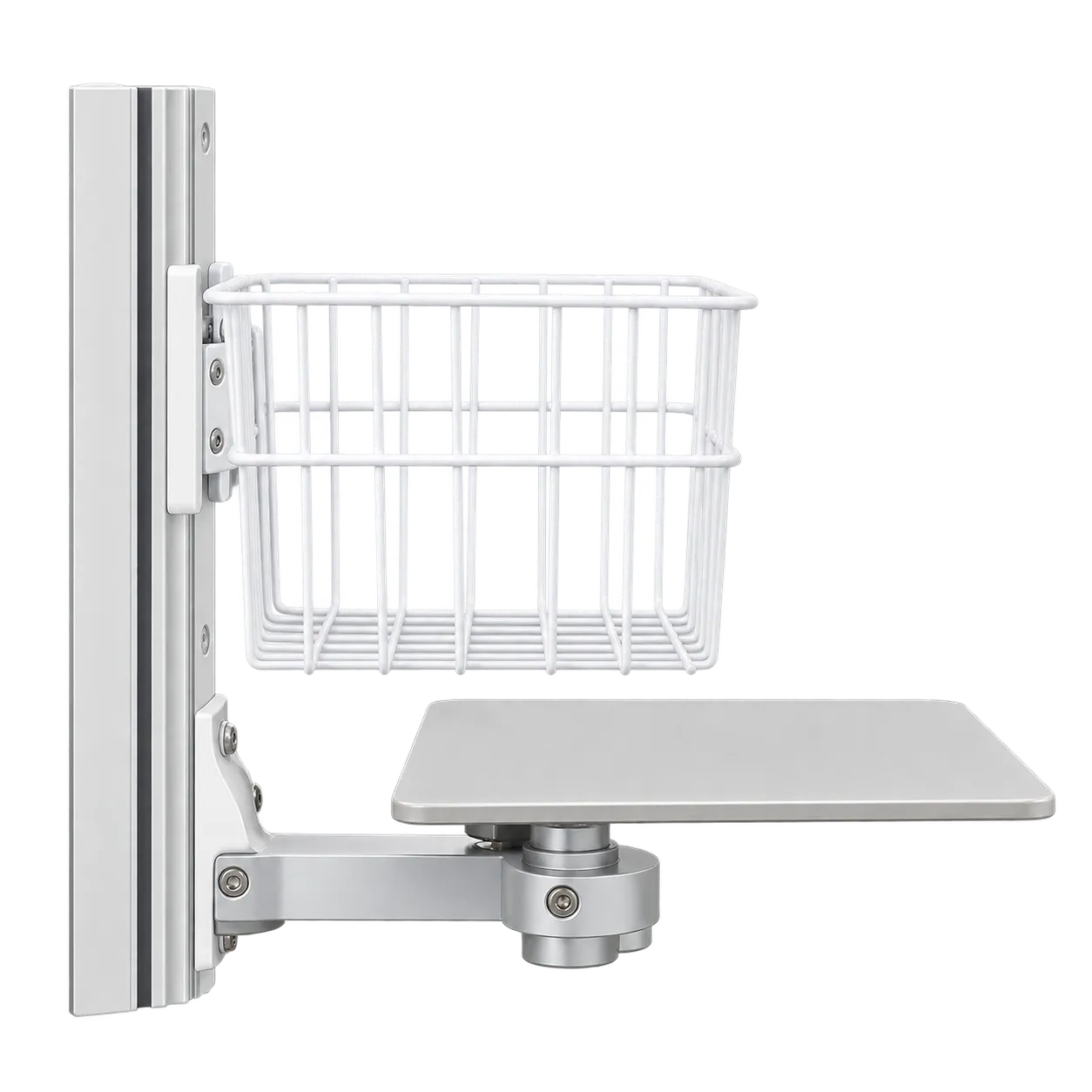
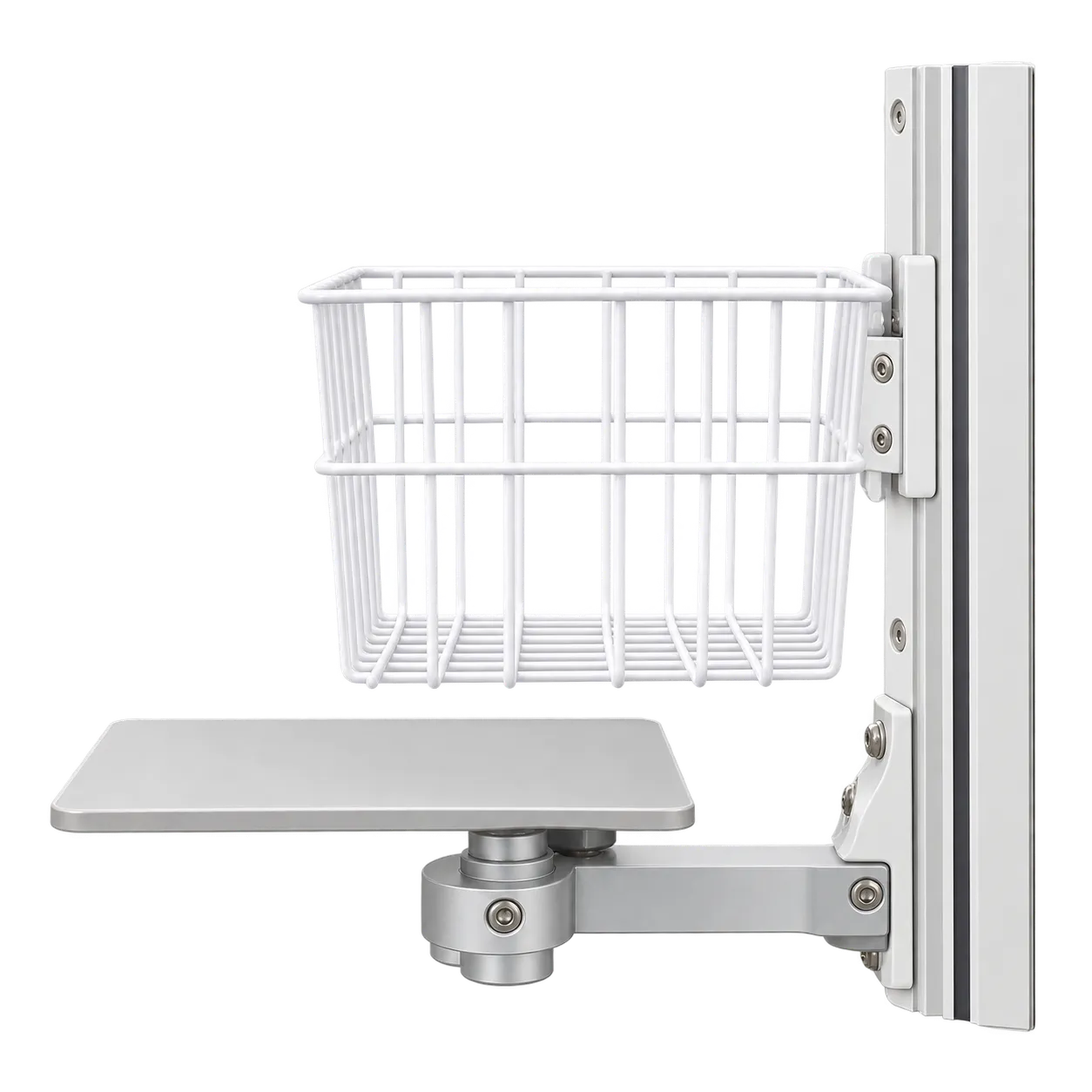
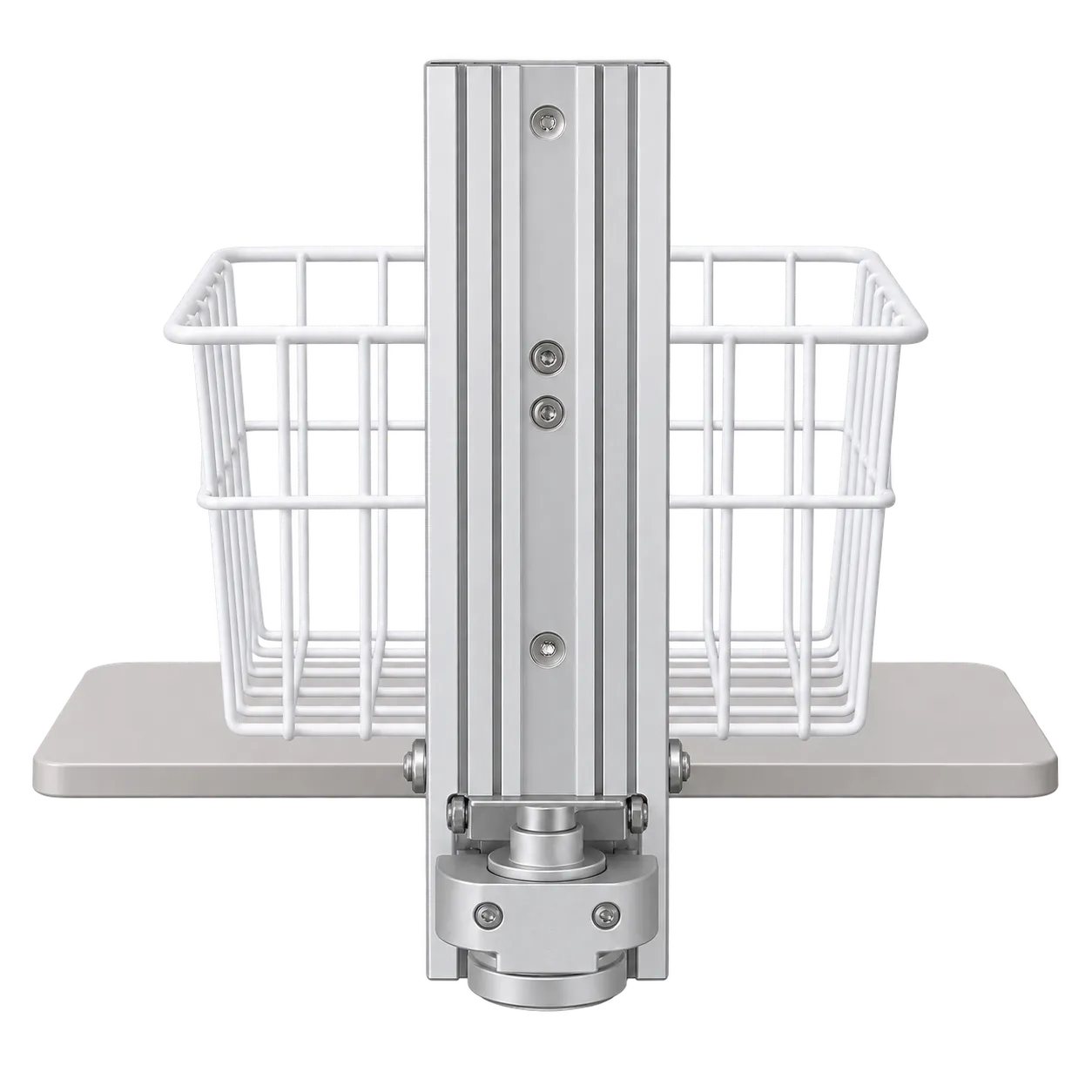
Permanent bed positions are where this belongs. Where a monitor stays with a bay rather than following a patient, hanging it from the wall clears the floor completely and removes a trolley from a space people are already working around. Three kilograms of aluminium is a trivial dead load on a fixing, and the 10 kg rating leaves ample room for the compact displays a general ward runs.
Base mounting has a practical advantage nobody writes on a datasheet. A monitor bolted down onto a tray cannot be lifted off by someone in a hurry, which is a genuine consideration in a bay where equipment migrates. It also puts the fastenings underneath, out of reach of gloved hands and away from the surfaces that get wiped. By contrast, the tray occupies the space directly beneath the machine, so anything a department normally slides under a shelf-mounted monitor no longer fits there, and the illustrated basket may be the intended answer.
Whether pitch adjusts is the question a ward needs answering before choosing this reference over its siblings. A display fixed at one angle is entirely satisfactory where lighting is constant and the viewing position never changes, and it removes a joint that can loosen. It is unsatisfactory where afternoon sun reaches the bay or where the same monitor is read from a chair and from the doorway.
Medigear.uk establishes the arrangement, including the fixings, tray drilling, and basket, before this monitor tray wall bracket enters clinical use on any ward.