
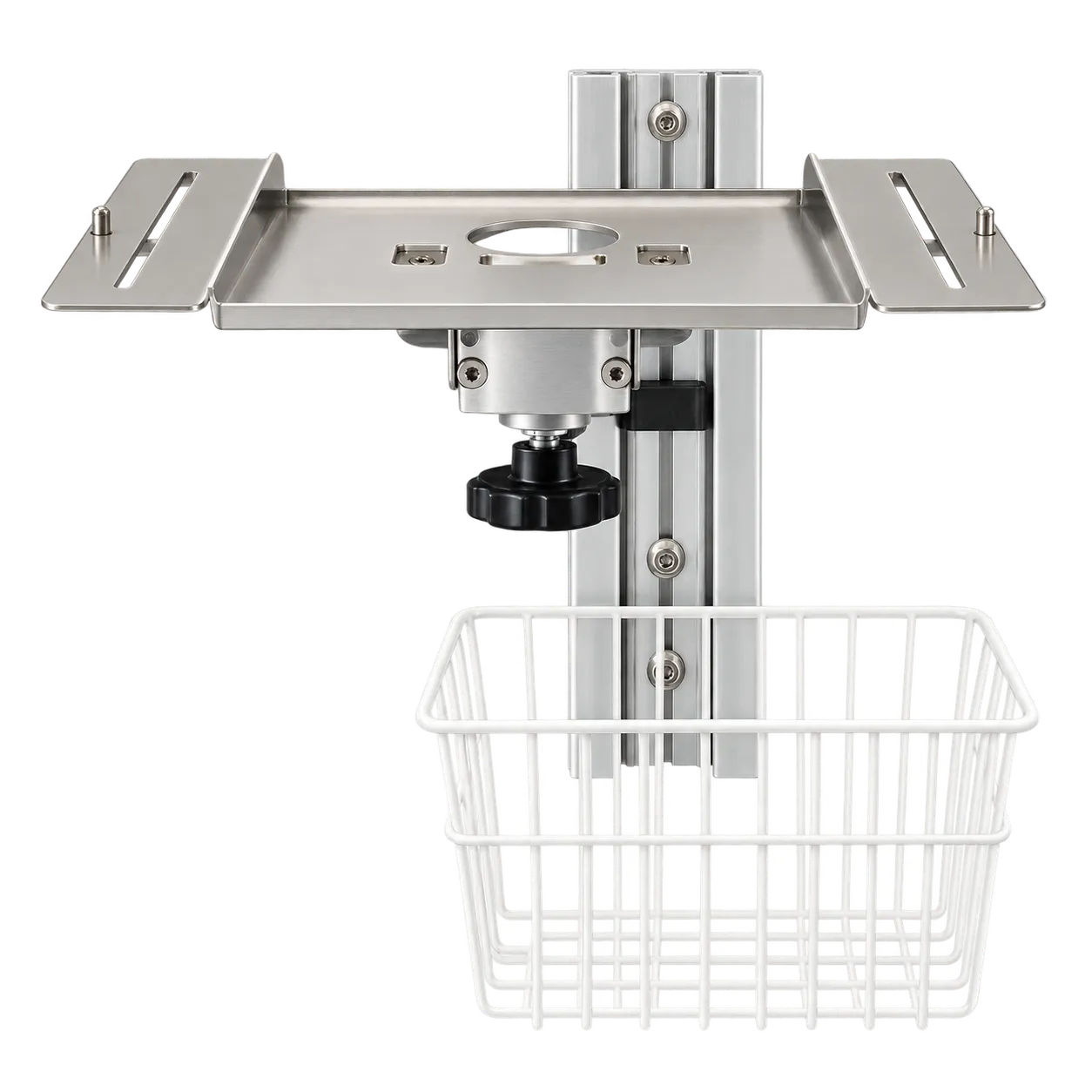
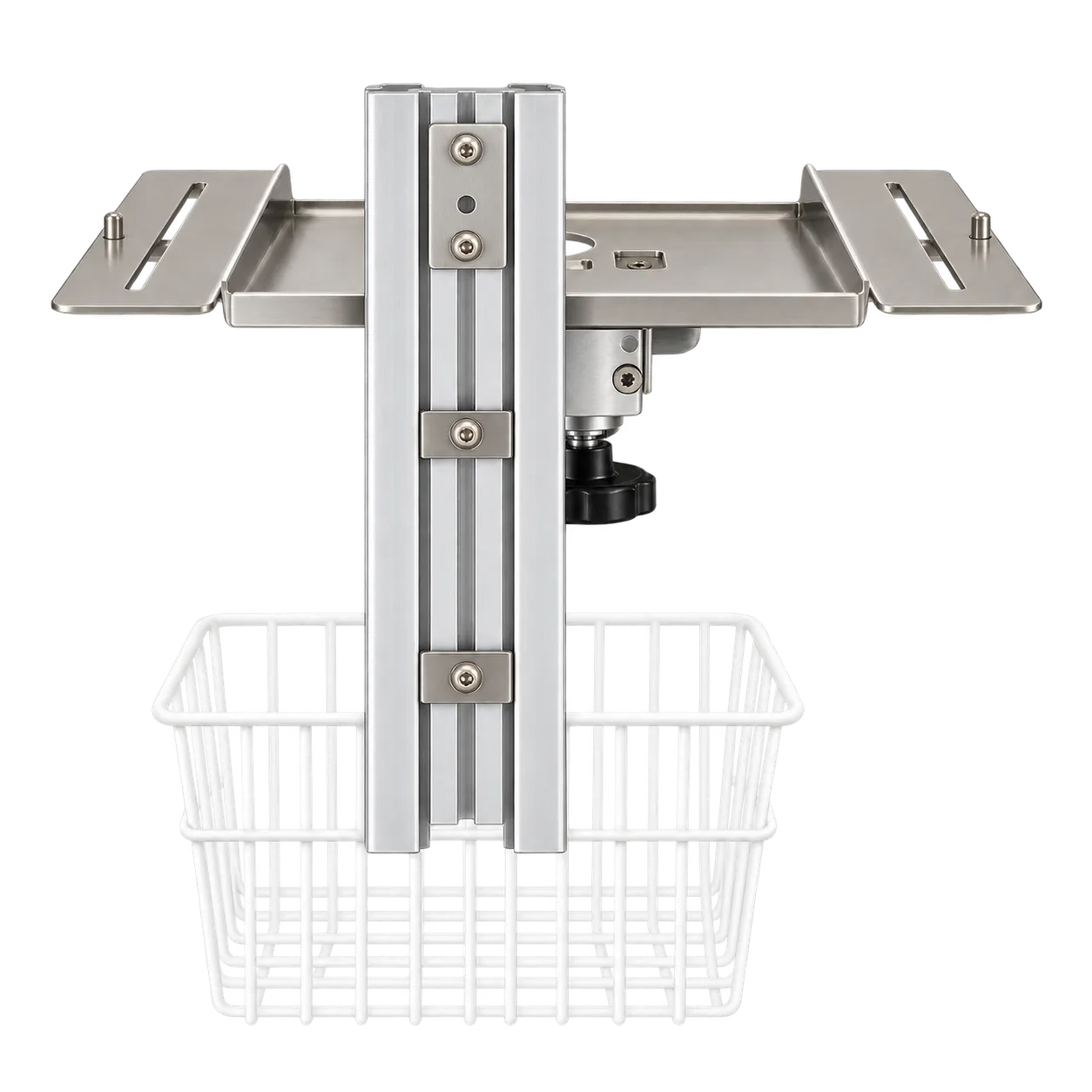
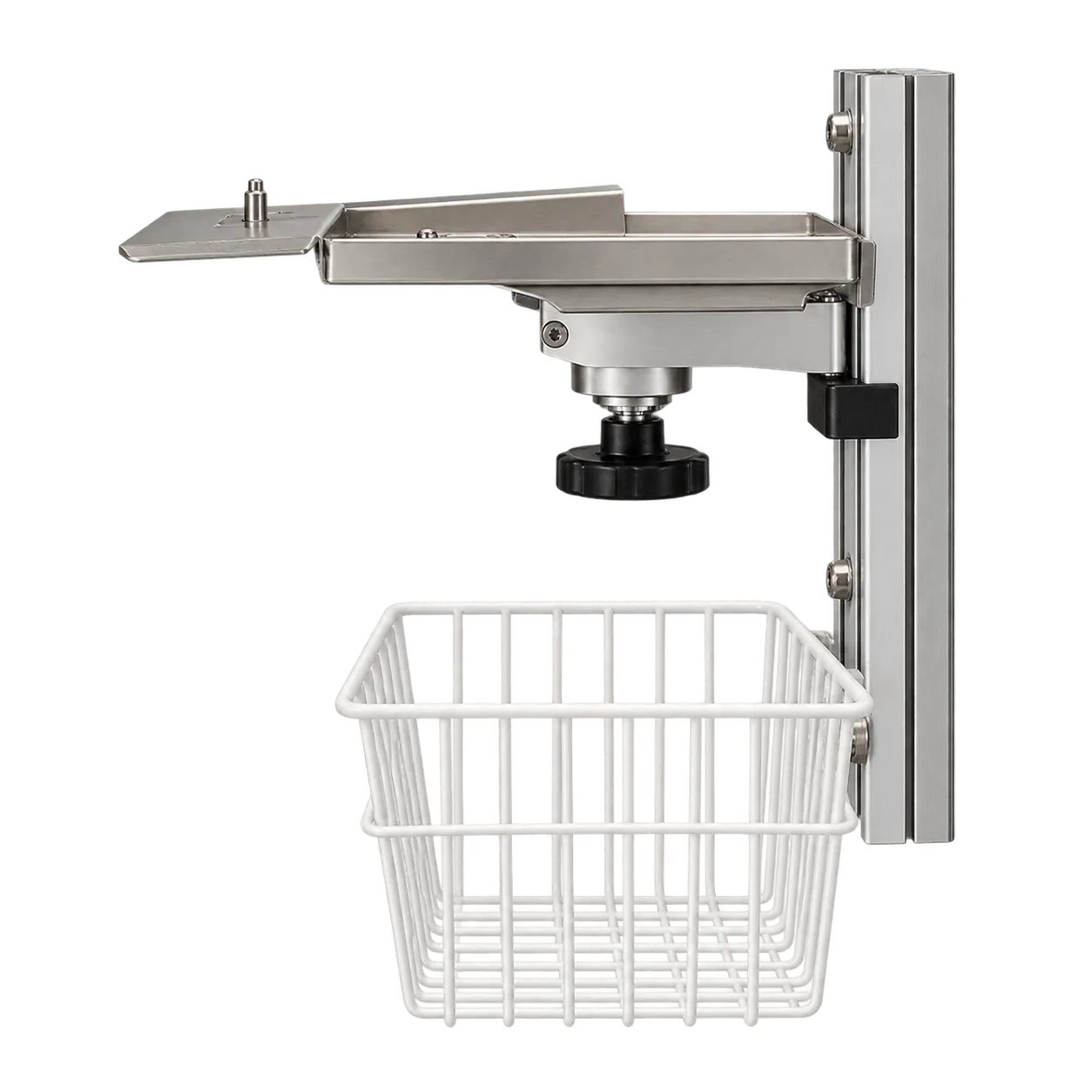
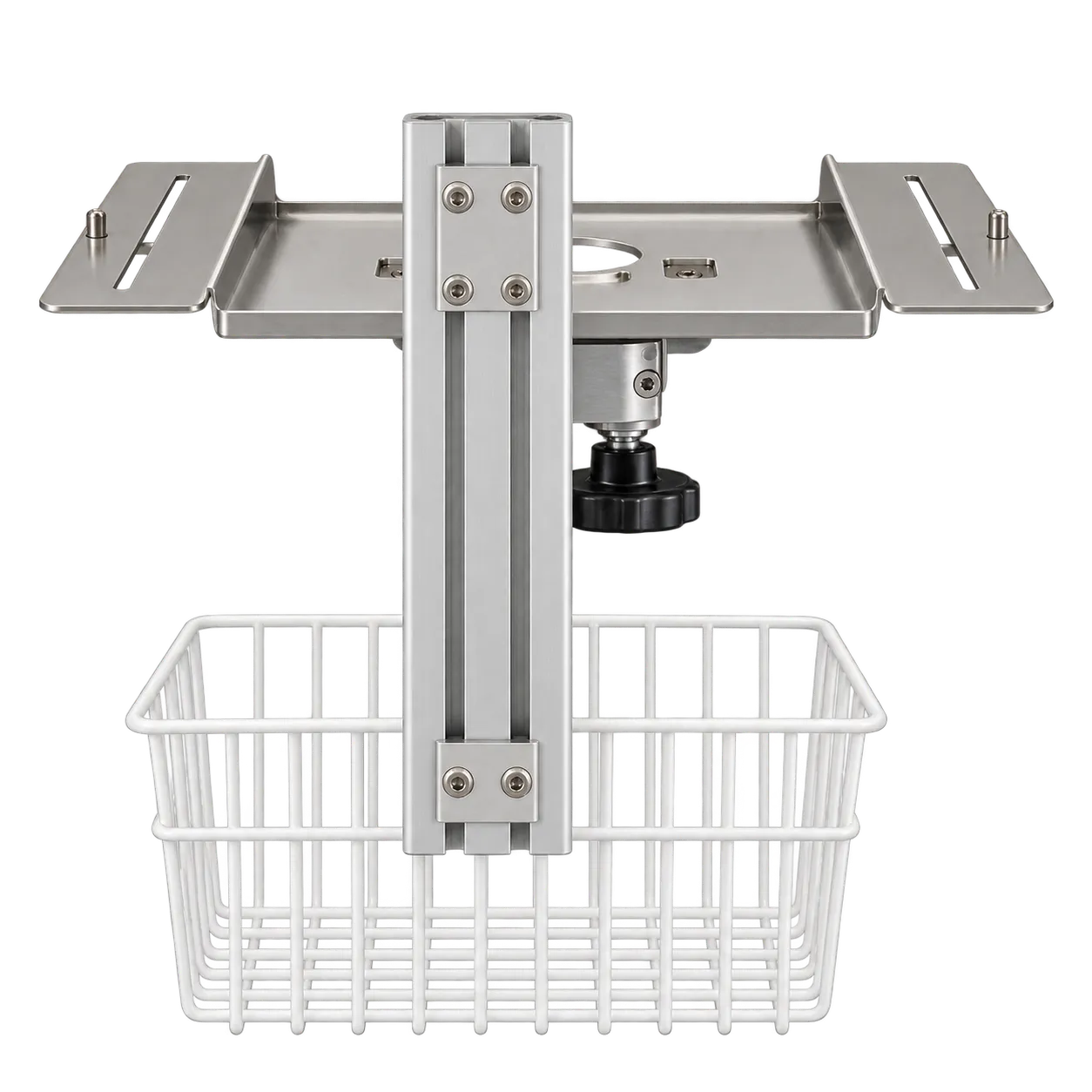
Light is the usual reason a fixed screen becomes a nuisance. Ward bays get sun through a window at one hour, and overhead fluorescent glare at another, and a display set at a single angle will be unreadable at some point in the day. Fifteen degrees of correction is generally enough to move a reflection off the face of a monitor, and it takes nothing from the floor, because the whole assembly stays on the wall.
Viewing position is the second reason. A trace read by someone standing at the bedside and the same trace read from a chair are looked at from quite different angles, and a screen normal to one is oblique to the other. Where a bay serves patients who are sat up as well as lying flat, being able to drop the display a little makes the difference between a monitor that is glanced at and one that is squinted at.
Against that, adjustment introduces a joint, and joints loosen. A bracket carrying up to 10 kg through a tilting mechanism relies on whatever holds the angle to keep it there, and the sheet says nothing about that mechanism at all. Where an angle would be set once at installation and never touched again, the unmarked RJA-1A may prove the sounder choice of the two.
Medigear.uk explains how this adjustable pitch monitor bracket retains its setting, along with the fixings, the tray pattern, and the identity of the illustrated basket, before it enters clinical use.