
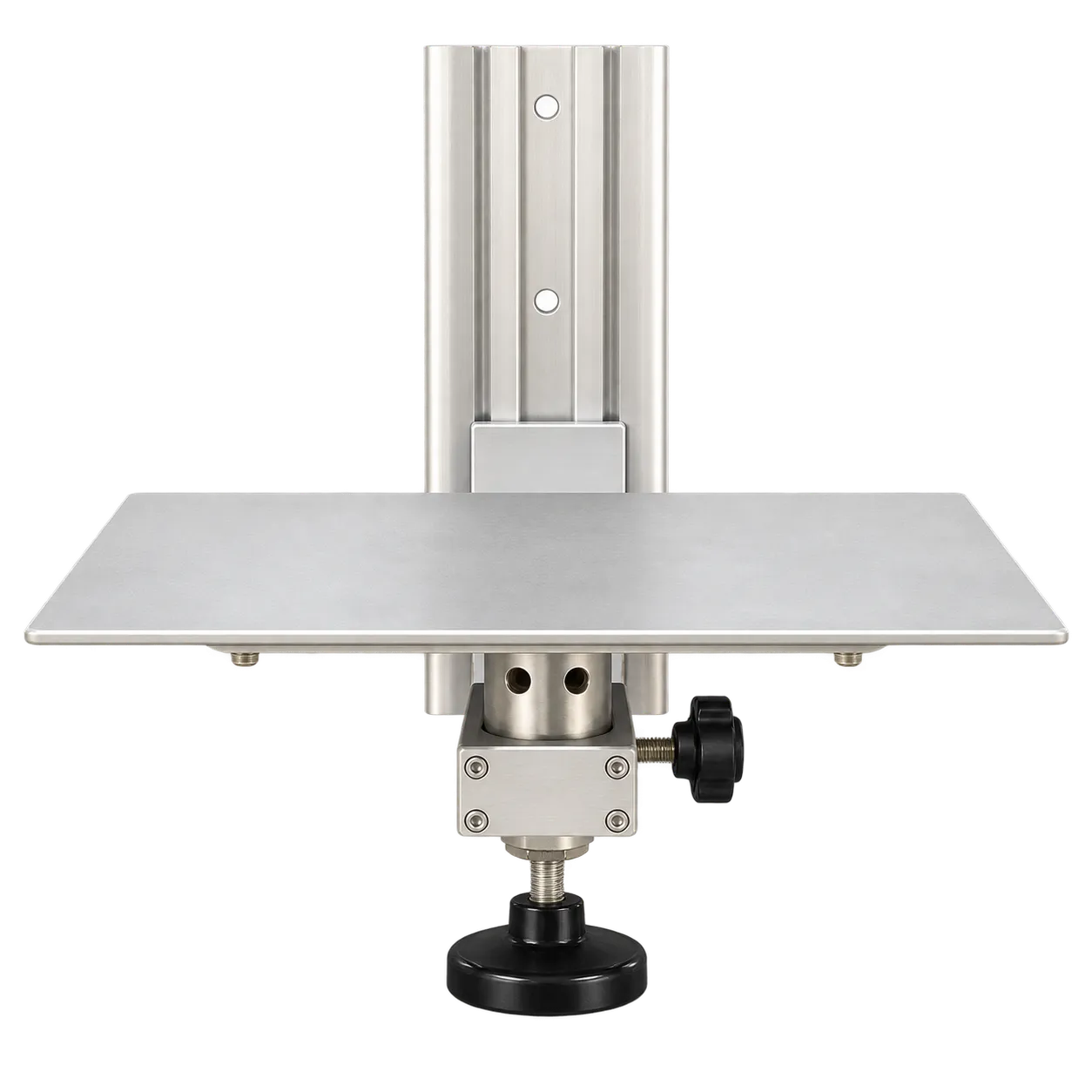
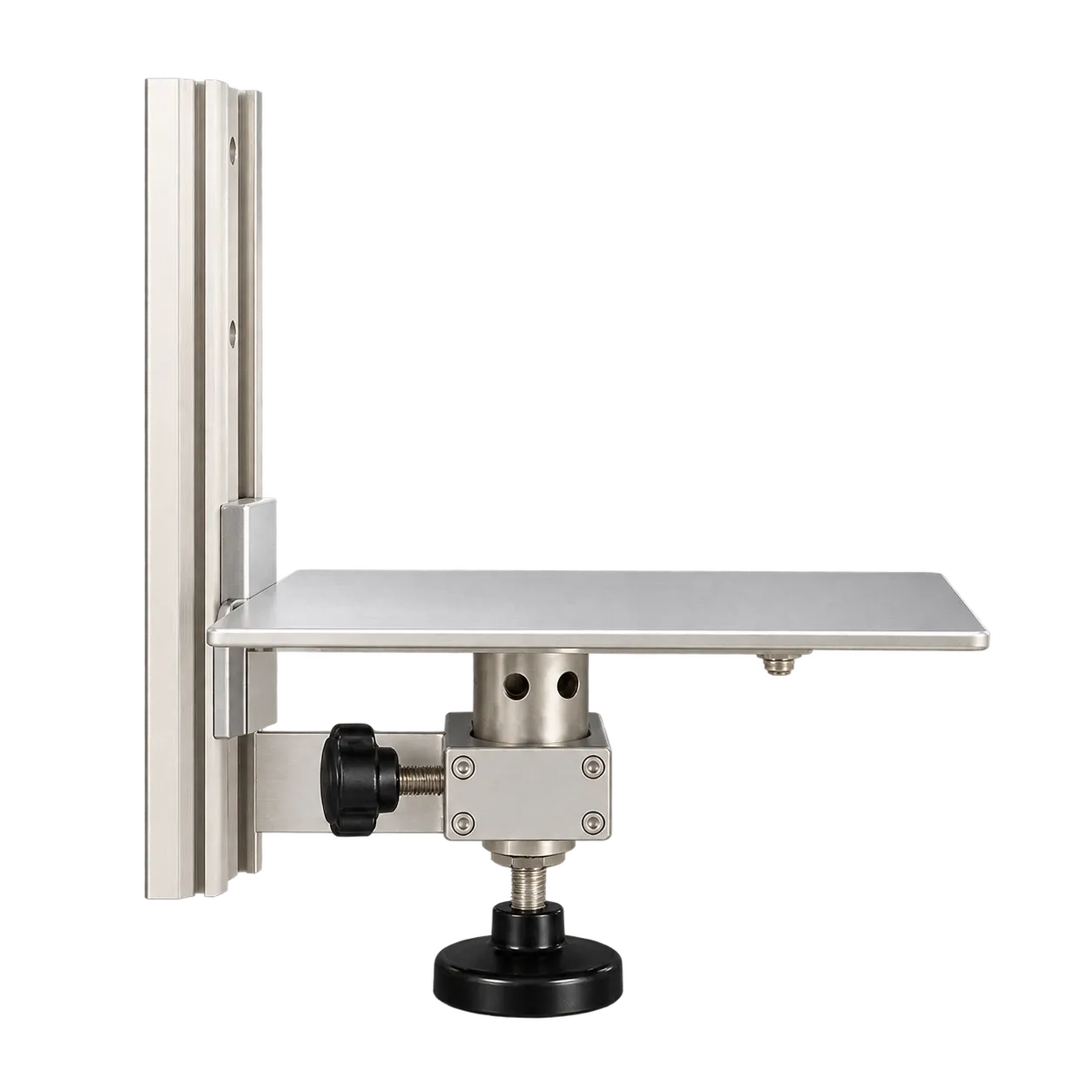
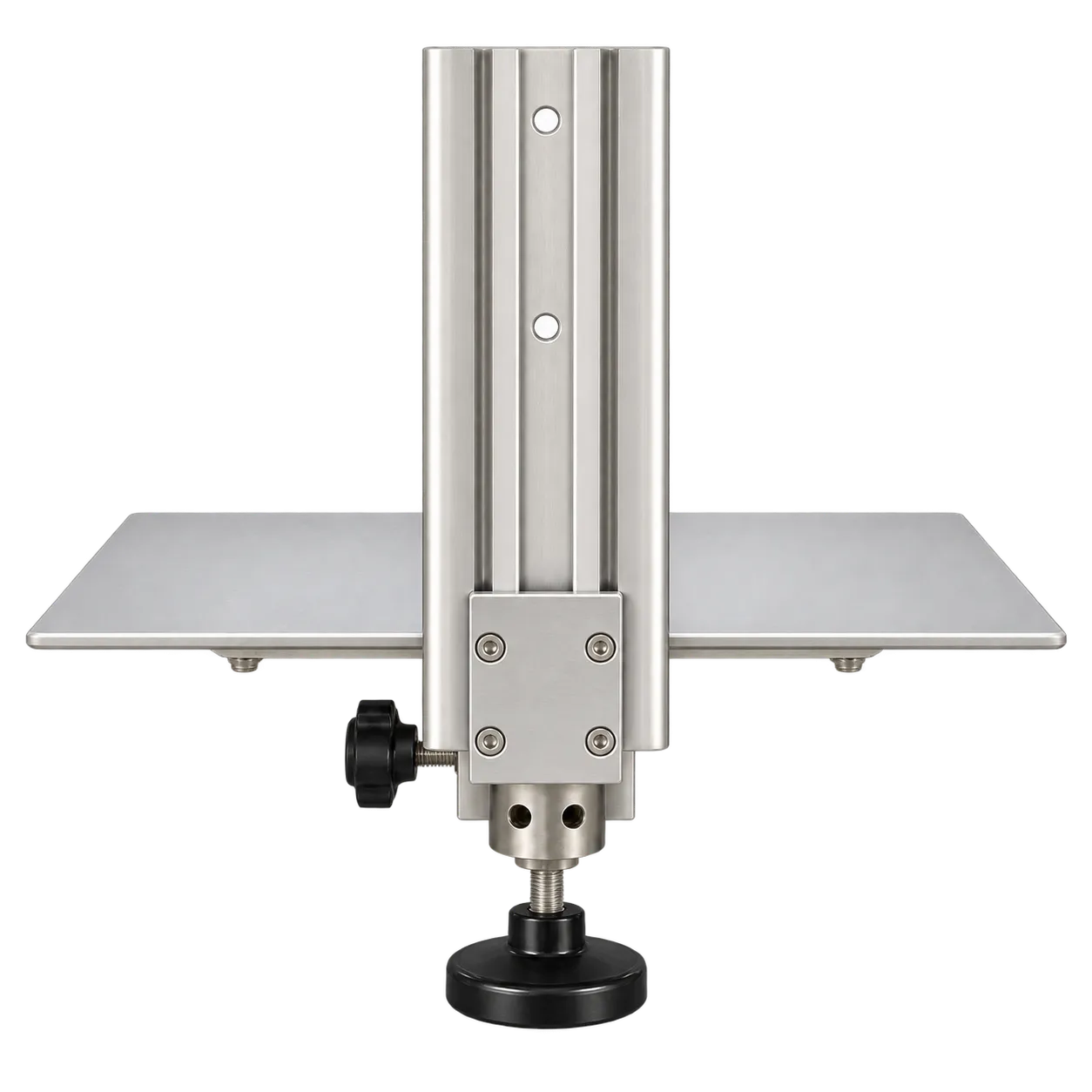
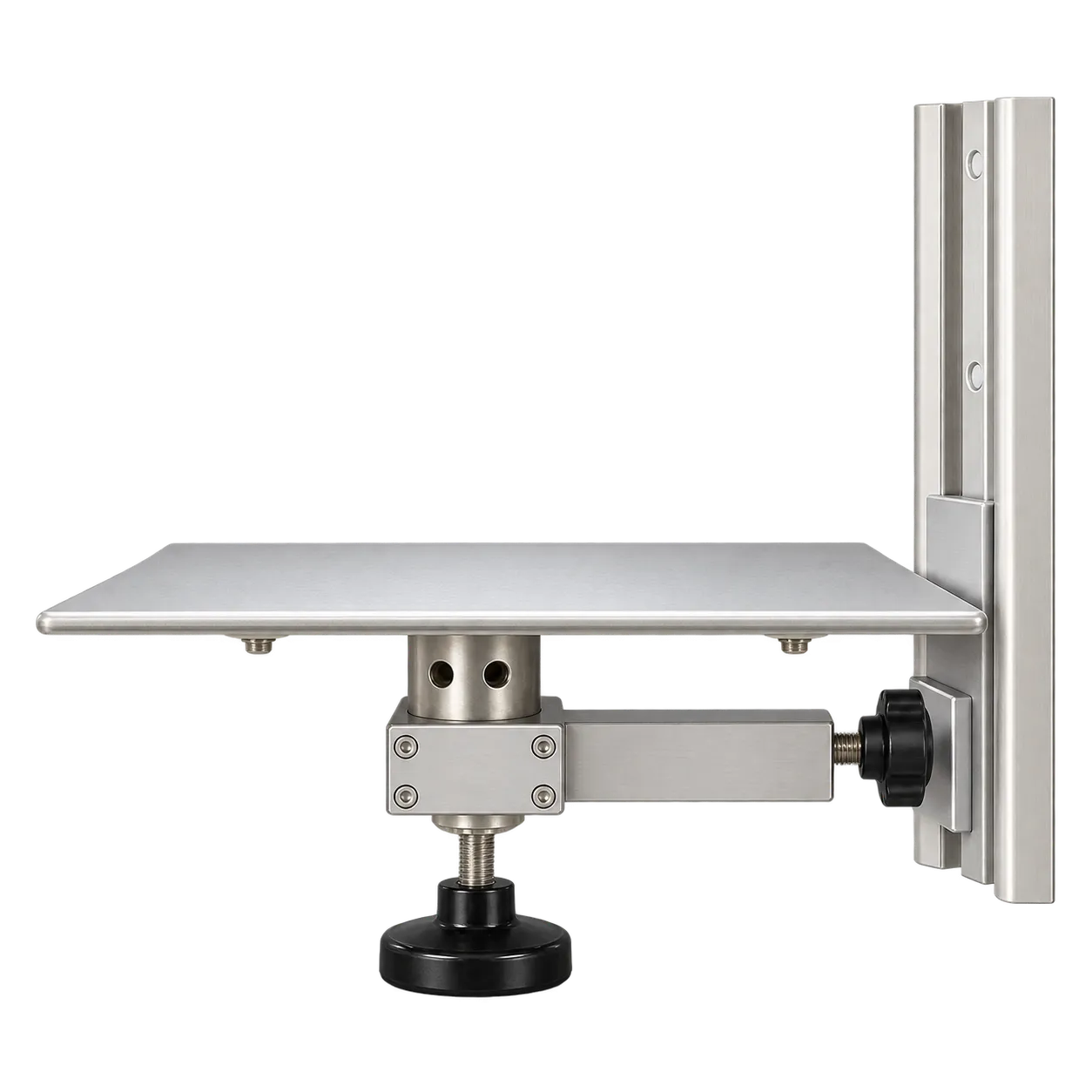
A tilting bracket earns its place wherever the light or viewing position changes throughout the day. Bays with a window get direct sun for part of an afternoon and overhead light the rest of the time, and a screen set at one angle will wash out at some point in either. A 15-degree correction usually shifts the reflection clear, and it happens on the wall rather than requiring a stand on the floor.
The same range accommodates the two positions a patient occupies. Somebody sat up in bed and somebody lying flat look at a wall-mounted display from noticeably different lines, and dropping the face of a monitor by a few degrees is often all that separates a readable trace from a squinted one. Where a bay habitually holds both, that adjustment is worth having, and it demands nothing further once the bracket is already on the wall.
What a ward cannot determine from this sheet is which of the two marked references to specify. Both tilt, both weigh the same, both take the same load, and both accept the same trays. If the practical difference lies in the basket, as the illustrations suggest, then it is a storage question rather than a mounting one, and it ought to be stated as such rather than left to a drawing.
Medigear.uk establishes what genuinely separates the RJA-1B from the RJA-1C, along with tray drilling and fixing requirements, before this tilting monitor wall mount reaches a clinical area.