
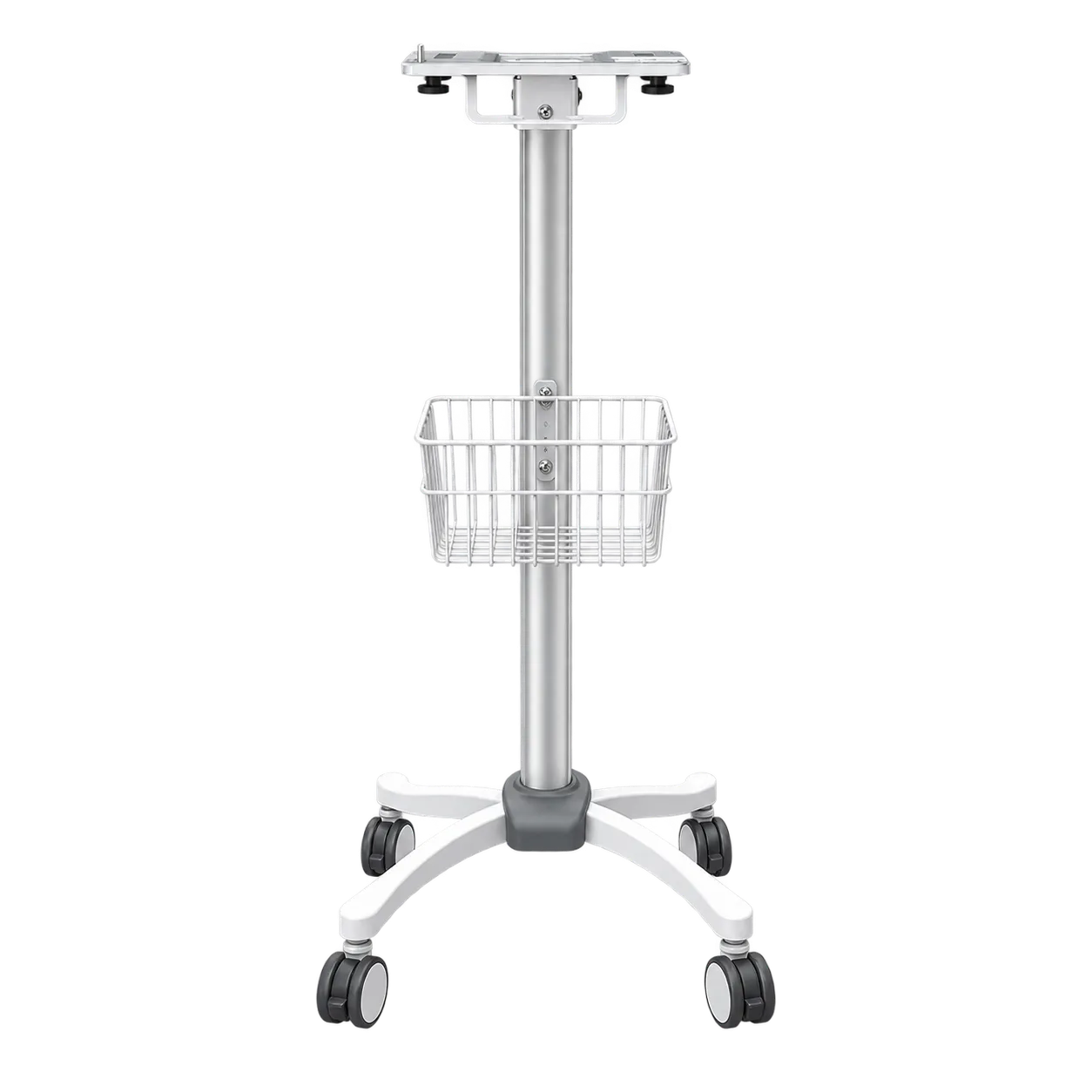
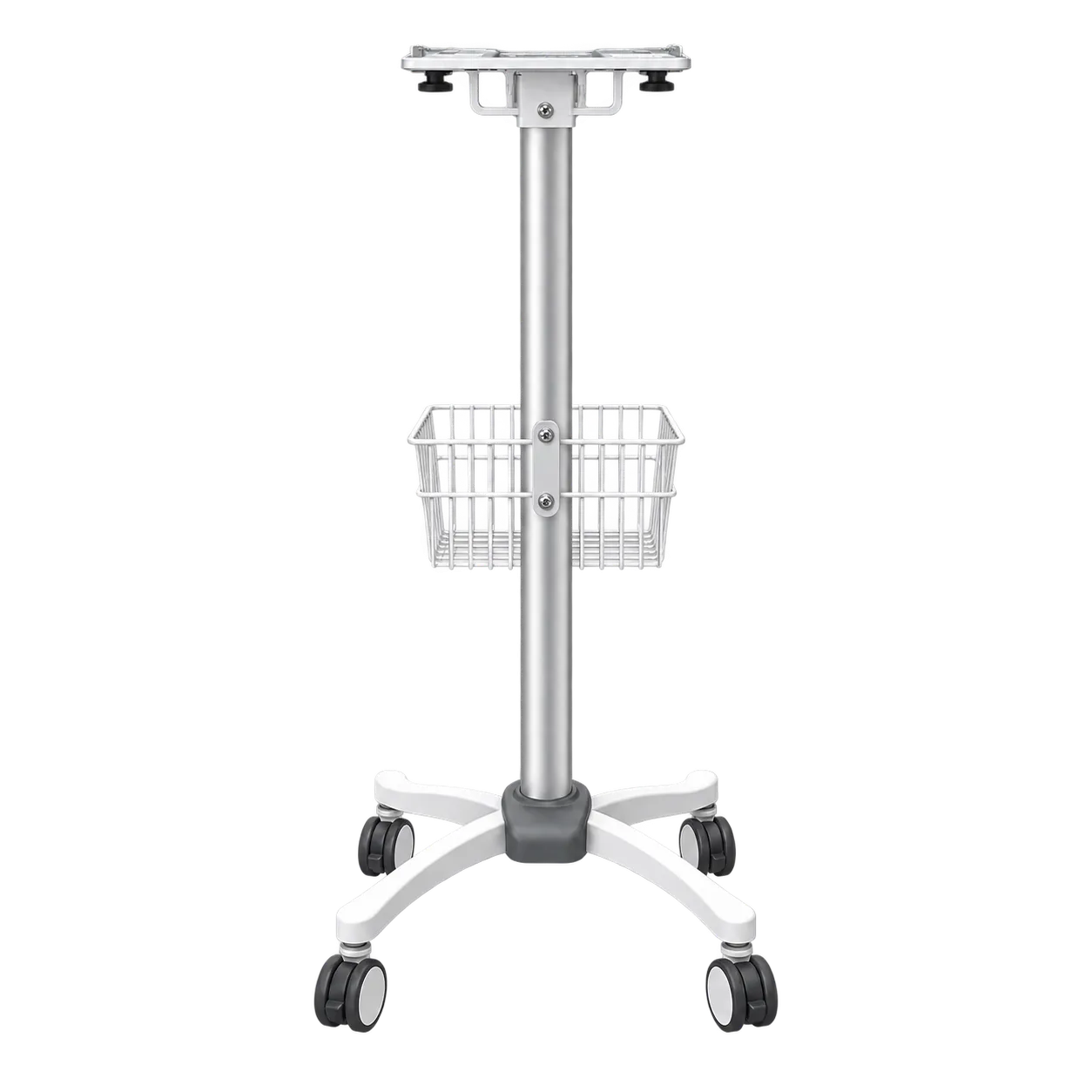
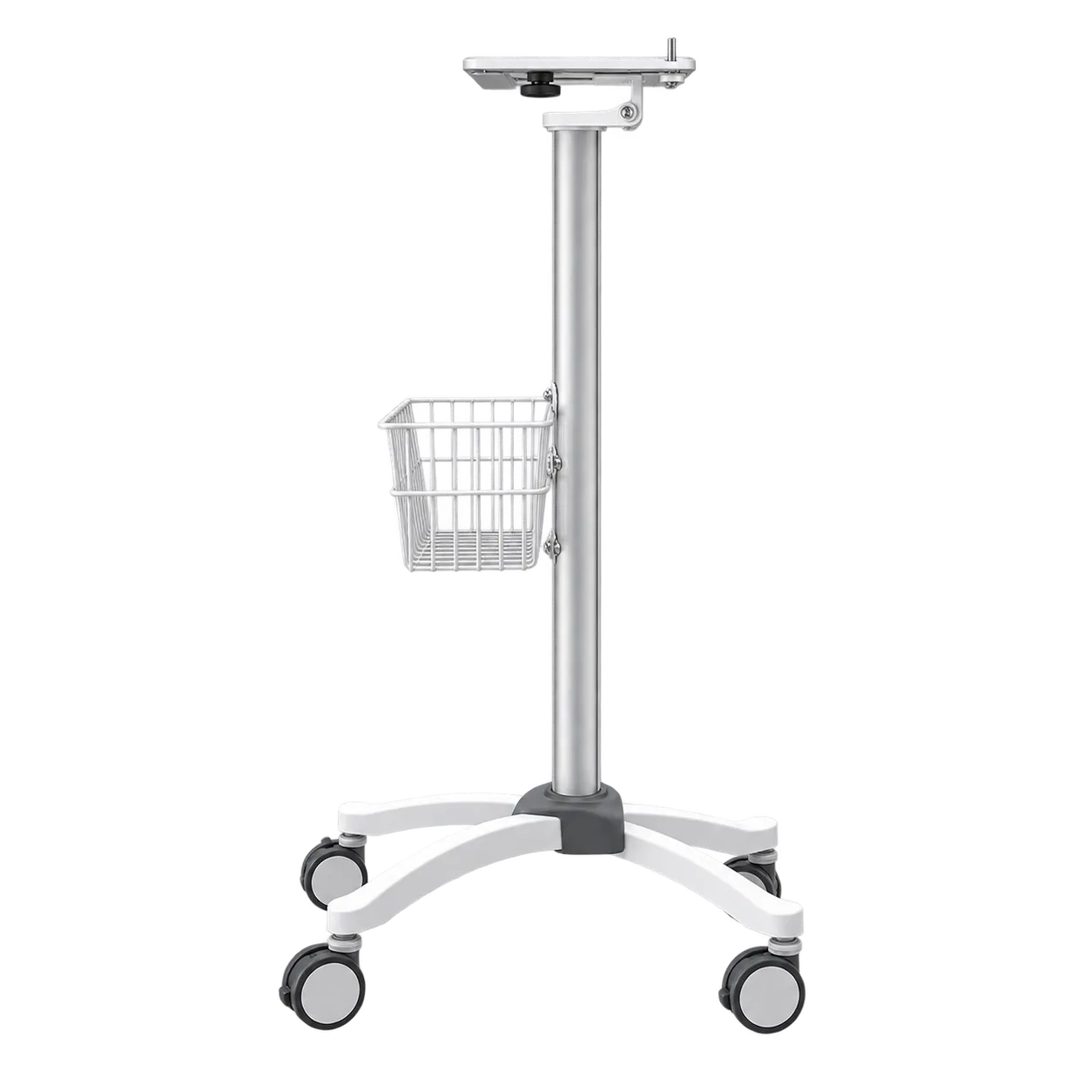
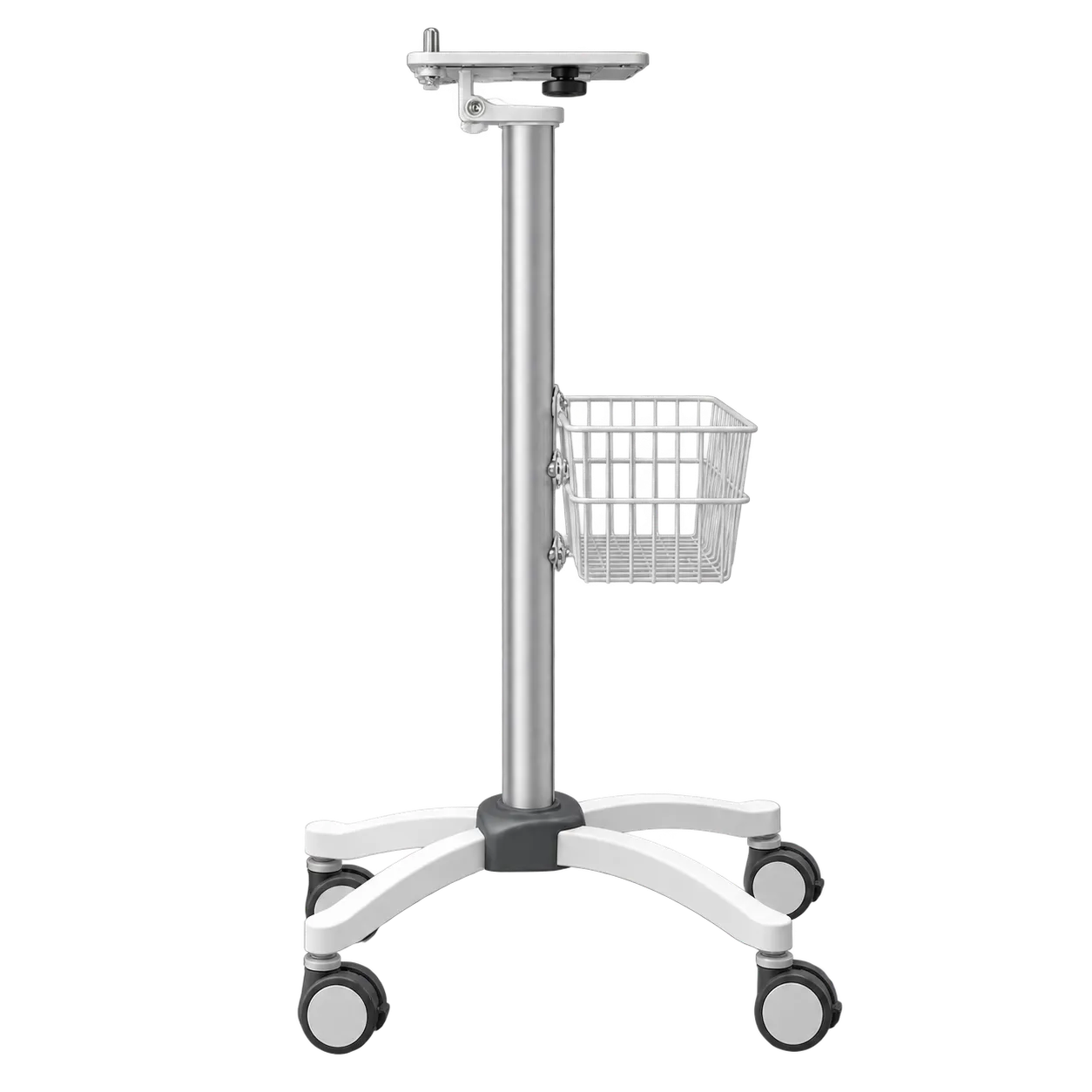
Step-down and observation areas are where a lightweight monitor trolley belongs. Monitors used away from critical care tend to be smaller units that monitor fewer parameters, and those are the machines an 8 kg bracket suits comfortably. Pairing a modest monitor with a 7.5 kg chassis creates something a member of staff moves without thinking, which is what an area with high patient turnover actually needs.
The 970 mm height reads as deliberate rather than incidental. Fifty-five millimetres above the other fixed RJB stands puts a display a little higher than bed level, which helps when a monitor is read from the foot of the bed or from a doorway rather than immediately beside the patient. It remains a fixed height, so the choice between 915 and 970 mm is made once, at order, and lived with thereafter.
The bracket rating is where you need to pay attention. Eight kilograms covers most compact and mid-range bedside monitors. Still, multiparameter units with several modules fitted can exceed it, and the other RJB references allow another two kilograms for exactly that reason. Confirming the weight of the specific monitor, with its modules and any attached recorder, comes before choosing this reference over its siblings. It is not a figure worth estimating from a datasheet for a bare unit.
Medigear.uk checks that figure and confirms the hole spacing and fastening method before this lightweight monitor trolley enters clinical use, along with what the basket in the drawing amounts to.