
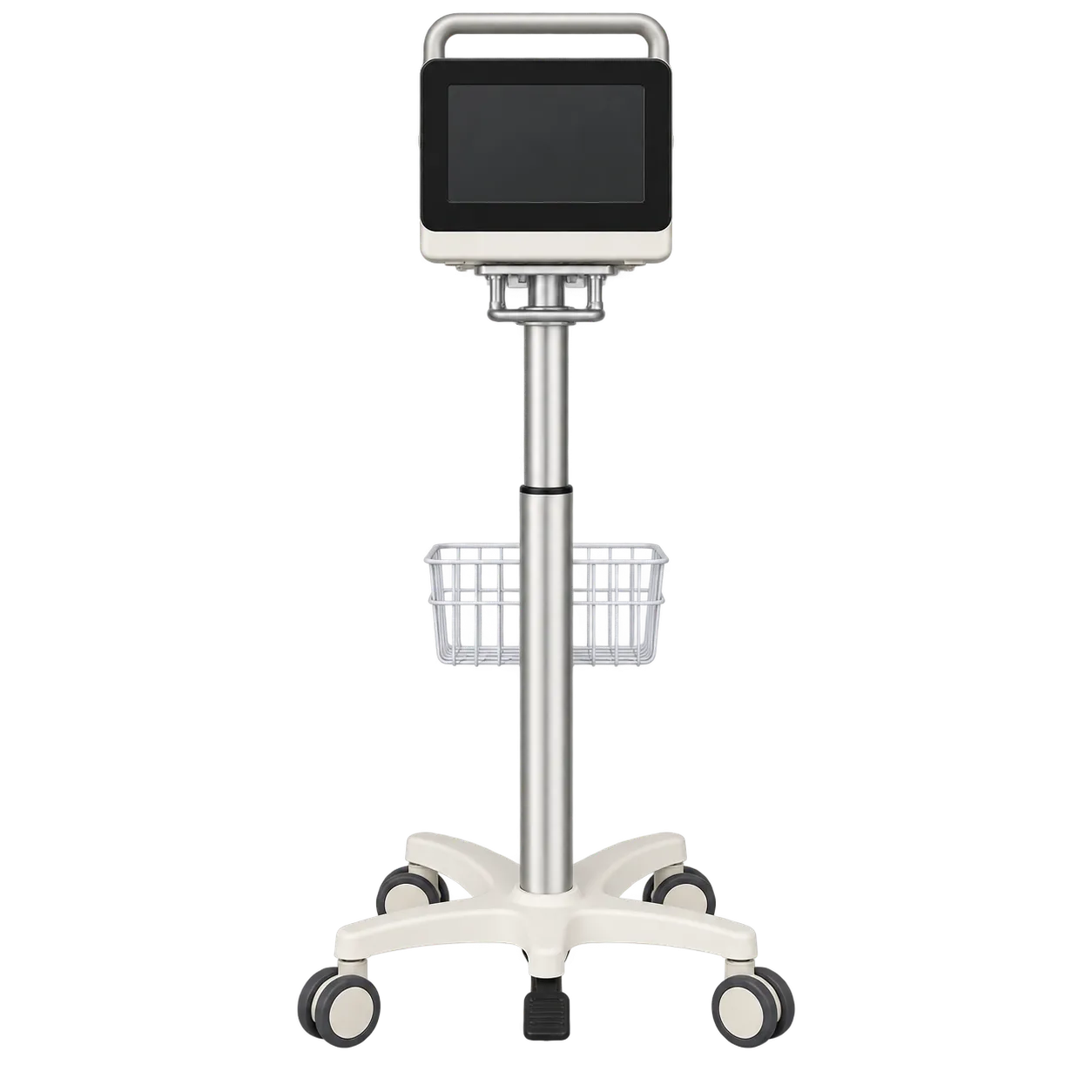
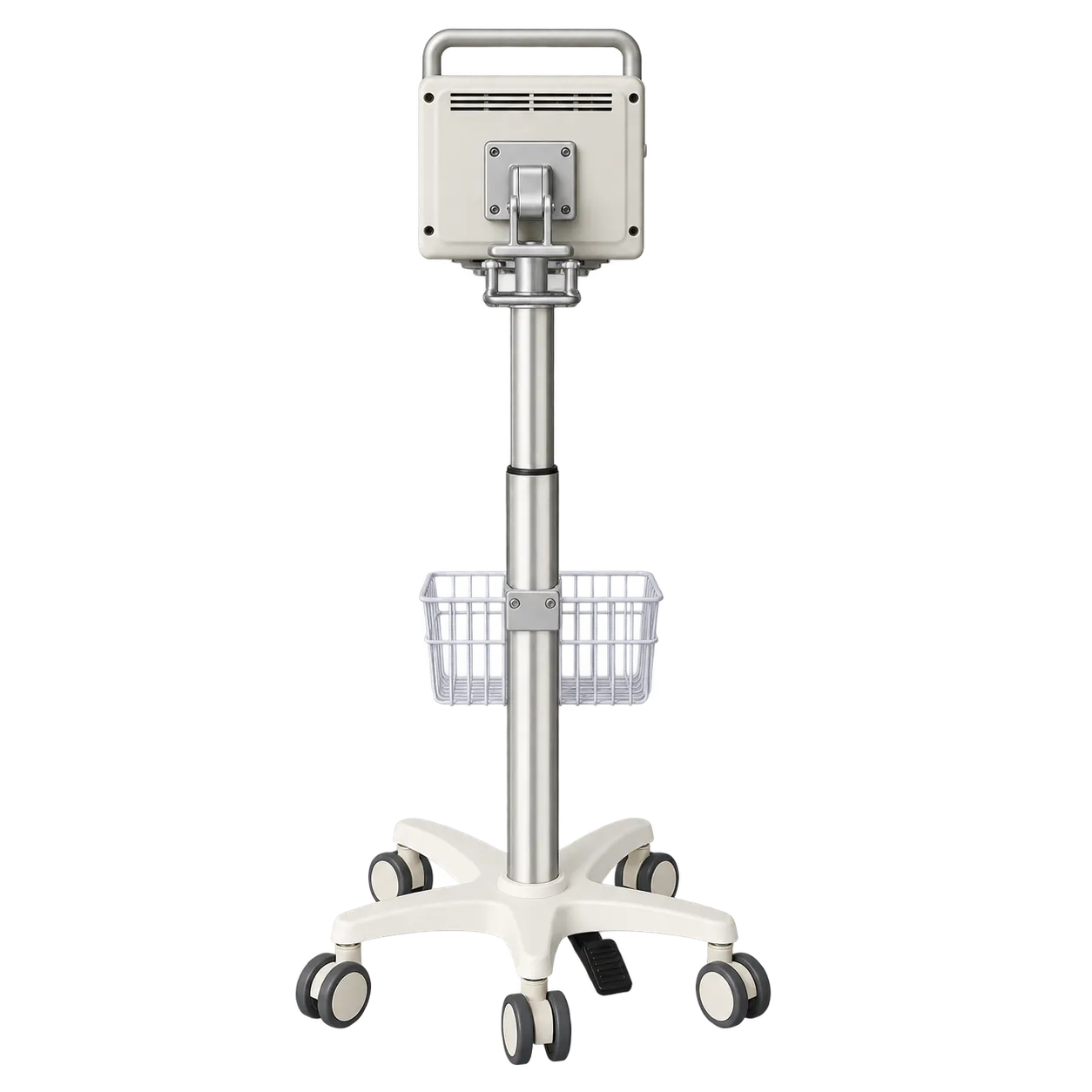
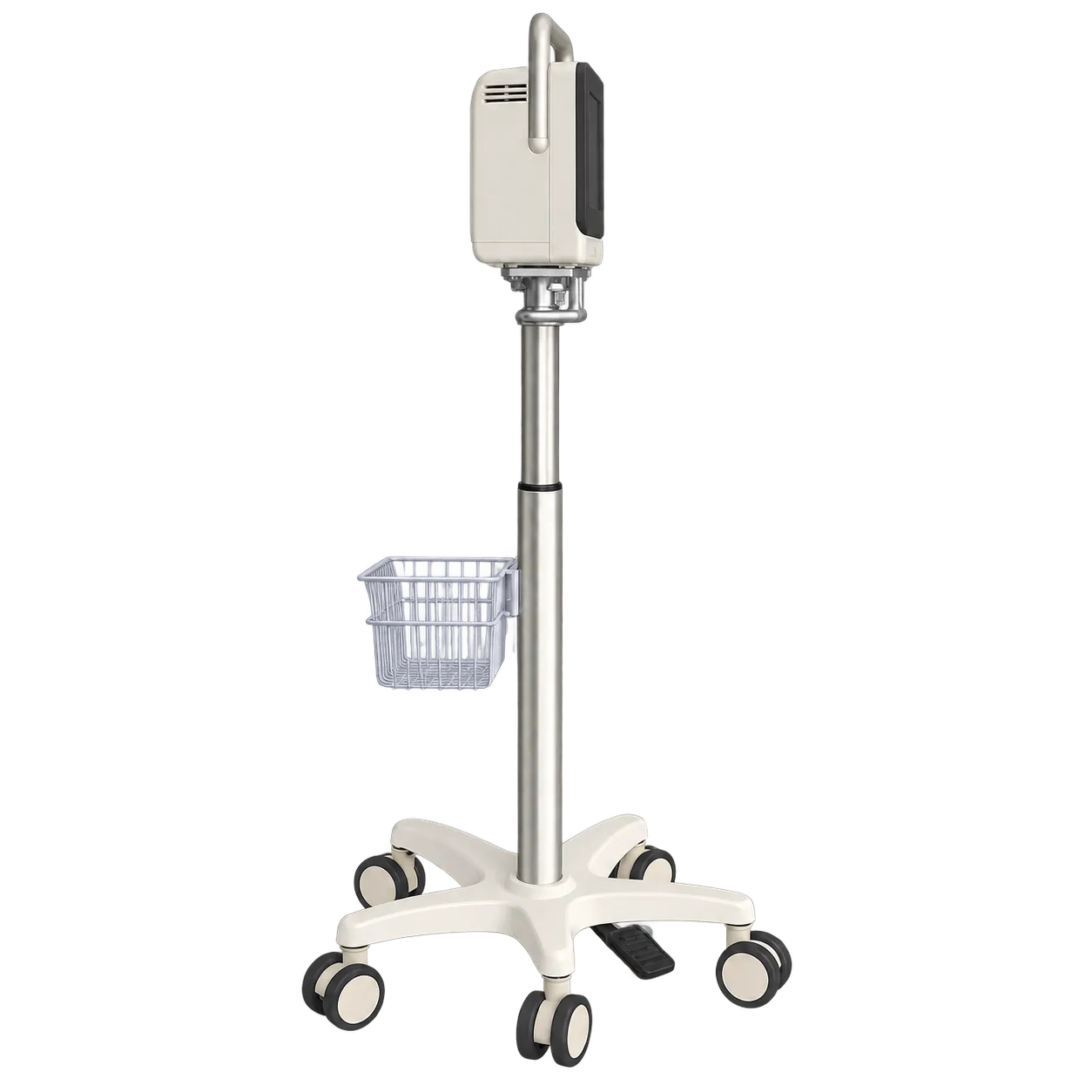
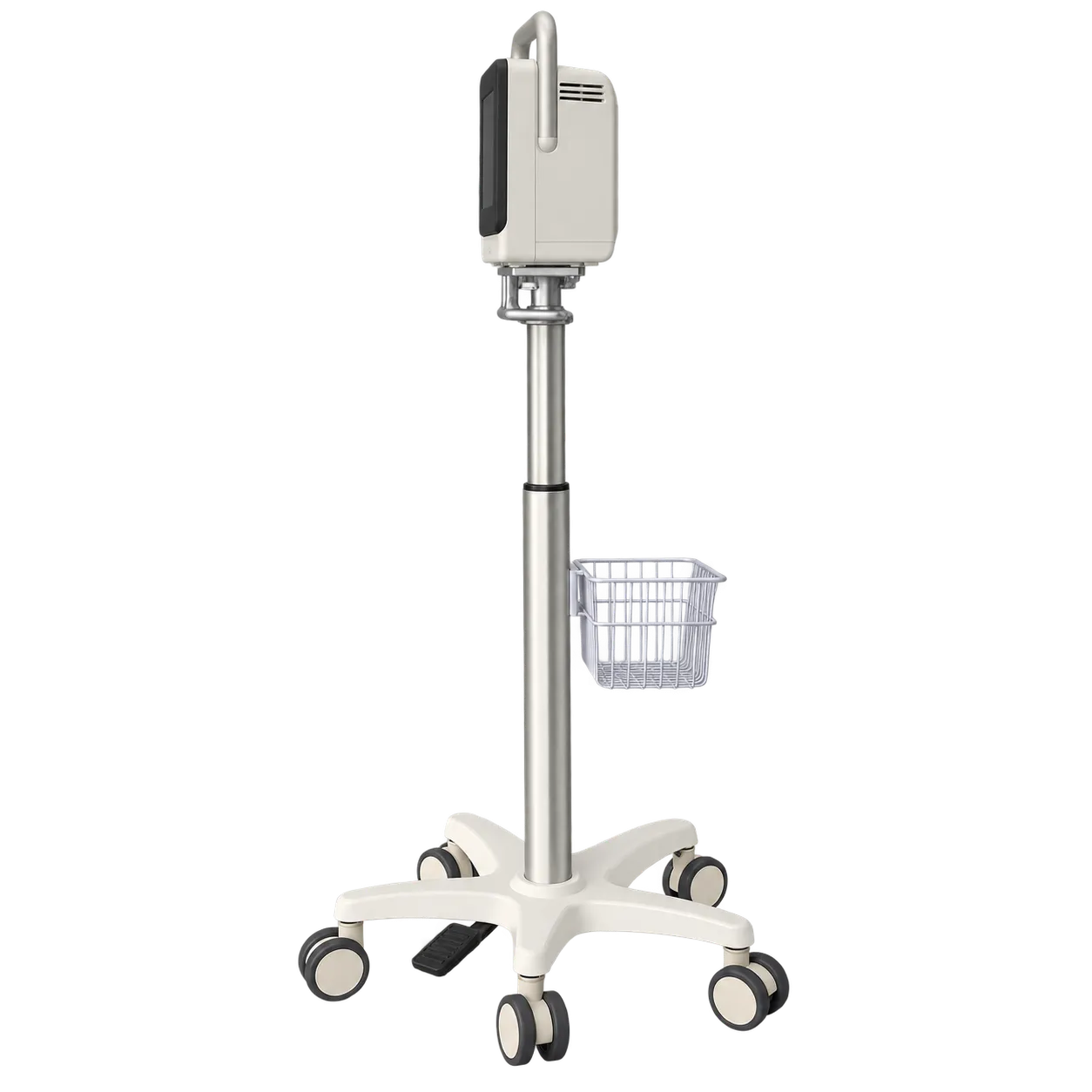
A travelling monitor benefits from a base with no corners. Moving a patient from recovery into a bay, threading past a bed and a visitor's chair, turning into a lift, the circular footprint rotates rather than presenting a leg to catch on something. The fixed RJB references exploit that already, and this one keeps it while adding the ability to set the viewing height on arrival.
Two hundred and fifty millimetres of travel covers the ordinary range of viewing positions. At 820 mm a display sits low enough to read while seated at a bedside; at 1070 mm it is comfortably above bed level for someone standing or glancing in from the door. It does not reach the 1125 mm offered by the five-star reference, so a bay where monitors are watched from a distance across several beds may want that extra 55 mm instead.
The unpublished weight is worth pressing on. A round base monitor stand is chosen partly because it is easy to move, and mass is central to that judgement, as it is to how a raised load behaves on a light chassis. The other RJB references sit between 7.5 kg and 9 kg, so a figure in that region is probable. Probable is not a specification, and a manual handling assessment cannot be written against it.
Medigear.uk obtains the weight, resolves the base tolerance, and establishes the mounting-hole spacing before this stand reaches a clinical area, along with how a monitor fastens down.