


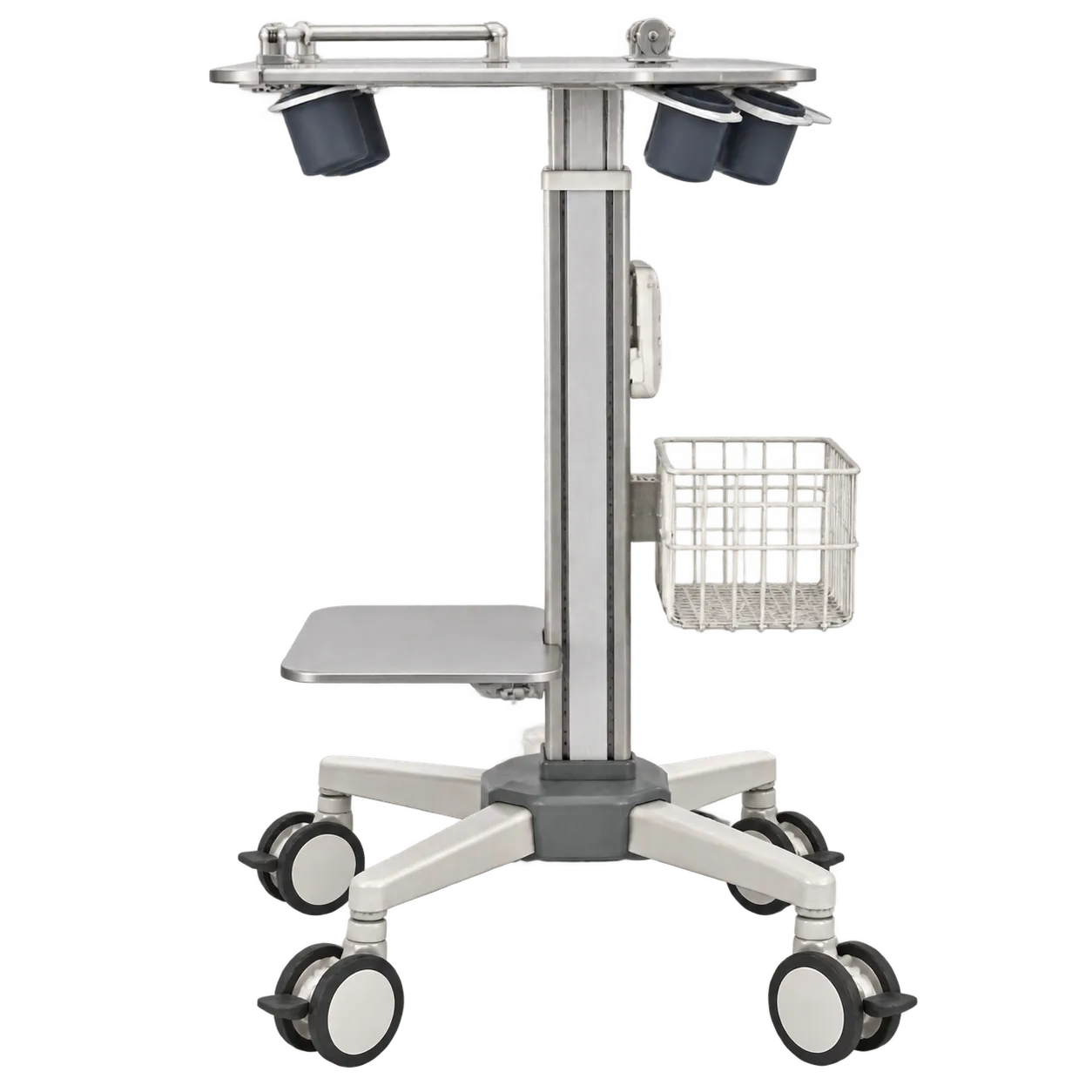
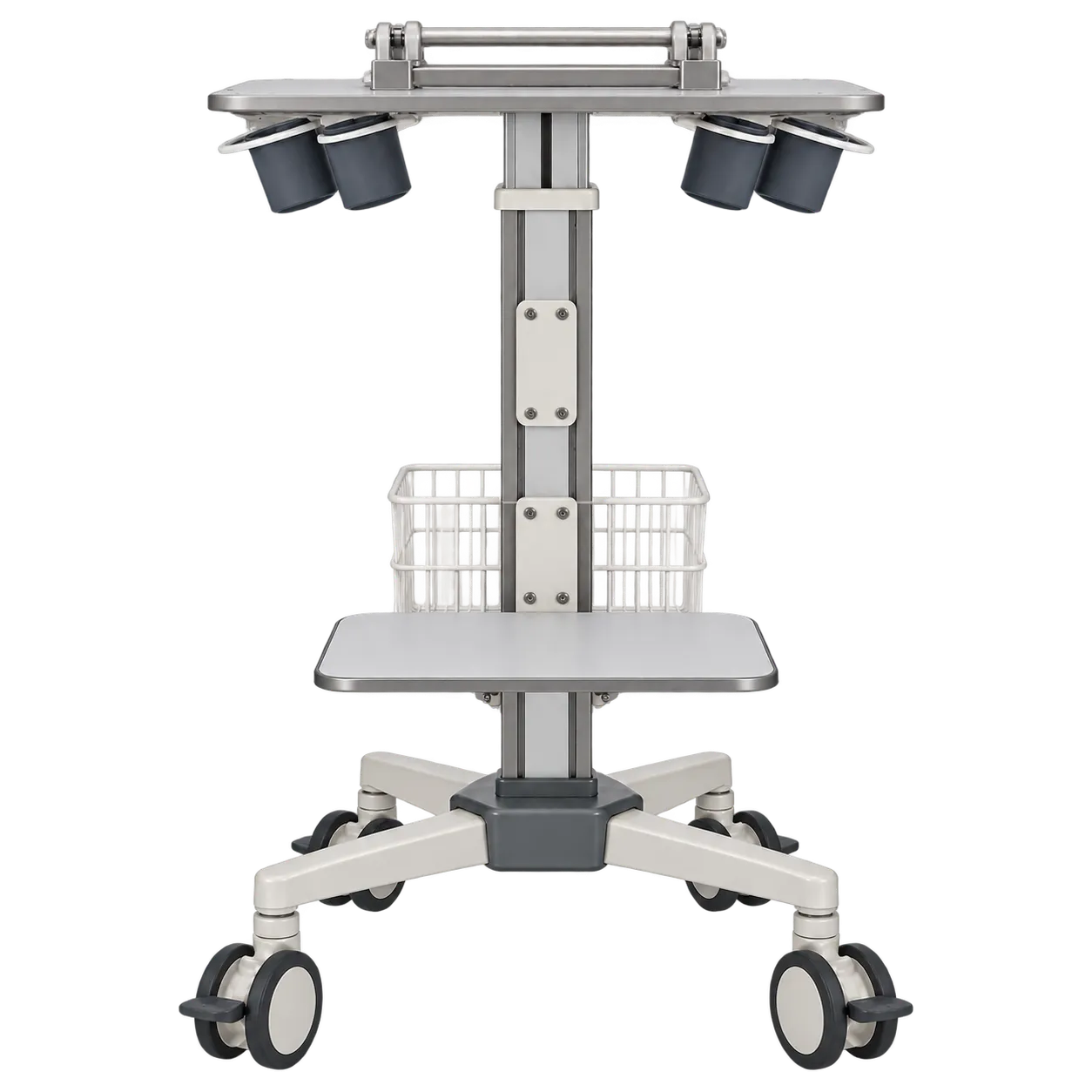
Point-of-care scanning belongs on an ultrasound trolley at this height. Vascular access, lung and cardiac views, bladder assessment and procedural guidance are usually performed standing at a bed rather than seated at a couch, and a deck reaching 1070 mm supports that posture. Dropping to 770 mm still allows a seated examination where the patient is in a chair. Between them, 300 mm of travel covers most of what a general ward or emergency department asks of an ultrasound trolley.
Gel handling is what distinguishes an ultrasound trolley from a general laptop cart. Two coupling agent holders keep bottles upright and to hand, which matters because a bottle laid on a deck rolls and a bottle in a pocket leaks. Paired with two probe cups, an operator can work with two transducers and their gel without anything resting on the working surface. The bottle size those holders accept is not stated, and gel containers vary considerably between suppliers, so that is checked before a department commits.
Cleaning an ultrasound trolley follows directly from the same fittings. Cups meeting coupling agent again and again call for a stated process and a plastic proven to withstand it, which differs entirely from wiping a deck between patients. No cleaning guidance appears anywhere on the sheet, and neither does any cable routing, though probe leads on a mobile cart have to go somewhere.
Medigear.uk confirms the cleaning requirements, cable arrangement, and castor braking before this ultrasound trolley enters clinical use, along with the holder sizes.