

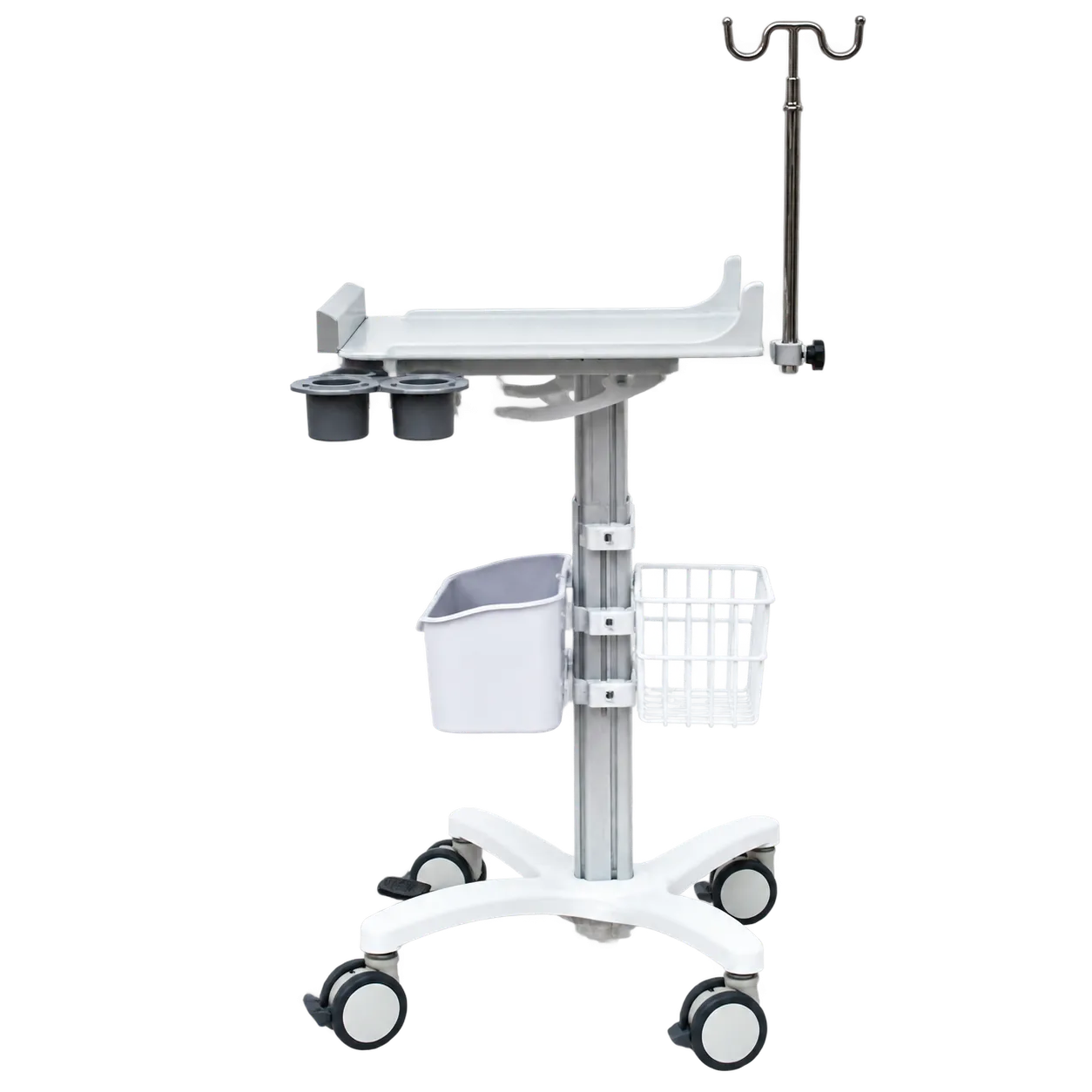
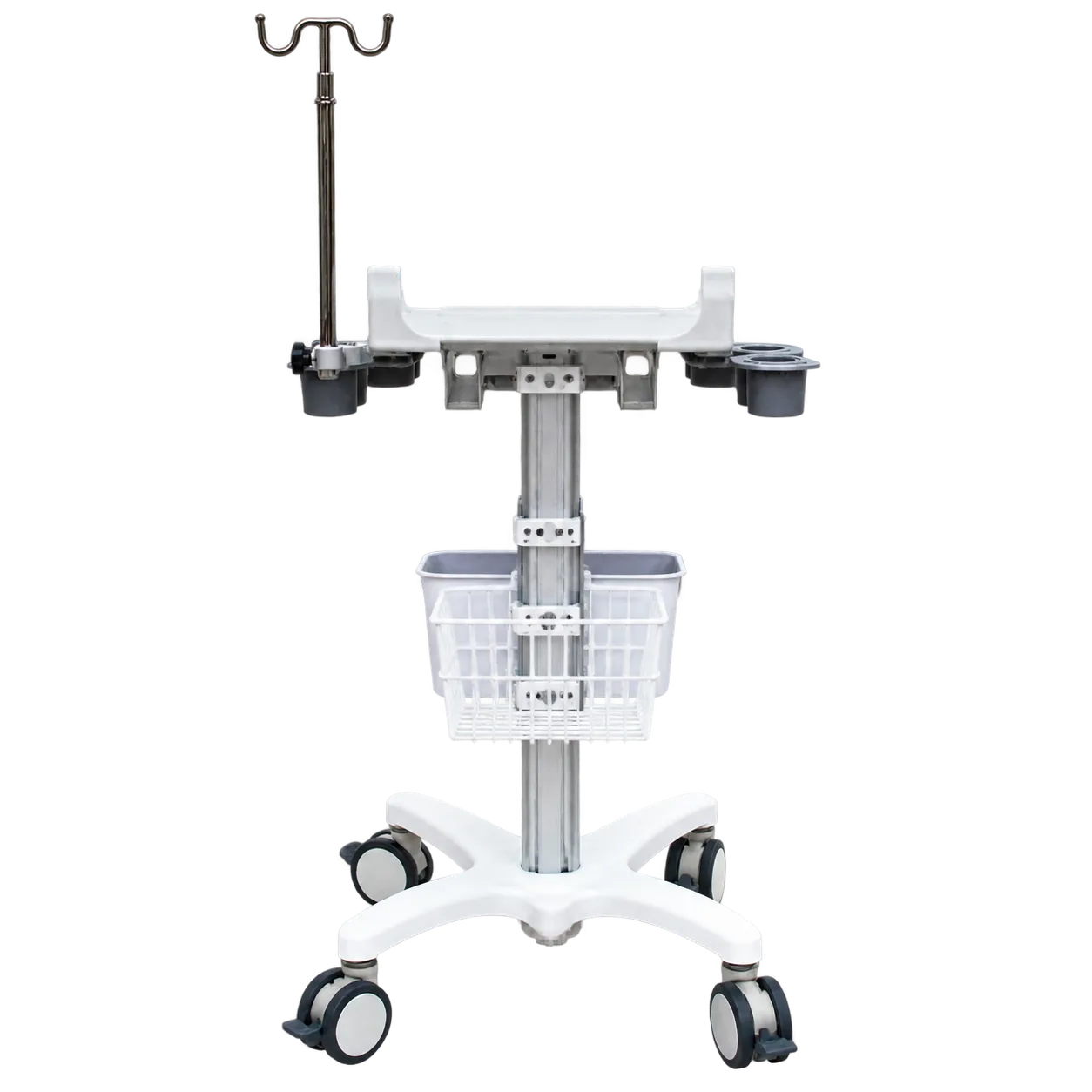
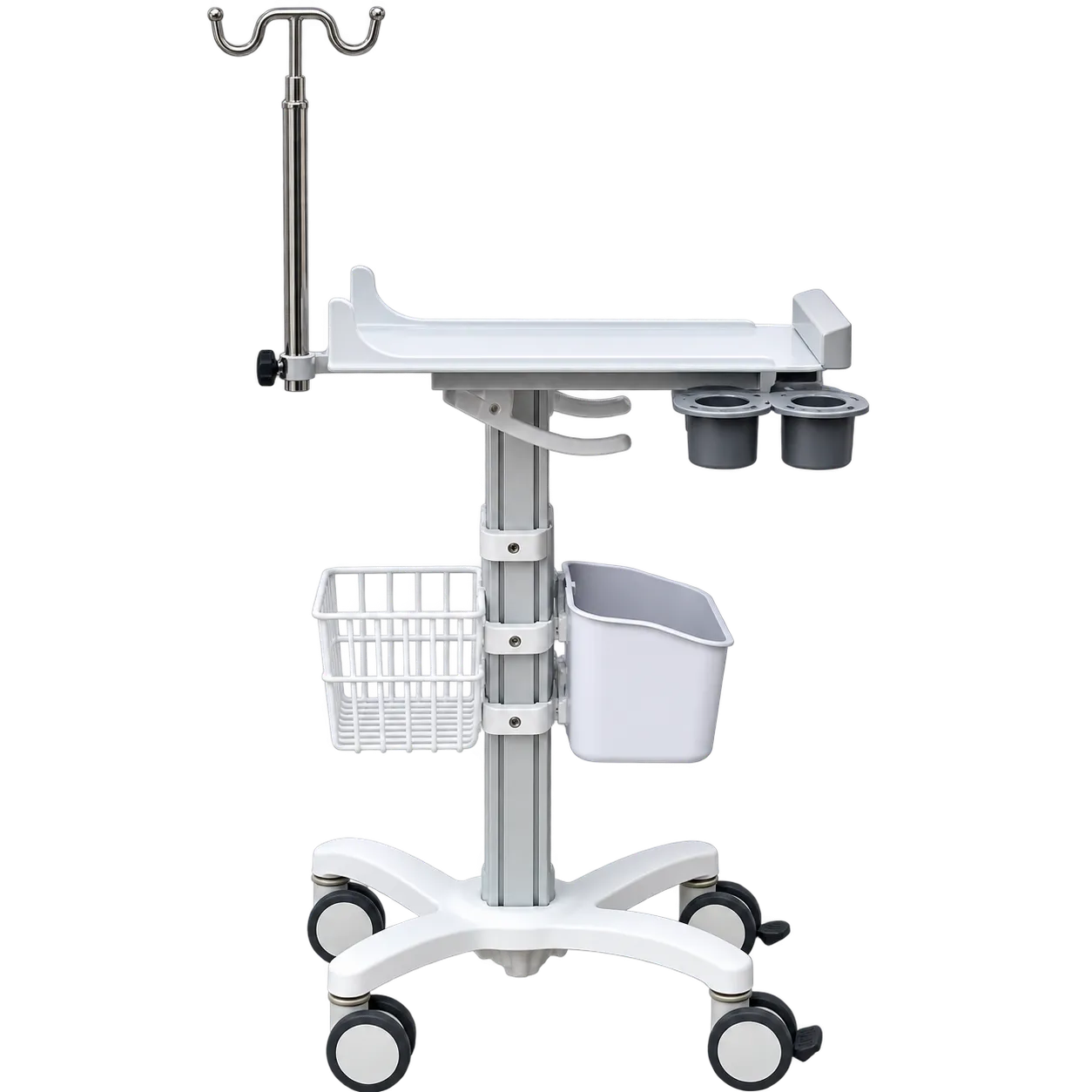
An ultrasonic trolley like this pared-back model suits a department that already has its printing and gel sorted elsewhere. Where reports go straight to a system rather than to paper, a printer tray is dead weight, and where gel lives on a wall bracket or in a warmer, a bottle cup on the trolley adds nothing. What remains is a machine, four transducers, and a surface at the right height, which for many point-of-care examinations is the whole requirement.
The circular base of this ultrasonic trolley earns its place in a crowded bay. An examination often means walking around the patient, moving from one side of the bed to the other, and turning the cart as you go. A five-pointed pedestal has legs that face a particular direction; a round base does not, so an ultrasonic trolley can be spun without a leg swinging into a chair or a drip stand. Wider at 545 mm, it also puts more distance between the wheels and the load.
The height band sits lower than its relatives. At 750 to 1000 mm, it starts 40 mm beneath the SH2-G-3-1 and finishes 90 mm below it, which favours a seated examination at a chair or a couch over standing work at a raised bed. Departments scanning standing at bed height should check the upper figure against their own practice before committing to this reference.
Medigear.uk confirms the deck coating, the probe cup dimensions and how the four cups are arranged before this ultrasonic trolley enters clinical use.