
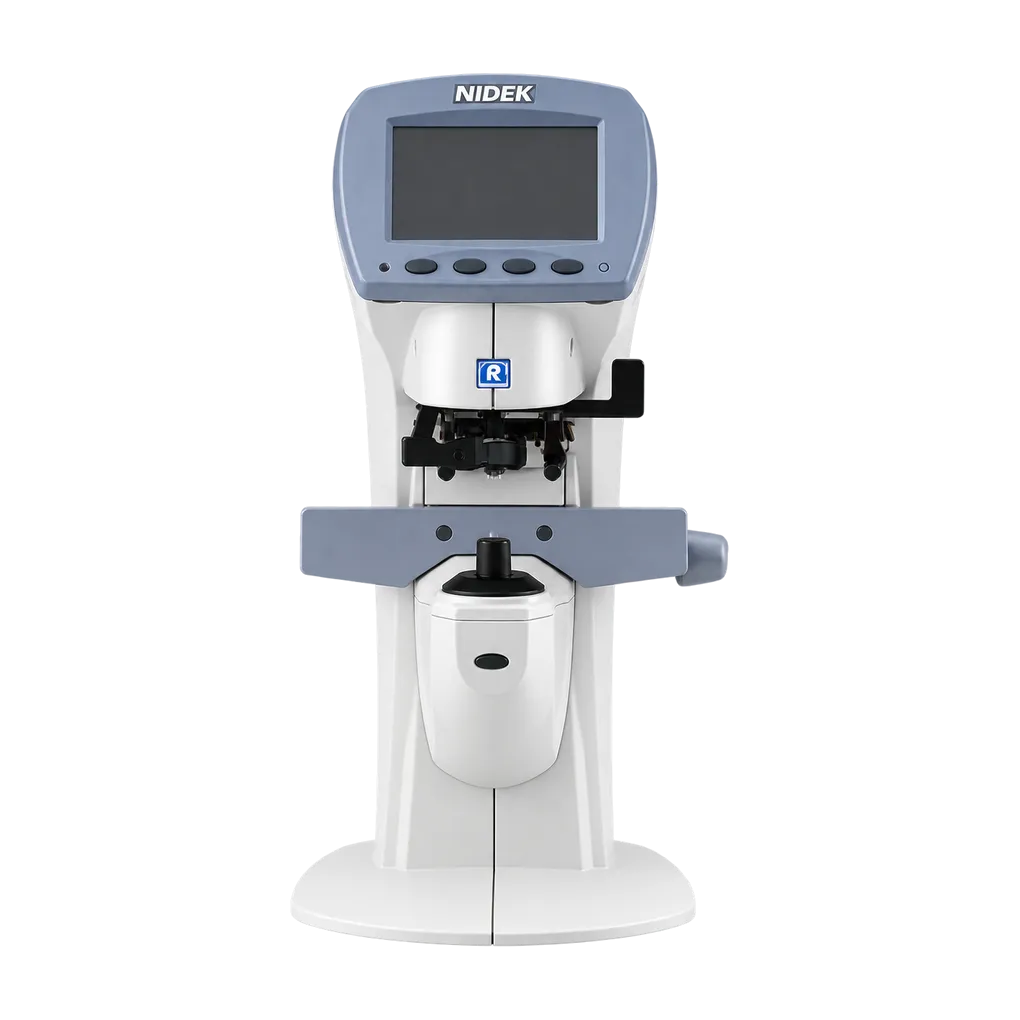
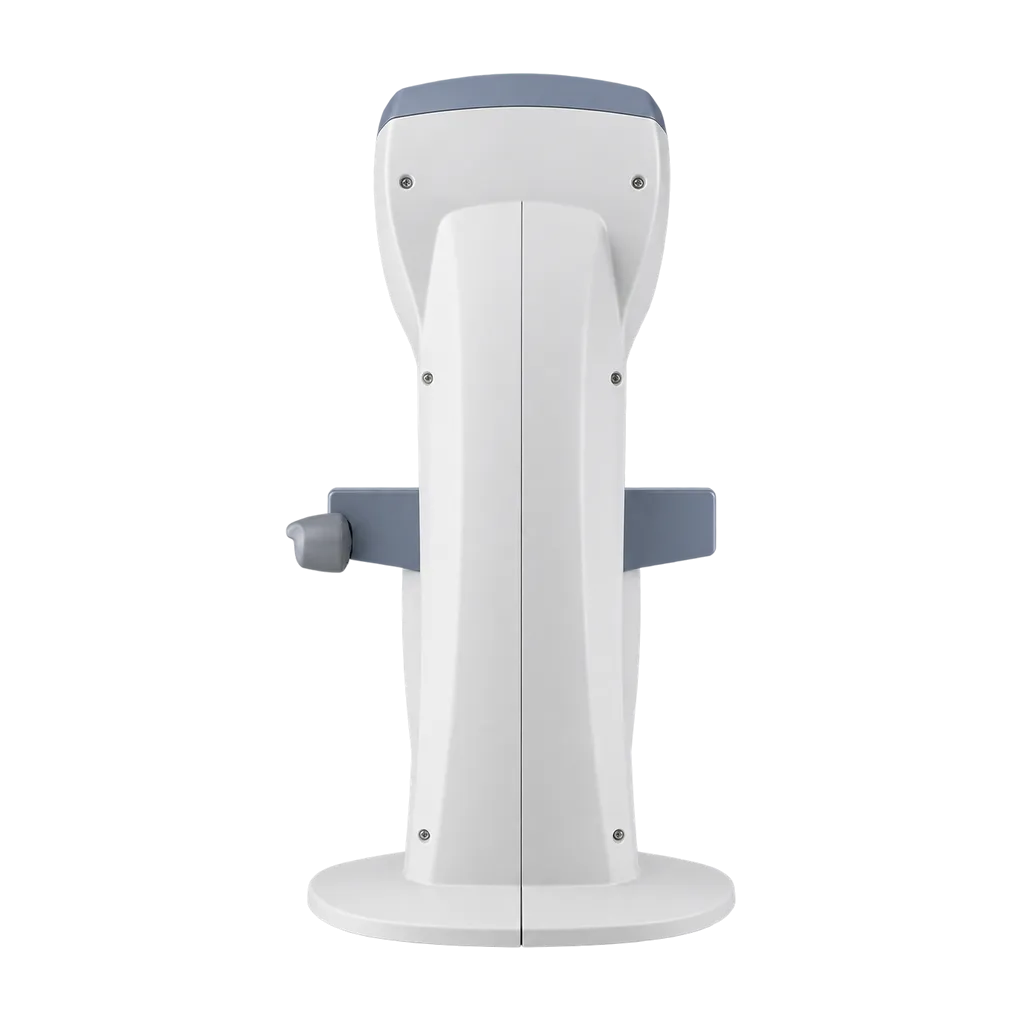
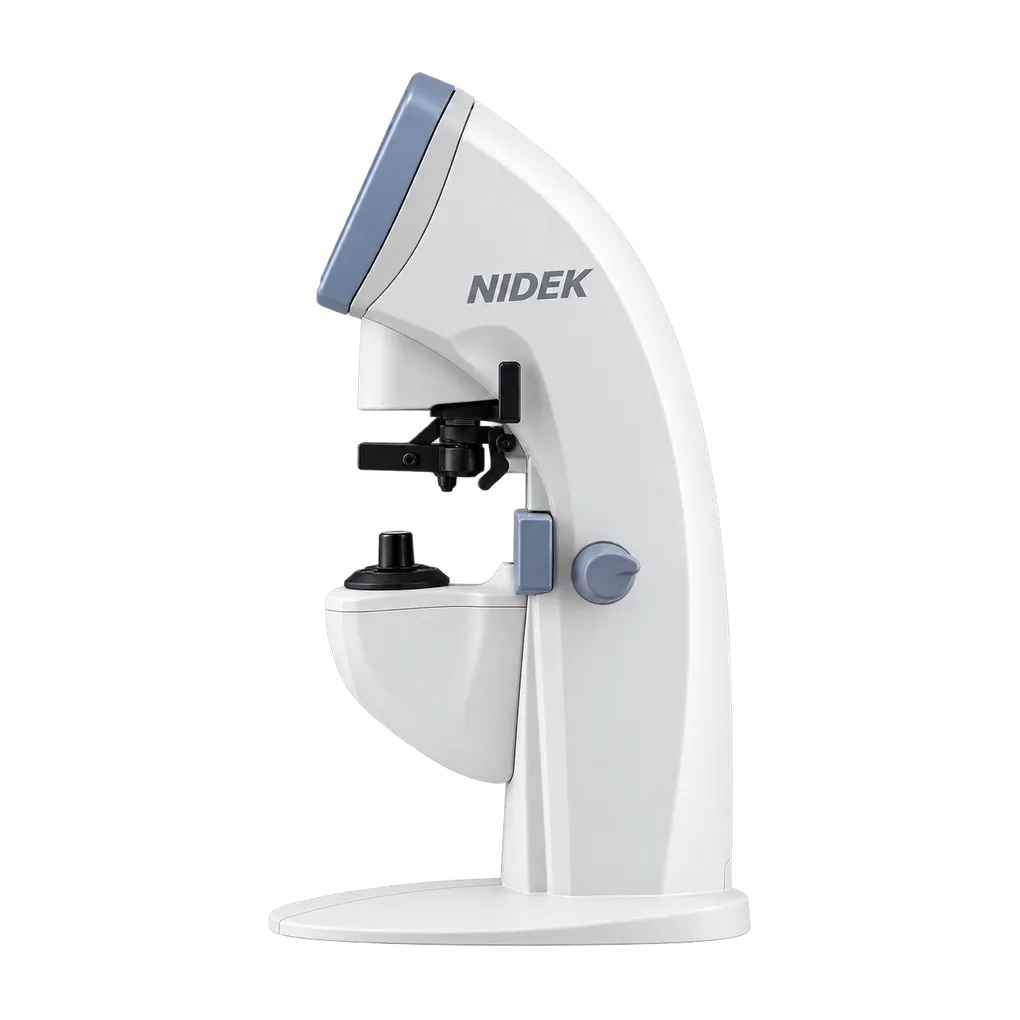
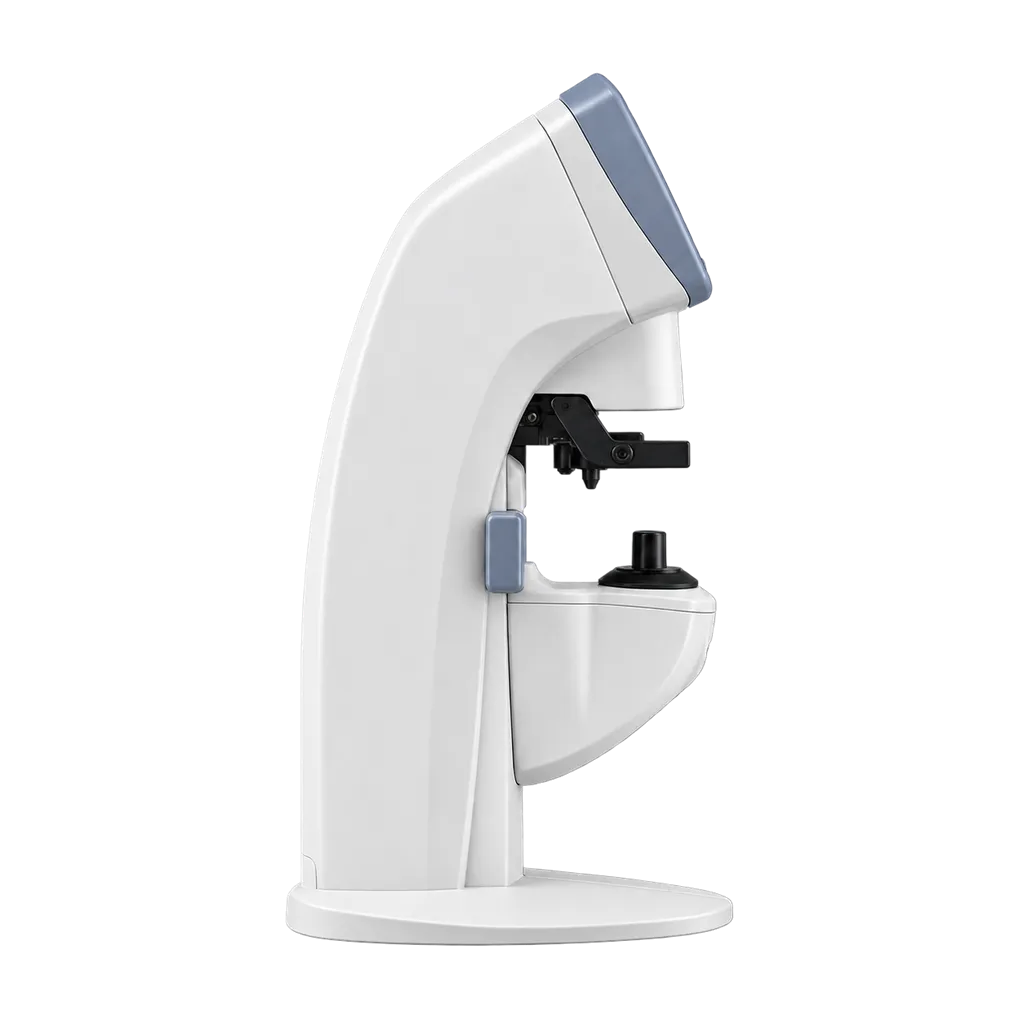
Dispensing opticians use the LM-500 to establish the powers present in a patient's spectacles and assess lenses during dispensing. Sphere, cylinder, and axis remain visible while the frame sits on the table. The holder secures the selected lens at the nosepiece, and the displayed right-or-left designation keeps each result associated with its side. Existing spectacles can therefore be described through their measured optical properties.
Progressive-lens work gives the directional display a particular role. An operator follows the transition from the distance zone to the reading area while the instrument tracks local power changes. Near-position indicators support the final horizontal and vertical adjustments. With automatic capture selected, the system retains a stable result at the aligned position. This suits dispensing and verification tasks where a measurement's location matters as much as its numerical value.
Optical laboratory staff use the marking assembly to transfer a chosen position and orientation to an uncut lens. The three-dot line provides a physical reference for subsequent handling in the workshop. Sphere, cylinder, and prism remain available during positioning so the marks relate to the selected optical centre or prescribed prism point. The optional foot switch supports capture while both hands remain occupied with the lenses.
Within an optometry service, the contact-lens nosepiece extends the same bench station to support contact lenses. Dedicated display fields include spherical equivalent alongside sphere, cylinder and axis. Bifocal and trifocal work uses separate segment readings to preserve the relationship between distance and addition. Configured computer or NIDEK instrument links carry measured results forward, allowing the dispensing station to add lens information to the broader examination record.