
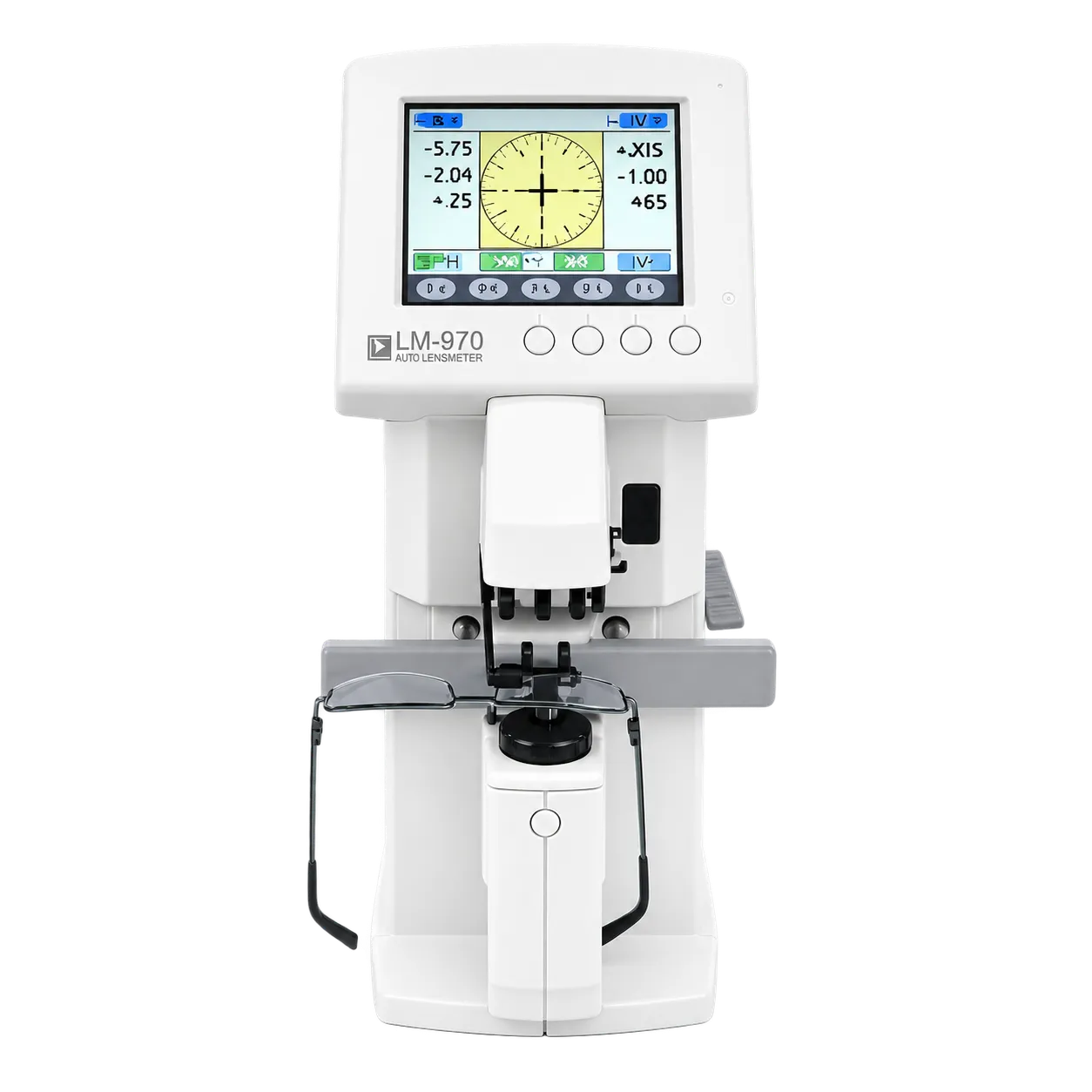
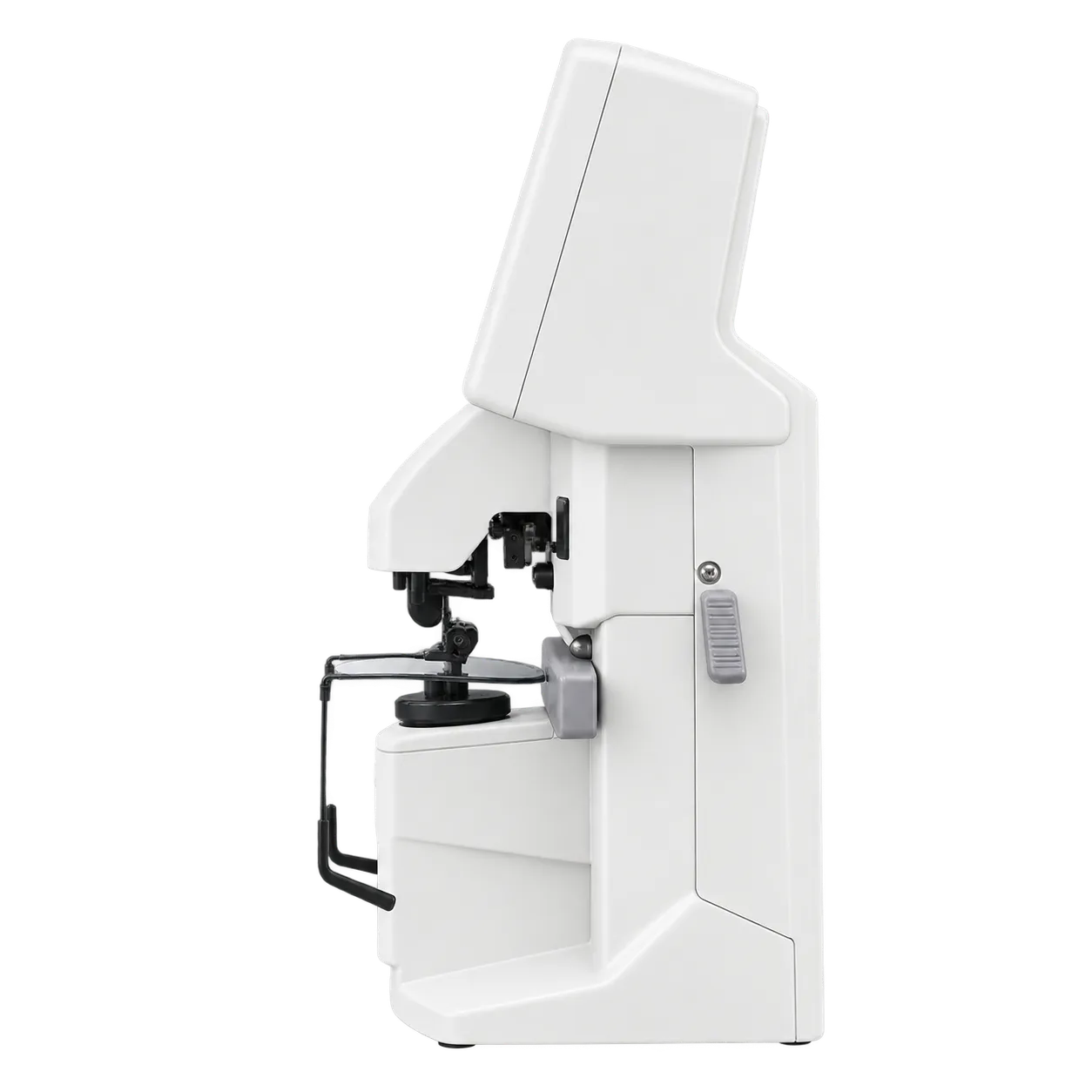
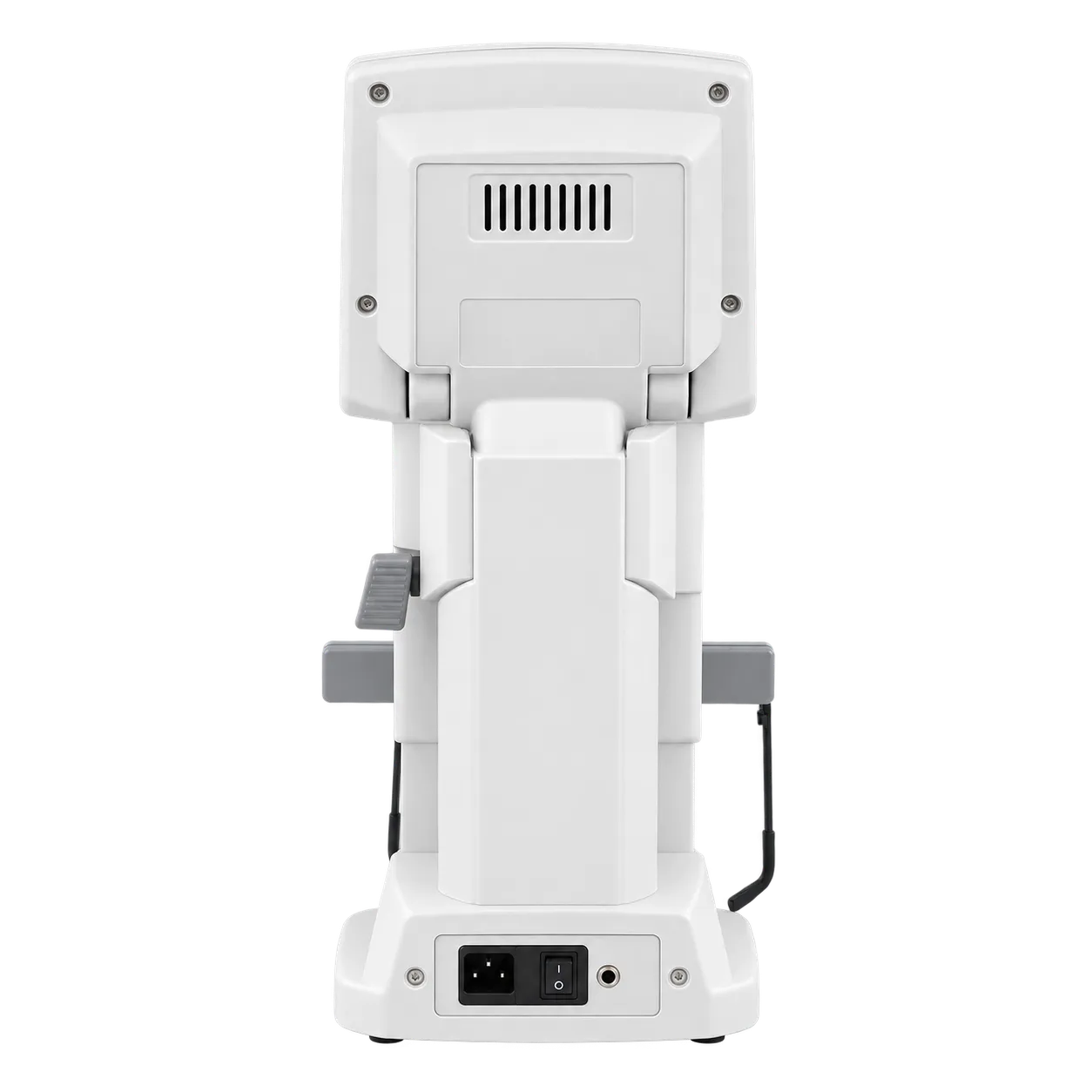
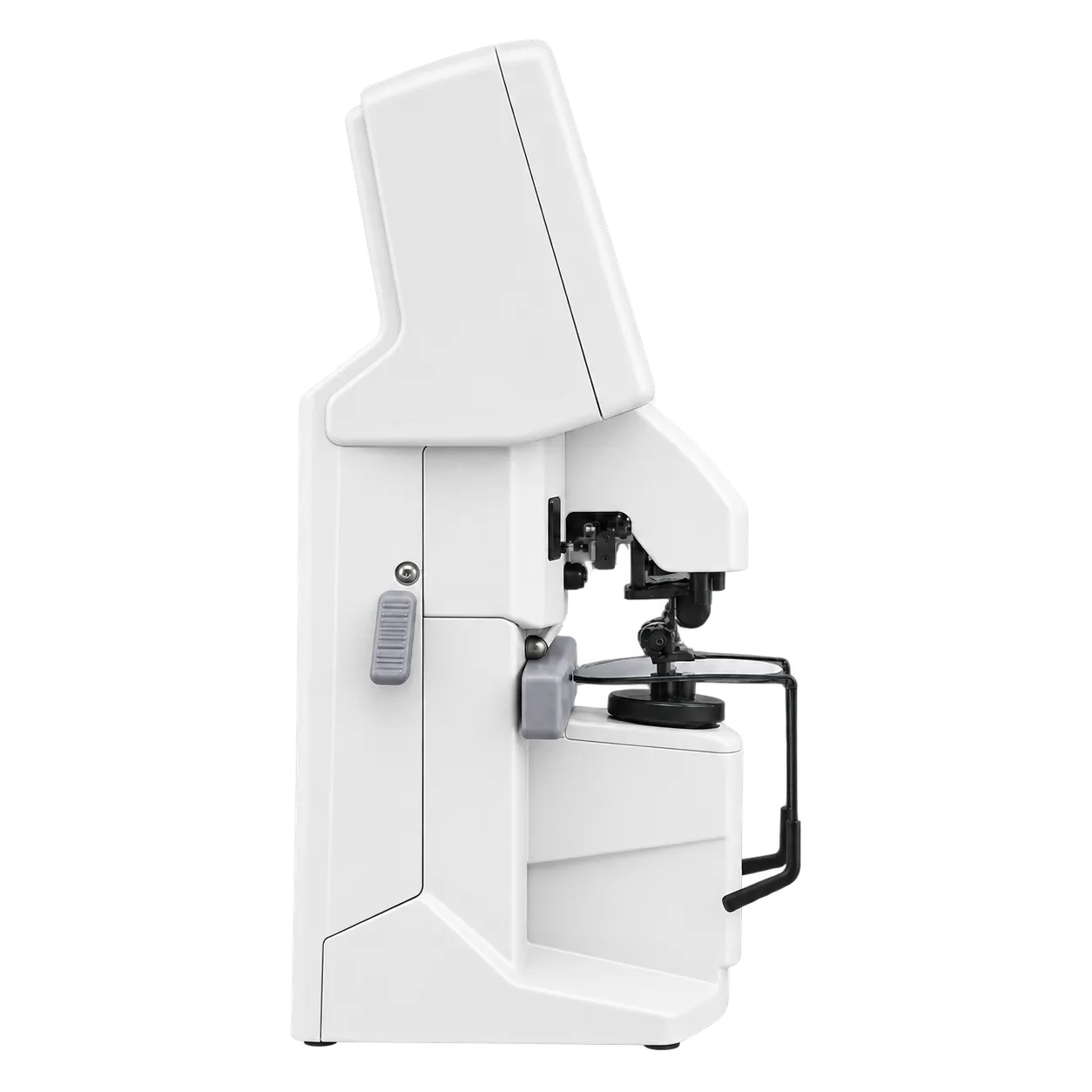
Optical practices, optometry practices, ophthalmology clinics, and dispensing opticians use the LM-970 wherever lenses are checked. In pre-test, staff read a patient's current spectacles before the eye examination, and the result can travel over the RS-232C interface to an auto refraction system such as Nidek's AR-660A. At the dispensing counter, a finished pair is checked against the prescription before it is handed over, and contact lens wearers can have their lenses read on the same bench.
The instrument earns its place by fitting the rooms it works in. A refraction room is often kept dim, while a dispensing area is brightly lit, and the backlit full-graphic LCD stays legible in both. At 7 kg it can be carried from one room to another when the day's workload shifts, and it runs from an ordinary mains socket at 100–120 V or 200–240 V. Nothing about its installation goes beyond a level bench and that socket.
Its measuring modes cover the lenses a practice meets most often. Single vision spectacles are read through the auto-read function, with the cylinder axis calculated automatically. Progressive lenses have a mode of their own, and on-screen prompts lead the operator through it, which helps staff who measure progressives less often. Contact lenses are read in a dedicated mode. For spectacles made from high-index materials, entering the lens's Abbe number, anywhere from 20 to 60, lets the reading be corrected for the way that material spreads light.
The result is a single benchtop lensmeter that serves pre-test, refraction, and dispensing, and that sends its readings on to refraction equipment.