
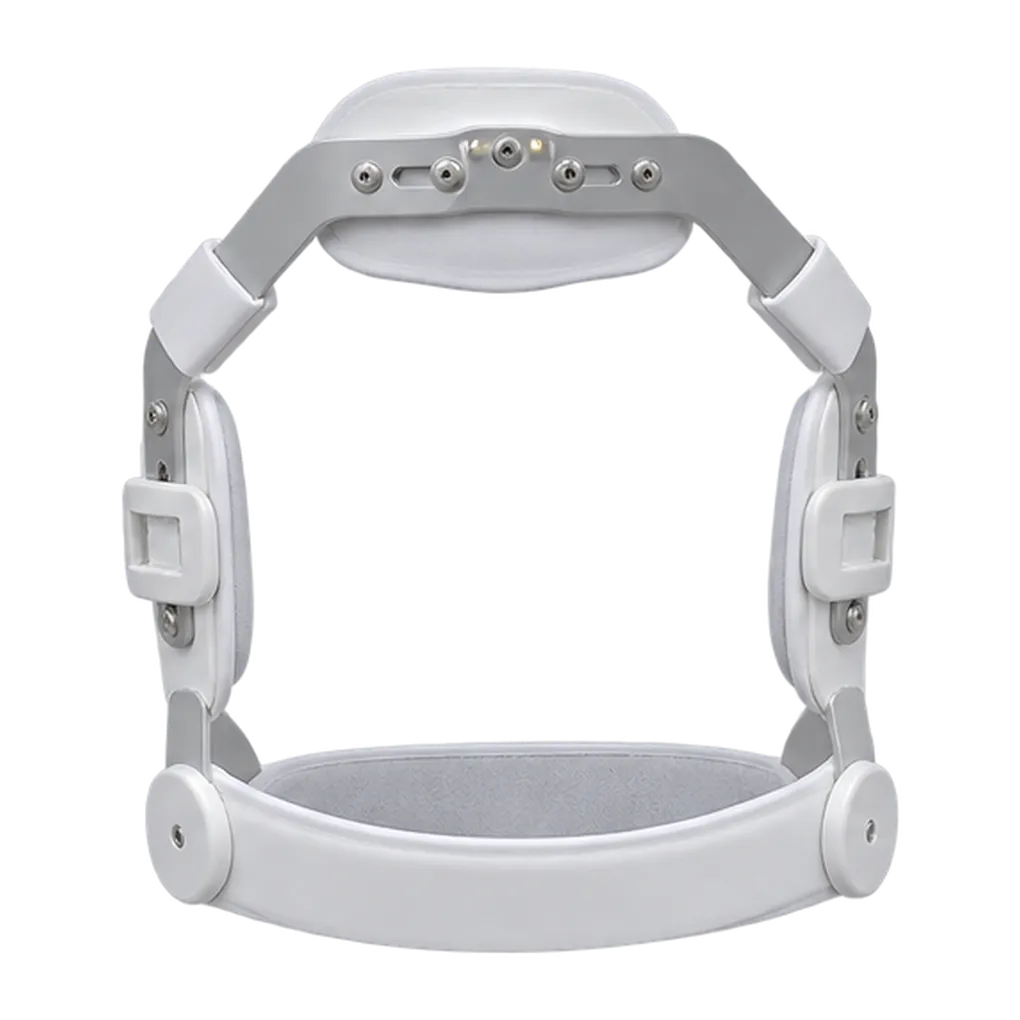
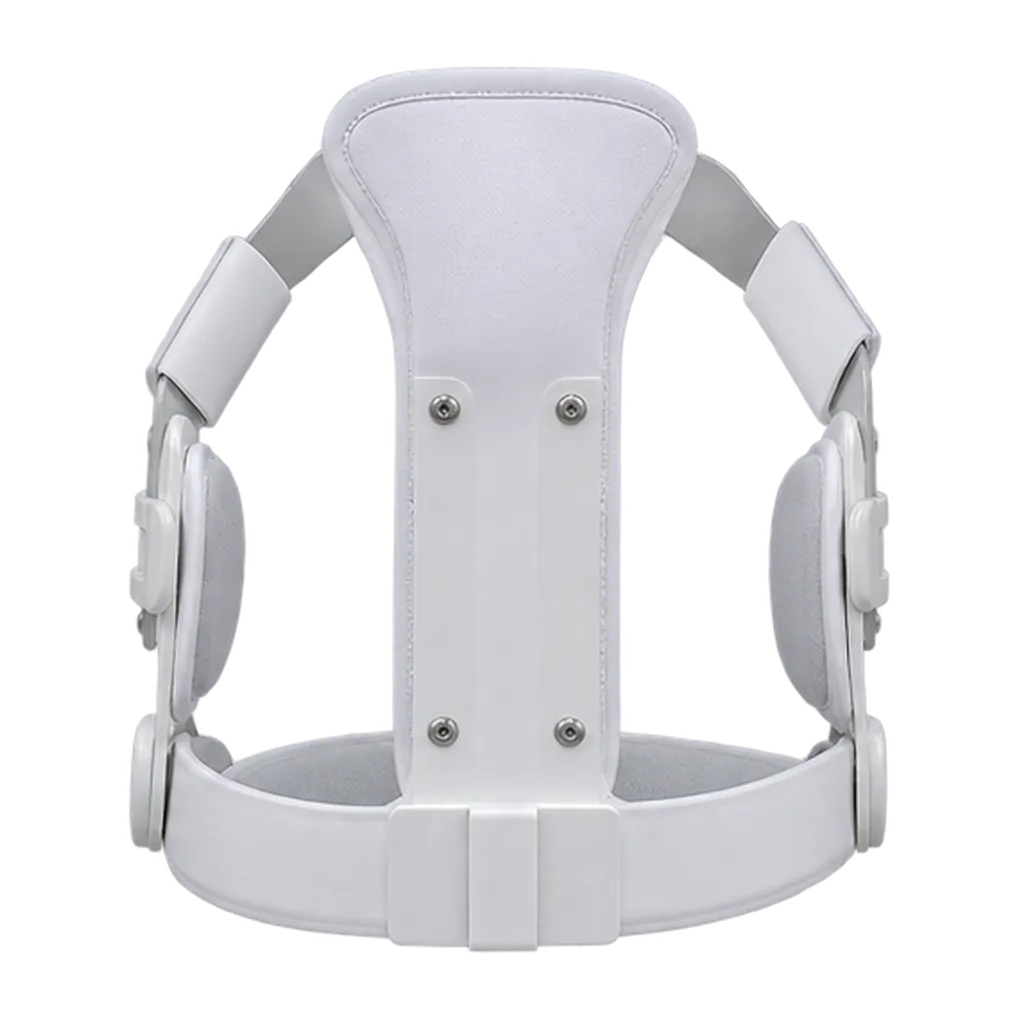
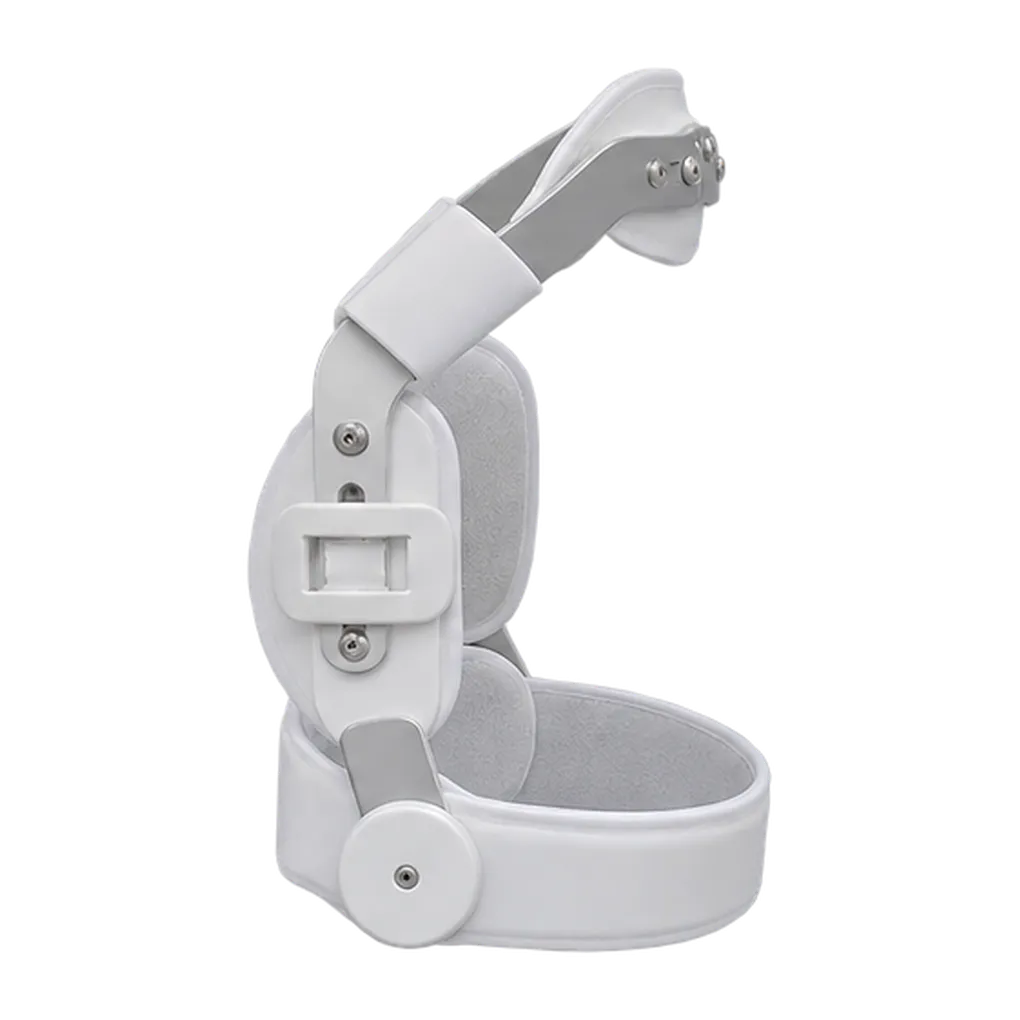
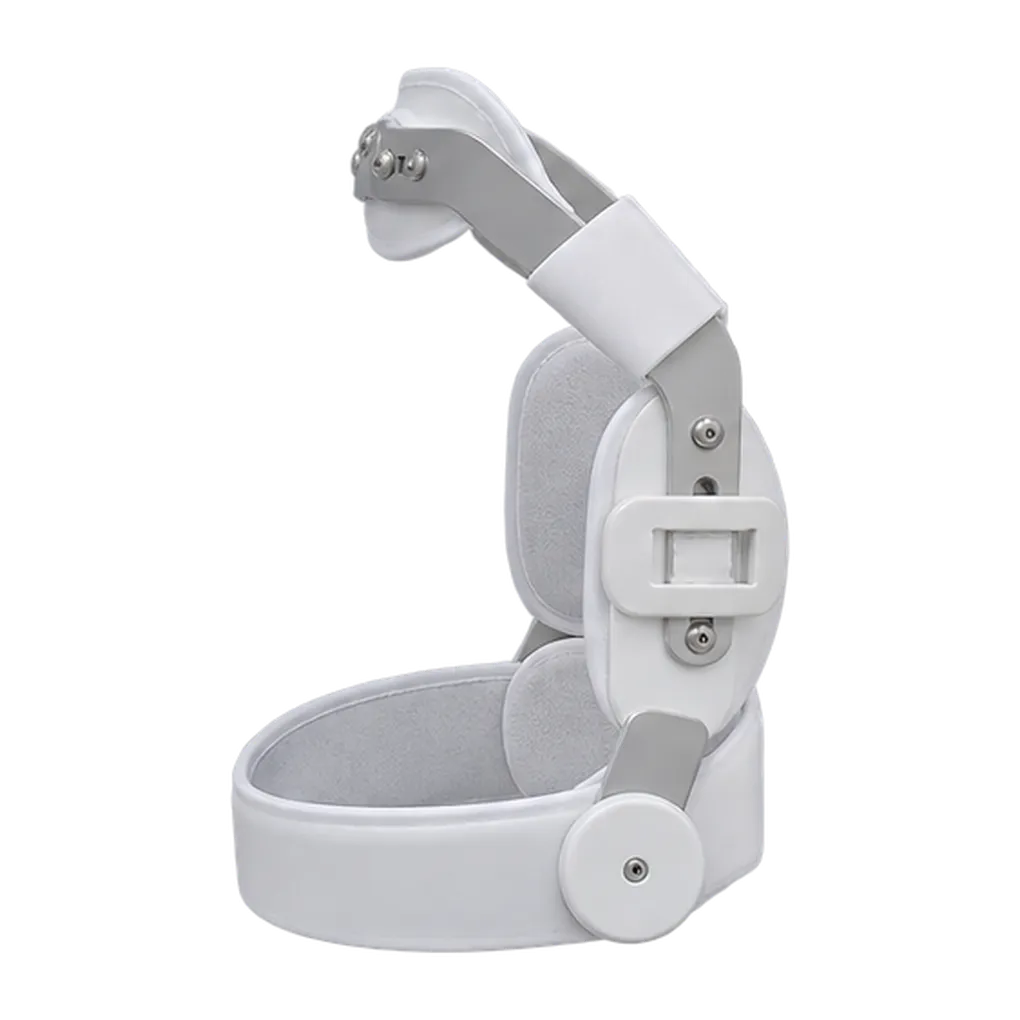
The HE201 is fitted after a spinal fracture or spinal surgery, when the trunk must be protected from forward and sideways movement. Orthopaedic surgeons, spinal rehabilitation teams and physiotherapists apply it to stable non-osteoporotic compression fractures below T6, to thoracolumbar fractures after surgical stabilisation and to the recovery that follows herniated intervertebral disc surgery.
Fitting is quick because the brace is fast to apply. The frame is set to the wearer: its width and height are adjusted. A rigid frame restricts side-bending, and the brace restricts forward flexion where there is anterior vertebral instability, so one fitted brace limits movement in both directions.
The hyperextension force is the next adjustment. A one-push buckle sets it, so a clinician changes the force with a single action while the frame stays as it was fitted. This suits a ward or a clinic where the same brace is adjusted again as a patient progresses.
The movable pelvic bar is positioned for comfort while the wearer is sitting. Sitting is part of every day for a person recovering from a fracture or an operation, and the bar is placed to suit it.
Size follows two ranges. Each of the four sizes pairs a pelvic range with a length range, in centimetres. The smallest, size S, covers 60–75 cm and 39–46 cm. Size M covers 75–90 cm and 42–49 cm, and size L covers 90–105 cm and 45–52 cm. At the top, size XL covers 105–115 cm and 49–56 cm. A clinic that stocks the four sizes covers pelvic ranges from 60 to 115 cm with one model.